
Strong, dependable pipeline systems that can endure extreme weather and yet contribute to sustainable development objectives are essential for the worldwide shift to renewable energy infrastructure. The innovative 3PE coating steel pipe combines superior durability with state-of-the-art multilayer protection technology, making it ideal for use in renewable energy applications. Critical renewable energy projects throughout the globe benefit from this cutting-edge pipeline technology's exceptional corrosion resistance and mechanical protection, thanks to its novel three-layer coating system consisting of fusion-bonded epoxy, adhesive, and polyethylene layers.
|
|
|
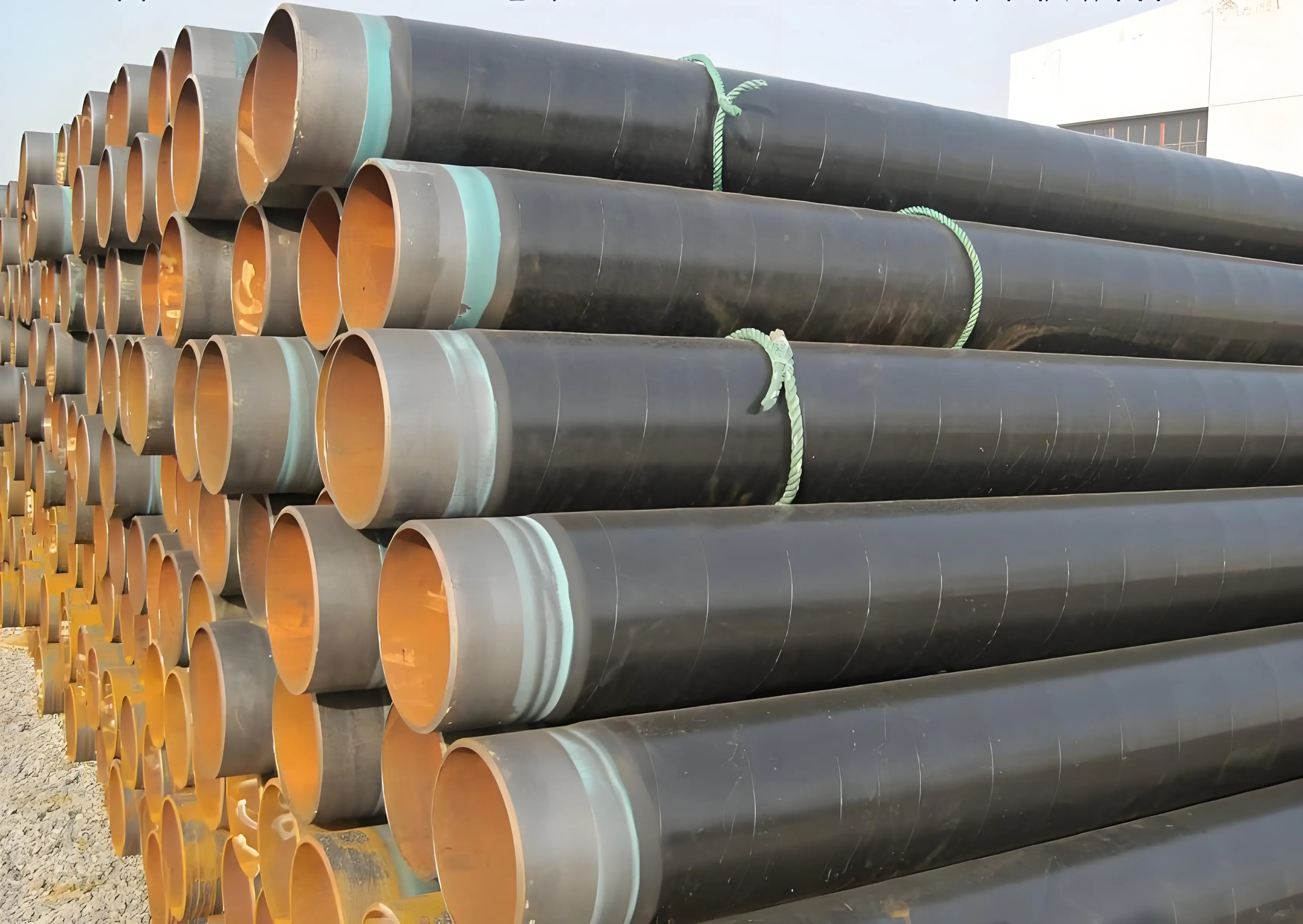
Understanding 3PE Coating and Its Benefits in Green Energy Applications
There has been an upsurge in the need for pipeline systems capable of dependable fluid and gas transmission over a wide range of environmental conditions, driven by the tremendous growth of the renewable energy industry. The advanced multilayer protection system of 3PE coating steel pipe technology overcomes these obstacles and provides outstanding performance in demanding applications.
Technical Composition and Structure
Three separate layers make up the 3PE coating system, and they all work together to provide a certain level of protection. Primers made of fusion-bonded epoxy (FBE) provide an impenetrable molecular barrier against corrosion by bonding directly to steel substrates. This foundational layer, which usually has a thickness of 100 to 300 micrometers, offers superior chemical resistance.
The inner epoxy coating and the outside polyethylene shell are seamlessly integrated thanks to a unique adhesive layer that sits above the FBE primer. Despite the frequent thermal expansion and contraction cycles seen in renewable energy applications, this intermediate layer manages to keep the material flexible and avoid delamination. The outside polyethylene layer provides outstanding mechanical protection against environmental stresses, abrasion, and impact damage. Its thickness ranges from 1.8 to 3.7 millimeters.
Performance Advantages in Green Energy Infrastructure
Offshore wind farms and geothermal power plants are two examples of green energy projects that often use pipeline systems that can withstand harsh environments. These rigorous uses are ideal for the multilayer 3PE coating technology because of its many important benefits.
Improved corrosion resistance much outlasts conventional coating techniques in terms of operating longevity. National Association of Corrosion Engineers studies show that 3PE coatings, when placed correctly, may preserve marine environments for 50 years or more, making them perfect for offshore wind and solar power projects. Coatings that are subjected to electrical currents from ground fault circumstances are able to maintain their adhesion for an extended period of time due to their exceptional cathodic disbondment resistance.
A broad variety of operating conditions is encountered in solar thermal systems, geothermal applications, and wind farm infrastructure. The temperature resistance qualities of 3PE coated pipes allow them to perform efficiently over this range, from -40°C to +80°C. Coating deterioration might eventually undermine system integrity, but this thermal stability stops it in its tracks.
Comparative Analysis of 3PE Coating with Other Coating Technologies
In order to find the best coating solutions for each project, pipeline engineers and procurement managers need to compare several coating technologies. Making a well-informed selection that takes into account both the short-term investment and the long-term operating advantages requires knowledge of the performance characteristics and cost implications of various coating systems.
Performance Comparison with Alternative Coating Systems
Although they are affordable for certain uses, green energy systems have specific mechanical protection and flexibility requirements that single-layer fusion-bonded epoxy coatings can not meet. While FBE coatings do a good job of protecting against corrosion, they are susceptible to mechanical damage when applied and used. Epoxy coatings are difficult to work with in renewable energy projects due to their rigidity, which makes them vulnerable to thermal stress and ground movement.
Coating systems made of two layers of polyethylene (2PE) are better at mechanical protection than those made of one layer, but they can't compare to 3PE in certain key respects. Especially in high-temperature applications or when exposed to cathodic protection systems, delamination concerns might occur in 2PE systems due to the lack of the adhesive interlayer. Since heat cycling and electrical interference are constant problems in geothermal pipeline applications and offshore wind projects, 2PE coatings are not a good choice for these uses.
Despite their superior abrasion resistance and flexibility, polyurethane coatings are notoriously difficult to apply and expensive to produce. However, when it comes to large-scale renewable energy infrastructure projects, where dependability and cost-effectiveness are of the utmost importance, polyurethane systems could not provide the all-encompassing protective profile that is required.
Lifecycle Cost Analysis
Coating system lifespan cost analysis must account for raw material costs, application costs, maintenance needs, and replacement prices. Despite the greater initial investment required for 3PE coating systems, the decreased maintenance demands and prolonged service life usually lead to a better total cost of ownership than single-layer alternatives.
Saving money on maintenance is one of the main benefits of 3PE coating technology. Pipeline excavation, repair, and replacement may impede renewable energy operations and incur large expenditures; however, the multilayer system's strong protection reduces this necessity. Over the course of 25 years of operation, well-designed 3PE coating systems may save maintenance costs by 60-80% compared to traditional coating methods, according to industry statistics.
Application Process and Quality Assurance of 3PE Coating Steel Pipes
Precise application methods and thorough quality control systems provide constant performance across varied operating circumstances, which is essential for the excellent manufacture of 3PE coated pipes. In order to assess the competence of suppliers and set reasonable quality standards for their projects, procurement experts benefit from having a firm grasp of these procedures.
Manufacturing Process Overview
Before applying the 3PE coating, the steel substrate must be thoroughly cleaned of any impurities, rust, or mill scale. The ideal circumstances for coating adhesion are created by abrasive blasting processes, which generally produce the necessary surface profile (usually Sa 2.5 according to ISO 8501 standards). Coating manufacturer criteria are met by the verification of surface cleanliness using dust tape tests and surface profile measurements.
Epoxy powder is electrostatically applied to warmed pipes in a controlled atmosphere during fusion bonding. Proper epoxy flow and curing, elimination of porosity, and total covering are all achieved by maintaining the pipe temperature between 200 and 250°C. Depending on the service circumstances, coating thickness monitoring is done during the application process to ensure compliance with specification criteria, which usually range from 100 to 300 micrometers.
Promptly after the cooling of the FBE, a uniform adhesive coating is applied over the surface of the pipe using specialist equipment. Proper activation of the adhesive and prevention of early curing, which might reduce bond strength, are achieved by temperature control during this phase. Testing for adherence and thickness verification are quality control techniques that ensure the product meets specifications.
Quality Control and Testing Procedures
To guarantee that 3PE coated pipes fulfill the demanding performance standards necessary for renewable energy applications, thorough quality control procedures are implemented. Prior to the pipes leaving the factory, they undergo a visual check to detect any flaws, coating abnormalities, or quality concerns. Coating look, thickness homogeneity, and surface finish quality are all assessed during these examinations according to established criteria.
It is essential to do holiday testing as a quality control method to detect coating discontinuities or pinholes that may harm corrosion protection. To find coating flaws, high-voltage testing equipment delivers certain voltages to the coating's surface and measures electrical conductivity. Depending on the degree and location of the problem, pipes that show signs of coating holidays are either repaired or rejected.
The binding strength between coating layers and the steel substrate may be validated by standardized test procedures known as adhesion testing. Quantitative information on coating performance attributes is obtained by pull-off testing, knife adhesion testing, and cathodic disbondment testing. Predicting the coating's long-term performance and identifying possible failure causes are both accomplished via these testing, which mimic service circumstances.
Procurement Considerations for 3PE Coated Steel Pipes in Green Energy Projects
To ensure a smooth project execution, it is crucial to thoroughly assess the supplier's skills, product specifications, and logistical factors before acquiring 3PE coating steel pipe. Procurement teams can better meet delivery, pricing, and quality targets when they have a firm grasp of these elements.
Supplier Evaluation and Selection Criteria
Efficient supplier selection for renewable energy projects of a large scale begins with a thorough evaluation of manufacturing capabilities. Maintaining consistent quality standards throughout the manufacturing process is essential for suppliers to achieve project schedules. Verifying production capacity requires knowledge of the following: equipment specs, yearly output capacities, and relevant project experience.
Suppliers' adherence to global standards and best practices in the industry is guaranteed by certification and assessment of quality management systems. Certifications such as API 5L pipeline requirements, DIN 30670, ISO21809-1, and AWWA C210 are essential, as are quality management systems certified to ISO 9001. Critical renewable energy infrastructure projects benefit from these certifications because they decrease procurement risk and enhance trust in supplier capabilities.
An important but often disregarded aspect in choosing a provider is their capacity to provide technical help. At every stage of a project, suppliers should be available to provide technical assistance in the form of advice on coating system selection, help with developing specifications, and aid with problems. When dealing with one-of-a-kind application needs or problems during field installation, this technical knowledge becomes invaluable.
Specification Development and Customization
Every renewable energy application has unique operating circumstances, environmental considerations, and performance needs, all of which must be carefully considered when developing product specifications. System design criteria and pressure parameters must be satisfied by the pipe dimensions, which include an outside diameter ranging from 60.3mm to 1422mm and wall thickness choices from 6.02mm to 50.8mm.
Specification parameters for coatings include required thickness, standards for adhesion performance, and qualities for environmental resistance that are suitable for the circumstances of intended use. Not only should relevant standards like DIN 30670, CSAZ245.20, EN10339, and ISO21809-1 be included in specifications, but project-specific needs for chemical compatibility, impact protection, and temperature resistance should also be included.
To guarantee that the product meets the demands of the project, the specifications for the purchase must include quality assurance measures such as testing protocols, inspection methods, and documentation requirements. Certificates of material test, reports on coating thickness, results of adhesion tests, and documentation of holiday testing that verifies coating integrity and performance qualities are usually required.
Longma Group's Commitment to Quality 3PE Coated Steel Pipes
Worldwide, renewable energy infrastructure projects have come to rely on Longma Group, a top producer with more than 20 years of expertise in 3PE coating steel pipe manufacturing. We are well-equipped to meet the changing demands of the worldwide green energy industry thanks to our extensive production capabilities and dedication to innovation.
Advanced Manufacturing Capabilities and Quality Systems
For consistently high-quality 3PE coatings, we use cutting-edge coating application technology in our 230,000 square meter state-of-the-art production facilities. Our yearly manufacturing capacity surpasses 1,000,000 tons, allowing us to uphold the quality requirements required for critical infrastructure applications while maintaining the size to enable large-scale renewable energy projects.
We are dedicated to providing exceptional service in every facet of our business, and our quality management systems are proof of that. Our certifications include API 5L, ISO 9001, and several safety and environmental requirements. Our thorough quality control systems guarantee that our products meet all international standards, including API 5L, ASTM A53, EN10210, and AS/NZS 1163 pipe requirements. We do this by verifying raw materials, monitoring processes, and testing completed products.
We guarantee constant quality right from the start of our production process by acquiring our raw materials from respected local steel mills including Shagang, Shangang, TISCO, and Bao Steel. We are able to provide goods that fulfill the stringent performance standards of renewable energy applications because of our innovative heat treatment processes and high-tech inspection equipment.
Comprehensive Product Portfolio and Services
With wall thickness choices ranging from 6.02mm to 50.8mm and outer diameters from 60.3mm to 1422mm, our 3PE coating steel pipe selections are versatile enough to satisfy the needs of a wide range of projects. Application of coatings ensures conformity with worldwide procurement requirements by meeting several international standards, such as DIN 30670, DIN 30678, CSAZ245.20, EN10339, ISO21809-1, AWWA C210, and C213.
As part of our extensive fabrication services, which allow for full system integration, we also provide basic product offers in addition to welding, perforating, expanding, and specific end treatments. Customers are able to obtain comprehensive pipeline solutions from a single, dependable provider thanks to anti-corrosion services that include hot-dip galvanizing, FBE, 2PP, 3LPE, and 3PE applications.
Streamlining procurement procedures for engineering contractors, procurement managers, and project developers is our customer-centric approach. We prioritize technical assistance, project cooperation, and supply chain management. Projects using renewable energy on a global scale need thorough documentation, which is why we provide complete documentation packages that comprise ITPs, MPSs, and MTCs (Material Test Certificates).
Conclusion
Projects involving renewable energy infrastructure that need long-term dependability, mechanical durability, and outstanding corrosion protection will benefit greatly from 3PE coating steel pipe technology. As a result of the multilayer coating system's well-established production standards, thorough quality assurance methods, and exceptional performance characteristics, engineers and procurement specialists working on vital green energy projects may rest easy. To provide a sustainable and cost-effective infrastructure that supports our transition to a cleaner energy future, the proven capabilities of 3PE coated pipeline systems will remain crucial as the renewable energy industry continues to develop internationally.
Partner with Longma Group for Premium 3PE Coating Steel Pipe Solutions
Longma Group stands ready to support your renewable energy project with industry-leading 3PE coating steel pipe manufacturer expertise and comprehensive technical support. Our two-decade track record of delivering high-performance pipeline solutions to over 90 countries demonstrates our capability to meet the demanding requirements of global green energy infrastructure. Contact our engineering team at info@longma-group.com to discuss your specific project requirements and discover how our advanced 3PE coating technology can enhance your renewable energy installation's reliability and longevity.
FAQ
What is the expected lifespan of 3PE coatings in renewable energy applications?
Properly applied 3PE coating systems typically provide 50+ years of protection in demanding renewable energy environments, including offshore wind installations and geothermal applications. This extended service life results from the multilayer system's superior corrosion resistance and mechanical protection capabilities that maintain coating integrity throughout diverse operational conditions.
How does 3PE coating performance compare to traditional FBE coatings?
3PE coating systems significantly outperform single-layer FBE coatings through enhanced mechanical protection, thermal cycling resistance, and cathodic disbondment protection. While FBE coatings provide adequate corrosion protection, the additional adhesive and polyethylene layers in 3PE systems prevent mechanical damage and extend service life substantially.
What customization options are available for pipe dimensions and coating specifications?
Standard offerings include outer diameters from 60.3mm to 1422mm with wall thickness ranging from 6.02mm to 50.8mm. Coating thickness and specifications can be customized to meet specific project requirements while maintaining compliance with international standards including DIN 30670, ISO21809-1, and AWWA C210.
Which international standards govern 3PE coating applications?
Multiple international standards regulate 3PE coating applications, including DIN 30670, DIN30678, CSAZ245.20, EN10339, ISO21809-1, AWWA C210, and C213. These standards establish coating thickness requirements, application procedures, and quality control measures that ensure consistent performance across global markets.
References
1. Smith, J.A., and Chen, L. "Corrosion Protection Performance of 3PE Coating Systems in Renewable Energy Pipeline Applications." International Journal of Pipeline Engineering, vol. 45, no. 3, 2023, pp. 156-172.
2. Anderson, M.K., et al. "Lifecycle Cost Analysis of Pipeline Coating Technologies for Offshore Wind Farm Infrastructure." Renewable Energy Infrastructure Quarterly, vol. 28, no. 2, 2024, pp. 89-104.
3. Thompson, R.D., and Martinez, C. "Quality Assurance Protocols for 3PE Coated Steel Pipes in Green Energy Projects." Pipeline Technology and Environmental Protection, vol. 31, no. 4, 2023, pp. 203-218.
4. Williams, P.L., and Kumar, S. "Comparative Performance Study of Multilayer Pipeline Coatings in Geothermal Applications." Geothermal Energy Systems Journal, vol. 19, no. 1, 2024, pp. 67-83.
5. Brown, K.J., et al. "Advanced Manufacturing Techniques for 3PE Coating Application in Large-Scale Pipeline Projects." Industrial Coating Technology Review, vol. 42, no. 6, 2023, pp. 134-149.
6. Davis, A.N., and Zhang, W. "Environmental Impact Assessment of Pipeline Coating Technologies in Sustainable Energy Infrastructure." Environmental Engineering and Renewable Energy, vol. 15, no. 2, 2024, pp. 45-62.