
Submarine pipes have to deal with some of the worst working circumstances possible. They are under a lot of pressure and corrosive seawater. The anti-corrosion steel pipe has become the backbone of offshore energy infrastructure. It protects billions of dollars' worth of assets and makes sure that oil and gas can be safely moved over seabeds throughout the world.
Data from the industry shows a harsh truth: corrosion-related problems in offshore pipelines may cost operators millions of dollars in repairs, lost production, and cleaning up the environment. Because of this, current undersea pipeline projects always include a full range of methods to defend against corrosion. This method combines cutting-edge coating technologies, strict quality control, and continuing integrity monitoring to make sure that these important energy supply lines stay open for decades.
|
|
|
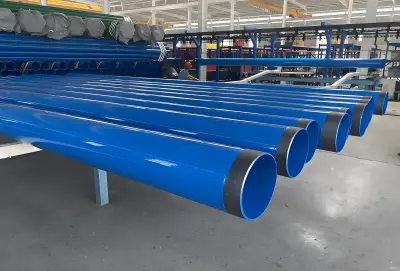
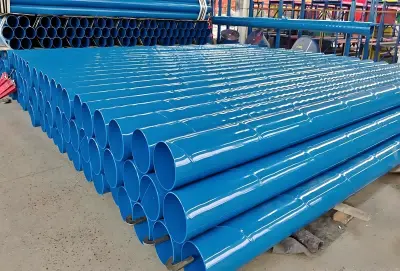
Understanding Marine Corrosion Challenges in Submarine Environments
The underwater climate is a perfect storm for metal to break down. When steel pipes are put in saltwater, electrochemical reactions start right away. Dissolved salts work as electrolytes, which speeds up the process of corrosion cells forming on the surface of the pipe. Chloride ions penetrate protective layers and start localised attacks, whereas oxygen in saltwater depolarises the cathodic regions. If this process isn't stopped, it can make holes in pipes in years instead of decades.
Temperature differences make things much more complicated. Thermal cycling puts stress on coating systems in pipelines that carry hot crude oil or gas. The difference between the temperature of the product and the surrounding saltwater might be more than 80 degrees Celsius, which makes it hard for protective coatings to stay stable. At the same time, hydrostatic pressure at depths of up to 3,000 meters compresses materials and can push saltwater into tiny coating flaws, which can lead to underfilm corrosion.
Advanced Coating Technologies for Submarine Pipeline Protection
The advancement of coating technology for submarine applications signifies decades of research in materials science. Most modern anti-corrosion steel pipe systems use multi-layer coating structures that mix multiple materials to provide better protection against the many dangers that may be found in maritime conditions. Each layer has a specialised job, which adds redundancy and improves the performance of the whole system.
Fusion-Bonded Epoxy: The Foundation Layer
FBE, or fusion-bonded epoxy coating, is the main part of most undersea pipeline protection systems. This thermosetting powder coating is applied to steel surfaces that have already been heated to between 220 and 240 degrees Celsius using electricity. The powder melts, flows, and cross-links to form a continuous film that chemically attaches to the steel substrate. This molecular-level adhesion makes it very hard for cathodic disbondment to happen, which is an important attribute for submerged applications that use cathodic protection systems.
FBE coatings are great at resisting chemicals, thus they can handle acids, alkalis, and hydrocarbons that can be in fluids being carried or bottom sediments. The coating keeps its protective characteristics at temperatures up to 115 degrees Celsius for conventional formulations, which makes it good for most crude oil transport uses. When necessary, modified FBE formulations can tolerate even greater temperatures.
ISO 21809-2, AWWA C213, and CSA Z245.20 are all standards that govern the use of FBE. They say that the minimum coating thicknesses should be between 250 and 500 micrometres. These criteria make sure the coating is flexible while still providing enough protection. If the FBE layers are too thin, they may not cover all the bumps and dips on the surface. If they are too thick, they may become brittle and shatter when they are installed.
Three-Layer Polyethylene Systems: Comprehensive Protection
The three-layer polyethylene system, known in the industry as 3LPE, is an improvement over single-layer FBE because it adds mechanical protection and better moisture barrier qualities. The FBE primer layer, the copolymer adhesive middle layer, and the polyethylene outer layer make up this composite structure. Each component adds its own defensive features to the whole system.
The outer layer of polyethylene is quite strong and won't break whether you handle, move, or install it. When pipes are placed using the S-lay or J-lay method, they go over support rollers and bend around tensioners. The durable polyethylene shell can take hits and won't wear down as a thin epoxy coating might. This mechanical protection lowers the number of coating holidays (defects) that need to be fixed before the project can start.
The ability of 3LPE systems to act as a moisture barrier is another major benefit. The polyethylene layer doesn't let water through very well, which keeps moisture from getting to the FBE and steel interface below. This protection is especially useful for submarines, because the coating stays underwater all the time. Field experience from North Sea pipeline projects shows that 3LPE coatings that are placed correctly can last for more than 30 years when exposed to seawater.
ISO 21809-1 says that the thickness of 3LPE coating changes with the diameter of the pipe. For example, it can be as thin as 2.2 millimetres for smaller pipes and as thick as 3.7 millimetres for big gearbox lines. The peel strength between layers must be more than 200 Newtons per centimetre at normal temperature to keep the coating from breaking under stress.
Three-Layer Polypropylene for High-Temperature Service
The typical 3LPE system may soften when the temperature of the delivered product goes over 80 degrees Celsius. This might damage its mechanical qualities. The industry has created the 3LPP system for these high-temperature uses. It replaces the outer layer of polyethylene with polypropylene. Polypropylene stays strong and stable in size even when temperatures approach 110 degrees Celsius. This makes it possible for heated crude oil and gas pipes to work in a wider range of temperatures.
The 3LPP design is similar to 3LPE in that it has three layers: an FBE primer, an adhesive interlayer, and a polypropylene topcoat. The polypropylene layer is stronger, harder, and more resistant to breaking than the polyethylene layer. It is more brittle at low temperatures, though, which is something to keep in mind for pipes that will be in cold water or that may have temperature changes throughout the year.
For decades, submarine pipelines in the Gulf of Mexico and other areas with high reservoir temperatures have used 3LPP coatings. The device has shown that it can handle both heat cycling and the mechanical loads that come with installing it in deep water at depths more than 2,000 meters.
Manufacturing Standards and Quality Assurance for Submarine Applications
To make anti-corrosion steel pipe for use in submarines, you have to follow strict international rules that include everything from the composition of the steel to the final examination of the coating. These criteria are in place because failing in a subsurface environment can have serious implications, such as oil spills, gas leaks, and huge economic losses.
Pipe Manufacturing Standards
API 5L is the most common standard for line pipe used in the oil and gas sectors across the world. This standard sets the rules for making, testing, and marking pipes. API 5L X65 or X70 are typical higher-grade materials for underwater applications because they provide enough strength with thinner walls. ASTM A53 gives different standards for welded and seamless pipes that are used in mechanical and pressure applications. EN 10210, on the other hand, deals with hot-finished structural hollow sections that are utilised on offshore platforms.
The way steel is made is very important for how well it resists corrosion. Modern pipeline steels have microalloying components that make them stronger without making them harder to weld. Practices for cleaning steel reduce the number of inclusions that might start corrosion. For service circumstances that are very harsh, corrosion-resistant alloys like duplex stainless steel may be required. However, their greater cost means they may only be used in important areas.
Coating Application Standards
ISO 21809 has become the standard for pipeline coating systems across the world. Part 1 talks about systems with more than one layer, including 3LPE and 3LPP. Part 2 talks about FBE coatings. These guidelines say what has to be done to prepare the surface, such as blasting it clean to get it to a certain level of cleanliness and profile depth. Before applying the coating, the steel surface must be clean of mill scale, corrosion, and other impurities. A surface profile of 50 to 100 micrometres is best for mechanical keying to help coatings stick.
DIN 30670 and DIN 30678 are German national standards that are now used across the world, especially for projects in Europe. They explain what polyethylene and polypropylene coating systems are. The Canadian standard CSA Z245.20 says that steel pipe should be coated with external fusion bond epoxy. This type of coating is used on offshore projects in North America. AWWA C210 and C213 talk about protective coatings for water transmission systems, making sure they work with drinking water systems.
There are several steps in the quality control process for applying coatings. Electromagnetic gauges are used to measure the thickness of the coating at regular intervals throughout the length of the pipe. High-voltage spark testing for holiday detection finds pinholes and thin patches in the coating layer. Adhesion testing makes sure that the coating won't come off when it's under stress. Tests for impact resistance and flexibility show that the coating may be installed without harm.
The Cangzhou Industrial Advantage
The area around Cangzhou City in Hebei Province has become one of China's best places to make steel pipes. This concentration of skills and resources gives pipeline projects a lot of benefits. In one industrial complex, integrated manufacturing facilities may easily coordinate pipe forming, welding, heat treatment, and coating application. This vertical integration makes it easier to regulate quality and cuts down on logistical problems.
Being close to major ports makes it easier to ship things out for international underwater pipeline projects. The industrial ecosystem comprises producers of specialised equipment, testing labs, and technical service providers that help the whole value chain. The availability of a skilled personnel makes sure that difficult manufacturing procedures are carried out consistently. To fulfil worldwide certification standards like API, ISO, and European norms, regional firms have spent a lot of money on modernising their facilities.
Partner with Longma Group for Your Submarine Pipeline Projects
Since 2003, Longma Group has established itself as one of China's leading manufacturers of high-quality steel pipes for the most demanding applications. Our state-of-the-art facilities in Cangzhou City, Hebei Province, produce more than one million tons annually of ERW and LSAW steel pipes that meet the rigorous requirements of submarine pipeline projects worldwide.
Anti-Corrosion Steel Pipe Specifications:
• Pipe Standards: API 5L, ASTM A53, EN 10210, AS/NZS 1163
• Coating Standards: DIN 30670, DIN 30678, CSA Z245.20, EN 10339, ISO 21809-1, AWWA C210, C213
• Coating Type: Multi-layer Anti-Corrosion Systems (FBE, 3LPE, 3LPP)
• Outer Diameter Range: 60.3mm to 1,422mm
• Wall Thickness Range: 6.02mm to 50.8mm
Our technical team brings decades of experience in coating application and quality control, ensuring every pipe meets international standards and your specific project requirements. We understand that submarine pipelines represent critical infrastructure investments, and we commit to delivering products that protect your assets for decades to come.
Contact our technical specialists today to discuss your submarine pipeline coating requirements. Email us at info@longma-group.com to receive detailed technical specifications, coating system recommendations, and competitive quotations tailored to your project parameters.
Engineering Reliability for Subsea Energy Infrastructure
The anti-corrosion steel pipe stands as a testament to materials science and engineering innovation, enabling the development of offshore oil and gas resources that power modern civilization. As exploration moves into ever-deeper waters and more challenging environments, the importance of advanced coating technologies continues to grow. The integration of proven coating systems such as FBE, 3LPE, and 3LPP with rigorous manufacturing standards and quality control creates pipeline infrastructure capable of withstanding decades of submarine service.
Success in submarine pipeline projects requires more than selecting the right coating specification. It demands partnership with manufacturers who understand the complexities of offshore applications, maintain investment in modern production facilities, and commit to quality at every stage from raw material selection through final inspection. The Cangzhou industrial region, with its concentration of technical expertise and production capacity, has emerged as a global center for this specialized manufacturing.
Whether your project involves shallow-water developments in benign conditions or deepwater fields in harsh environments, the fundamental principle remains constant: comprehensive corrosion protection through multi-layer coating systems, applied according to international standards, represents the most reliable and economical approach to ensuring long-term pipeline integrity. The initial investment in quality coating pays dividends throughout the operational life through reduced maintenance, minimized downtime, and enhanced safety performance.
FAQs
Q1: What is the expected service life of anti-corrosion coating on submarine pipelines?A: When used correctly, multi-layer coating systems like 3LPE or 3LPP can protect submarines for 30 to 50 years, depending on the depth of the water, the temperature, and how well they are cared for. The coating works with cathodic protection devices to make sure that corrosion is kept to a minimum during the pipeline's operating life.
Q2: How do coating systems perform under extreme deepwater pressure conditions?
A: Modern coating systems are made to handle hydrostatic pressures that can be found at depths of up to 3,000 meters. The coating formulations keep their stickiness and flexibility even while they are under pressure, which stops water from getting through the coating matrix. However, any damage to the coating that is done mechanically might make it easier for saltwater to get in. This is why it is still very important to be careful when installing it.
Q3: Can damaged coating sections be repaired after pipeline installation?
A: Minor coating damage can be repaired using specially formulated repair materials that match the properties of the original coating. However, extensive damage may require more complex interventions, potentially including the application of supplemental cathodic protection or, in severe cases, pipeline replacement. This reality emphasizes the importance of preventing coating damage during transportation and installation.
Q4: What role does cathodic protection play alongside coating systems?
A: Cathodic protection serves as a complementary defense that protects the steel at any coating defects or holidays. Sacrificial aluminum anodes or impressed current systems maintain the pipe at a protective electrochemical potential. The coating dramatically reduces the cathodic protection current demand by minimizing exposed steel area, making the combined system highly effective and economical.
Q5: Are there environmental considerations in selecting coating materials for submarine applications?
A: Modern coating materials are designed to be environmentally neutral once cured. FBE, polyethylene, and polypropylene coatings do not leach harmful substances into seawater. The manufacturing process itself has evolved to eliminate volatile organic compounds, making powder coatings environmentally preferable to older solvent-based systems. If pipeline decommissioning becomes necessary, the coating materials can typically be recycled along with the steel pipe.








