
In the world of industrial piping, two popular options often come head-to-head: API 5L ERW pipe and carbon steel tubing. Both have their merits, but which one is truly superior? This comprehensive guide will delve into the intricacies of these two materials, comparing their strengths, cost-effectiveness, and durability to help you make an informed decision for your next project.
|
|
|
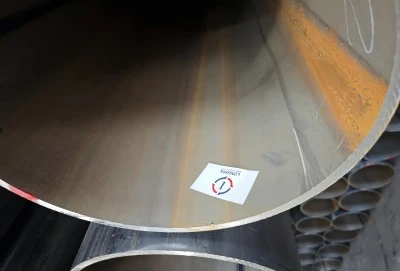
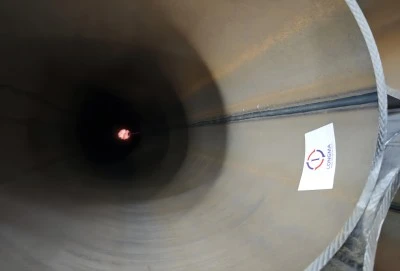
Comparing Strength: API 5L ERW Pipe and Carbon Steel Tubing
When it comes to strength, both API 5L ERW pipe and carbon steel tubing have their unique advantages. API 5L ERW pipe, manufactured according to the American Petroleum Institute's specifications, is renowned for its high tensile strength and excellent resistance to internal pressure. This makes it an ideal choice for applications in the oil and gas industry, where pipes must withstand extreme conditions.
API 5L ERW pipe is produced using the Electric Resistance Welding (ERW) process, which creates a strong, continuous weld along the length of the pipe. This process results in a pipe with uniform wall thickness and excellent roundness, contributing to its overall strength and reliability. The API 5L standard also specifies strict requirements for chemical composition and mechanical properties, ensuring consistent quality across different grades.
On the other hand, carbon steel tubing, while also strong, is typically used in less demanding applications. It's often chosen for its versatility and ease of fabrication. Carbon steel tubing can be produced through various methods, including seamless and welded processes, offering different strength characteristics depending on the manufacturing technique.
While carbon steel tubing can be heat-treated to enhance its strength, ERW pipe generally offers superior strength-to-weight ratios, especially in higher grades such as X70 or X80. This makes API 5L ERW pipe the preferred choice for high-pressure applications or environments where structural integrity is paramount.
It's worth noting that the strength comparison isn't always straightforward. The specific grade of API 5L ERW pipe (e.g., Grade B, X42, X52, etc.) and the carbon content of the steel tubing can significantly influence their respective strengths. Therefore, it's crucial to consider the specific requirements of your project when making a choice.
Cost-Effectiveness: API 5L ERW Pipe or Carbon Steel Tubing?
When evaluating the cost-effectiveness of API 5L ERW pipe versus carbon steel tubing, several factors come into play. Initially, carbon steel tubing might appear more economical due to its lower upfront cost. It's widely available and often less expensive to produce, making it an attractive option for projects with tight budgets or less demanding applications.
However, the true cost-effectiveness of a material extends beyond its initial price tag. API 5L ERW pipe, while potentially more expensive upfront, often proves more cost-effective in the long run, especially for large-scale or critical applications. Its superior strength and durability can lead to reduced maintenance costs and longer service life, ultimately providing better value over time.
The cost-effectiveness of API 5L ERW is particularly evident in high-pressure or corrosive environments. Its resistance to internal pressure and ability to withstand harsh conditions can significantly reduce the risk of failures, which could otherwise result in costly downtime, repairs, or even environmental damage. In such scenarios, the initial investment in API 5L ERW pipe can translate into substantial savings over the lifecycle of the project.
Moreover, the standardization of API 5L ERW pipe can lead to cost savings in terms of design and engineering. The well-defined specifications make it easier to plan and execute projects, potentially reducing overall project costs. The availability of different grades within the API 5L standard also allows for optimized material selection, balancing performance requirements with cost considerations.
Carbon steel tubing, while more budget-friendly initially, may require more frequent replacements or additional treatments to meet specific performance requirements. This could potentially offset its initial cost advantage, especially in more demanding applications.
It's important to note that cost-effectiveness is highly dependent on the specific application and project requirements. For less demanding applications or shorter-term projects, carbon steel tubing might indeed be the more cost-effective choice. However, for critical infrastructure or long-term installations, the superior properties of API 5L pipe often justify the higher initial investment.
Durability Face-Off: API 5L ERW Pipe vs Carbon Steel Tubing
Durability is a critical factor in choosing between API 5L ERW and carbon steel tubing, as it directly impacts the longevity and reliability of the piping system. In this aspect, API 5L ERW pipe generally has the upper hand, particularly in challenging environments.
API 5L ERW pipe is engineered to withstand a wide range of environmental conditions. Its manufacturing process, which includes precise control of chemical composition and heat treatment, results in a material with excellent resistance to corrosion, erosion, and fatigue. This is particularly important in oil and gas applications, where pipes are often exposed to corrosive fluids, high pressures, and temperature fluctuations.
The durability of API 5L pipe is further enhanced by its uniform wall thickness and consistent material properties. The ERW process creates a strong, continuous weld that is often as strong as or stronger than the base metal. This uniformity reduces weak points and stress concentrations, contributing to the pipe's overall durability and resistance to failure.
Carbon steel tubing, while durable in its own right, may not match the performance of API 5L ERW pipe in extreme conditions. Standard carbon steel tubing is more susceptible to corrosion, especially in environments with high moisture or chemical exposure. However, it's worth noting that carbon steel tubing can be treated or coated to improve its corrosion resistance, though this adds to the overall cost and maintenance requirements.
In terms of wear resistance, API 5L pipe often outperforms standard carbon steel tubing. The controlled manufacturing process of API 5L ERW pipe results in a finer, more uniform grain structure, which contributes to better wear characteristics. This is particularly beneficial in applications involving abrasive materials or high-flow conditions.
Another factor to consider is the impact of cyclic loading on durability. API 5L ERW pipe, especially in higher grades, typically exhibits better fatigue resistance compared to standard carbon steel tubing. This makes it a preferred choice in applications involving pressure fluctuations or vibrations.
It's important to note that the durability of both materials can be significantly influenced by proper installation, regular maintenance, and appropriate use. Even the most durable pipe can fail prematurely if not properly installed or maintained. Therefore, while API 5L pipe generally offers superior durability, the overall longevity of the piping system depends on various factors beyond just material selection.
If you're considering API 5L pipe for your next project, as a leading manufacturer of API 5L ERW Pipe since 2003, Longma Group offers a wide range of grades (B, X42, X46, X52, X56, X60, X65, X70, X80) in both PSL1 and PSL2 levels. With outer diameters ranging from 1/4" to 20" and thicknesses from SCH10 to SCH160, Longma Group can meet diverse project needs. Their commitment to quality is evidenced by their API 5L, ISO, and QMS certifications. For expert guidance and high-quality API 5L pipe, don't hesitate to reach out to Longma Group at info@longma-group.com.