
When selecting hollow section pipe for industrial applications, understanding grade differences becomes critical for project success. Different steel grades offer varying mechanical properties, corrosion resistance levels, and cost structures that directly impact performance in oil and gas transportation, structural engineering, and offshore platform construction. Engineers and procurement managers must evaluate chemical composition, manufacturing standards compliance, and application-specific requirements to make informed decisions. This comprehensive comparison examines popular grades including S235, S275, and S355, helping buyers navigate the complex landscape of specifications, pricing, and supplier selection to optimize both project outcomes and budget allocation.
|
|
|
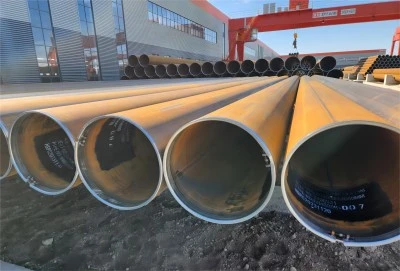
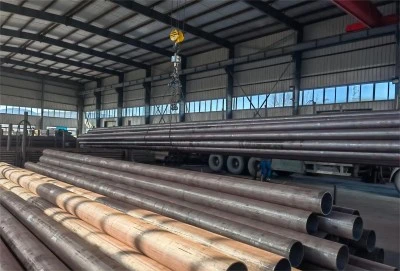
Understanding Hollow Section Pipe Grades and Their Differences
Steel pipe grades are standardized groups that describe the hollow section pipe's chemical make-up, mechanical features, and quality standards for making. These categories make sure that performance is the same across all suppliers and uses, giving engineers reliable design guidelines.
Chemical Composition Variations Across Grades
The main difference between grades is the chemicals that make them up. The amount of carbon in S235 is smaller than in S355, which makes them stronger in different ways. S235 usually has between 0.17% and 0.20% carbon, while S355 can have up to 0.22% carbon, it depends on how thick it is. The amount of manganese in pipes also changes. Higher-grade pipes have higher amounts of manganese to make them stronger and easier to harden.
The amounts of silicon and phosphorus are kept the same in all grades so that the metal can be welded and doesn't become weak. To make sure the material can be shaped well, the sulfur level stays below 0.050% in high grades. These managed compositions have a direct effect on how the pipe behaves during manufacturing, welding, and its lifetime of use.
Manufacturing Standards and Compliance Requirements
International guidelines decide how things should be made and how they should be tested. EN 10219 sets the standards for S235, S275, and S355 grades for structural hollow sections in Europe. ASTM A500 sets requirements for structural tubing in the United States, while ISO 3183 covers pipeline uses around the world.
Each standard spells out specific ways to test things, like tensile testing, impact testing, and physical limits. Material Test Certificates (MTC) and inspection records are some of the documents that manufacturers must give. Quality management systems, such as ISO 9001, make sure that production methods are always the same and that the raw materials can be tracked all the way to the finished product.
Impact on Structural Integrity and Service Life
Choosing the right grade has a big impact on long-term success in tough settings. Higher-strength types, like S355, can hold more weight, which lets engineers make structures that are lighter while still meeting safety standards. To make something stronger, though, you usually have to be more careful with the welding process and the heat treatment.
Different grades have different levels of corrosion protection, especially when they are used in marine settings or chemical processes. If you choose the right grade for the job and the surroundings, it can last anywhere from decades to over fifty years.
Comparing Mechanical Properties of Different Grades
By understanding the changes in mechanical properties, you can choose the best grade for the loading situations and environmental needs. These features decide how pipes work when they are stressed, when temperatures change, and when they are loaded and unloaded quickly.
Tensile Strength and Yield Strength Analysis
S235 hollow section pipe has a minimum yield strength of 235 MPa, which means it can be used for general construction purposes with mild loads. S275 has a yield strength of 275 MPa, which is in the middle for uses that need more strength without paying more. The peak strength of S355 is 355 MPa, making it perfect for heavy-duty structure uses and high-pressure systems.
The tensile strength of S235 is between 360 and 510 MPa, that of S275 is between 430 and 580 MPa, and that of S355 is between 510 and 680 MPa. With these numbers, engineers can figure out exact load limits and safety factors for different uses.
Higher grades have a better strength-to-weight ratio, which lets large-scale projects save money on materials and improve the structure. This is especially helpful for remote sites where losing weight means saving a lot of money.
Available Thickness and Size Ranges
The grade you choose affects the physical choices you have. Our hollow section pipes have sizes ranging from 1/2" to 72", so they can be used for everything from small manifold systems to big structural parts. The wall thickness can be anywhere from SCH 10 to SCH 160, which gives you options for different pressure needs and structure loads.
Due to production limits and the need for heat treatment, higher grades may not be available in the thickest ranges. When it comes to all sizes, S235 is the most widely available, while S355 may need longer lead times for custom sizes. To make sure that custom measurements can be manufactured within an acceptable amount of time, grades must be carefully chosen.
Corrosion Resistance and Environmental Performance
All three types have some of the same basic corrosion properties as carbon steels, but how well they work in different conditions varies. With the right coating methods, S235 is resistant enough to corrosion for use indoors and in mild weather conditions.
Because the chemistry and production methods are managed, S275 and S355 have a slightly better protection to corrosion. But all grades need the right anti-corrosion solutions for harsh settings. In naval and chemical industry settings, hot-dip galvanizing, fusion-bonded epoxy (FBE), and multi-layer polyethylene coatings all make things last a lot longer.
Application-Based Grade Selection for Hollow Section Pipes
To choose the right hollow section pipe grades, you have to make sure that the mechanical qualities match the needs of the job, the surroundings, and safety standards. This methodical technique guarantees the best results while keeping costs low.
Construction and Structural Engineering Applications
When using structures, you need to think carefully about things like loading conditions, earthquake needs, and safety factors. S355 is the best material for building tall buildings, bridges, and industrial platforms where maximum strength lets designers make the best plans.
Depending on the load needs and span lengths, building frames usually use S235 or S275 steel. While still being cost-effective, these types are great for field building because they can be welded easily. Seismic zones might need S355 because it is more flexible and can absorb more energy.
The better strength-to-weight ratio of S355 makes it a good choice for industrial structures like crane supports, conveyor frames, and equipment platforms. This makes it possible to build longer spans with less material, which lowers the overall cost of the job even though the materials are more expensive.
Oil and Gas Transportation Infrastructure
For pipeline uses, it's important to choose the right hollow section pipe grade based on the temperature, pressure, and location. Transmission pipes usually call for S355 or a grade similar to it for high-pressure service and installations in rough terrain.
Depending on how they are used, gathering systems and delivery networks may use S235 or S275. For lower-pressure uses, choosing the right grade can help you save money while still keeping safety gaps.
Offshore platform building needs structural parts made of S355 because of the harsh conditions, such as wave action, wind forces, and temperature changes. Higher grades are essential for long-term use abroad because they have better fatigue protection.
Manufacturing and Fabrication Considerations
Grade selection is affected by more than just strength. Fabrication needs also play a role. S235 is very easy to machine and shape, which makes it perfect for making complicated forms and a lot of construction work.
There are different ways to weld different types of metal. In some cases, stronger materials need to be heated up before and after the join. For modest fabrication complexity, S275 strikes a good mix between strength and weldability.
Heavy industrial uses may choose S355 even though it makes the fabrication process more complicated in order to reduce weight and improve performance. The extra costs of fabrication are usually covered by saves on materials and better final performance.
Practical Guide to Procuring Hollow Section Pipes by Grade
Good buying strategies keep quality needs, cost concerns, and delivery dates in mind at the same time. Knowing what hollow section pipe suppliers can do and how the market works helps you make the best buying choices.
Supplier Evaluation and Quality Verification
The first step in qualifying a supplier is to check their certifications, such as API 5L, ISO 9001, and agreement with important product standards. Audits of manufacturing facilities make sure that the methods for quality control and output capacity meet the needs of the project.
Material traceability paperwork is very important for businesses that are controlled, like oil and gas transportation. For each heat of material, suppliers must give full chemical analysis, mechanical testing data, and an account of how it was made.
Incoming inspection methods, measurement verification, and mechanical property validation should all be part of quality control procedures. Third-party inspection services give more security for important projects and purchases worth a lot of money.
Cost Analysis and Budget Optimization
Different hollow section pipe grades and providers have very different pricing systems. S235 usually has the lowest starting cost, while S355 costs more because it has better qualities and has to be made in a different way. Costs can often be cut by a lot across all grades when there are volume agreements.
When it comes to big lines and large amounts, transportation costs become important. Even if their starting prices are higher, regional providers may have competitive total delivered costs. Because it costs less to keep inventory on hand, just-in-time delivery works best for regular types that are always available.
Grade optimization and uniformity across projects can lead to value engineering possibilities. When needs for specific grades and sizes are grouped together, prices and shipping times are often better.
Delivery Scheduling and Inventory Management
Standard grades and sizes usually keep stock on hand, and for urgent needs, shipping times can be as short as 7 days. Depending on production schedules and the supply of materials, custom specifications and grades that aren't common may take 4 to 12 weeks.
Our current stock ranges from 50 to 150 tons of popular grades and sizes, so we can respond quickly to immediate needs. Coordinating production schedules makes sure that resources are available for planned projects while reducing the cost of buying supplies.
Diversifying suppliers, making long-term deals for important grades, and having emergency buying processes are all parts of supply chain risk management. Having buffer stock for important uses shields you from supply problems and changes in the market.
Case Studies: Successful Grade Selection in Global B2B Projects
Real-life examples show how choosing the right grade can affect the success of a project, the lowest cost, and long-term performance. These examples can help you make better decisions about buying.
Structural Framework Project Using S355 Grade
For a big industrial facility growth, 40-meter-long equipment support frames had to be made out of structural hollow section pipes. When S235 was first used in designs, the members were too big, and the total cost of the materials went up.
By switching to S355 grade, the structure lost 25% of its weight while keeping the same level of safety. Even though the cost of the materials went up, the cost of work went down, connections were made easier, and the base loads went down. Compared to the original plan, the whole project saved more than 15%.
Five years of long-term tracking showed that the performance was excellent even when the equipment was loaded and unloaded and the temperature changed. There were no problems with the structure, which supported the grade selection choice and the design optimization method.
Offshore Platform Construction Project
For a gas station project in Southeast Asian seas, structural hollow parts had to be able to withstand harsh weather conditions like marine corrosion and typhoon loads.
Under heavy loads, the S355 grade gave the structure the power it needed for a 60-year planned life. During the structure's service life, wave-induced cyclic stress made it very important that the wear resistance was improved.
The grade selection was completed with a full anti-corrosion treatment that included zinc-rich binders and polyurethane topcoats. After eight years of service in harsh sea settings, regular testing programs show that the equipment is still working very well.
Industrial Manufacturing Facility Expansion
A chemical manufacturing plant needed hollow section pipes for both structural and process uses. Different types were chosen based on the needs of the service and the conditions of the surroundings.
For chemical protection, process pipes were made of S275 with special coatings, and structural parts were made of S355 for earthquake loading needs. This unique method improved both efficiency and costs across the whole building.
The installation showed that combining different grades in one project can work well, showing how important it is to choose the right grade for the job instead of standardizing on a single grade.
Conclusion
To choose the best hollow section pipe grade, you need to carefully look at its mechanical features, the needs of the application, and the cost. S235, S275, and S355 are all different types of steel that have different benefits for different uses, ranging from general building work to high-performance industry setups. To do a good job of buying, you need to know about these differences, check out the skills of potential suppliers, and find a balance between performance needs and price limits. The case studies show that choosing the right grade has a big effect on the results of a project, its performance over time, and the total cost of ownership.
Choose Longma Group for Your Hollow Section Pipe Requirements
Longma Group stands as your trusted hollow section pipe manufacturer with over 20 years of manufacturing excellence and global project experience. Our comprehensive inventory of S235, S275, and S355 grades ensures rapid delivery within 7 days for standard specifications, while our 50-150 ton stock capacity supports urgent project requirements. With complete API 5L and ISO 9001 certifications, advanced testing facilities, and partnerships with premium steel mills including Baosteel and Shougang, we guarantee consistent quality and full traceability documentation. Contact our technical team at info@longma-group.com to discuss your specific requirements and receive detailed specifications for optimal grade selection.
FAQ
①What are the main differences between S235, S275, and S355 hollow section pipes?The main changes are in the chemical make-up and the output power. The minimum yield strength for S235 is 235 MPa, for S275 it's 275 MPa, and for S355 it's 355 MPa. The higher types have more carbon and manganese, which makes them stronger but might mean you have to use more complicated welding techniques.
②How do I determine which grade is suitable for my project?
The grade chosen is based on the amount of weight that needs to be carried, the weather, and safety concerns. Figure out the needed strength based on the design loads, think about how to prevent rust, and look at the manufacturing needs. For high-load structural uses, S355 is usually the best choice. For general building, S235 or S275 may work.
③What delivery times can I expect for different grades?
From stock, standard grades with popular sizes usually ship within 7 to 15 days. Depending on production schedules, custom specifications could take anywhere from 4 to 12 weeks. Most of the time, S235 is the fastest to get, but lead times for S355 in certain sizes may be longer.
④Are there cost differences between various grades?
When compared to S235, S355 costs more, usually 15–25% more, but this depends on the market. But the higher unit cost might be worth it in large-scale uses because the better strength often lets designers save material through better designs.








