
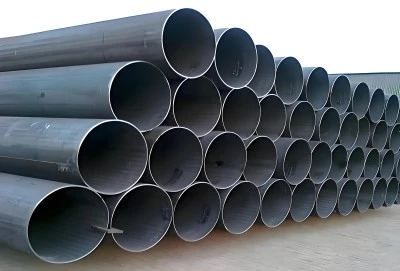
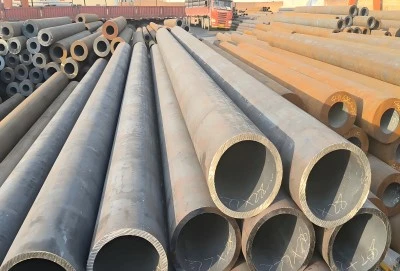
S235JR Pipe is an essential component in a variety of industries, including manufacturing and construction. S235JR and S355JR are two common pipe steel grades. These materials have distinct characteristics that make them suitable for various applications, despite the fact that they may appear similar at first glance. The chemical composition, mechanical properties, impact toughness, and applications of S235JR and S355JR pipes will be the primary focus of this article's examination of their key distinctions.
|
|
|
Chemical Composition
Steel's properties and performance are heavily influenced by its chemical composition. The different chemical compositions of the S235JR and S355JR pipes contribute to their distinct characteristics.
S235JR has other trace elements like 0.17 percent carbon, 1.40 percent manganese, 0.55% silicon, 0.03% phosphorus, and 0.25 percent sulfur. S235JR's unique properties, such as moderate strength and good weldability, are due to its composition.
However, the chemical composition of S355JR is slightly different. It has trace elements like 0.24 percent carbon, 1.60 percent manganese, 0.55% silicon, 0.03% phosphorus, and 0.25 percent sulfur. S355JR's increased strength is due to its higher carbon and manganese content in comparison to S235JR.
Particularly noteworthy is the difference in carbon content between these two steel grades. Steel's hardness and strength are significantly influenced by carbon, a key element. One of the primary contributors to S355JR's superior strength is its higher carbon content (0.24% compared to 0.17% in S235JR).
Mechanical Properties
Steel pipes' suitability for various applications is heavily influenced by their mechanical properties. The yield strength and tensile strength of S235JR and S355JR pipes are significantly different from one another in terms of their mechanical properties.
The minimum yield strength of S235JR pipes is 235 MPa. As a result, the material can withstand a stress of 235 MPa without plastically deforming. S235JR has a tensile strength in the range of 360-510 MPa. The maximum stress that a material can withstand before failing is represented by its tensile strength.
S355JR pipes, on the other hand, have a higher minimum yield strength of 355 MPa. Compared to S235JR, this indicates that S355JR can withstand significantly higher stresses before deforming. S355JR has a tensile strength that is significantly higher than that of S235JR, ranging from 470 to 630 MPa.
S235JR pipes are better suited for applications requiring greater strength and load-bearing capacity due to the differences in their mechanical properties. S355JR has a higher yield and tensile strength, allowing it to withstand more stresses and loads without ever failing or deforming.
Impact Toughness
Another important characteristic that differentiates S355JR pipes from S355JR pipes is their impact toughness. It measures a material's capacity to absorb energy without fracturing during impact. In applications where the material may be subjected to sudden loads or impacts, this property is especially important.
At room temperature, the impact energy required by S235JR and S355JR pipes is at least 27 J. This indicates that during impact testing, neither material will fracture if it absorbs at least 27 joules of energy. However, it is essential to keep in mind that, despite the fact that the minimum requirement is the same, S355JR is generally thought to have superior strength and hardness for the same thickness as S235JR.
In real-world applications, S355JR's superior strength and hardness may enhance overall toughness. In situations where both high strength and good impact resistance are required, S355JR pipes are the preferred choice because of this.
It is important to note that temperature can affect impact toughness. At room temperature, both steel grades meet the 27 J requirement, but their performance may vary at lower temperatures. Additional testing and consideration may be required in applications where low-temperature toughness is essential.
Application
S235JR and S355JR pipes are utilized in various applications due to their distinct chemical compositions, mechanical properties, and impact toughness.
Due to their lower yield strength, S235JR pipes are typically used for structural components that do not require heavy loads to be supported. They are frequently used in mechanical parts, building structures, and other general construction applications. S235JR is suitable for projects where extreme load-bearing capacity is not a primary requirement due to its moderate strength.
The following are some typical uses for S235JR Pipe:
S355JR pipes, on the other hand, are frequently utilized in applications requiring higher load-bearing capacity and durability due to their higher yield strength and overall superior mechanical properties. These applications include: - Frameworks for residential and commercial buildings; - Light industrial structures; - Fencing and railings; - General purpose mechanical components; - Low-pressure fluid transportation systems. These pipes are frequently used in structural applications that are more difficult.
The following are typical uses for S355JR pipes:
- Bridges and large-scale infrastructure projects - Skyscrapers and high-rise buildings - Heavy industrial structures and equipment - Offshore platforms and marine structures - High-pressure pipelines and vessels The decision between S235JR and S355JR pipes is frequently determined by the project's specific requirements. The best steel grade is determined by a number of factors, including the required strength, anticipated loads, environmental conditions, and costs.
Contact Longma
LONGMA GROUP offers products that are compliant with the Standard EN10210 for customers who require S355JR Pipe. This standard guarantees that the pipes will perform and meet certain quality standards. If you're looking for S235JR pipe manufacturers, you can learn more about LONGMA GROUP's products and services by contacting them at info@longma-group.com.








