
In the world of steel pipe manufacturing, Spiral Submerged Arc Welded (SSAW) steel pipes have gained significant prominence due to their exceptional strength and versatility. These pipes, characterized by their distinctive helical weld seam, offer a range of benefits that make them ideal for various applications in industries such as oil and gas, water transportation, and construction. In this comprehensive exploration, we'll delve into the fascinating world of SSAW steel pipes and uncover how the spiral weld enhances their strength, making them a preferred choice for many demanding projects.
|
|
|
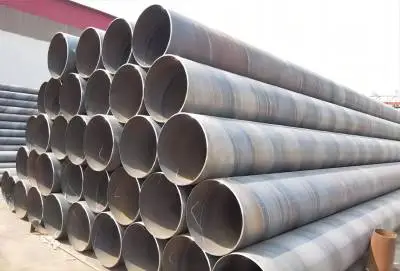
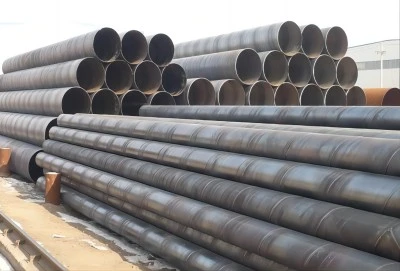
The Helical Weld Seam: A Key to Enhanced Strength
The helical weld seam is the defining feature of SSAW steel pipes, and it plays a crucial role in enhancing the overall strength of these pipes. Unlike traditional longitudinal welded pipes, where the weld runs parallel to the pipe's axis, SSAW pipes feature a spiral weld that wraps around the pipe's circumference. This unique welding pattern contributes significantly to the pipe's structural integrity and performance.
The spiral weld distributes stress more evenly across the pipe's surface, reducing the concentration of stress at any single point. This even distribution of forces helps prevent localized weaknesses that could lead to failure under pressure or external loads. As a result, SSAW steel pipes can withstand higher internal pressures and external forces compared to their longitudinally welded counterparts.
Moreover, the helical weld seam increases the pipe's resistance to longitudinal stress. In traditional longitudinally welded pipes, the weld seam is parallel to the direction of the primary stress, making it more susceptible to failure along this line. In contrast, the spiral weld in SSAW pipes intersects the longitudinal stress at an angle, effectively distributing the force across a larger area and reducing the likelihood of failure along the weld seam.
The spiral welding process also allows for better control of the welding parameters, resulting in a more consistent and high-quality weld throughout the pipe's length. This consistency further contributes to the overall strength and reliability of SSAW steel pipes.
Testing Standards: Confirming the Strength of Spiral Welded Pipes
To ensure the superior strength and performance of SSAW steel pipes, manufacturers adhere to rigorous testing standards. These standards not only confirm the pipes' strength but also provide assurance to end-users about the quality and reliability of the products. Some of the key testing standards used in the industry include:
1. API 5L: This standard, set by the American Petroleum Institute, is widely used in the oil and gas industry. It specifies the requirements for seamless and welded steel line pipes, including SSAW pipes. The standard covers various aspects such as chemical composition, mechanical properties, and hydrostatic test requirements.
2. ASTM A1018: The American Society for Testing and Materials (ASTM) provides this standard for steel, sheet, and strip, heavy-thickness coils, hot-rolled, carbon, structural, high-strength low-alloy, high-strength low-alloy with improved formability, and ultra-high strength. This standard is often applied to the steel used in manufacturing SSAW pipes.
3. EN 10208: This European standard specifies the technical delivery conditions for steel pipes used in pipelines for combustible fluids. It includes requirements for SSAW pipes, covering aspects such as chemical composition, mechanical properties, and non-destructive testing.
4. ISO 3183: The International Organization for Standardization (ISO) provides this standard for steel pipe for pipeline transportation systems in the petroleum and natural gas industries. It covers the manufacturing, testing, and inspection of SSAW pipes, ensuring their suitability for demanding applications.
These testing standards typically involve a series of tests and inspections, including:
- Hydrostatic pressure tests to verify the pipe's ability to withstand internal pressure without leakage or failure.
- Tensile strength tests to evaluate the pipe's resistance to longitudinal stress.
- Impact tests to assess the pipe's toughness and ability to resist sudden loads.
- Non-destructive testing methods such as ultrasonic testing and radiographic inspection to detect any internal defects or inconsistencies in the weld seam.
By adhering to these rigorous testing standards, manufacturers can confidently confirm the strength performance of spiral welded pipes, ensuring they meet or exceed the requirements for their intended applications.
Improved Pressure Resistance: A Key Advantage of SSAW Steel Pipes
One of the most significant benefits of the spiral welding process in SSAW steel pipes is the enhanced pressure resistance it provides. This improved pressure handling capability is particularly crucial in applications where pipes are subjected to high internal pressures, such as in oil and gas transportation or high-pressure water systems.
The spiral weld contributes to improved pressure resistance in several ways:
1. Even stress distribution: As mentioned earlier, the helical weld seam distributes stress more evenly across the pipe's surface. This even distribution allows the pipe to withstand higher internal pressures without developing weak points or stress concentrations that could lead to failure.
2. Increased weld length: The spiral configuration of the weld results in a longer total weld length compared to longitudinally welded pipes of the same size. This increased weld length provides more area to resist internal pressure, effectively improving the pipe's overall pressure handling capacity.
3. Optimized material utilization: The spiral welding process allows for more efficient use of steel coils, resulting in pipes with more consistent wall thickness. This consistency contributes to uniform pressure resistance along the entire length of the pipe.
4. Enhanced hoop stress resistance: The angle of the spiral weld helps to counteract hoop stress, which is the circumferential stress in a cylindrical pressure vessel. This improved resistance to hoop stress further enhances the pipe's ability to withstand high internal pressures.
5. Reduced residual stress: The spiral welding process can result in lower residual stresses compared to longitudinal welding. Lower residual stress levels contribute to better overall pressure resistance and reduced susceptibility to stress corrosion cracking.
The improved pressure resistance of SSAW steel pipes makes them an excellent choice for applications where high-pressure handling is critical. For instance, in the oil and gas industry, these pipes can safely transport fluids at higher pressures, allowing for more efficient and cost-effective pipeline systems. Similarly, in water transportation projects, SSAW pipes can handle the high pressures associated with long-distance water conveyance, making them ideal for large-scale infrastructure projects.
It's worth noting that the pressure resistance of SSAW steel pipes can be further enhanced through various manufacturing techniques and material choices. For example, using high-strength steel grades or increasing the wall thickness can result in pipes capable of withstanding even higher pressures. However, these decisions are typically made based on specific project requirements and economic considerations.
About Longma Group
The spiral weld in SSAW pipes is more than just a manufacturing technique; it's a key factor in enhancing the overall strength and performance of these essential industrial products. By providing even stress distribution, improved pressure resistance, and better overall structural integrity, the helical weld seam contributes significantly to the pipes' ability to withstand demanding conditions in various applications.
The rigorous testing standards applied to SSAW pipes ensure that they meet or exceed the stringent requirements of industries such as oil and gas, water transportation, and construction. These standards, combined with the inherent strengths of the spiral welding process, give users confidence in the reliability and durability of SSAW pipes.
As industries continue to push the boundaries of what's possible in terms of pressure, size, and efficiency in pipeline systems, SSAW pipes are well-positioned to meet these evolving needs. Their unique combination of strength, versatility, and cost-effectiveness makes them an invaluable asset in modern infrastructure development.
For those seeking high-quality SSAW steel pipes that meet international standards and offer superior strength and performance, contact Longma Group at info@longma-group.com. It stands as a premier manufacturer. With a wide range of products meeting various international standards and the capability to produce pipes with outer diameters from 8 inches to 120 inches and thicknesses from SCH10 to SCH160, Longma Group is equipped to meet diverse project requirements. Their commitment to excellence in both products and services makes them an ideal partner for your pipe needs.