
To figure out how much a hollow section pipe weighs, you need to know the basic formula: Weight = (Volume of material) × (Density of steel). To find the volume, take the inner empty area and remove it from the outer pipe area. Then, multiply by the length. The density of steel is 7.85 g/cm³, which is 0.284 lb/in³. This calculation is very important for procurement managers and engineers who work with structure hollow sections because it affects shipping costs, load estimates, and project budgets across all fields.
|
|
|
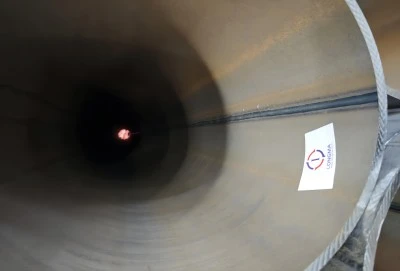
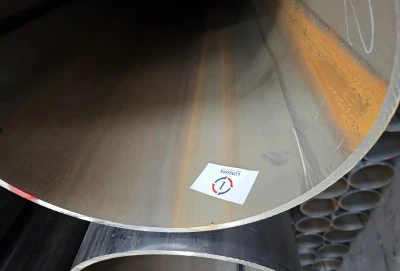
Understanding Hollow Section Pipes and Weight Calculation Basics
Defining Hollow Section Pipes and Their Applications
Hollow structural pieces are an important part of many current engineering and building projects. These pipes are different from solid profiles because they have holes inside them. This gives them special structural qualities that make them perfect for uses that need high strength-to-weight ratios. These parts are very important in industries like oil and gas transportation, offshore platform building, and water supply systems because they can hold a lot of weight and use materials efficiently.
Hollow pipes are better for structure in more ways than just saving weight. Their form makes it easy to distribute the material efficiently, putting strength where it's needed most and reducing bulk where it's not needed. For big engineering projects, this trait comes in very handy because weight limits and the need for structural stability need to be carefully weighed.
Common Dimensions and Grade Classifications
Modern hollow section pipes are made in different sizes to meet the needs of different applications. There are different levels of power for the S235, S275, and S355 grades. Each grade has its own mechanical qualities that affect both how much it weighs and how well it performs. The basic structure strength of S235 is good for most uses, while the higher yield strength of S355 is better for tough industrial settings.
Dimensions usually run from 1/2" to 72" in outer diameter, so they can be used for both small installations and large building projects. Wall thickness ranges from SCH10 to SCH160, which lets engineers choose the right specs based on weight limits, pressure needs, and structural loads. These standard measurements make sure that projects from different countries can work together and keep the same calculation factors.
The Critical Importance of Accurate Weight Calculation
In B2B buying and project management, weight estimates are useful for more than one thing. For accurate logistics planning, making sure that transportation capacity matches real cargo weights requires accurate predictions. This level of accuracy is especially important for foreign shipping, where mistakes in figuring out the weight can cause big cost increases or delivery delays.
For structure analysis and load distribution calculations, engineering programs need exact weight data. When engineers build remote platforms or bridges, they have to think about how much each part weighs to make sure the whole system is stable and safe. When buying materials, choices are also based on weight estimates that help with managing inventory and figuring out how much space is needed.
Step-by-Step Guide to Calculating the Weight of Hollow Section Pipes
Measuring Pipe Dimensions Accurately
To get accurate weight estimates, you need to be able to measure hollow section pipes accurately. Multiple places along the pipe's circumference should be used to measure its outer diameter so that any production differences or oval distortion can be taken into account. Professional measuring tools, like circle tapes or precise calipers, make sure that measurements are accurate within acceptable ranges.
To accurately measure wall thickness, you need to pay close attention to the details. Measure the thickness of the pipe around its diameter and along its length several times using ultrasonic thickness gauges or mechanical calipers. Tolerances in manufacturing can lead to changes in thickness that have a big effect on weight figures. This is especially true for large-diameter pipes, where small percentage differences can lead to big weight changes.
Weight Calculation Formula Breakdown
This is the basic method for figuring out the weight of circular empty sections:
Weight = π × (OD² - ID²) / 4 × Length × Density
What does OD stand for? It stands for outer diameter, ID for inner diameter, and 7.85 kg/m³ for steel density. To find the inner diameter, take the outer diameter and remove twice the wall thickness. This method can be used to figure out the weight of any empty pipe, no matter what size or purpose it is being used for.
Practical Calculation Examples
As an example, let's look at a pipe with a width of 12 inches, a wall thickness of 0.375 inches, and a length of 20 feet. The inside width is 11.25 inches, which is 12 minus (2 × 0.375) inches. By changing the units to consistent ones and using the formula, you can get accurate weight estimates that take into account the empty room inside.
When working with foreign specs, it's important to think about unit change. To keep your calculations correct, you need to be very careful when changing between metric and British measures. Digital tools and conversion guides help keep mistakes to a minimum during this process, so the results are always accurate no matter what measurement method was used in the beginning.
Leveraging Digital Tools and Software
Modern CAD programs have built-in weight calculators that figure out pipe weights instantly based on inputs for dimensions and material properties. These tools get rid of mistakes that happen when calculations are done by hand and give quick results for complicated geometries or non-standard setups. A lot of engineering firms add these features to their buying processes to make talking to vendors and planning projects easier.
Online tools that are made just for figuring out pipe weights can quickly solve problems with normal setups. Usually, these tools come with a number of material choices, different pipe rates, and automatic unit changes. For important situations where accuracy is very important, it is still a good idea to check the results using different calculation methods.
Industry Standards and Material Properties Affecting Weight Calculation
International Standards ComplianceEuropean hollow section pipe manufacturing is governed by EN 10219 standards, which spell out tolerances for dimensions and mechanical qualities that have a direct effect on weight estimates. These standards make sure that materials made by different companies have the same traits. This lets you get accurate weight estimates based on grade specs. It's especially important to follow these rules for projects that involve more than one country or area.
The American standard for cold-formed, welded, and seamless carbon steel structure tubes is ASTM A500. This standard gives exact numbers for density and gravity that must be used when figuring out weights to make sure they are correct and in line with the rules. Knowing these standards helps people who work in procurement talk to suppliers more effectively and check the specs they give.
Steel Grade Impact on Weight Calculations
Different types of steel have different thicknesses, which change how much something weighs in the end. Most popular types of steel have a normal density of 7.85 kg/m³, but some alloy compositions can make small differences. When compared to smaller grades, S355 grade steel has better mechanical performance and keeps its density properties the same.
Different grades' mechanical qualities are mostly affected by the amount of carbon and alloying elements present, not their mass. This feature lets engineers choose the right grades based on strength needs without having a big effect on how much something weighs or how it will be transported. Material certificates from makers usually have exact density numbers that can be used for accurate calculations.
Coating and Treatment Weight Considerations
Hot-dip galvanizing adds between 85 and 600 g/m², based on how thick the layer needs to be. When working on big jobs with hundreds or thousands of pipe pieces, this extra weight starts to matter. When figuring out how much something costs to ship and how much space it needs, procurement managers have to take covering weights into account.
Protective coats like fusion-bonded epoxy (FBE), two-layer polypropylene (2PP), and three-layer polyethylene (3LPE) add weight that changes based on how thick the covering is and how it is applied. These coatings are very important for protecting against rust, but they need to be taken into account when planning the general weight of a project and figuring out how much weight a structure can hold.
Practical Applications and Case Studies in Weight Calculation
Bulk Procurement Weight ManagementFor big building jobs, getting hundreds of tons of hollow section pipes is common. Accurate weight estimates allow for precise logistics planning, making sure that the amount of space available for transport fits the real needs of the product. A recent project to build an offshore platform needed 150 tons of different hollow parts. Accurate weight estimates kept shipping delays and cost overruns from happening.
Accurate weight info is very helpful for managing inventory. Planning how much space to store things in a warehouse, figuring out how much weight a crane can lift, and choosing the right material handling tools all depend on accurate weight data. When you're in charge of just-in-time shipping plans and storage room is limited, you need to be very careful with these figures.
Structural Load Assessment Applications
For engineering purposes like making frames and bridges, it's necessary to do a thorough weight analysis in order to figure out how strong the structure is. Each hollow piece adds to the total loads on the structure, which need to be carefully balanced against safety factors and design requirements. Finite element analysis software is used to check the strength of structures, and weight data is fed straight into it.
Because of seismic design concerns, correct weight estimates are even more important. When figuring out how a building will react to an earthquake in an area prone to them, structural engineers have to take into account the mass of every part. Because they have better strength-to-weight ratios, hollow pieces are better for these uses. However, accurate modeling still needs accurate weight data.
Quality Assurance and Supplier Verification
Verifying the weight is an important quality control step that is done during the material receipt check. When you compare the calculated weights to the actual given weights, you can find production flaws, wrong specs, or material substitutions. This process of checking makes sure that the project is honest and follows the technical requirements.
As part of testing a supplier's ability to make things, weight calculations are often checked during the audit process. When suppliers can accurately calculate weights and consistently meet shipping deadlines, it builds trust and stability in long-term purchasing relationships. This check is especially important when buying from several foreign providers whose manufacturing standards are different.
Conclusion
Procurement managers and engineers who work in a wide range of industries need to be able to accurately figure out the weight of hollow section pipes. When used regularly with the right measuring methods and standard compliance, the basic formula that combines dimensional factors with material density gives accurate results. Modern digital tools make calculations faster and more accurate, which is important for completing projects successfully. When you know how steel types, dimensions, and protective coatings work together, you can do a full weight analysis that helps you make smart buying choices. These calculation tools have a direct effect on the success of a project by making it easier to plan tasks, estimate costs accurately, and do solid structure analysis. If procurement workers learn these skills, they will be able to handle big projects well while still meeting quality standards and keeping costs low.
Partner with Longma Group for Reliable Hollow Section Pipe Solutions
Longma Group is ready to help you with your hollow section pipe needs. They have been making pipes for over 20 years and can send them anywhere in the world. We have a large selection of S235, S275, and S355 grades in lengths from 1/2" to 72" and thicknesses from SCH10 to SCH160. We keep 50–150 tons of stock on hand so that we can deliver within 7 days for urgent project needs. Our engineering team helps you with the technical side of the buying process and gives you thorough weight estimates, material certificates, and more. Get in touch with our experts at info@longma-group.com to talk about your specific needs and find out why top builders around the world choose Longma Group as their main provider of hollow section pipes.
FAQ
①How do I calculate weight for non-circular hollow sections?You can use the formula Weight = [(Outer Area - Inner Area) × Length × Density] for both rectangular and square hollow parts. Find the outer area by multiplying the length by the width. Then, find the inner area by calculating (Height - 2 × Wall Thickness) × (Width - 2 × Wall Thickness) and subtract it from the outer area. This method works for all rectangular shapes, no matter what their aspect ratio is.
②What density value should I use for different steel grades?
For math, the standard density for carbon steel types S235, S275, and S355 is 7.85 kg/m³ (0.284 lb/in³). Grades of stainless steel need 8.0 kg/m³, while alloys made of aluminum need 2.7 kg/m³. When exact figures are needed for engineering purposes, always check density numbers with material certificates.
③How does wall thickness tolerance affect weight calculations?
Standard pipes can have wall thickness differences of up to 12.5% because of manufacturing errors. In the end, this range can lead to weight differences of ±10% to 15%. When planning your purchases, you should take these differences into account by planning for the lowest and highest possible weights based on the tolerance limits set by the relevant standards.
④Should I include coating weight in structural calculations?
Yes, protective coats do add a lot of weight that needs to be taken into account when figuring out how much a structure can hold. Galvanizing adds between 600 and 850 kg/m³ of coating volume, and polymer coats add between 900 and 1400 kg/m³. Find the covering volume by multiplying the surface area by the thickness. Then, add this number to the weight of the base pipe to get a full structural study.