
Materials play a crucial role in determining the strength, durability, and effectiveness of structures in the ever-evolving construction industry. Hot Rolled Steel Pipes are one of these materials that has emerged as a versatile and essential component with numerous construction industry applications. Hot-rolled steel pipes have repeatedly demonstrated their value in a variety of contexts, including intricate bridge designs and towering skyscrapers. these pipes are used in a variety of construction projects, with a particular focus on road construction, bridge construction, and structural support.
|
|
|
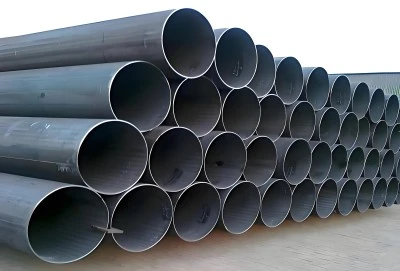
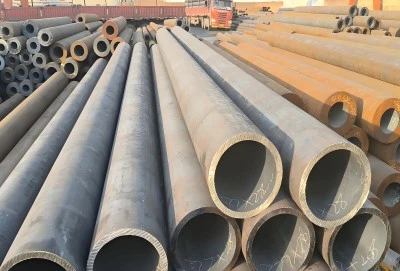
Structural Support
Engineers and architects frequently select hot rolled steel pipes as their preferred option when it comes to providing robust structural support for projects involving infrastructure and buildings. Due to their excellent weight-to-strength ratio, these pipes are ideal for use in both residential and commercial structures.
Hot Rolled Steel Pipe frequently serve as the skeleton of high-rise structures, serving as columns and beams. They are ideal for supporting multiple floors and evenly distributing weight throughout the building due to their resistance to bending and their capacity to withstand heavy loads. Additionally, these pipes' circular cross-section outperforms other shapes in terms of buckling resistance, ensuring long-term stability and safety.
Due to their durability and adaptability, hot-rolled steel pipes are used extensively in industrial construction, such as warehouses and factories. Supporting a variety of structural elements, such as roofing systems, mezzanine floors, and the installation of heavy machinery, necessitates these pipes. Their exceptional durability and resistance to wear and tear are primarily to blame for their widespread use in these settings. Because of their resilience, hot-rolled steel pipes are well-suited for environments that see a lot of traffic or have a lot of vibrations because they can withstand the stresses and strains that come with these kinds of environments. As a result, they are ideal for industrial facilities' demanding environments, where dependability and longevity are essential.
Hot-rolled steel pipes are a dependable option for structural support in industrial settings. They are frequently used to construct frameworks that are sturdy and able to withstand significant loads, such as the weight of heavy machinery and the dynamic forces generated by facility operations. These pipes can withstand the rigorous demands of industrial settings while maintaining their structural integrity over time due to the inherent strength of hot-rolled steel. They are also suitable for environments where durability is a top priority due to their ability to withstand high-impact stresses and frequent vibrations.
Hot-rolled steel pipes are also used extensively in steel-framed homes. These pipes are advantageous for both the construction process and the finished structure in residential construction because they offer a combination of strength and relative lightness. Because they are simple to cut and weld, hot-rolled steel pipes are known for their adaptability in design. This adaptability makes it possible to create a wide variety of architectural forms, making design more adaptable and allowing for more imaginative and useful building solutions.
Steel-framed homes that use hot-rolled steel pipes also take longer to build. When compared to conventional materials, their ease of fabrication and assembly contributes to a quicker construction process. Additionally, the foundation's load is lessened due to the pipes' light weight, which can result in cost savings and simplified construction procedures. Overall, the use of hot-rolled steel pipes in residential and commercial settings demonstrates how important they are to modern construction because of their durability and design adaptability.
Bridge Construction
Another area where hot rolled steel pipes shine is in the construction of bridges. They are an excellent material for a variety of bridge components due to their ability to withstand tension and compression forces and their high strength-to-weight ratio.
The main cables that support the entire structure are frequently constructed from hot-rolled steel pipes in suspension bridges. In order to support the weight of the bridge deck and the traffic that passes over it, these cables need to be extremely strong. The circular cross-section of the pipes makes it possible to distribute stress evenly, lowering the likelihood of failure and increasing the bridge's overall lifespan.
The intricate framework that gives truss bridges their distinctive appearance is constructed using hot-rolled steel pipes. The truss's diagonal and vertical members are formed by the pipes, which collaborate to efficiently distribute loads throughout the structure. Hot rolled steel pipes are an excellent choice for crossing wide rivers or deep valleys because their design not only ensures structural integrity but also allows for longer spans between supports.
Hot Rolled Steel Pipe give architects the flexibility to create striking designs for pedestrian bridges, which frequently place an emphasis on aesthetics over functionality. The pipes can be bent and shaped into graceful arches or spirals, giving these functional structures a touch of artistic flair.
Road Construction
Hot rolled steel pipes are also used in the construction of roads, although it may not be immediately apparent. Diverse and necessary for the development of transportation infrastructure that is both safe and long-lasting are their applications in this field.
The construction of guardrails and barriers is one of the most common applications for hot-rolled steel pipes in road construction. These safety features are absolutely necessary to stop cars from veering off the road in dangerous places like sharp turns, steep embankments, and waterways. Hot-rolled steel pipes are ideal for this application due to their strength and resistance to impact. They can absorb and dissipate the force of a collision, potentially saving lives.
Additionally, noise barriers along busy roads and highways are constructed using hot-rolled steel pipes. These designs help to diminish the effect of traffic commotion on adjacent local locations. Panels made of a variety of sound-absorbing materials are held up by the pipes, which are the primary support for these barriers.
Hot Rolled Steel Pipe are also used in places where soil erosion or landslides are common. They are used to build retaining walls and soil nail systems that help keep soil from moving and stabilize slopes. This is especially important for roads built in hilly or mountainous areas, where the roadbed's integrity is critical to safety.
Additionally, culverts and drainage systems beneath roads are constructed using hot-rolled steel pipes. Water flow management and preventing road damage from flooding or erosion require these structures. The pipes are suitable for this underground application due to their durability and corrosion resistance, ensuring long-lasting performance even in challenging conditions.
Contact Longma
In conclusion, structural support, bridge construction, and road infrastructure are just a few of the many uses for hot rolled steel pipes in the construction sector. They are an excellent option for a wide range of construction projects due to their distinctive combination of strength, adaptability, and durability. It is abundantly clear that hot rolled steel pipes will continue to be an essential component in the construction of the infrastructure of the future, despite the industry's ongoing development and new challenges.
For those in need of high-quality Hot Rolled Steel Pipe for their construction projects, Longma Group offers an extensive stock ranging from 50 to 150 tons. To learn more about their products or to place an order, interested parties are encouraged to reach out via email at info@longma-group.com.








