
API 5L welded pipe materials for sour service must meet strict chemical makeup standards. These include limits on the amount of carbon (usually ≤0.22%), sulfur and phosphorus levels, certain microalloying elements, and a maximum hardness of 22 HRC. To get the best architecture for hydrogen sulfide settings, these pipes need to be tougher, resistant to sulfide stress cracking according to NACE MR0175/ISO 15156 standards, and heat treated in special ways.
|
|
|
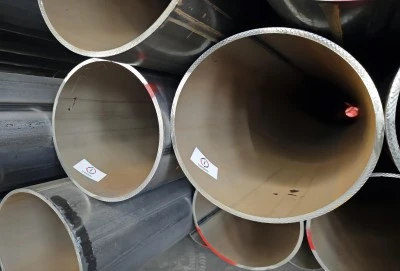
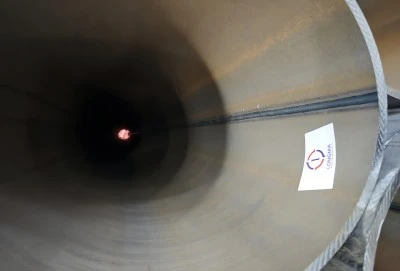
Understanding API 5L Welded Pipe and Sour Service Applications
Pipeline equipment that can work in the roughest conditions is very important to the oil and gas business. The API 5L standards lay the groundwork for making welded pipes. They set the grades and mechanical qualities that make sure pipelines work reliably in a wide range of situations. These guidelines cover everything, from the chemicals used to the allowed sizes for parts. They make a complete system for making sure pipelines are safe.
Sour service settings have their own problems that need special attention when it comes to materials. Sulfide stress cracks, general corrosion, and severe material decay can all happen when hydrogen sulfide (H₂S) is present. NACE guidelines say that an area is considered bad service when the amount of hydrogen sulfide present is higher than 0.05 psia when it is wet.
Chemical Environment Challenges
Hydrogen sulfide is very acidic, so it can cause a lot of different types of failure that normal pipeline materials can't handle. Hydrogen atoms get into the steel structure and gather at the edges of grains and where inclusions are present. This hydrogen embrittlement effect makes materials less flexible and can cause them to break suddenly without any notice.
Changes in temperature and pressure make these problems even worse. Higher temps tend to speed up rusting, and higher pressures make it easier for hydrogen to get in. Knowing about these external factors helps engineers choose the right materials for the pipeline so that it stays structurally sound for as long as it is used.
Material Integrity Considerations
To keep a material's performance in bad service, you need to pay close attention to its microstructural features. Fine-grained steels with managed inclusion content are better at stopping cracking caused by hydrogen. For long-term dependability, the steel must be able to fight both general corrosion and specific attack.
When pipelines are used in bad service, they also have to think about how mechanical stress and climatic factors affect each other. When hydrogen sulfide is present, stress corrosion cracking can happen at stress levels well below the material's yield strength. This is why choosing the right material is so important for safety and keeping operations running.
Key Material Requirements for API 5L Welded Pipe in Sour Service
To choose the right API 5L welded pipe materials for sour service uses, you need to know a lot about their chemical, mechanical, and structural needs. The requirements go beyond the normal API 5L requirements to deal with the special problems that come up in hydrogen sulfide settings.
Chemical Composition Controls
For sour service uses, the most important chemical requirement is the carbon level. Maximum carbon levels are usually between 0.18% and 0.22%, but this can change based on the grade and the needs of the product. A lower carbon level makes the material less likely to crack when hydrogen is added, but it still has good strength characteristics.
The levels of sulfur and phosphorus must be carefully monitored, and the highest amounts are usually set at 0.012% for sulfur and 0.02% for phosphorus. These elements make spots that can act as places for hydrogen to build up, which creates stress concentrations that make cracks more likely to start. These strict standards can be met with the help of modern steelmaking methods such as vacuum degassing and calcium treatment.
Microalloying elements like titanium, niobium, and vanadium are very important for getting the microstructure you want. These elements help fine grains form and precipitation hardening happen, and they keep the toughness qualities good. The careful balance of these factors makes sure that they work at their best in sour service situations.
Mechanical Property Standards
For sour service uses, the impact toughness requirements are higher than the normal API 5L requirements. Testing with Charpy V-notch at low temperatures (usually -10°C to -46°C, based on the purpose) makes sure that the material is strong enough not to break. Minimum numbers for received energy run from 27J to 40J per specimen, and there are strict rules about the amount of shear area that must be met.
Specifications for yield strength must find a mix between mechanical performance and resistance to hydrogen. Higher levels of strength can make materials more vulnerable to hydrogen embrittlement, so strength and hardness qualities need to be carefully optimized. Grades X52 through X70 are used in most sour service uses. Grade X80 needs extra approval tests.
Another important condition for bad service materials is that they can't be too hard. The hardest part is 22 HRC (248 HBW), and that goes for both the base metal and the areas that have been heated. Because of this need, cooling rates must be controlled while welding, and for thick-walled uses, heat treatment may be needed after the welding process.
Manufacturing Process Requirements
Heat treatment methods are very important for getting the microstructure and characteristics that are needed. Normalized or quenched and tempered conditions give the best mix of strength and hardness while reducing the amount of leftover stress that could lead to stress corrosion cracking.
Sour service standards say that people who do welding have to be qualified, and that includes controlling the amount of hydrogen in the welds. Low-hydrogen welding methods, the right amount of preheating, and controlling the temperature between passes can help keep hydrogen from picking up during production. A heat treatment after the welding process might be needed to soften the metal and ease any remaining stresses.
Comparison of API 5L Welded Pipe Grades Suitable for Sour Service
For sour service uses, the API 5L standard welded pipe has different grades that can do different things. Knowing these differences helps you make smart choices for your project's needs and the way it will be used.
Grade Performance Characteristics
The standard that is most often used for sour service uses is Grade X52. This grade has a minimum yield strength of 52,000 psi, which makes it very resistant to sulfur stress cracking while still being easy to weld. Because the strength level isn't very high, there are fewer rules about the chemicals that can be used, so it can be used in a wide range of bad service conditions.
Grade X60 provides more power while still being compatible with sour service. For the higher strength level, stricter controls over the chemical makeup and better production methods are needed. When a thinner wall is needed or longer spans between supports are needed, this type is especially useful.
Grade X70 is the highest level that can be used for many bad service uses. The high strength qualities require very careful control over the chemical makeup and nanostructures. This grade has better mechanical performance, but it needs to go through a lot of quality tests and may need special welding methods.
Welding Technology Comparison
Electric Resistance Welded (ERW) pipes are a cheap way to solve problems with smaller diameters. The welding method creates a narrow heat-affected zone, which lowers the chance of property changes. But careful control of the welding process is needed to get the type of weld needed for sour service uses.
LSAW technology, which stands for Longitudinal Submerged Arc Welded, makes great welds for bigger diameter jobs. When compared to other welding methods, the submerged arc process has better penetration and dynamic qualities. This technology works especially well for high-pressure sour service jobs that need thick walls.
For tough jobs, Double Submerged Arc Welded (DSAW) pipes are the latest in complex industrial technology. The two-pass welding method makes sure that the weld goes all the way through and has better mechanical qualities. This technology is very useful for important sour service applications that need to be reliable above all else.
Spiral Submerged Arc Welded (SSAW) pipes have special benefits in some situations, especially when they need to be big in diameter but not too thick on the inside. Different pressures are spread out differently in spiral welds than in longitudinal welds, which could be a benefit in some loading situations.
Conclusion
For API 5L welded pipe to work in sour environments, the materials must meet strict controls over chemical makeup, have better mechanical qualities, and be made using special methods. For success, you need to pay close attention to the limits on carbon content, impact stiffness, and hardness while keeping the strength qualities at a good level. Choosing the right grades, welding methods, and quality control procedures has a direct effect on how well and safely something works over time in hydrogen sulfide settings. To make sure that foreign standards and project-specific requirements are met, procurement strategies must stress that suppliers must be qualified, undergo thorough testing, and provide the right paperwork.
Contact Longma Group for Premium API 5L Welded Pipe Solutions
Longma Group is a reliable API 5L welded pipe supplier that has been making high-quality products for over 20 years. They offer certified sour service options. Our wide range of products includes grades B through X80 in ERW, LSAW, DSAW, and SSAW welding methods, with wall thicknesses from SCH10 to SCH160 and widths from 3" to 80". Our strict quality standards are upheld by API 5L certification, ISO certification, and full quality control systems. Our skilled technical team can help you choose the right sour service material and meet the needs of your unique application. Get in touch with info@longma-group.com right away to talk about your project needs and find out why engineering contractors all over the world choose Longma Group for reliable, legal pipeline solutions that can be delivered in as little as 7 days.
FAQ
①What makes API 5L welded pipes suitable for sour service environments?To make API 5L welded pipes ideal for sour service, certain changes are made to the material, such as controlling the chemical makeup, making the pipes tougher, and using a special heat treatment. The pipes need to meet the requirements of NACE MR0175/ISO 15156 for sulfur stress cracking protection, keep their hardness below 22 HRC, and show that they are tough enough against impacts at low temperatures. These changes make sure that the metal won't be damaged by hydrogen or stress corrosion cracking in hydrogen sulfide settings.
②How do welded pipes compare to seamless pipes for sour service applications?
If they are made and tested correctly, welded pipes can work just as well as smooth pipes in sour service. Newer types of welding, like LSAW and DSAW, make good welds that have mechanical properties that are the same as or better than the properties of the base metal. One of the best things about welded building is that it can make widths and lengths that are bigger while still being cost-effective. But soldered pipes need more quality tests and may need a heat treatment after the weld to work best in sour service.
③What testing procedures make sure the pipe is safe before it is accepted?
Full non-destructive testing with ultrasonic, radiographic, and magnetic particle methods is an important part of screening routines. Sulfide stress cracking resistance is checked by specialized sour service tests according to NACE TM0177. Testing the pipe's cross-section for hardness makes sure that the upper limits are met. The inspection standards are completed by checking the chemical composition, trying the mechanical properties, and looking at hydrogen-induced cracking. Third-party inspection services make sure that standards are being followed without any interference from the company.








