
S275JR steel pipe is widely used in construction and engineering projects due to its excellent balance of strength, ductility, and weldability. To ensure consistent quality and performance across different manufacturers and countries, various international standards have been developed. These standards provide detailed specifications for the chemical composition, mechanical properties, and testing methods for S275JR steel pipe and similar structural steels. This article explores some of the key international standards used to evaluate its performance, offering valuable insights for engineers, contractors, and quality control professionals.
|
|
|
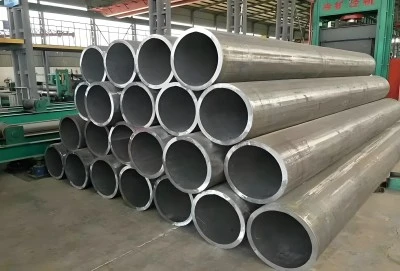
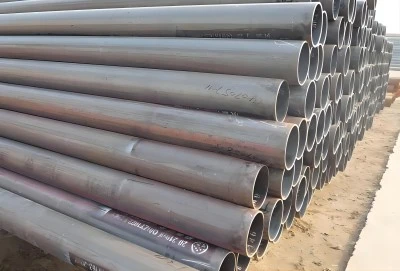
EN 10025-2-2019
The European Standard EN 10025-2:2019 is the primary reference for S275JR steel pipe and other non-alloy structural steels in Europe. This standard, titled "Hot rolled products of structural steels - Part 2: Technical delivery conditions for non-alloy structural steels," provides comprehensive specifications for various grades of structural steel, including S275JR.
EN 10025-2:2019 outlines the chemical composition requirements for S275JR steel. It specifies maximum percentages for elements such as carbon, manganese, silicon, phosphorus, and sulfur. For instance, the maximum carbon content for S275JR is set at 0.21%, which ensures good weldability while maintaining the required strength.
The standard also defines the mechanical properties that S275JR steel pipe must meet. These include a minimum yield strength of 275 MPa for nominal thicknesses ≤ 16 mm, a tensile strength range of 410-560 MPa, and a minimum percentage elongation after fracture. The impact toughness requirements are also specified, with S275JR requiring a minimum average energy of 27J at 20°C.
EN 10025-2:2019 provides guidance on testing methods, including tensile testing, impact testing, and ultrasonic testing for internal soundness. It also covers aspects such as surface quality, dimensions, and tolerances for various product shapes, including pipes.
By adhering to the specifications in EN 10025-2:2019, manufacturers can ensure that their S275JR steel pipes meet the required performance standards, and users can have confidence in the quality and consistency of the material they are using.
American Society for Testing and Materials (ASTM)
While S275JR is a European designation, equivalent or similar grades of structural steel are covered by American standards. The American Society for Testing and Materials (ASTM) provides several standards that can be used to evaluate the performance of carbon structural steels comparable to S275JR.
ASTM A36 is one of the most commonly used standards for carbon structural steel in the United States. While not an exact equivalent to S275JR, ASTM A36 steel has similar properties and applications. ASTM A36 specifies a minimum yield strength of 250 MPa (36 ksi), which is slightly lower than S275JR, but it's often used in similar structural applications.
ASTM A36 provides detailed requirements for chemical composition, with maximum percentages specified for elements such as carbon, manganese, phosphorus, and sulfur. It also outlines the mechanical properties, including tensile strength and elongation requirements.
Another relevant ASTM standard is A529, which covers high-strength carbon-manganese steel of structural quality. Grade 50 of ASTM A529 has a minimum yield strength of 345 MPa (50 ksi), which is higher than S275JR but may be used in similar applications where higher strength is required.
These ASTM standards provide comprehensive testing methodologies, including tension tests, bend tests, and chemical analysis procedures. They also cover aspects such as heat treatment, surface finish, and permissible variations in dimensions.
While not direct equivalents to the European standards for S275JR, these ASTM standards can provide valuable benchmarks for evaluating the performance of similar structural steels, especially in projects involving international collaboration or when comparing materials across different standard systems.
Japanese Industrial Standards (JIS)
Japanese Industrial Standards (JIS) offer another set of internationally recognized specifications for structural steels similar to S275JR. While not exactly equivalent, these standards provide comprehensive guidelines that can be useful in evaluating the performance of structural steel pipes.
JIS G3101 is the Japanese standard for rolled steels for general structure. It includes several grades of steel, with SS400 being roughly comparable to S275JR in terms of mechanical properties. JIS G3101 specifies the chemical composition, tensile strength, and yield point for various steel grades. For SS400, the standard requires a minimum tensile strength of 400 MPa and a yield point of 245 MPa for thicknesses up to 16 mm, which is close to the requirements for S275JR.
JIS G3106 covers rolled steels for welded structure. This standard is particularly relevant when considering steel pipes that will be used in welded constructions. It provides detailed specifications for chemical composition, mechanical properties, and testing methods. The standard also addresses aspects such as weldability and through-thickness properties, which are crucial for many structural applications.
Both JIS G3101 and JIS G3106 outline testing procedures for evaluating steel performance. These include tension tests, bend tests, and impact tests. The standards also provide guidelines for inspection, packaging, and marking of steel products.
While these JIS standards may not be directly applied to S275JR steel pipe, they offer valuable insights into the performance requirements and evaluation methods for structural steels in the Japanese market. Understanding these standards can be beneficial when dealing with international projects or when comparing steel grades across different standard systems.
German Industrial Standards (DIN)
German Industrial Standards (DIN) have historically been influential in the development of European standards and continue to be referenced in many industries. While many DIN standards have been superseded by EN standards, understanding them can provide additional context for evaluating structural steels like S275JR.
DIN 17100, although now withdrawn and replaced by EN standards, was a widely used standard for general structural steels. It included grade St 44-2, which was similar in many respects to S275JR. This standard provided detailed specifications for chemical composition, mechanical properties, and testing methods for various grades of structural steel.
DIN 17102 covered weldable fine-grained structural steels. While not directly equivalent to S275JR, this standard is relevant when considering high-performance structural steels, especially those used in welded constructions. It provided comprehensive requirements for chemical composition, mechanical properties, and weldability.
These DIN standards outlined testing procedures similar to those found in current EN standards, including tension tests, impact tests, and bend tests. They also provided guidelines for ultrasonic testing to ensure internal soundness of the steel.
While current projects typically reference EN standards for S275JR steel pipe, familiarity with these DIN standards can be helpful when working with older structures or when reviewing historical documentation. Moreover, the principles and testing methodologies outlined in these standards continue to influence current practices in steel evaluation and quality control.
China S275JR Steel Pipe
LONGMA GROUP, a leading manufacturer in China, produces S275JR steel pipes that comply with international standards, particularly EN 10025-2:2019. Recognizing the global nature of many construction and engineering projects, LONGMA GROUP ensures that their products meet the stringent requirements set forth by European standards while also considering other international specifications.
LONGMA GROUP's commitment to meeting various international standards reflects the increasingly global nature of the steel industry. By offering products that can be evaluated against multiple standard systems, they provide versatility and reliability to their clients.
Contact Longma
Their sales team is highly knowledgeable and can offer in-depth information on how their S275JR steel pipes adhere to various international standards, ensuring high-quality and reliable performance. They can also guide you through the customization process to meet the specific needs of your project, whether related to design, load requirements, or environmental conditions. This expertise is particularly valuable for projects that involve international collaboration or need to comply with diverse standard systems. For detailed assistance on applicable standards or custom specifications, please contact LONGMA GROUP at info@longma-group.com.








