
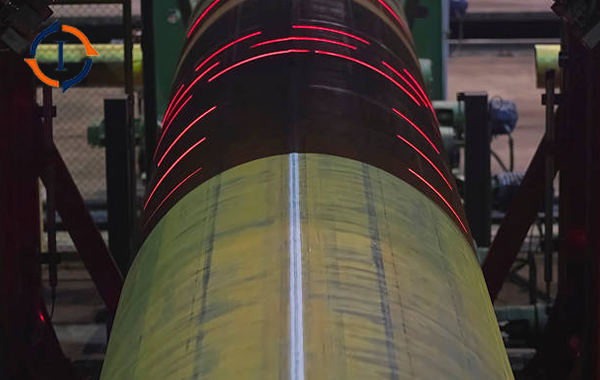
ASTM A691 2-1/4Cr Pipe







ASTM A691 2-1/4Cr Pipe – Electric Fusion Welded Alloy Steel Pipe for High-Temperature and High-Pressure Industrial Systems
Hebei Longma Group manufactures premium-grade ASTM A691 2-1/4Cr Pipe using electric fusion welding technology, delivering robust chromium-molybdenum alloy steel piping solutions for critical industrial applications. We have been producing dependable large-diameter alloy steel pipes since 2003. The outer diameter is from 60.3mm to 2032mm (2"-80") and wall thickness from 4mm to 100mm. We have an annual manufacturing capacity of about 1,000,000 tons.Our goods include high-temperature strength, oxidation resistance and quality traceability and supported by API 5L, ISO9001, ISO14001 and ISO18001.We provide Material Test Certificates (MTC), heat treatment reports, NDT reports and hydrostatic test results for each pipe according to international standards for power plants, petrochemical facilities, refineries and process piping systems.
What Is ASTM A691 2-1/4Cr Pipe and Why Does It Matter?
The alloy steel pipe is made from electric-fusion-welded pressure-vessel-quality ASTM A387 Grade 22 steel plate.The chemical composition " 2-1/4Cr " comprises 2.25 % chromium and 1 % molybdenum . This is intended for high temperature and high pressure applications .
Our EFW manufacturing process allows us to produce large-bore pipe in a cost-effective manner without compromising structural integrity, something that cannot be done with seamless piping solutions such as ASTM A335 P22, which have production limits at bigger diameters.This allows the product to be used for projects with diameters larger than 16" without sacrificing pressure containment or creep rupture strength.
Chromium concentration increases resistance to oxidation and heat.Creep strength at 600°C (1112°F) is improved by molybdenum.These alloying elements provide long term stability in severe operating circumstances that would fail with carbon steels.
Technical Specifications and Material Characteristics
Understanding the precise specifications helps you evaluate whether this pipe meets your engineering requirements:
| Parameter | Specification |
|---|---|
| Standard | ASTM A691 |
| Grade | 2-1/4Cr (A387 Grade 22 base material) |
| Outer Diameter | 60.3mm – 2032mm (2" – 80") |
| Wall Thickness | 4mm – 100mm |
| Manufacturing Method | Electric Fusion Welding (EFW) |
| Chromium Content | Approximately 2.25% |
| Molybdenum Content | Approximately 1% |
| Minimum Tensile Strength | 515 MPa (75 ksi) |
| Minimum Yield Strength | 310 MPa (45 ksi) |
| Service Temperature Range | Up to 600°C (1112°F) |
| Heat Treatment Classes | Class 11, 22, 42 (stress-relieved, normalized/tempered, quenched/tempered) |
The material chemistry is carefully controlled during production. Carbon, manganese, and silicon levels are balanced to optimize weldability while maintaining mechanical performance. Every production batch undergoes chemical composition analysis with full heat number traceability.
Heat treatment classification is particularly important for your application design. Class 22, for example, indicates normalized and tempered condition with complete radiographic examination, providing an ideal balance of ductility and hardness for most industrial installations.
Superior Performance Advantages in Critical Applications
Your operational success depends on piping systems that perform reliably under stress. Here's how this product delivers:
Excellent High Temperature Properties: The 2.25% chromium forms a protective oxide layer that is significantly more resistant to heat deterioration than that of their lesser alloyed counterparts. That implies lower maintenance intervals and longer service life in your steam systems, your boilers and your heat exchangers.
Excellent Creep Resistance: Adding Molybdenum boosts the material's resistance to continuous mechanical stresses at high temperatures. Your pressure vessels and process pipes retain dimensional stability and structural integrity during their design life with continuous temperature cycling.
Reliable Pressure Containment: We use EFW welding, a method that delivers consistent, high quality longitudinal welds with complete penetration and no inclusions. Together with obligatory post-weld heat treatment (PWHT) at 1250°F-1350°F, this reduces residual stresses and refines grain structure in the weld zone, guaranteeing the welded connection works as reliably as the base material.
Hydrogen service compatibility: The chromium concentration stabilises carbides in the microstructure, thereby avoiding the development of methane and internal decarburization known as High Temperature Hydrogen Attack (HTHA). This makes the tube very ideal for use in refinery hydrogen reformer services and hydrocracking units.
Large Diameter Capability: While seamless pipe production becomes economically impractical and technically challenging above certain sizes, our EFW manufacturing process efficiently produces large-bore piping. This solves your design constraints for main steam lines, primary coolant loops, and trunk process piping without compromising quality standards.
Comprehensive Quality Control and Inspection Protocol
Every pipe leaving our facility undergoes rigorous multi-stage inspection aligned with ASTM A691 requirements and international best practices:
100% Radiographic Examination (RT) of all longitudinal weld seams ensures complete fusion and freedom from internal defects. This non-destructive testing identifies any inclusions, porosity, or lack of penetration before the pipe reaches your site.
Hydrostatic Testing verifies pressure containment integrity. Each pipe is subjected to test pressures exceeding design specifications, confirming it can safely contain operational pressures throughout its service life.
Mechanical Testing includes transverse tension tests and guided-bend tests performed on weld coupons cut from production pipes. These tests confirm the weld zone strength matches or exceeds base material properties.
The efficiency of post-weld heat treatment is evaluated by means of Hardness Testing and Charpy V-Notch Impact Testing. These tests confirm the material's enough toughness and ductility so as not to brittle fracture during upset situations, start-ups and shutdowns.
Positive Material Identification (PMI) use X-ray fluorescence technology to validate the chromium and molybdenum concentrations in the base material and weld regions. This avoids expensive mix-ups of materials that might lead to catastrophic failure.
Dimensional Inspection checks that the outside diameter, wall thickness, length, straightness and end prep conform to your requirements. Our sophisticated metering device guaranties accurate measurement within close tolerances necessary for field installation.
Typical Industrial Applications
The unique properties of ASTM A691 2-1/4Cr Pipe make it the preferred choice for several demanding applications:
Power Generation: Excellent high temperature strength and oxidation resistance are beneficial for main steam lines, reheat pipework and superheater tubes in coal burned, gas powered and combined cycle power plants.
Petrochemical Processing: Hydrocracking units, catalytic reformers and hydrogen service lines need the material's resistance to hydrogen attack and thermal cycling capabilities.
Refinery Operations Crude distillation columns, vacuum towers and coker units work in harsh circumstances where ordinary materials decay fast.
Chemical Plants: The performance of chromium-molybdenum alloy is essential for high-pressure reactors, heat exchangers and process piping systems for the transfer of corrosive fluids at high temperatures.
Boiler Systems: These pipes are used in industrial boilers, waste heat recovery units, and steam production equipment for economisers, steam drums and connecting pipework.
Heat Treatment Classes and Engineering Considerations
Understanding heat treatment classification helps you specify the correct material condition for your application:
Class 11 indicates stress-relieved condition. This treatment reduces residual stresses from welding while maintaining higher strength levels, suitable when maximum strength is prioritized.
Class 22 represents normalized and tempered condition with complete radiographic examination. This provides an optimal balance of strength, ductility, and toughness for most general applications, making it the most commonly specified class.
Class 42 denotes quenched and tempered condition, offering maximum toughness and impact resistance. This class is specified when low-temperature service or exceptional impact properties are required.
All courses still need PWHT. This crucial process refines the microstructure of both weld and heat-affected zones, softening martensite forms and reducing residual stresses which may otherwise contribute to stress corrosion cracking or brittle failure.
Select the heat treatment class for your design engineer based on the ASME section VIII pressure vessel requirements or B31.3 process piping code calculations. We provide technical consulting to guide you to the right choice.
Production Facilities and Customised Solutions
Our manufacturing plant of 230,000 m2 is equipped with state of the art EFW production lines for the construction of pipes up to 80 inches in diameter and wall thicknesses up to 100mm. We only use basic materials from well-known steel mills like TISCO, BX Steel and HBIS, to guaranty uniformity of chemical and mechanical qualities.
Beyond standard pipe production, we offer comprehensive value-added services:
Custom End Preparation: Beveling, threading, and grooving to match your installation requirements and reduce field fabrication time.
Secondary Fabrication: Welding of fittings, flanges, and attachments performed by qualified welders following approved welding procedure specifications.
Anti-Corrosion Protection: External coating options including FBE, 2PP, 3LPE, and 3PE systems protect against environmental corrosion during storage, transportation, and service.
Expedited Production: Our fastest delivery time of 7 days for standard specifications helps you meet urgent project schedules without quality compromise.
Complete Documentation Package
International engineering projects demand comprehensive technical documentation. Every order includes:
- Material Test Certificate (MTC) showing actual chemical composition and mechanical test results with full heat number traceability
- Heat Treatment Records documenting time-temperature profiles for PWHT operations
- NDT Reports including radiographic film interpretation and acceptance criteria
- Hydrostatic Test Reports with test pressure, duration, and acceptance confirmation
- Dimensional Inspection Reports verifying conformance to ordered specifications
- Manufacturing Procedure Specification (MPS) detailing welding parameters and quality control steps
- Inspection and Test Plan (ITP) customized to your project requirements
Third-party inspection is welcome at any production stage. We regularly work with international inspection agencies including Bureau Veritas, TUV, SGS, and Intertek.
FAQ
Q:What makes ASTM A691 2-1/4Cr superior to lower alloy grades?
A: 1Cr or 1-1/4Cr grade has worse oxidation resistance and thermal stability than higher chromium content. Lower-alloy materials form oxide scale and lose mechanical properties more rapidly over 500°C. The 2.25% chromium in this grade makes a stronger oxide layer that will not break down at any temperature. Molybdenum also increases creep - rupture strength , which is the ability to withstand constant mechanical stress at elevated temperatures without deformation .
Q:Can you explain the difference between ASTM A691 2-1/4Cr and ASTM A335 P22?
A: Both products use the same basic chemistry from A387 Grade 22 steel. Basic difference is manufacturing process. A335 P22 is seamless hot-extruded or pierced pipe, whereas A691 2-1/4Cr is electric-fusion-welded from rolled plate. Seamless pipe may be cheaper and weld-free for diameters under 16 inches. When correctly made and heat-treated, EFW construction is cheaper for bigger diameters while preserving pressure containment and mechanical performance. Many standards now permit EFW pipe for high-pressure, high-temperature service as well as seamless.
Q:Is Post-Weld Heat Treatment really necessary?
A: PWHT is a mandatory requirement for the product and is not waivable. Welding residual stresses lead to strong and brittle microstructures of the weld and heat affected zones. Stress concentrators may fail if proper PWHT is not done at controlled temperatures (typically 1250°F-1350°F) for a sufficient amount of time depending on wall thickness. PWHT relaxes brittle martensite, refines grain structure and redistributes residual stresses, such that the weak welded junction becomes as dependable as the underlying material over time.
Q:How do I verify the material is genuine 2-1/4Cr alloy?
A:Demand Positive Material Identification (PMI) testing using calibrated X-ray fluorescence (XRF) equipment. This non-destructive test accurately measures chromium, molybdenum, and other alloying elements in seconds, confirming the material matches A387 Grade 22 chemistry requirements. Reputable suppliers provide PMI results as part of the standard documentation package. Additionally, review the Material Test Certificate to ensure chemical composition from mill certification matches the physical material heat numbers stamped on the pipe. We maintain complete traceability from steel plate procurement through finished pipe delivery.
Q:What inspection should I request beyond standard ASTM A691 requirements?
A:For critical applications, consider specifying additional Charpy V-notch impact testing at your minimum design metal temperature to verify adequate toughness. Request Positive Material Identification testing on both base material and weld deposits. For sour service applications, specify hardness testing per NACE MR0175/ISO 15156 to prevent sulfide stress cracking. Third-party witness inspection of critical production steps including welding, heat treatment, and NDT provides additional assurance. We accommodate all reasonable supplementary inspection requirements and work cooperatively with your designated inspection agencies.
Contact Us
Contact our technical team at info@longma-group.com to discuss your ASTM A691 2-1/4Cr Pipe specifications, receive detailed quotations, and access expert guidance for your high-temperature, high-pressure piping systems.