
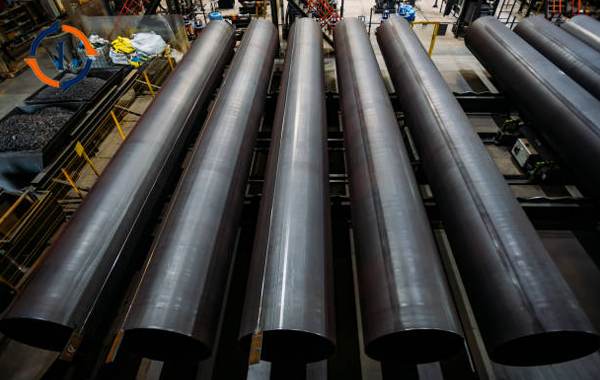
ASTM A691 3Cr Pipe







ASTM A691 3Cr Pipe | Premium Electric Fusion Welded Alloy Steel Pipe for High-Temperature Industrial Applications
Hebei Longma Group Limited delivers industrial-grade ASTM A691 3Cr Pipe manufactured through Electric Fusion Welding technology, utilizing ASTM A387 Grade 21 alloy steel plate with 3% Chromium and 1% Molybdenum composition. Our plant covers 230,000 square metres, equipped with modern heat treatment technologies and comprehensive NDT inspection ability, with over 20 years of specialised manufacturing expertise and yearly production capacity of over 1,000,000 tons. Our product is designed for tough service circumstances with outside diameter from 60.3mm to 2032mm (2”-80”), wall thickness from 4mm to 100mm, and delivery as quick as 7 days for urgent project needs.
Understanding ASTM A691 3Cr Alloy Steel Pipe Technology
The product is a particular kind of electric-fusion-welded pressure pipe for use in settings where carbon steel cannot be used for lengthy exposure to high temperatures and pressures. The material specification includes 2.70-3.30% Chromium for excellent oxidation resistance and 0.90-1.10% Molybdenum to improve creep-rupture strength.
The composition of this alloy tackles many major industrial concerns including High-Temperature Hydrogen Attack (HTHA) and structural deterioration in thermal cycle conditions. The electric fusion welding technology has been shown to provide uniform weld quality for big diameter heavy wall configurations and to provide an inexpensive alternative to seamless pipe for pipe diameters greater than 16 inches.
Unlike typical carbon steel pipe, the chromium-molybdenum alloy retains its mechanical integrity at operation temperatures to 650°C. The material is very resistant to graphitization and thermal fatigue and is essential for refinery hydroprocessing units, steam generating systems and petrochemical process lines.
Technical Specifications and Material Properties of ASTM A691 3Cr Pipe
Our manufacturing process strictly adheres to ASTM A691 standards, ensuring every pipe meets rigorous performance requirements for high-pressure service.
| Specification | Details |
|---|---|
| Material Grade | ASTM A387 Grade 21 (Cr-Mo Alloy Steel) |
| Chromium Content | 2.70–3.30% |
| Molybdenum Content | 0.90–1.10% |
| Outer Diameter Range | 60.3–2032mm (2"–80") |
| Wall Thickness | 4mm–100mm |
| Tensile Strength | 515–690 MPa (depending on heat treatment class) |
| Maximum Hardness | 225 HBW (after PWHT) |
| Manufacturing Method | Electric Fusion Welding (EFW) |
| Heat Treatment | Normalized and Tempered |
| Testing Standards | 100% RT, Hydrostatic Testing, PMI, Impact Testing |
The precise chemical composition combined with controlled thermal processing delivers superior hardenability and structural stability. Post-weld heat treatment relieves residual stresses while achieving optimal microstructure for high-temperature performance.
Superior Performance in Demanding Industrial Environments
Your operations require piping solutions that maintain integrity under continuous thermal and pressure stress. The ASTM A691 3Cr Pipe provides measurable advantages over standard materials.
The chromium concentration provides a protective oxide layer that resists scaling and high temperature corrosion. This feature enhances service life in steam systems and flue gas settings where carbon steel is degraded quickly.
The inclusion of molybdenum considerably enhances the creeps resistance that enables the material to keep dimensional stability under continuous loads at extreme temperatures. This feature is crucial for pressure vessels and process pipes operating close to their design limits.
The electric fusion welding procedure creates longitudinal seams with mechanical qualities equivalent to those of the base metal. The filler metal was strictly selected and the welding settings were managed to make the weld zones have similar strength, toughness and corrosion resistance .
Heat treatment processes normalise the grain structure and temper the material to the desired hardness ranges. This heat treatment reduces welding strains and optimises the balance of strength and ductility for safe pressure containment.
Rigorous Quality Assurance and Testing Processes
Manufacturing Quality Control assures the safety and reliability of your pipe system. Our inspection techniques surpass regulatory criteria to offer traceable, verified items.
Every pipe gets 100% Radiographic Testing to check weld integrity. This non-destructive inspection reveals internal discontinuities like porosity, slag inclusions, and partial fusion that might impact pressure ratings.
Post-Weld Heat Treatment certification validates adequate thermal processing. Monitoring temperature and recording time-at-temperature ensures stress release and metallurgical transformations are within specification requirements.
Every pipe is subjected to 90 % of yield strength in hydrostatic testing to verify the capacity to hold pressure . This proof test detects manufacturing problems before installation, therefore avoiding expensive field failures.
Positive Material Identification validates the chemical composition at a number of places. PMI testing ensures chromium and molybdenum ratios are in accordance with material certifications to avoid material mix-ups.
Charpy V-Notch impact testing is a test of low temperature toughness and resistance against brittle fracture. Impact energy levels provide retention of ductility in the expected service temperature range.
Full documentation packages available including Material Test Certificates with heat number traceability, chemical composition analysis, mechanical test findings, heat treatment records, NDT reports and dimensional inspection data.
Strategic Applications Across Critical Industries
Your industry faces unique challenges requiring specialized material solutions. ASTM A691 3Cr Pipe addresses specific operational demands across multiple sectors.
Power Generation: Oxidation resistance and creep strength of superheater and reheater tubes for coal fueled and mixed cycle facilities. The material can endure steam temperatures of 540°C and yet preserve pressure integrity.
Petroleum Refining Hydroprocessing units, catalytic crackers and coker systems need materials resistant to hydrogen attack and sulfidation. The chromium-molybdenum alloy gives dependable performance in these corrosive, high-temperature conditions.
Petrochemical Processing: Ethylene furnace output pipework, methanol reformers and ammonia synthesis reactors are subject to harsh circumstances. The 3Cr composition provides the requisite mechanical qualities and corrosion resistance.
Industrial Boiler Systems High-pressure steam production and distribution systems need materials that resist thermal fatigue and retain high-temperature strength. This pipe grade satisfies certain important criteria.
Value-Added Services for Complete Project Solutions
Beyond manufacturing standard pipe, we provide customization and protective treatments that enhance installation efficiency and extend service life.
Our fabrication services include precision beveling for weld preparation, expansion processing for connections, and end treatments matching your specification requirements. These services reduce field modification time and ensure proper fit-up.
Anti-corrosion coating options protect external surfaces from environmental degradation. We apply FBE, 2PP, 3LPE, and 3PE coating systems based on your operating conditions and protection requirements.
Technical support includes material selection guidance, pressure rating calculations, and heat treatment recommendations. Our engineering team assists with specification development to ensure optimal material performance.
Documentation support provides complete project files including Inspection and Test Plans, Manufacturing Procedure Specifications, and quality records required for project approval and regulatory compliance.
Selecting Your ASTM A691 3Cr Pipe Manufacturing Partner
Your project success depends on supplier capability and reliability. Evaluate potential partners across critical performance dimensions.
Manufacturing experience with chromium-molybdenum alloy steels indicates process knowledge and quality control maturity. Verify the supplier maintains qualified welding procedures and heat treatment capabilities specific to Cr-Mo materials.
Production capacity determines delivery reliability for large projects. Confirm the manufacturer operates sufficient equipment and maintains raw material inventory to meet your schedule requirements.
Quality management systems should include laboratory testing facilities, NDT equipment, and traceability systems covering material receipt through final inspection. Third-party certifications validate management system effectiveness.
Technical support capability helps you specify appropriate materials and address installation challenges. Access to metallurgical expertise and engineering assistance adds value beyond product supply.
Global export experience demonstrates ability to navigate international standards, documentation requirements, and logistics challenges. Our products serve customers across 90+ countries, proving our capability to support worldwide projects.
Partner With Hebei Longma Group for Your Alloy Steel Piping Requirements
Hebei Longma Group Limited combines more than 20 years industrial experience, innovative manufacturing capabilities and full quality systems. Customer service and technological superiority have forged collaborations in over 90 countries.
Your projects need dependable supplies, timely delivery and quick technical assistance. Our staff is available to help with material selection, specification development and document needs.
FAQ
Q: Why do we choose product reliability in high temperature and high pressure service applications?
A: This material has a combination of chromium for oxidation resistance, and molybdenum for improved creep strength, to provide a material with mechanical capabilities at high temperature. The electric fusion welding technology results in large-diameter heavy-wall pipe with uniform weld quality and stable pressure performance. The microstructure is heat-treated to optimise for structural stability during thermal cycling and prolonged stress. This makes it applicable to key systems in the power generation, refining and petrochemical processing industries where carbon steel is unable to meet the temperature capabilities.
Q:What quality controls should buyers require when purchasing products?
A:Require Material Test Certificates with complete chemical analysis confirming chromium and molybdenum percentages. Demand mechanical test results including tensile strength, yield strength, and elongation values. Insist on heat treatment records documenting time-temperature profiles and hardness verification. Request 100% radiographic testing reports and hydrostatic test results. For critical applications, specify impact testing and Positive Material Identification. Third-party inspection by agencies such as BV, TUV, or Intertek provides additional verification. Complete traceability from steel plate through final inspection ensures accountability and quality assurance.
Q:How can buyers choose the right product supplier?
A:Evaluate manufacturing experience with chromium-molybdenum alloy steel pipe and familiarity with ASTM A387 Grade 21 material. Verify quality assurance capabilities including raw material inspection, qualified welding procedures, heat treatment management, and complete testing facilities. Assess production capacity and delivery track record for projects similar to yours. Confirm availability of technical support for material selection and specification development. Review documentation capabilities to ensure complete certification packages. Consider global experience and ability to support international projects with appropriate standards compliance.
Contact Us
Contact our technical sales team at info@longma-group.com to discuss your ASTM A691 3Cr Pipe requirements and receive detailed quotations tailored to your project specifications.