
3PE Coated Pipe vs. Galvanized Steel Pipe comes down to where the pipe will live. For buried oil, gas, and water lines, 3PE coating steel pipe is usually the stronger choice because its epoxy, adhesive, and polyethylene layers shield steel from soil moisture, abrasion, and handling damage. Galvanized steel pipe relies on a zinc coating that suits smaller, exposed, and easy-to-reach systems. The right pick still depends on soil, temperature, pipe size, project standards, and lifecycle cost. I wrote this guide to help buyers and engineers compare both options and ask suppliers for the right documents.
|
|
|
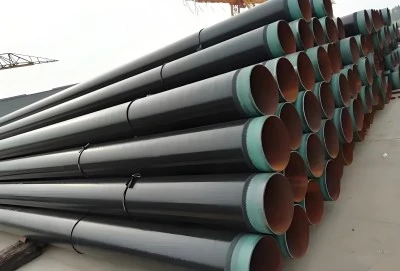
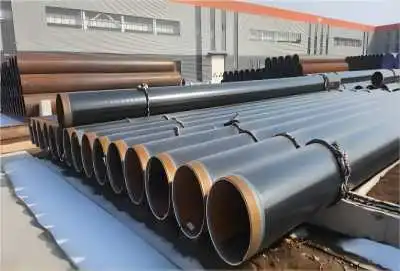
What Is 3PE Coated Steel Pipe?
Because it is the standard for steel pipes buried in the ground, I start with 3PE. This is how the system is put together, what it needs, and how it works.
How the Three Layers Work
A 3PE-coated steel pipe is made of carbon steel that has three layers of 3PE coating stuck to it. The steel that has been blasted does not rust because of the fusion-bonded epoxy (FBE) coat that sticks to it. After that, a copolymer glue bonds the epoxy to the outside polyethylene jacket. The soil hits, wears, and stresses that jacket while it is being shipped, dug, and filled back in. Every part of the system needs to work well together for the whole thing to work right. Thick plastic can't fix a weak primer link. In project papers, it is common to talk about an epoxy layer that is more than 100 µm thick, a glue layer that is 170–250 µm thick, and polyethylene that is 2.5–3.7 mm thick, depending on the width and the standard.
How the Coating Is Applied
The first thing that needs to be done is to inspect the pipe, clean it, and blast it with media that is up to Sa 2.5 and has an anchor pattern of about 50–75 µm. As the plant heats the pipe, it applies epoxy powder, glue, and plastic one after the other. When it's cool, testers look at the surface, holidays, thickness, and sticky parts. A coating may not last as long if the surface is dirty or not properly blasted. This is because adhesion depends on how clean the surface is. For every job, you should pick a standard such as DIN 30670, DIN 30678, ISO 21809-1, or CSA Z245.20. I also tell buyers to get written confirmation of the type of coating and the way it will be fixed before the machine starts making things.
Longma Group's 3PE Coating Steel Pipe Range
There has been an ERW and LSAW steel pipe company in Hebei since 2003. They produced more than 1,000,000 tons of it every year by the end of 2023. The outside diameter of our 3PE coating steel pipe ranges from 60.3 mm to 1422 mm, and the wall thickness ranges from 6.02 mm to 50.8 mm. You should use API 5L, ASTM A53, EN 10210, or AS/NZS 1163 as the main pipe. Coatings must meet a number of standards, including AWWA C210, C213, CSA Z245.20, EN 10339, and ISO 21809-1. We pack pipe in crates, boxes, and pallets made of wood. When you buy pipe and covering at the same time, you only have to deal with one person for delivery, inspection, and paperwork.
What Is Galvanized Steel Pipe?
Next, I'll talk about zinc-coated pipe. Many buyers already know what it is because they've used it in power plants and construction projects before.
How Zinc Protects Steel
Zinc does two things to keep steel safe. It keeps water and oxygen from ever getting to the steel surface. Second, zinc is a metal that is used to make sacrifices. If you see a small scratch on the steel, the zinc nearby will rust first and cover the hole. If you want a thicker layer, hot-dip galvanizing is usually better than electro-galvanizing. This is because it physically bonds the zinc to the steel. Zinc is added to things that have already been galvanized before they are formed, which means that cut ends may not be covered. In ASTM A53, both black steel pipe and hot-dip zinc-coated steel pipe are discussed. What makes the coating last longer is how heavy the zinc is, how big the pipe is, and how it was made.
Where Galvanized Pipe Works Best
Galvanized steel pipes can be used for small utility lines, handrails, fences, supports, farming structures, and water systems in buildings. Workers can fix broken pipes when they can see them. It works well inside and outside. For smaller jobs, fittings that are simple to use and a supply chain that is easy to follow can also be helpful. Coatings are put under more stress when long oil and gas lines are buried, when transmission pipes have large diameters, and when the ground is rough. So, before you approve the plan, I think you should see how zinc stacks up against a stacked system like 3PE. We can give you a price for either hot-dip galvanizing or cold-dip galvanizing at Longma Group, based on what the project needs.
Galvanized Pipe Limits in Soil
The ground changes the view. Too much water, an acidic pH, chlorides, sulfates, pollution, and stray currents can all speed up the loss of zinc. You can also see bare steel when it is scraped while being moved or filled back in. Before deciding to bury zinc pipe, buyers should look at the soil's resistivity, lab soil tests, cathodic protection plans, and how easy it will be to do upkeep. In the United States, 49 CFR Part 192 says that buried steel gas pipelines must have a coating on the outside and cathodic protection. This shows how seriously officials take rust on the ground. There is no one number that works for all soils when it comes to service life. Not the name of the coating, but the corrosion test should decide what to do.
3PE Coated Pipe vs Galvanized Steel Pipe: Technical Comparison
It's important that something doesn't rust, but that's just one test. This is where most of the results will come from in the field. 3PE makes a wall that keeps dirt ions away from steel. A zinc layer is often better for underground work because it doesn't get wet or wear down as quickly. As an extra layer of protection, galvanizing can lose some zinc. How much is lost varies on the type of dirt and the damage to the coating. In neither case is there a working life that works for everyone. What happens depends on how the surface is prepared, how good the coating is, if there was any damage during installation, how it is used, cathodic protection, and regular maintenance. Corrosion costs the world about US$2.5 trillion a year, or 3.4% of the world's GDP, according to the NACE IMPACT study. That picture shows why you should give your treatment a lot of thought.
Corrosion Resistance and Service Life
3PE makes a wall that keeps dirt ions away from steel. A zinc layer is often better for underground work because it doesn't get wet or wear down as quickly. As an extra layer of protection, galvanizing can lose some zinc. How much is lost varies on the type of dirt and the damage to the coating. In neither case is there a working life that works for everyone. What happens depends on how the surface is prepared, how good the coating is, whether there was any damage during installation, how it is used, cathodic protection, and regular maintenance. Corrosion costs the world about US$2.5 trillion a year, or 3.4% of the world's GDP, according to the NACE IMPACT study. That picture shows why you should give your treatment a lot of thought.
Mechanical Protection and Field Joints
The polyethylene jacket does a good job of protecting the 3PE coating steel pipe when it gets hit, scraped, or touches lifting equipment. That makes it easier to load, ship by sea, dig, fill in, and put in place without having to dig. Zinc is more likely to scratch and gouge when it comes in contact with rock or rough backfill. Care must be taken when stacking both systems, and the slings must be padded. Also, remember to take care of your field joints. When the factory coating runs out at the weld cutback, crews use compatible heat-shrink sleeves or other approved joint coatings to finish the job. After that, tests are done over the holidays. You should choose the field joint way before you start making, in my opinion.
Temperature and Cathodic Protection
It is generally safe to use 3PE from -40°C to 60°C. For lines that are hotter, you usually need 3LPP or a system that has been changed. Check the limit against the approved data sheet to make sure it is correct. It is also good that the 3PE and cathodic protection work well together. The layer covers the bare steel, which lowers the current need, and small breaks are taken care of by the cathodic protection. The resistance of the coating, the holiday results, the anode's capacity, and the tracking spots are some of the things that designers should think about. Because cathodic protection and zinc surfaces can work in different ways, that plan needs to be looked over by a corrosion engineer. AMPP SP0169 talks about how to keep steel pipes that are buried from rusting from the outside.
Which Is Better for Different Pipeline Applications?
This cover is the best because it does the job. There are three parts to my choice: cost, oil and gas, and water.
Oil and Gas Transmission Lines
Many people choose 3PE for buried lines that run for a long time and carry crude oil, natural gas, and finished goods. People who are buying line pipes usually want them to have coatings that meet DIN 30670 or a similar standard, be cleaned with controlled blasting, have their thickness checked, go through holiday testing, have field joint protection, and be compatible with cathodic protection. The end design is still based on the pipe's diameter, its working temperature, the soil's conditions, and the owner's needs. It's important to find a provider that can help you, keep inspection records, and let you keep track of products from the time they're made until they're put. For these kinds of big transmission lines, galvanized pipe isn't usually a good choice.
Underground Water Supply Lines
A lot of the time, coated carbon steel is used for water lines in factories, cities, and raw water tanks. Check to see if the soil is corrosive, how deep it was buried, how much pressure was there, how it was installed, what chemicals were used to clean it, and if the pipe needs an inner lining. It's possible that the materials and finishes that go inside drinkable water projects need to be approved. We have AWWA C210 and C213 on our list of standards that we cover. I think you should talk to your engineer about what standard they need. This type of pipe is more often used for small utility systems and plumbing in homes than for large buried mains. The water body has the final say on the rules and requirements for project design.
Cost, Lifecycle, and Quotation Details
It's only fair if you compare prices in an honest way. Make sure that the base pipe, coating, testing, packing, and freight are all broken down into their own different things. Also, they should write down the steel grade, length, coating class, outer diameter, wall thickness, and where the steel is going. Even if galvanized steel is cheap, the project might still cost more if it needs to be wrapped, fixed in the field, watched over, or replaced early. This includes the cost of getting it, putting it, checking it, keeping it in good shape, and cathodic protection. It's not fair to compare prices that just say "3PE coating steel pipe" since they don't say what kind of treatment or inspection is included. Take a look at these two sheets of paper next to each other before you give the order.
How to Choose Between 3PE and Galvanized Steel Pipe
If the steps are clear, there's no need to do the work twice. After these three things, I make sure the grade is good by checking it.
Match the Coating to Site and Design Conditions
- Pick the location: underground, on the ground, in the open, inside, or outside; 2. Pick the type of trench: open or not; and 3. Pick the location. To make sure that buried pipes are safe, check the soil's pH, chlorides, sulfates, moisture, and stray-current risk. Next, write down the fluid, pressure, constant and maximum temperatures, design life, and how easy it is to do maintenance. This is the last step. Make sure the finish you picked works with the base pipe standard, size, internal lining, and cathodic protection plan. These should be in your question. Then, the provider can suggest a good way to do things instead of giving a price for a general coated pipe.
Evaluate the Supplier and Documents
Ask for proof of mill tests, proof of finishing materials, records of surface preparation, thickness reports, and test results for each holiday. The Material Test Certificate (MTC), the Inspection and Test Plan (ITP), and the Manufacturing Procedure Specification (MPS) are all things that Longma Group gives you. Aside from API 5L, we also have ISO 9001, ISO 14001, and ISO 18001 certifications. We get our steel from mills such as TISCO, HBIS, and Bao Steel. We can find out where all the steel we buy came from. What sizes can the finishing line handle? Also, find out how the plant packs pipes to be shipped by sea. It is helpful to have proof from projects that were the same size and quality in the past.
Check Quality Before Shipment
Things that aren't right are found before they are sent out, and it's still cheap to fix them. I need these three records:
- Thickness and uniformity: To find out how thick each layer and the whole thing is, inspectors use precise gauges. They look for spots that are too thin, wrinkles, blisters, and edges that are becoming loose. It is important to keep track of the pipe number, heat number, test spot, readings, and accepted limits. Every repair has to use approved parts and go through another inspection.
- Holiday detection: Holes, cracks, and voids in steel that let soil in are found by a high-voltage detector during the holiday season. During the process, you should write down the correct fix rules, test voltage, and trip speed. There should be written proof for the buyer that this was done for each holiday that is marked and checked again.
- Adhesion and disbondment: When something sticks together and then breaks apart, the lab checks the peel strength, impact resistance, and cathodic disbondment. This is usually done over 28 days. If your QA/QC team looks at the report, they can compare the results to the approved coating specification by reading about the batch, method, conditions, and results.
These records are proof, not a promise, for your team.
Conclusion
You can protect steel in two good ways: galvanized steel pipe and 3PE coated steel pipe. But each is best used for a different job. It is made up of polyethylene, epoxy, and adhesive that are fused together. Buried lines are protected by 3PE coating steel pipe from earth wetness, wear, and handling damage. It works with protection from the cathode. A zinc barrier is used in galvanized pipe as a sacrifice. If the systems are small, easy to reach, and don't need to handle a lot of pressure, this method may work well. However, it depends on the soil's chemistry. Because neither coating has a set temperature or service life, how well it works relies on the dirt, the working conditions, the field joints, and the project standards. If you want to compare costs, you should not only look at the unit price, but also the costs over a long period of time and at the same scale. Before it is sent out, the quality is checked by keeping track of the thickness, holiday, and glue. For long underground oil, gas, and water lines, 3PE is usually the better choice from a technical point of view.
FAQ
1. Is 3PE better than galvanizing for underground steel pipe?
If the line is long, yes, most of the time. Water, wear, and damage during installation can't get through its multilayer barrier. When some soils are coated, some zinc is lost. How much zinc is lost depends on the type of soil and any damage.
2. What temperature can 3PE handle?
It is generally safe to use 3PE from -40°C to 60°C. If the service is hotter, you may need 3LPP or a different method. Check the coating specs to see what the limits are.
3. How are field joints protected?
After putting on heat-shrink covers or other approved joint treatments that match the factory layers, holiday tests are often done.
4. What sizes does Longma Group's 3PE coating steel pipe cover?
The outside diameters range from 60.3 mm to 1422 mm, and the wall thickness ranges from 6.02 mm to 50.8 mm.
5. Can Longma Group supply both coatings?
Yes. You can hot-dip galvanize, 3PE coat, or FBE coat pipes that are made to meet API 5L, ASTM A53, EN 10210, or AS/NZS 1163 specs.
Request a 3PE Coating Steel Pipe Quote from Longma Group
Before 2003, Longma Group only made ERW and LSAW pipes. Now they also make 3PE coating steel pipes. They are certified by API 5L and by ISO 9001, ISO 14001, and ISO 18001 as well. We offer pipe and finishing, along with ITP, MPS, and MTC papers. You can email info@longma-group.com with the size of the pipe, the steel grade, the coating standard, the number of pipes, and the shipping port.