
Seven great things about FBE coated steel pipe: it doesn't rust, sticks well, is always of the same high quality, can be customized, lasts a long time with little upkeep, doesn't slow down operations as much as often recoating, and can be used in many situations. When you heat and blast steel and then put epoxy on top of it, you get a hard, continuous film that keeps water, salts, and soil chemicals from getting through. Engineers and buyers who need to find the right coating quality for the job will find this guide useful. FBE has many good points. I'll talk about them and some things you should check ahead of time below.
|
|
|
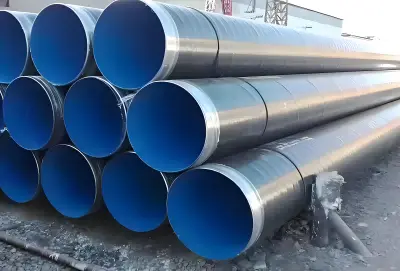
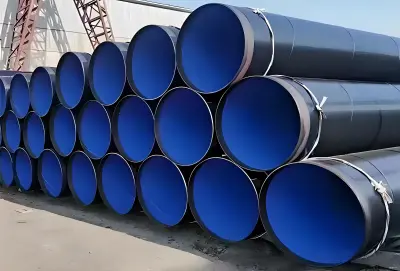
What Is FBE Coated Steel Pipe?
How Fusion Bonded Epoxy Works?
A thermoset powder coating is made up of mineral fillers, epoxy resin, and a hardener and resin. It's called fusion bonded epoxy, or FBE. To clean the pipe, we blast it. Then, we heat the steel to between 230°C and 250°C and spray electrically charged powder on top of it. When you melt the powder, it flows into the blast profile and cures it chemically in a way that can't be undone. This means that it won't melt again when you heat it up. Instead of a solvent, powder paint doesn't have one. A stand-alone FBE's range is usually between 250 and 500 micrometers, but it can be changed if the project calls for it. This kind of corrosion is caused by oxygen, water, and chemicals in the soil, but the finished film stops them.
Pipe Types We Coat
It means more than one thing. Pipes that are made to API 5L and have FBE on them protect line pipes. When epoxy line pipes are joined together, they can carry water, gas, and oil. The same method can be used to coat pipes made to EN 10210, ASTM A53, or AS/NZS 1163. Our ERW and LSAW steel pipes have inside diameters that range from 60.3 mm to 1422 mm and wall thicknesses that range from 6.02 mm to 50.8 mm. Baosteel, HBIS, TISCO, and Shougang are some of the mills that give us their raw materials. We keep track of every pipe from the time it was made from raw materials to finished goods.
Where Buyers Use It?
Oil and gas companies use FBE on crude and high-pressure gas lines. It is put under a weight coating of concrete offshore because it doesn't react with chloride. AWWA C213 says that water companies have to use it for mains with a large diameter. To be used with drinking water, powder must have the right approval, such as NSF/ANSI 61, so I always tell people who buy it to check. Horizontal directional drilling crews use two layers of FBE with an abrasion-resistant overlay to protect the steel from rocks during the pullback process. The coating is also used in process pipes, fire safety, and mining. How well the pipe works is always based on the standard, the service conditions, the cost over its whole life, and the skill of the supplier.
Benefits 1–3: Protection Built Into the Pipe Surface
Benefit 1: Strong Corrosion Resistance for Challenging Environments
You can keep water, groundwater, soil, chlorides, salts, mild acids, alkalis, and some industrial chemicals away from the steel with an FBE layer that has been properly cured. It was found that corrosion costs the world US$2.5 trillion a year, which is about 3.4% of the world's GDP. FBE can also be used for cathodic protection because it doesn't stop the current if the coating is broken. This helps the under-film stay strong and not rust. Performance is still based on sandblasting, adhesion, holiday detection, and how well the installation was done. You shouldn't just rely on the coating for buried lines. You should also look at the soil's resistivity, moisture, backfill, and plans for how it will be handled. When you use this method, you're less likely to lose walls, have leaks, need unplanned repairs, or have to shut down.
Benefit 2: Strong Adhesion and Mechanical Durability
The FBE is heated and sprayed with electricity to join it to the ready steel in a chemical and mechanical way. Wet paint that is put on in the field doesn't stick as well as paint that is put on in a factory line. It's possible to hit, wear down, lift, move, trench, lower, and fill back in a strong film. When designers make films, they look at how hard and flexible they are. A film that is too brittle can break when it is bent or handled. Standards like CSA Z245.20 tell us how to test things like adhesion and cathodic disbondment. Before the pipe leaves the plant, inspectors usually check its color, look for breaks, check for pipe-end cutbacks, repair procedures, release documents, and see how clean the surface is. They also look at the thickness of the coating and the shape of the anchor.
Benefit 3: Uniform Factory-Applied Coating Quality
Things can stay stable on a coating line, but not on a job site. The first steps in the process are to inspect the incoming pipes, clean them, and use abrasive blasting. The next steps are preheating, applying the powder, curing, cooling, inspecting, fixing, and writing up. It doesn't stick as well to steel when it's oily, the powder doesn't fully cure when the pipe temperature is low, and the thickness changes when the line speed is uneven. You can be sure that your QA/QC team knows what happened to each pipe because they keep track of its batch number, temperature, and weight. In order to review large international projects, people need to see an Inspection and Test Plan, a Manufacturing Procedure Specification, and Material Test Certificates. These can be found at Longma Group.
Benefits 4–7: Specification Flexibility, Lifecycle Value, and Project Fit
Benefit 4: Dependable Protection with Flexible Specification Options
One-layer FBE can meet most of your needs for corrosion protection. There is an extra layer on the outside of dual-layer FBE that doesn't wear down easily. This makes installation harder in places like drilled crossings and rocky trenches, but it also makes the process more complicated. It gets thicker, works better, and costs more as you add more protection. Pick the thickness and temperature level based on the pipe's size, its use, the epoxy's make-up, how long it needs to cure, and the standard that needs to be followed. Make sure you know the minimum and maximum dry film thicknesses, the length of the end cutback, the repair thickness, the acceptance criteria, and the temperature limits for both continuous and intermittent use before you place your order. Our team looks at these things and compares them to your needs and the powder manufacturer's data sheet.
Benefit 5: Long Service Life and Reduced Maintenance Requirements
Pipelines last a long time if they are well installed, have good adhesion, don't let chemicals through, are applied evenly, and are protected from cathodic damage. When the system is properly designed by the engineers, FBE coated steel pipe can lessen the need for repairs, excavation, and service interruptions due to corrosion. What makes the service life different, though, is the chemistry of the soil and groundwater, the operating temperature, the fluid's make-up, ultraviolet light, damage during installation, coating breaks, field-joint protection, and upkeep. They can't promise a single number that works for everyone if they are being honest. Instead, get test results, warranty terms, and references from projects that are like the one you're working on. After that, look at them next to your design life. Cover stacked pipes that are kept outside so that the epoxy doesn't get scratched by direct sunlight for a long time.
Benefit 6: Lower Environmental and Operational Impact Than Frequent Recoating
With factory-applied FBE, you don't have to use as many coats of paint, solvents, dig, or shut downs. There are some liquid systems that are better than powder systems because powder systems don't carry any solvents. Having a coating that lasts a long time also makes it easier to plan when to build things and do integrity checks. I don't want to overstate how green this product is, but the footprint depends on how the powder is made, how much energy is used to heat it, how production is controlled, how waste is dealt with, and how it is moved. ISO 14001 is for managing the environment, and ISO 18001 is for health and safety at work. Both are held by Longma Group. It also makes operations safer by lowering the chance of corrosion from the outside, but FBE is only one part of a bigger program to make sure things are safe.
Benefit 7: Broad Application Range and Compatibility with Global Projects
FBE coated steel pipe is used for more than just oil and gas transmission and gathering. It is also used for firefighting, water and wastewater, mining, moving slurry, industrial utilities, district energy, piling, and OEM work. The steel must have the same outside diameter, wall thickness, length, and end shape as the coating line. Our pipe grades range from API 5L Grade B to X80. Standards for coatings that are important to know about are ISO 21809-2, CSA Z245.20, AWWA C213, NACE, AMPP, EN, and what the client wants for the project. We list DIN 30670, DIN 30678, CSA Z245.20, EN 10339, ISO 21809-1, AWWA C210, and C213 as coating standards. We'll tell you which parts of the contract apply to your job. Always keep in mind that API 5L only talks about line pipe and not certification for automatic coating.
How to Choose the Right Coating and Supplier?
FBE Coated Steel Pipe Versus Other Coating Solutions
A FBE primer is the first step in 3LPE. Next comes an adhesive layer and a polyethylene layer on the outside. It's better at protecting against mechanical damage, and FBE has a coating structure that is simpler and sticks to things well. Liquid epoxy, like the systems in AWWA C210, can still be used for repairs, fittings, and projects that can be used in different ways. In some structural and weather conditions, galvanized steel can be used. However, it doesn't always work with FBE on buried pipelines. Before making a choice, you should think about how rough the soil is, how it will be put down, the temperature, scratching, cathodic protection, your budget, how easily you can fix it, and the rules that apply. At Longma Group, we use hot-dip galvanizing, FBE, 3LPE, 3PE, 2PP, and 3PE. This way, we can help you compare your choices without pushing one system.
Specification and Inspection Checklist
A clear purchase specification can help you avoid most disagreements at the inspection. Based on these three sets of needs, build yours:.
- Pipe and coating data: State pipe standard and grade, outside diameter, wall thickness, length, coating standard, minimum and maximum thickness, end cutback length and repair technique so that mill and coating line work from one agreed document. Include rules for surface preparation grade and marking & packing.
- Tests and records: Request holiday detection, adhesion and impact test results, cathodic disbondment reports if required by the applicable standard, mill test certificates, coating certificates and traceability records that link each heat and coating batch to the pipes you get. If your contract requires for an outside witness, get third-party inspection reports.
- Pre-shipment checks: Compare each document with the purchase order. Check quantity, dimensions, coating appearance, pipe ends, repairs, packing and transit protection. Damage handling is a frequent source of field repairs, thus employ soft dunnage and covers during shipment. “Walk the stacks with your inspector and photograph any defect prior to loading.
As long as these things were agreed upon in writing, your QA/QC team can use the same document that the factory did to accept the pipe.
How to Select an FBE Coated Steel Pipe Supplier?
Before you inquire for quotations you need to know the pipe's purpose, grade, size, coating system, quantity, delivery date, destination and inspection requirements. When comparing suppliers, don’t just look at price per meter or per ton. Look at their capacity, their ability to meet requirements, their ability to coat, their ability to regulate quality, their ability to package, their ability to handle logistics, their warranty time, and their ability to help you with technical concerns. Ask them if the factory is registered and what kind of certifications they have, what their most recent inspection records are, if you can monitor the goods, what their minimum order quantity is, how long their lead times are and if they use an outside business for any coating work. It has been manufacturing welded steel pipe since 2003. The facility is 230,000 square meters and the corporation will be producing more than 1,000,000 tons of steel by the end of 2023 per year. It has consumers in over 90 countries.
When FBE Coated Steel Pipe Is the Right Choice?
FBE is ideal for projects requiring a strong bond, uniform application in the factory, corrosion protection for buried or industrial use, the ability to trace inspections, customizable specifications and reduced maintenance frequency. There are a lot of things that need more engineering evaluation - very high temperatures, considerable wear and tear, directional drilling, exposure to harsh chemicals, protracted exposure to sunlight before burial, service offshore, usage of potable water, and special fire approvals. FBE is not always the best choice. Consider service circumstances, installation risk, project standards, lifecycle cost and ease of local system repair when picking a system. Ask your supplier for confirmation that you made the appropriate choice.
Conclusion
An epoxy film that has hardened is glued directly to steel that has been blasted in FBE coated steel pipe. This keeps buried, underwater, and industrial pipelines safe. This article talked about seven benefits: it's resistant to corrosion, sticks well, and lasts a long time; the quality is consistent from the factory; the specifications are flexible; it lasts a long time with less maintenance; it doesn't need to be recoated as often; and it can be used in many situations. It depends on how well the surface is prepared, how thick the coating is, holiday detection, cathodic protection, soil conditions, temperature, and how carefully it is put on. There is no one number that works for service life. When it comes to projects that need good adhesion and a simpler coating structure, FBE is better than 3LPE, liquid epoxy, and galvanizing. But projects that will be drilled into a lot, worn down, or heated up a lot need more care. It's best to make sure that the coating, standard, and paperwork are all right for the service conditions ahead of time.
FAQ
What is FBE coated steel pipe?
Fusion-bonded epoxy is a thermoset powder that sets into a hard film when it melts on hot, blasted steel. It's used to protect steel pipes. The film keeps the soil's water, salts, and chemicals out.
How thick is an FBE coating?
Most of the time, FBE that works by itself is between 250 and 500 micrometers. Based on the terms of service and the standard that applies, your project specification may ask for lower or higher values.
How does FBE compare with 3LPE?
In the 3LPE process, an epoxy primer is given an adhesive layer and a polyethylene layer on the outside. This makes the defense against damage from mechanical means stronger. You can understand FBE better and it sticks better. How it will be put down, the soil, and how much wear it will get will all play a role.
Can you give one service-life number?
That's not always the case. The outcome may be different based on the temperature, the fluid type, the installation damage, and the cathodic protection. Ask for test reports, data sheets, and project references to learn more.
What do you need for a quotation?
Please send the pipe's grade, its outside diameter, wall thickness, length, quantity, coating standard, thickness, inspection needs, delivery port, and times.
Request a Project-Specific FBE Coated Steel Pipe Quote
They are ready to take a look at your next pipeline project. Send an email to info@longma-group.com with the type of pipe you need, its outside diameter, wall thickness, quantity, coating standard, and delivery port. We'll let you know about prices, lead time, certificate lists, and coating thickness when we get back to you. You can see all of our FBE coated steel pipes at longma-group.com. Then, send us your specifications right away.