
Because it combines the strength of steel with a coating or lining that keeps water, oxygen, salts, and chemicals out of the soil, anti-corrosion steel pipe is good for long-term projects. With this protection, buried, coastal, and industrial lines are less likely to leak and have a longer useful life. It also saves money on repairs and digging. Coated pipe costs more than bare pipe at first, but it usually ends up saving you money after a few years of use. Three things are needed for the results to be good: the coating needs to be right for the area, the rules need to be followed, and quality needs to be checked from the mill to the trench. In this guide, I go over each step.
|
|
|
Introduction: Why Anti-Corrosion Steel Pipe Matters in Long-Term Projects?
Corrosion Risks That Shorten Pipeline Life
It costs a lot to have corrosion. A study by NACE International IMPACT says that corrosion cost the world about US$2.5 trillion in 2013. That's around 3.4% of the world's GDP. They take on a lot of that risk because they are in wet soil, seawater, or chemical service for years at a time. Every day, it comes into contact with water, oxygen, and salts that have been broken down. A small flaw in the coating can become a pit, and a pit can become a leak. If there is a leak, the contractor has to dig, shut down, and have a tough talk with the owner. That's why I see protecting against corrosion as part of the design process and not as something extra.
What Anti-Corrosion Steel Pipe Is?
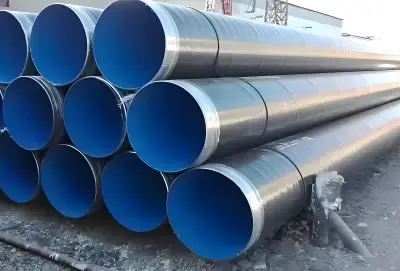
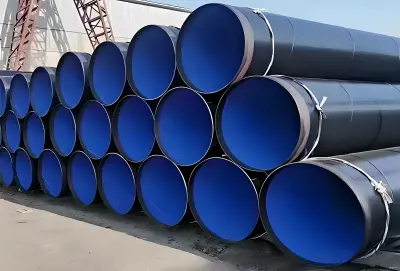
Anti-corrosion steel pipe is made of carbon or alloy steel and has a coating on the outside, a lining on the inside, or both. The first step is to get a steel pipe that meets a standard like API 5L or ASTM A53. The surface is cleaned with abrasive blasting, and then the protective layers are put on top of it. A 3PE system, for example, has epoxy that is fused together, an adhesive layer, and a polyethylene layer on the outside. Every level does something. The epoxy sticks to the steel, the glue holds the layers together, and water or impact don't hurt the polyethylene. When put together, they form a wall between the steel and the ground. This keeps buried water, gas, and oil lines safe.
Benefits You Can Expect Over the Project Life
The best thing about it is that it will last longer. A lot of well-made coating systems are made to last at least 50 years. However, how long they last depends on the soil, the temperature, how it was installed, and how well it is kept up. A second benefit is the full lifecycle cost. You won't have to fix, shut down, or replace pipe as often when it's coated. This saves you a lot of money over time. It is safer to move fluids when there is a sound coating on them, so they are less likely to leak into the ground or soil. To protect against cathodic damage, coatings also work as a second line of defense. These gains will only last as long as the project's standards for coating quality, handling, and repairs in the field are met.
Anti-Corrosion Steel Pipe Types, Coatings, and Manufacturing
Common Coating Types and Where They Fit
There are different coatings that work better for different jobs. For example, 3LPE and 3PE are good for protecting buried pipes because the polyethylene layer is strong against water and damage. This FBE doesn't let steel come loose and sticks well to it. It can be used by itself or as the bottom layer of a system with more than one layer. Liquid epoxy is often used on water pipes. More heat can be handled by systems made of polypropylene, like 2PP, than by systems made of polyethylene. In hot-dip galvanizing, zinc is used to protect steel. This method works well in moderate conditions, such as for fire protection and electricity lines. Before I pick a coating, I ask myself four things. How does the ground feel? What does the pipe bring? How hot does it get? How hard is it going to be to set up?
How the Coating Process Works?
Quality should be primary, coating second. The base pipe should pass tests for size, wall thickness, chemistry, and weld quality, whether ERW or LSAW. Then the crews strip off the oil, rust and mill scale. Blasting gives a form to the surface that allows the coating to attach. The temperature and speed of the line can be adjusted during application of the primer, adhesive and outer layers. The next stage of the inspection is to check the thickness of the coating, as well as its capacity to stick, impact and break away cathodically. The ends of the pipes are left exposed so they can be linked together. After each step a record is made. The reason records are crucial is that when the engineer reviews the coating package the EPC team wants verification.
Comparing Coatings and Alternative Materials
Stainless steel won’t rust, but it is more expensive per ton to produce lengthy, large diameter lines from it. Coated carbon steel is more expensive than plain carbon steel, but is robust and easy to weld. If you are harsh with a thin film it might be easily scratched whereas a coating such as FBE adheres nicely. The 3PE protection against mechanical damage is useful for rocky backfill or trenchless installation. Galvanizing is a low cost method of protecting metals from regular conditions. However, zinc can wear down faster in harsh chemicals, the ocean, or high temperatures. Not all choices are harmful just because one of the choices comes with a risk. Look at them all together.
Standards, Documentation, and Industry Applications
Standards That Govern Pipe and Coating
So that buyers and inspectors can talk the same language, rules are useful. Our range of pipes includes API 5L, ASTM A53, EN 10210, and AS/NZS 1163. For coatings, we follow AWWA C210 and C213, EN 10339, CSA Z245.20, DIN 30670, and DIN 30678. We can say that DIN 30670 covers coatings made of polyethylene, DIN 30678 covers coatings made of polypropylene, and ISO 21809-1 covers coatings made of three layers of polyolefin for pipelines that are buried or submerged. On the outside, CSA Z245.20 talks about fusion-bonded epoxy. For steel water pipes, AWWA C210 and C213 talk about liquid epoxy and fusion-bonded epoxy. Before you get quotes for a project in the US, make sure that the owner is okay with the standard.
Documents Your QA/QC Team Will Ask For
Forms are often used to give permission. There are several important parts of a strong package. These are the Material Test Certificate (MTC), the Manufacturing Procedure Specification (MPS), and the Inspection and Test Plan (ITP). Buyers also want to see proof that the coating material is certified, records of how it was applied, reports on thickness, results from holiday tests, and information on how well it sticks. A third party is often brought in to check large orders, and they need to be able to easily link the heat number to the finished pipe. The documents we offer are ITP, MPS, and MTC. If you need help with any other project right away, just let us know. Make sure you have the list of papers before you sign. Not having the right paperwork can slow down a shipment just as much as not having the right pipe.
Applications Across Industries
The coating of anti-corrosion steel pipe is important in different ways in different areas. It's important for oil and gas lines to be able to handle being hit, work with cathodic protection, and be able to be fixed securely at the field joint. Epoxy-based coatings are often used on water systems, and drinking water lines must meet local approvals for potable water. Damage to wastewater lines can be caused by water, hydrogen sulfide, and normal wear and tear. District heating and process pipes raise the temperature and the amount of chemicals that are present. You'll get salt spray and splash zone wear if you work near the coast or at sea. Our pipes have outside diameters between 60.3 mm and 1422 mm and wall thicknesses between 6.02 mm and 50.8 mm, so they can be used for many things.
How to Choose Anti-Corrosion Steel Pipe for a Long-Term Project?
Match the Pipe to the Service Environment
First, that which is closest. Decide if the line is going to be on land, in water, underground or out at sea. Consider the pH level, the amount of salt in the soil, the UV exposure, the temperature range and the fluid that is there. Make sure you understand the essentials of the pipe, including the diameter, wall thickness, pressure rating, grade of steel and how it will be attached. There is an API 5L grade that will meet the strength requirements of your design. Grades range from B to X80. Finally, choose the finish. Based on the scores, what do you do? Scores should include adhesion, impact resistance, temperature range, repairability and compatibility with cathodic protection.
Procurement Mistakes to Avoid
Most of the problems are caused by a few mistakes. The first is picking a coating before knowing what the place is like. One more way is to just look at the unit price of each quote. This way doesn't show differences in thickness, testing, or paperwork. Third, they overlooked the field joints. After welding, a field joint coating like a heat-shrink sleeve or liquid epoxy is used to protect the coating at the pipe ends because welding can damage it. If the coating on the joint doesn't match the coating on the plant, the joint will not hold together well. The fourth one doesn't come with proof of shipping. To keep big coated loads safe while being moved, they need to be stacked correctly, padded, and have their ends padded.
Final Selection Checklist
Use this short list before you place your order. Make a note of the service environment, fluid, temperature, and pressure. Check the pipe's standard, grade, size, wall thickness, and how it was made. Give the name of the coating system, how thick it is, and any linings that are inside. Explain the need for cathodic protection, field joint coating, and ways to fix things. Figure out how to inspect, what the standards are for acceptance, and what the third party will be able to see. Lastly, make sure you agree on the amount, the date of delivery, the destination, the Incoterms, the packaging, and the terms of the warranty. You should send the same list to all of your suppliers. So you don't have to guess, quotes can be compared, and inspections won't come as a surprise.
Choosing a Manufacturer for Anti-Corrosion Steel Pipe
Capacity and Experience
LONGMA GROUP (Hebei Longma Group) has been making ERW and LSAW steel pipe since 2003. We'll have made more than 1,000,000 tons of goods every year by the end of 2023. Our site is 230,000 square meters big. People from over 90 countries have bought from us. Engineering firms, stockists, and import traders are some of these customers. Customers in the US care about that export record because our team takes care of all the shipping paperwork, packing, and needs for the destination. We make LSAW pipe with big diameters and thick walls, as well as ERW pipe. This means that orders for more than one line size can often be taken care of by the same supplier.
Quality Control and Certificates
It's mills in China like Shagang, Shangang, TISCO, BX Steel, Shougang, HBIS, and Bao Steel that give us their raw materials. There are tools and heat treatments used in our plants to find flaws and make welds stronger. From the raw materials to the finished pipe, we keep track of everything. Your QA/QC manager will be able to link a coated pipe to its mill certificate this way. As well as API 5L, ISO 9001, FPC, ISO 14001, and 18001 for health and safety at work, we also have an evaluation of our Health, Safety, and Environment management system. Seek out each supplier and ask them to show you their most recent test records and certificates. After, read them line by line to make sure they meet the needs of your project.
Coating, Fabrication, and Integrated Supply
There is less work to do when you only have to coordinate one supplier for pipes and protections. Some of the things we do to keep steel pipes from rusting are hot-dip galvanizing, FBE, 2PP, 3LPE, and 3PE. We also make things, which means we weld, perforate, expand, and treat the ends of things so they can fit together. It's easier to keep track of who is responsible for what when the same team works on both the pipe and the coating. All of your engineers can talk about the pipe and coating plan at the same time and agree on the thickness, check points, and delivery. Tell us what you need, and we'll let you know what fits.
Conclusion
Due to its strong steel construction and coating or lining that keeps water, salts, and soil chemicals out, anti-corrosion steel pipe is safe for long-term projects. It's important to match coatings like 3PE, FBE, liquid epoxy, polypropylene, or galvanizing to the environment if you want the benefits we've talked about here, such as longer service life, lower capital costs, and fewer leaks. The protection stays the same because the surface is cleaned, the coating is applied carefully, and it is tested carefully. In this case, the rules come from API 5L, ISO 21809-1, DIN 30670, and AWWA C210 and C213. Compliance is shown by having records and being able to find them. When you only compare prices, field joints, and shipping damage can leave weak spots. It's not just about one coating or price that makes a difference. It's about the whole project and how well the supplier has managed quality in the past.
FAQ
What is the difference between 3PE and FBE?
It's made up of a single layer of epoxy that sticks well and doesn't come off easily. 3PE has an adhesive layer and an outer layer of polyethylene that protects it better from damage while it's being cut and put together. A lot of people like 3PE better for buried pipes.
How long does anti-corrosion steel pipe last?
If you put pipe in the right way and make sure it meets standards like ISO 21809 or DIN 30670, it should last at least 50 years. The actual life depends on the soil, how it is used, the cathodic protection, and how well it is maintained.
Can I weld coated pipe without damaging the coating?
The coating is destroyed by the heat from the weld, so when the pipe ends are cut back, they are left bare. To make sure the protection lasts, crews put on a field joint coating after welding. This could be a heat-shrink sleeve or liquid epoxy.
What should I send for a quotation?
Send the pipe's standard, grade, size, quantity, coating system, and thickness, along with a delivery schedule and the address of the place where it needs to be inspected.
Request an Anti-Corrosion Steel Pipe Quote from Longma Group
Have you been looking for a company that can make anti-corrosion steel pipes for your next big project? Longma Group sells pipes that are between 60.3 mm and 1422 mm in diameter. They also work with ITP, MPS, and MTC documents, as well as 3PE, 3LPE, FBE, 2PP, and galvanizing. Email us at info@longma-group.com with your needs, the number of items you want, and where you want them sent, and we'll get back to you with a clear technical quote. Please go to longma-group.com to learn more.