
Neither choice always wins. When it comes to buried, submerged, chemical, and long-life pipelines, anti-corrosion steel pipe usually wins. For general construction, fire protection, and mild environments, galvanized pipe is the best choice. That answer comes from how each system keeps steel safe. Galvanized pipe has a thin metal shield that is made of zinc. With coatings like 3LPE, FBE, and epoxy, you can make a stronger barrier that is engineered to withstand soil, fluid, temperature, and the test of time. That way, you can write a clear specification. Here, I compare the two based on performance, cost, and inspection.
|
|
|
Galvanized Pipe vs Anti-Corrosion Steel Pipe: What Is the Difference?
How Galvanized Pipe Protects Steel?
Zinc is used to protect galvanized pipe, and it is usually done by hot-dip galvanizing. The steel is cleaned, flux is put on it, and the pipe is put into molten zinc. There are two ways that the zinc layer works. It keeps out water and oxygen, and if the surface is scratched, it rusts first, protecting the steel that's close by. ASTM A53 includes both black and hot-dipped zinc-coated pipe, which means that people in the US already know a lot about this product. Zinc is useful in a lot of different ways, both outside and inside. Zinc is stable only between pH 6 and 12, so it doesn't fare as well in strongly acidic or strongly alkaline environments.
How Anti-Corrosion Steel Pipe Is Built?
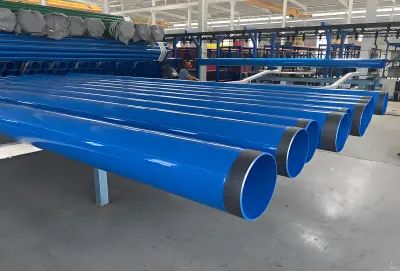
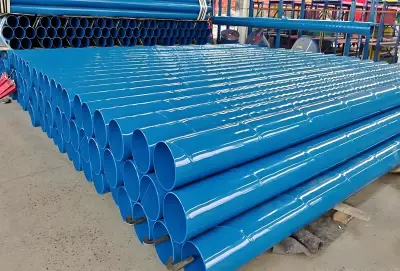
API 5L, ASTM A53, EN 10210, or AS/NZS 1163 steel pipes are the building blocks of anti-corrosion steel pipes. After that, the factory coats either the outside or the inside, or both. An FBE primer, an adhesive layer, and a polyethylene outer layer make up a 3LPE system. FBE is a single layer of epoxy that sticks very well. A lot of water pipelines use liquid epoxy. There is a primer that sticks to the steel, an adhesive that holds the layers together, and polyethylene that protects against impact and soil stress. With this system, you can choose the type of coating and the thickness that works best for the job.
What to Check Beyond the Coating Name?
A label like “3LPE” tells you nothing about the quality of the job. I always tell folks when they’re buying something to check at the records for surface prep, preheat, coating thickness, adherence and holiday detection. Holiday detection is an electrical test used to locate very small holes in a coating. Identify the standard that applies to the coating. In terms of coatings, ISO 21809-1 is about polyolefins, DIN 30670 is about polyethylenes, CSA Z245.20 is about external FBE, and AWWA C210 and C213 are about epoxy on steel water pipes. Also, ask how the supplier repairs damage and how the coating on the field joints will match the factory parts coating. These details affect whether the pipe lasts as long as it was designed to.
Performance and Coating Choice
Performance in Soil, Water, and Marine Exposure
Performance is driven by exposure. Indoors or outdoors where it is dry and moderate, galvanized pipe can last for many years and doesn't cost much to begin with. Zinc wears away more quickly in wet soil, salt, or industrial chemicals, and a thin layer doesn't leave much room for cracks. An even stronger barrier is created between the steel and its surroundings by coated pipe. When the lines are buried, this barrier works with cathodic protection. According to the NACE IMPACT study, corrosion costs the world economy about US$2.5 trillion a year, which is about 3.4% of the world's GDP in 2013. Those numbers show why pipeline owners are very careful about what protection they offer.
3LPE vs FBE vs Galvanizing
Each choice is good for a different task. 3LPE is often used for buried water, gas, and oil lines because the polyethylene layer can handle impact, soil stress, and moisture. FBE sticks well and doesn't react with chemicals, and it's put on in a controlled factory process. However, it doesn't protect against mechanical damage as well as 3LPE, so it needs to be handled carefully. Hot-dip galvanizing can be used for water service, fire protection lines, and building projects in mild climates. I think you should choose based on operating conditions instead of popularity. First, look at the risks of handling, temperature, fluid, and depth of burial. Then, match the coating to those limits.
Internal Corrosion and Field Joints
The fluid inside can't stop corrosion from the outside coating alone. Water, sewage, chemicals, oil, and gas can all damage the bore, so it might need to be lined with epoxy, FBE, or cement mortar. Linings also make the surface smoother, which makes it easier for things to move. The field joints also need care. Since welding burns off the coating at the ends of pipes, factories leave the cutbacks bare. After that, heat shrink sleeves or liquid epoxy are put over the weld by the crew. A common weak spot is when the factory coating doesn't match the material used in the field joint. To avoid this, I suggest that you agree on the joint system before you place the order.
Cost Comparison and Lifecycle Value
What Counts in Total Installed Cost?
The price paid per ton doesn't tell the whole story. The steel pipe, coating or galvanizing, inspection, certification, packaging, freight, installation, field joint treatment, maintenance, replacement, and downtime are all part of the total installed cost. If you have to dig up a buried line after 15 years, it could cost a lot more than the difference in price at the time of purchase. Most of the time, standard sizes of galvanized pipe cost less up front. Coated pipe usually costs more to buy, but in harsh environments, it can save you money on repairs and replacements. I tell buyers to price the whole project, not just the bill.
Price Drivers for Each Pipe Type
You can find different prices for anti-corrosion steel pipes based on their diameter, wall thickness, steel grade, coating system, coating thickness, internal lining, testing scope, quantity, and delivery location. One of the key factors that can vary is the size, because the Longma Group has exterior diameters from 60.3 mm to 1422 mm and wall thicknesses from 6.02 mm to 50.8 mm . The cost of galvanized pipe depends on the amount of zinc coating, the pipe size, the method of production, availability, certification and freight. If you require galvanizing kettles that are the proper size for large or lengthy pipes it can be tough to locate a source. Both things have pricing that are tied to the price of raw steel.
How to Compare Quotes Fairly?
Quotes only compare when the details are the same. Send the same pipe standard, grade, size, wall thickness, coating standard, coating thickness, lining, test requirements, and delivery terms to all of the suppliers. Ask for prices broken down by meter, by ton, or by delivery to site. Inspect, pack, protect the ends for shipping by sea, and provide repair materials are some of the things that each price contains. A lower number often leaves out tests or papers that you will need later. Putting line items next to each other makes it easy to see where there are gaps, and it also speeds up the technical review process with your QA/QC team.
How to Choose the Right Pipe for Your Project?
Define the Environment and Medium
First, decide where the pipe will be: above ground, underground, underwater, at sea or in a factory. Check the soil for pH, UV exposure, abrasion, temperature, pressure and resistivity. Then find out what's in the pipe and what the odds are that it'll corrode. Different forms of water include potable water, raw water, effluent, crude oil and gas need different linings. Place these results on one page of paper. It is utilized to select the coating and it offers all vendors the same information, so there is less back and forth when pricing.
Match Applications to Coating Systems
Depending on the quality of the water, how it will be buried, the diameter, and any approvals for potable water, water projects may need epoxy, FBE, cement mortar lining, or 3LPE. For buried transmission lines, oil and gas buyers often choose 3LPE. When adhesion or chemical resistance is important, they choose FBE. Distributors may keep galvanized pipe in stock in sizes that are commonly used and move quickly. However, contractors working on infrastructure and industrial projects often need coated pipe that is custom made for the job. OEM buyers should be clear about the size, steel grade, coating, tolerances, end finish, markings, and packaging from the start.
What Longma Group Can Supply?
Since 2003, Longma Group has been making ERW and LSAW steel pipe. By the end of 2023, we will have produced over 1,000,000 tons of steel each year. The body of our anti-corrosion steel pipe is made in line with API 5L, ASTM A53, EN 10210, and AS/NZS 1163. Some coating standards are AWWA C210 and C213, DIN 30670 and DIN 30678, CSA Z245.20, EN 10339, and ISO 21809-1. You can get both hot-dip galvanizing and FBE, 2PP, 3LPE, and 3PE from us, so you can compare the two. More than 90 countries get our packages.
Quality Control and Inspection Checklist
Checks Before Coating
A bad pipe can't be fixed by a good coating. Check the steel's grade, chemical make-up, mechanical properties, dimensions, weld quality, and surface cleanliness before starting the coating process. Longma Group gets its steel from mills like Baosteel, HBIS, TISCO, Shougang, and Shagang. We keep track of all of our products, from the raw materials to the finished pipes. We can find problems early on with the help of inspection tools and heat treatment of welds. Anyone you buy from should be able to give you mill test certificates and a plan for how to track each pipe back to its heat source.
Checks During Coating
During coating, inspectors check the surface's profile and preparation, the coating's thickness, whether it's curing or cooling, its ability to stick to other surfaces, its resistance to impact, and its ability to find holidays. The adhesion and cathodic disbondment tests are most important for buried lines because they show how well the coating stays on the steel when the protection current flows through it. Not just one sample report, but records for every production lot. Extreme temperatures are also something to talk about, so let your supplier know the lowest and highest temperatures that will be used and stored.
Final Inspection and Documents
During the final inspection, the item's appearance, dimensional tolerances, repair records, packing, and protection during shipping and loading are all checked. If you want to protect pipe ends, stacking, and dunnage from damage caused by bulk sea freight, ask how they will be done. Longma Group gives you a Material Test Certificate, an Inspection and Test Plan, and a Manufacturing Procedure Specification. We also have FPC, API 5L, ISO 9001, and ISO 14001 certificates. A full set of documents cuts down on disagreements and makes it easier for your team to accept materials on the job site.
Conclusion
You can't always tell the difference between galvanized pipe and anti-corrosion steel pipe. Galvanized pipe is useful for general construction, fire protection, and mild water service, and it's easy to find and buy. Covered pipe can be used in chemical, oil and gas, marine, buried, or submerged applications. It can be made with 3LPE, FBE, or epoxy systems that meet standards like ISO 21809-1, DIN 30670, and AWWA C210 and C213. These systems are made to last for a long time. The best choice isn't just based on price; it also depends on the conditions of the soil and fluids, internal corrosion, field joint compatibility, and the cost over the whole life of the product. Records of coating thickness, adhesion, and holiday testing are just as important as records of the type of coating. The most reliable way to make a decision is based on a written engineering review.
FAQ
Is anti-corrosion steel pipe always better than galvanized pipe?
No, galvanized pipe is good for mild areas and general building. It is better to use coated pipe for long-life, buried, marine, or chemical pipelines because it is stronger.
What is the difference between 3LPE and FBE?
It is made up of a single layer of epoxy that sticks well and doesn't break down easily when it comes to cathodic disbondment. 3LPE has an adhesive and an outer layer of polyethylene that protects better against mechanical damage, which is why it is often chosen for buried pipelines.
Can coated pipe be welded?
Yes. Pipes come with ends that are just cut off. Crews put on a field joint coating, like a heat shrink sleeve or liquid epoxy, after welding to make sure the protection lasts.
Which standards apply to coated pipe?
DIN 30670, ISO 21809-1, CSA Z245.20, and AWWA C210 and C213 are some of the most common. Pick based on the project's location and purpose.
Get an Anti-Corrosion Steel Pipe Quote from Longma Group
Longma Group can be reached at info@longma-group.com with information about your project. Our team will then suggest a coating system, a quote basis, and an inspection plan. As a company that makes anti-corrosion steel pipes and is certified by API 5L to do both ERW and LSAW production, we can offer both pipes and coatings. Type in the size, steel grade, standard, medium, and amount. To find out more, go to longma-group.com.