
When pipeline engineers and procurement managers look at oil and gas projects' transport infrastructure, choosing the right pipe type is a very important choice that affects both safety and cost. In this situation, API 5L X42 pipe is a useful option because it has a minimum yield strength of 42,000 psi (290 MPa) and a tensile strength of 60,200 psi (415 MPa). This carbon steel line pipe meets the standards set by the American Petroleum Institute Specification 5L. It is made to move water and fuels in a variety of operating settings. Because it has balanced mechanical qualities, it works well between basic utility piping and high-strength options. This means it can be used in low- to medium-pressure situations where dependability cannot be sacrificed.
|
|
|
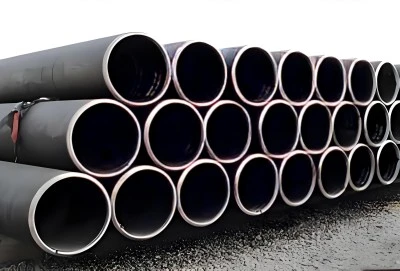
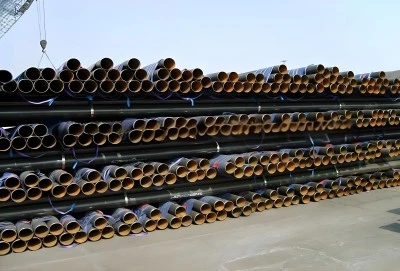
Comprehensive Technical Specifications of API 5L X42 Pipe
Engineers can make better material choices when they know about the technical aspects of this pipe type. The requirements include the chemistry make-up, mechanical features, production methods, and quality control rules that work together to make sure the performance is correct.
Chemical Composition and Alloying Elements
The chemicals that make up API 5L X42 grade steel have a direct effect on how well it welds, how tough it is, and how well it resists rust. The carbon percentage is usually between 0.26% and 0.28%, which gives the metal enough strength without being too hard, which could make field welding less effective. Around 1.30 percent manganese amounts make things stronger and help them deoxidize while they're being made. In the PSL2 standards, phosphorus and sulfur levels must be below 0.030% and 0.030%, respectively, to keep the steel from becoming brittle and hot cracking during the manufacturing process. Having about 0.40% silicon in something makes it stronger and removes oxygen. These controlled compositions make sure that the material acts as expected under working stress while still being easy to work with during installation.
Mechanical Properties and Compliance Standards
When figuring out wall thickness and pressure levels, pipeline builders need accurate mechanical data. The API 5L X42 grade has a minimum yield strength of 290 MPa and a minimum tensile strength of 415 MPa. This gives midstream uses a safety cushion for situations where internal pressure could happen. The elongation qualities are usually higher than 20%, which means the material is flexible enough to handle installation pressures and small ground movements without breaking. Charpy V-Notch impact testing, which is required by PSL2 standards, checks how tough something is to break at certain temperatures. This is very important for pipes that work in cold places or underwater, where the risk of breaking easily rises.
Manufacturing Processes and Heat Treatment
We use a variety of welding methods to make API 5L X42 pipes that fit the needs of each job. Electrical Resistance Welding (ERW) uses high-frequency induction heating to make lines from 1/2" to 24" in diameter. For normal uses, it is a cost-effective method. Longitudinally Submerged Arc Welding (LSAW) makes large pipes up to 80" by rolling steel plates into cylinders and welding longitudinal seams. It is great for trunk line projects. Spirally Submerged Arc Welding (SSAW) makes continuous spiral seams, which gives you more options for diameter and wall thickness. After welding, the weld area is heated to about 900°C and then cooled slowly to get rid of any residual stresses and irregularities in the grain structure.
Quality Control and Testing Protocols
Before a pipe section is shipped, it is carefully inspected to make sure it meets all the requirements. Chemical component analysis using spectroscopic methods checks the elemental composition against standard limits. Tensile testing on sample coupons checks the yield strength, ultimate tensile strength, and elongation percentages. Ultrasonic testing finds internal laminations or inclusions that could weaken the pipe's integrity. Hydrostatic testing applies pressure inside the pipe that is higher than the design limits, usually 1.5 times the rated pressure, and holds it for a certain amount of time to find leaks or weaknesses. X-rays of weld seams show any porosity, incomplete fusion, or slag inclusions that can't be seen on the surface. Our nondestructive testing protocols are in line with API 5L requirements, and we give engineering contractors all the paperwork they need for project approval and regulatory compliance.
Key Applications and Advantages of API 5L X42 in Oil & Gas Pipelines
It is possible to use API 5L X42 pipes in many different types of industries because they have balanced performance qualities that meet operating needs without adding extra costs.
Primary Applications Across Industries
X42 pipes are used a lot in midstream oil transmission networks for gathering systems and secondary trunk lines that work below 1,000 psi. Natural gas distribution systems choose this grade for regional transmission lines that work at 400 to 800 psi because it is strong enough and easy to weld, which cuts down on installation time. API 5L X42 pipes are used in water injection systems in enhanced oil recovery projects to move large amounts of water from treatment facilities to injection wells, where corrosion resistance and pressure capacity balance against project economics. Offshore platform flowlines in shallow water depths use PSL2 seamless variants, where Charpy impact properties ensure safety against dynamic loading from wave action and thermal cycling. District heating infrastructure uses API 5L X42 pipes to distribute hot water, often with internal FBE coatings to prevent scaling and corrosion over decades of service.
Core Advantages in Pipeline Design
Cost-effectiveness is the most obvious benefit, as API 5L X42 pipes usually cost 15-20% less than higher grades like X52 or X60 while still being strong enough for uses below 1,200 psi design pressure. Better weldability cuts down on field labor costs and speeds up construction schedules, as the controlled carbon content means that the pipes don't need to be heated up as much and are less likely to crack during welding. The grade also accepts a variety of corrosion protection coatings, such as 3LPE, FBE, and coal tar enamel, which increases the pipes' service life in harsh soil conditions or marine environments. Size customization across diameters from 21.3mm to 2032mm and wall thicknesses from 6.35mm to 59.54mm lets engineers make the best designs for specific flow rates and pressure needs without having to over-specify.
These benefits directly affect how well a project is done. When purchasing managers look at the total installed cost instead of just the price of the materials, API 5L X42 is often the best choice for medium-duty applications because it has a lower acquisition cost, less complicated welding, and a good performance envelope.
Real-World Performance Examples
Many projects around the world have shown how reliable API 5L X42 specifications are in tough conditions. For example, a regional gas transmission project in Southeast Asia used 150 kilometers of 24-inch API 5L X42 ERW pipe operating at 720 psi. This pipe's moderate strength and excellent weldability made it possible to build quickly through difficult jungle terrain. An Australian water distribution expansion used 36-inch LSAW X42 pipe with 3LPE coating for buried service in salty soils, and it has been leak-free for over 25 years. Offshore platform modifications in the Middle East used PSL2 seamless API 5L X42 pipes for riser replacements. Charpy-tested material gave confidence in low-temperature performance even when temperatures fluctuated during winter operations.
In-Depth Comparison: API 5L X42 vs Other Pipe Grades
In order to choose the right material, you need to know how API 5L X42 stacks up against other types and materials in terms of performance and cost.
X42 Versus X46 and X52 Grades
The progression from API 5L X42 to higher grades involves strength increases accompanied by cost and fabrication considerations. X46 offers approximately 10% higher yield strength at 46,000 psi (317 MPa), which allows modest wall thickness reductions in pressure calculations but typically commands a 5-8% price premium with minimal practical advantage in applications below 900 psi. X52, with its 52,000 psi (358 MPa) yield strength, enables engineers to reduce wall thickness by roughly 15-20% compared to API 5L X42 for equivalent pressure ratings, generating weight savings that become significant in large-diameter, long-distance projects. However, X52 costs approximately 18-25% more than API 5L X42 and may require more stringent welding procedures including mandatory preheating in cold weather conditions. The decision point typically centers on project design pressure: below 1,000 psi, API 5L X42 remains more economical despite thicker walls; above 1,200 psi, X52 becomes cost-competitive due to material tonnage savings.
Carbon Steel vs Stainless Steel Alternatives
Although stainless steel pipes are better at resisting corrosion, especially in sour service environments with high chloride or hydrogen sulfide levels, austenitic stainless grades like 304L or 316L are much more expensive than carbon steel API 5L X42. This means that they are only a good investment when the corrosion rate would require replacing carbon steel within 10 to 15 years. Carbon steel API 5L X42 with the right coatings (3LPE exterior, FBE interior) usually has a 30 to 40 year service life in most soil conditions and sweet service applications, with lifecycle costs much lower than stainless alternatives. In sour service conditions, specifying API 5L X42 with Annex H compliance and HIC-resistant properties is enough to protect, but still costs a lot less than stainless steel.
Selection Guidance for Procurement Professionals
When choosing materials, it's important to make sure that technical needs, budgets, and government rules are all met. For projects with design pressures below 900 psi, API 5L X42 specifications are the most cost-effective and safest option. Applications that involve a lot of field welding should choose API 5L X42 over higher grades because it's easier to weld and requires less quality control work. Coating choices should be based on the environment instead of changes in the base material grade; API 5L X42 with the right external protection works just as well as higher grades in corrosive soils. Regulatory compliance, especially API 5L PSL2 certification, should be required when projects are in places that require mandatory Charpy testing or stricter chemical composition limits. This is worth the 8–12% cost increase for documented quality assurance.
Conclusion
If you're choosing pipeline materials, you have to balance technical needs, cost, and the reliability of the supply chain. API 5L X42 grade pipes are useful for oil and gas transmission, water systems, and industrial applications that work at moderate pressures. They are a good compromise between basic utility piping and premium high-strength alternatives because they are sufficiently strong, easily welded, and affordable. To be successful in procurement, you need to understand technical specifications, compare options objectively, and work with manufacturers who offer consistent quality and full support. Projects benefit when engineering teams are clear about what they need and procurement professionals find suppliers who can deliver certified products with full documentation on predictable schedules.
FAQ
What distinguishes PSL1 from PSL2 specifications in X42 pipes?
PSL2 specifications have stricter quality requirements than PSL1. For example, Charpy V-Notch impact testing is required to make sure that the material is tough enough to break at certain temperatures. PSL2 also limits the maximum yield strength to avoid making the material too hard, which could make welding in the field more difficult. Finally, there are stricter controls on the amount of carbon, phosphorus, and sulfur in the material to make it easier to weld and less likely to crack. These extra requirements raise the cost of the material by 8–12% but give more assurance in critical applications where failure would have serious consequences. Projects in cold climates or offshore environments usually have to follow PSL2 specifications. Onshore applications in mild climates usually can use PSL1 specifications when project codes allow it.
Can X42 pipes handle sour service environments containing hydrogen sulfide?
Standard API 5L X42 production doesn't automatically meet the requirements for sour service applications where hydrogen sulfide concentrations are higher than the levels set by NACE MR0175/ISO 15156. To meet these requirements, you must specify Annex H compliance when placing your order, which requires controlled steel chemistry with lower sulfur content and specific inclusion controls to resist Hydrogen Induced Cracking. HIC-tested material goes through specialized testing according to NACE TM0284 to confirm resistance to hydrogen embrittlement. This specification adds about 15 to 20% to the cost of the material but allows safe operation in sour environments that would otherwise need much more expensive alloy materials.
How does coating selection affect the total project cost and timeline?
External coating application greatly extends the service life of a pipeline, but it also has an effect on project budgets and schedules. FBE (Fusion Bonded Epoxy) coating costs about $8–12 per square meter and adds 5–7 days to production schedules. It provides good corrosion protection for moderate soil conditions. 3LPE (Three-Layer Polyethylene) coating costs $15–22 per square meter and takes 10–12 days to apply and cure. It provides better mechanical protection and the longest service life in harsh environments. The decision should compare coating costs to expected maintenance costs and possible replacement costs over the pipeline's design life, with 3LPE usually being the most cost-effective choice for buried pipelines designed to last 40 years or more.
Partner with a Reliable X42 Pipe Manufacturer for Your Next Project
Our ISO-certified factory makes ERW and LSAW steel pipes that meet the strict needs of the world's oil and gas infrastructure. We make API 5L X42 pipe in sizes ranging from 1/2" to 80" in diameter, with wall thicknesses from SCH10 to SCH160. All of our pipes are tested thoroughly and come with full documentation packages. We also offer full anti-corrosion services, such as 3LPE, FBE, and hot-dip galvanizing, to make pipelines last longer in harsh environments. Contact our technical team at info@longma-group.com to talk about your project requirements and get detailed quotes from a reliable API 5L X42 pipe supplier who is committed to quality and on-time delivery.