
How well your pipeline project goes will depend on which seller you choose for line pipe materials. If you don't, you could face costly delays and compliance fails. A list of questions to ask when choosing an API 5L X42 pipe provider helps project managers, procurement managers, and pipeline engineers evaluate producers systematically based on their technical ability, compliance with certifications, production capacity, and the reliability of their logistics. This type has a minimum yield strength of 42,000 psi (290 MPa), and it is used around the world for low- to medium-pressure water distribution systems, oil and gas transportation, and building structures. The checklist method lowers vendor risk, makes sure that materials can be tracked, and makes sure that seller performance matches project needs in the Middle East, Australia, Southeast Asia, and other places.
|
|
|
Understanding API 5L X42 Pipe Specifications and Their Impact on Selection
Before you can properly evaluate a provider, you need to know what quality means in this material area. API 5L X42 is a designation for carbon steel line pipe made according to the strict guidelines set by the American Petroleum Institute. It is intended to carry oil, natural gas, and water. The material has a minimum yield strength of 42,000 psi, which is shown by the "X42" designation. Its minimum tensile strength is at least 60,200 psi (415 MPa). The pipe can handle both internal and exterior loads because it has the right amount of strength and flexibility. It can also be welded and broken without any problems.
Chemical Composition and Mechanical Properties
Chemical makeup has a direct effect on how well something welds, how tough it is, and how well it resists rust. Carbon content is usually between 0.26% and 0.28%, and sulfur and phosphorus levels are kept within limits (≤0.030%) and 0.030%) to keep the material from breaking easily when it gets cold. Manganese, silicon, and other alloying elements make the metal stronger while still allowing it to stretch enough (usually above 21%) to handle ground movement and heat expansion. Ask for detailed mill test certificates (MTC) that show the real results of chemistry and mechanical tests when you are reviewing sources. Check that the values given meet both API 5L PSL1 and PSL2 requirements, based on how important your service is. PSL2 has stricter chemical tolerances and requires Charpy V-Notch impact tests to make sure it can't break at low temperatures. This makes it suitable for use on offshore bases and in the arctic.
Heat Treatment and Manufacturing Processes
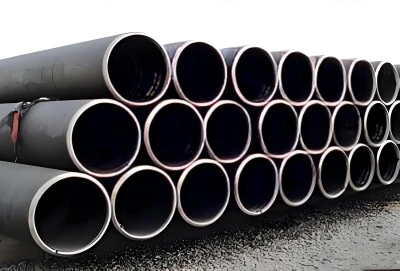
The way a pipe is made affects its stability and regularity in size. ERW (Electrical Resistance Welded) pipes are heated with high-frequency induction to join the longitudinal seams together. This is followed by an online heat treatment to level out the weld zone and recover the mechanical qualities. Longitudinally Submerged Arc Welded (LSAW) pipes use plate forming and double-sided submerged arc welding to make walls that are straighter and more uniform in thickness for uses with a width of 16 inches or more. Even though they are more pricey, seamless pipes don't have any problems with welds and can handle high-pressure or bad service. A good provider should be clear about their welding methods, how they treat the metal after the welding process, and the quality control checks that happen at every stage of production. This makes people more sure that the limits for dimensions—outer diameters from 1/2" to 80" and wall thicknesses from SCH10 to SCH160—will always meet requirements.
Inspection and Testing Protocols
Non-destructive testing protects against secret flaws that could make api 5l x42 pipe less safe. Ultrasonic testing (UT) finds cracks, laminations, and weld breaks inside the pipe body all the way through. Hydrostatic testing uses internal pressure that is higher than the design limits to make sure the structure is solid before it is shipped. X-ray inspection checks the quality of the weld, especially at the seam surfaces, to find holes, slag particles, or areas where the metal hasn't fused completely. Chemical research confirms the make-up of the material, and mechanical testing using standard examples proves the tensile strength, yield strength, and elongation. Suppliers who offer full inspection and test plans (ITP) show that they are responsible and follow the rules. Request proof of tracking from the heat numbers of the raw materials to the final tests. This will make sure that each pipe length can be linked to the steel mill where it came from and the production batch it was made in.
Supplier Evaluation Criteria Based on Technical and Quality Requirements
Finding a partner that always produces material that meets specifications means looking at a lot of different areas of their technical knowledge and operating skills.
Certification and Compliance Verification
Certifications that are known around the world give third parties proof that quality control systems and technical standards are being followed. When a manufacturer gets API 5L certification, it means they meet the standards for pipe specifications and are regularly checked by API-authorized testers. ISO 9001 certification proves that a quality management system works, and ISO 14001 certification shows that a company cares about the environment. Getting OHSAS 18001 (or ISO 45001) approval shows that you care about worker health and safety. Longma Group keeps all of these licenses up to date, along with Factory Production Control (FPC) certificates. This lets us work on projects that need to follow a wide range of rules, such as European PED laws and Australian AS/NZS standards. Check the validity dates and breadth of the certificates when looking at the credentials of a provider. Some certifications only cover certain product lines or production sites.
Manufacturing Capacity and Technical Capabilities
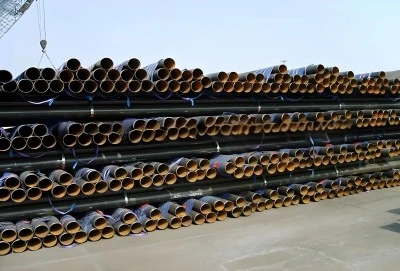
Production scale shows if a supplier can meet the number and supply schedules of a project. Longma Group has 230,000 square meters of production space that can hold more than 1,000,000 tons of goods every year. This lets us handle big orders for building pipelines without affecting lead times. Our factories make ERW pipes with diameters from 1/2" to 24" and LSAW pipes with diameters from 16" to 80". These sizes cover all of the requirements for API 5L X42 uses. Check to see if the provider has separate production lines for each type of welding. Specialization in this area is usually linked to process knowledge and consistent quality. Find out how old the equipment is and what kind of technology it uses. For example, new pipe mills with automatic ultrasonic testing systems and computerized dimensional checking can make standards that are much tighter than older human methods.
Raw Material Sourcing and Traceability
The quality of the steel coils and plates directly affects how well the finished pipe works. Reliable sellers get their steel from well-known steel mills that have a history of metal stability. Longma Group only buys raw materials from the best steel companies in China, such as Shagang, Shangang, TISCO, BX Steel, Shougang, HBIS, and Bao Steel. This approach of using more than one source lowers supply risk and makes sure that materials are always available, even when market conditions change. Each lot of steel comes with a mill certificate that lists the chemical and mechanical qualities as well as the production factors. Full tracking systems connect these source papers to specific pipe heat numbers, which lets you see the history of a material from the time it is made in steel to the time it is installed. This makes it possible to track things during third-party reviews and regulatory audits, especially for projects that need to follow NACE MR0175 or extra standards set out in API 5L Annex H.
Comparing API 5L X42 Pipes and Alternative Grades or Materials: Making the Right Choice
When choosing a material type, you have to weigh the needs of the product against the costs and mechanical performance.
Performance Trade-offs Between X42 and Higher Grades
It is in the middle of API 5L Grade B (35,000 psi yield) and higher-strength types like X52 (52,000 psi yield) or X65 (65,000 psi yield). When compared to Grade B, API 5l X42 pipe has a 20% higher yield strength, which means that engineers can make the walls thinner while still getting the same pressure ratings. This thinner wall saves money on materials, makes it easier to move, and makes it easier to handle during installation. On the other hand, X52 and X65 grades allow for higher working pressures or thinner walls, but they are more expensive and may make welding harder by needing to be heated up first and then treated with heat after the welding is done. X42 is the best choice for city gas distribution, water transmission mains, and gathering lines that work below 1,000 psi because it's strong enough to meet design standards without adding extra costs.
When to Choose Seamless Over Welded Construction?
Seamless pipes don't have a lengthwise weld line, so their mechanical features are the same in all directions. They are also better at resisting stress corrosion cracking. Because of these benefits, seamless construction is better for sour gas service, high-pressure injection wells, and important offshore risers where worries about weld quality are more important than cost. ERW and LSAW pipes work very well in high-stress situations and are the most cost-effective choice for large-diameter transmission lines where quality of welding can be closely monitored. Modern ERW methods that use 100% ultrasonic weld checking get results that are almost as reliable as seamless pipes, but they are much cheaper. When choosing a material, you should look at the working temperature, cyclic loads, H2S content, and CO2 partial pressure, as well as the service conditions, to see if the extra cost of seamless construction is worth it.
Corrosion Resistance Considerations
To keep soil-side rust from happening in underground service, carbon steel line pipe needs to be coated on the outside and given cathodic protection. Different types of fluids have different effects on internal rust. Sweet oil and natural gas have low attack rates, while sour hydrocarbons, produced water, and CO2-saturated fluids speed up the process. When mixed with the right inhibitors and protective coatings, X42 chemistry gives a basic level of rust protection that works well in pipeline settings. Stainless steel and corrosion-resistant metals are more resistant than carbon steel, but they are much more expensive, so they can only be used in harsh environments or places with a lot at stake. When considering options, you should look at the total lifetime costs that include the material, coating, cathodic protection, inspection, and upkeep. For normal transmission uses, carbon steel with engineered safety systems usually has the lowest total cost of ownership.
Conclusion
Using a structured source selection process changes buying API 5L X42 pipe from a one-time thing to building long-term partnerships. By looking at technical specs, manufacturing abilities, certification compliance, and logistics performance, providers can be chosen that will deliver consistent quality while still making project deadlines and budgets. Understanding the qualities of the material, comparing different grades, and making sure that specs match the needs of the application are the best ways to improve design efficiency and lifecycle cost. Successful procurement teams use the technical knowledge of their suppliers to help with choosing materials, planning installations, and providing support in the field. They do this by building relationships with their suppliers that go beyond individual deals. This all-around method lowers the risk of the project, makes pipelines more reliable, and builds a supply chain that can handle long-term infrastructure growth in markets around the world.
FAQ
What certifications should API 5L X42 pipe suppliers provide?
Reliable sellers keep their API 5L product certification up to date by having third parties audit their products on a regular basis to make sure they meet pipe standards. Systematic process controls are proven by ISO 9001 quality management certification. Environmental duty is shown by ISO 14001 and safety by OHSAS 18001 certifications. Certifications that are specific to a project might include PED compliance for installations in Europe or plant production control certificates for markets that are controlled. Ask for up-to-date certificates that cover the right types of products and places where they are made.
How does PSL1 differ from PSL2 in API 5L X42 pipe?
PSL2 standards have stronger requirements, such as Charpy V-Notch impact tests to make sure the material is tough at low temperatures, stricter limits on carbon and impurities in the chemical composition, and maximum yield strength caps to stop the material from becoming too hard. PSL1 is for general uses where normal quality standards are met, while PSL2 is for important installations that need higher fracture strength and weldability assurance.
Can suppliers provide custom lengths and end treatments?
Well-known companies can meet specific needs, like non-standard lengths of 6 to 18 meters, sharpened ends (BE) ready for welding, plain ends (PE) for mechanical couplings, and threading for screwed connections. Value-added services make it possible for pipes to be delivered ready to be installed, which cuts down on the work that needs to be done in the field and speeds up the building schedule.
What delivery lead times are typical for bulk orders?
Standard specs that match current stock can be shipped within seven days, which helps with pressing needs and substitute situations. Custom orders that need to get special materials, have non-standard sizes, or need extra testing usually take six to eight weeks from the time the order is confirmed until it is delivered. Early involvement of suppliers in the planning stages of a project allows for a production schedule that is in sync with building goals.
Partner with Longma Group for Reliable API 5L X42 Pipe Supply
Longma Group is ready to help you with your pipeline projects by providing approved, high-quality line pipe material that is backed by 20 years of factory greatness. As a well-known API 5L X42 pipe provider that works with customers in over 90 countries, we offer advanced production tools, thorough quality control systems, and quick customer service. Our yearly capacity of 1,000,000 tons provides a steady supply for projects of any size, and our value-added manufacturing and coating services make it easier for you to manage your purchasing. You can talk to our technical team at info@longma-group.com about your needs, get full quotes, or set up building inspections. You can feel confident when you work with a maker that is dedicated to technical excellence, full paperwork, and on-time delivery.








