
Understanding cross-standard equivalencies can help you save a lot of money when buying pipeline materials for important building projects. For seamless and welded line pipe uses, API 5L X46 pipe mostly matches EN 10208-2 L320NB/MB. For structural hollow parts, it matches EN 10219 S355J2H. Both guidelines say that carbon-manganese steel must have a minimum yield strength of 320 MPa (46,400 psi). This means that they can be used for the same things, like transporting oil and gas, building things, and providing water and electricity.
While API 5L focuses on toughness and weldability requirements that are specific to pipelines, the EN standards offer more manufacturing options and size limits that are more in line with European regulations. By seeing these similarities, buying managers can find a wider range of suppliers and get better prices without sacrificing technical accuracy.
|
|
|
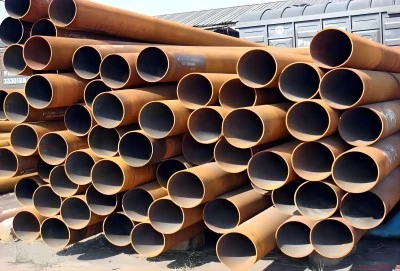
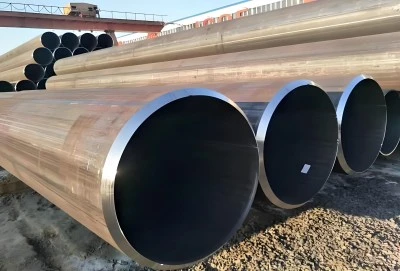
API 5L X46 Pipe Specifications and EN Equivalent Materials
Core Specifications of API 5L X46 Grade
API 5l X46 pipe is a type of medium-strength carbon steel that is widely used in both inland and offshore pipeline networks. The "X46" name comes from the fact that it has a minimum yield strength of 46,000 psi, which means it can handle high pressures well while still being easy to weld.
This grade meets a range of operating needs because it comes in both PSL1 and PSL2 standards.
- PSL1 is good for general-purpose uses and has standard chemical makeup limits.
- PSL2 requires Charpy V-notch impact tests at certain temps, tighter chemical controls to make welding easier, and repair welding is not allowed on pipe bodies.
ERW, HFW, LSAW, DSAW, and SSAW welding processes are used in the manufacturing process, along with seamless production for tough working conditions. The outside sizes of these pipes range from 1/2" to 80", and the wall thicknesses from SCH10 to SCH160. Lengths can be anywhere from 6 to 18 meters, based on how they will be transported and installed.
The chemical make-up usually has less than 0.26% carbon, between 1.20 and 1.45% manganese, and limited amounts of niobium, vanadium, and titanium, adding up to less than 0.15%. This micro-alloyed mixture creates an acicular ferrite and bainite microstructure that is more flexible and tough at low temperatures than regular carbon steels.
Tensile strengths of at least 435 MPa are confirmed by mechanical testing methods, and extension percentages make sure that the material is flexible enough for field bending operations. Every pipe goes through hydraulic pressure testing, ultrasonic study of all weld joints, dimensional verification, and chemical analysis that is recorded on full mill test reports.
European Norm Equivalents: EN 10208-2 and EN 10219
Line pipe for flammable fluids and water is regulated by EN 10208-2. L320 is the exact equal to API 5l X46 pipe because its yield strength limits are the same. There are two types of requirements in the standard: Class 1 (basic) and Class 2 (strict). Class 2 is similar to API 5L PSL2's higher quality requirements. EN 10208-2 L320NB (normalized) and L320MB (thermomechanically rolled) have similar mechanical qualities. This means that European producers can use local heat treatment methods that are better at saving energy and making the grains smoother. Chemical limits are very similar to API requirements. However, EN standards allow slightly wider manganese ranges to account for different ways of making steel in different member states.
EN 10219 talks about structural hollow sections that are used in building and on offshore platforms. S355J2H can be used instead when structural needs are more important than fluid transfer needs. This grade has an impact hardness that was tested at -20°C and a yield strength of 355 MPa, which is slightly higher than X46. S355J2H is not a direct replacement for API-certified steel for hydrocarbon pipeline uses, but it is better for jacket structures, bracing elements, and support frames where higher strength-to-weight ratios lower total tonnage and manufacturing costs. By knowing these differences, you can avoid making design mistakes that could hurt operating safety or compliance with regulations.
There are small differences between standards in the production error bands. EN allows slightly wider ovality margins for large-diameter pipes, which is in line with how pipes are inspected and made in Europe. Similar rules are used to measure wall thickness, but EN 10208-2 allows a production under-tolerance of 12.5%, while API only allows a 12.5% minus tolerance and strict statistical process controls. While these differences don't usually have an effect on performance in the field, they do have an effect on the acceptance standards for dimensional inspections during quality audits and third-party verification processes.
Supplier Selection and Certification Validation
Checking for current API 5L licenses through the American Petroleum Institute's online register, making sure mill capabilities match project requirements, and making sure ISO 9001 quality management systems show consistent process controls are all things that need to be done to find qualified makers. Mills that make both API- and EN-certified pipe give buyers options when they need to buy something because of a lack of supplies or a better price. Longma Group has many certificates, such as API 5L, ISO 9001:2016, EN 10204 Type 3.1, and workplace health and safety credentials, that show our dedication to making the best products possible according to international standards.
Verification of the trustworthiness of a certificate stops fake documents from getting into global supply chains. Material can be tracked from the steel mill to the project site by comparing heat numbers on mill test records, making sure the signs of third-party inspection witnesses are real, and making sure the lab is accredited. Manufacturers with a good reputation offer complete documentation packages that include manufacturing procedure specifications (MPS), inspection and test plans (ITP), material test reports (MTR), and dimensional inspection records. These make it easier for regulators to approve products and for contractors to follow quality assurance rules.
Lead times are very different depending on how complicated the specifications are and how the market is doing. Standard API 5L X46 PSL1 pipe grades with popular sizes can usually be shipped within 7–10 days from stock. However, custom chemicals, impact testing needs, or odd combos of sizes may make the manufacturing process take 6–8 weeks. When buying EN versions from European mills, you have to deal with the same time limits. Transcontinental deliveries by ocean freight take an extra 4 to 6 weeks. Strategic buyers keep relationships with several sources in different parts of the world to protect themselves against regional capacity issues and currency changes that can sometimes mess up strategies for buying from just one source.
Selecting API 5L X46 or Its EN Equivalent for Your Project
Matching Material Properties to Project Requirements
To choose the right material, you need to do careful design pressure estimates that include safety factors, temperature derating, and corrosion limits that are required by pipeline codes. The X46 grade is good for moderate-pressure uses; the highest pressure that can be used is between 600 and 1400 psi, based on the width, wall thickness, and design temperature. For projects that go over these limits, you need to switch to X52, X60, or higher grades instead of making up for it by adding too much wall thickness, which raises the cost of materials and makes welding more difficult.
Conditions in the environment have a big effect on the choice of materials. Installations in areas that are prone to earthquakes benefit from API 5l X46 pipe's high elasticity and strain capacity, which allow it to absorb ground movement without breaking. For work in the Arctic or other cold places, the requirements are PSL2 or EN Class 2, along with impact tests at service temperatures to make sure the materials have the right amount of fracture toughness to avoid catastrophic failures in the winter. Offshore and coastal environments need better corrosion protection, like internal lining, cathodic protection systems, and premium external coatings. These work regardless of the grade of the base material, but they depend on the quality of the substrate and how well the surface is prepared, which can only be done with controlled manufacturing processes.
Because of limited funds, lifetime cost analysis is needed instead of just comparing material prices. Higher-grade materials cost more at first, but if you don't need as thick of walls, you may save money on welding supplies, building work, and transportation costs that cancel out the difference in material costs. On the other hand, choosing lower-quality types that need to be hydrotested, maintained, or replaced too soon is ultimately not worth it when compared to properly chosen materials that last 30 to 50 years.
Specification Communication and Quality Assurance
Clear wording in purchase orders keeps them from being unclear, which can lead to compliance issues and expensive rework. It is important for technical specifications to clearly state the standards that apply (API 5L PSL1/PSL2 or EN 10208-2 Class 1/2), the grade, the manufacturing method, the size requirements with tolerances, the end preparation (plain or beveled), the testing protocols that go beyond the standard requirements, and the deliverables for documentation. Special needs like NACE compliance, extra impact testing, tighter limits on dimensions, or a certain heat treatment must be clearly stated so that mill production planning can handle them.
Third-party testing services make sure that the manufactured pipe meets the buyer's standards before it is shipped. The scope of an inspection usually includes checking the dimensions, looking at the item closely, trying the mechanical properties and pressure approval with a witness, looking over the paperwork, and making sure the markings are correct. Professional inspection services raise the cost of buying things by 2 to 4 percent, but they lower the chance of getting materials that don't meet standards, which can delay building and lead to contract disputes. Mills that have worked on foreign projects before make it easier for inspectors to get to the work and provide paperwork in English, which makes it easier for all the teams working on the project to get approvals.
Setting clear acceptance criteria before production stops people from judging subjectively conditions that are close to being acceptable that are found during inspection. Setting limits on the size of defects that are acceptable, the state of the surface, and the way that dimensional tolerances are enforced (accept/reject vs. engineering review for small differences) sets clear expectations that speed up the final acceptance and payment processes.
Conclusion
Finding the similarities and differences between API 5l X46 pipe and EN standards helps purchasing professionals make the best use of global supply networks to find the best products at the best prices while still upholding technical purity. The functional similarity between X46, EN 10208-2 L320, and EN 10219 S355J2H allows specification flexibility that encourages open bids, lowers the risk in the supply chain, and speeds up the time it takes to deliver projects. Knowing the subtle differences between materials' mechanical qualities, testing needs, and production methods helps choose the right materials for pipeline and building projects that are in line with practical needs, environmental conditions, and government rules. A good procurement process strikes a balance between technical performance, cost effectiveness, and supplier dependability. This is done by carefully crafting specifications, checking the quality of all materials, and working together with manufacturers to make sure materials meet strict standards are delivered on time, even if the construction schedule is tight.
FAQs
What distinguishes API 5L X46 PSL1 from PSL2 specifications?
PSL2 requires Charpy V-notch impact testing at certain temperatures to check how tough the notch is. It also sets maximum yield and tensile strength limits to make sure the material is flexible enough, doesn't allow repair welding on pipe bodies, and has stricter chemical composition controls to make welding easier. Standard chemicals and mechanical qualities make PSL1 useful for a wide range of uses, but it doesn't need to be tested for impact unless specifically asked for.
Can EN 10208-2 L320 substitute directly for API 5L X46 in pipeline projects?
The qualities of the materials are very similar, but acceptance is based on meeting regulations. Projects that need to follow U.S. pipeline safety rules or foreign standards that use API specifications usually need API-certified pipe that has the right markings and mill test certificates. Direct replacement is possible for European projects that follow EN norms. Before choosing materials, make sure they meet the standards of the project and the laws in the area. This will help you avoid problems with compliance during building.
How does welding procedure differ between X46 and higher-grade materials?
Compared to grades X60 to X80, X46 has a smaller carbon equivalent (usually 0.38 to 0.42%), which makes the heat-affected zone less hard and less likely to crack from hydrogen. This allows for a wider range of heat inputs, lessens the need for preheating in mild temperatures, and works in fields with less strict weather controls. Higher grades need more precise controls over the welding parameters and often need minimum warming temperatures no matter what the outside temperature is.
Partner with a Trusted API 5L X46 Pipe Manufacturer
Longma Group is ready to help you with your pipeline and building projects by providing you with high-quality API 5L X46 pipe that is made to strict international standards. Since 2003, we've been one of the biggest LSAW and ERW pipe makers in China. Each year, we send over 1,000,000 tons to customers in 90 countries, and we're known for our steady quality, wide range of certifications, and quick expert support. Our factories use high-tech heat treatment tools and checking methods like ultrasonic testing, hydrostatic pressure approval, measurement verification, and full chemistry analysis to make sure that every pipe meets or beats API 5L, ISO 3183, and EN standards.
We only buy high-quality raw materials from trustworthy local mills like Shagang, TISCO, and Bao Steel, and we make sure that the whole process is fully traceable, from the steel bar to the finished product. Our engineering team does all kinds of manufacturing work, like welding, beveling, and protecting against rust with hot-dip galvanizing, FBE, and multi-layer polyethylene coating systems. Every shipment comes with full paperwork packages that include MTC, ITP, MPS, and third-party inspection reports. This makes it easier for governmental approvals and quality assurance processes for contractors. Talk to our procurement experts at info@longma-group.com about your project needs and find out why engineering workers, procurement managers, and plant equipment managers all over the world choose Longma Group as their first choice for mission-critical API 5L X46 pipe needs.








