
There are two kinds of API 5L X56 pipes. They are called PSL1 and PSL2. Everyone is made to meet a different set of needs. You can get by with the PSL1 standard, which is fine for most transporting needs. We need to be more careful with the materials we use in PSL2 and make sure they can handle being hit. We should also limit their yield strength so that they don't break under pressure or in risky scenarios.
Because of this difference, people can choose what to buy, projects can have safety breaks, and oil and gas pipelines, water pipelines, and industrial process pipes will last for a long time.
|
|
|
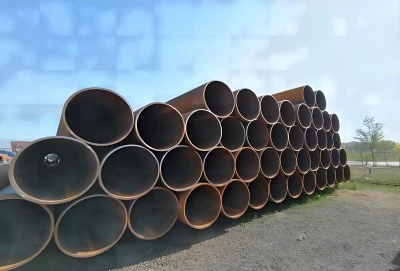
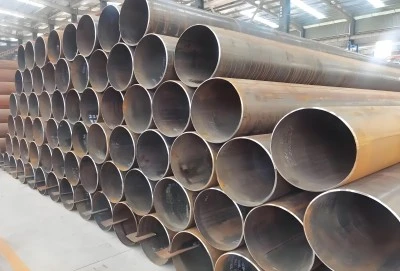
Detailed Comparison of API 5L X56 PSL1 vs PSL2 Pipes
Several business and professional factors work together to decide if a project meets these levels of requirements. API 5L X56 pipe management and composition allow makers to pick where to get their raw materials and how to treat them over heat.
Chemical Composition Tolerances and Control
When PSL1 is used, it's easy for makers to pick where to get their raw materials and how to treat them over heat. The amount of carbon can be as high as 0.31%, and the carbon equivalent (CE) can be found, but it's not required. This method works best for jobs where the ability to weld isn't very important and the temperature stays about the same.
As of now, API 5L X56 PSL2 sets 0.43% as the highest carbon equivalent number for grades up to X65. To get these numbers, use the IIW formula: CE = C + Mn/6 + (Cr+Mo+V)/5 + (Ni+Cu)/15. The heat-affected zone (HAZ) is not as hard when CE values are low, so it is easier to weld. You don't have to pre-heat as much. This is very helpful for welding jobs that need to be done outside, where it can be hard to keep the temperature steady between passes.
Testing Protocols and Quality Assurance
In a big way, these kinds of specifications don't check the quality of the same thing. To make sure there are no leaks, PSL1 needs to be stretched, flattened, and put under hydraulic pressure. When ultrasound or electromagnetic waves are used for non-destructive testing (NDT) on joint cracks, breaks are found on and below the surface.
PSL2 needs the same things as PSL1, plus Charpy V-Notch (CVN) impact testing at certain temperatures (often 0°C or lower depending on operating conditions), Drop Weight Tear Tests (DWTT) for gas pipelines to see how well they stop cracks from spreading, and more NDT coverage, like X-ray inspection of weld joints. There is full tracking paperwork for each pipe that connects the finished product to the heat numbers of the raw materials, the production factors, and each pipe's own test results. This strict method helps figure out why things are going wrong in the field and keeps good records that can be used to show that the rules were followed.
Performance Under Varying Operating Conditions
If an API 5L X56 pipe is made of gas or liquid, standard design factors like those in ASME B31.8 and B31.4 tell us how much pressure it can safely hold. For instance, normal design factors show that X56 pipe with a 24" diameter and a wall thickness of 0.500" can safely handle forces above 1,000 psi. The extra toughness standards in PSL2 give us bigger safety margins. This is especially helpful when pipeline routes go through populated areas or places that are sensitive to the environment and need bigger design factors.
Extreme temperatures change the kinds of materials that can be used. Normal working temps for both PSL1 and PSL2 are -20°C to 120°C. However, PSL2 needs to be tested for impact to make sure it won't go from being flexible to being hard at the lowest design temperatures. This is very important for pipes that are in cold places or for sites in the ocean that are near cold water.
When to Choose API 5L X56 PSL1 or PSL2?
You need to look at both the technical wants and the business facts to decide what to buy. A organized review framework can help you match the material specs to the needs of a project.
Project Risk Assessment and Regulatory Requirements
Laws or engineering standards often require API 5L X56 PSL2 specifications when pipes are close to places with a lot of people or people who care about the environment. In the US, the Department of Transportation is in charge of projects that have to follow strict rules. In Europe, the pressure equipment guidelines are in charge of projects that have to follow strict rules. These projects may need further testing and tracking with PSL2.
Most of the time, PSL1 standards are enough for general service uses with low impact levels. Some examples of places where PSL1 works well and doesn't cost too much are water transmission pipes with mild pressures, plant piping inside controlled facilities, and temporary installations while building is going on.
Application-Specific Use Cases
The highest yield strength cap in the standard keeps the substance from getting too hard, which could make cracks spread. The material also needs to be checked to see how well it can absorb energy if it is quickly loaded. Because of this, PSL2 is great for oil and gas trunk lines that move chemicals over long distances.
When water distribution systems join to city networks, they usually use API 5L X56 PSL1 pipe for parts that aren't very important and PSL2 for transmission mains or high-pressure zones that are very important. This tiered method saves the most money while still making sure there are enough safety gaps in places where something going wrong would be worse.
Streamlining Online Procurement Processes
More and more, digital tools are being used to save time and money when businesses buy from each other. You should be very clear about what you need to start a good online chat. You should ask about the API 5L X56 pipe's diameter and wall thickness, its standard level (PSL1 or PSL2), its length, how it's prepared at the ends (plain or curved), whether it needs to be coated, how many there are, and where it will be transported. People who work on projects can give you more accurate quotes if you give them project timelines and related standards, such as rules that apply and extra requirements.
Critical questions to pose to potential suppliers include:
- Current API 5L license status and scope (grades and specification levels covered)
- Manufacturing capabilities (diameter ranges, wall thickness limits, production methods available)
- Testing equipment and laboratory accreditations
- Standard delivery timelines for specified quantities and custom lead times if applicable
- Documentation provided (Mill Test Certificates, Inspection and Test Plans, Material Traceability Records)
- Quality hold points for witness inspection if desired
- Payment terms, pricing validity periods, and applicable Incoterms
There are clear price breaks and full quotes from respondent sources. They also offer proactive technical help to improve specs when other options may offer the same performance at better business terms.
Conclusion
When choosing between the API 5L X56 pipes PSL1 and PSL2 suggestions, you should carefully think about the project risks, technical goals, legal needs, and cost issues. The PSL1 has been shown to work well for general service jobs and in everyday work settings. It can get things to you faster and save you money. Some of the ways that PSL2 makes quality assurance better are through toughness tests, better chemistry controls, and full tracking. There are important parts on these pipes that could break in ways that are dangerous, bad for the environment, or bad for the business. There is a balance between performance goals and project costs that buying teams can make with confidence when they know how things are made, how they are tried, and what the seller needs to do to get approval. The level of detail should meet the actual needs of the service. This is better for safety and long-term worth. This holds true whether the pipe is used to move oil and gas, bring water to homes, or do something else in a business.
FAQ
What distinguishes API 5L X56 PSL1 from PSL2 specifications?
For the first quality level, PSL1, there are simple rules about what materials can be used and how the product must be made. PSL2 adds more rules to make welding easier. For example, it has maximum yield strength caps to keep materials from getting too hard, Charpy V-Notch impact tests to make sure they are tough at low temperatures, and better tracking and paperwork. It works best when there is a lot of stress or when the business is very important. The extra cost is worth it because the quality promise is better.
Can standard X56 pipe handle sour service environments?
When API 5L X56 pipes standards are met, it's not always okay to have bad service with hydrogen sulfide. For H2S projects, the material must be marked as X56MS (Sour Service grade) and its chemistry must be managed to keep the levels of sulfur and phosphorus low. There are also hydrogen-induced cracking (HIC) and sulfuric stress corrosion cracking (SSCC) tests that should be done on it according to NACE TM0284 and TM0177 to make sure that hydrogen-related processes that weaken materials can't damage it.
How does X56 compare with adjacent grades like X52 or X60?
X56 has about 7% more yield strength than X52. To put it another way, walls can be the same size but thinner at higher pressures or bigger at the same pressures. Most of the time, X56 has smaller carbon equivalent numbers than X60. Because it doesn't need to be fired up first, it is easier to weld in the field. X56 is the best combination of high power and ease of output in this way.
What welding methods suit X56 pipe installations?
X56 can be used for shielded metal arc welding (SMAW/stick), gas metal arc welding (GMAW/MIG), gas tungsten arc welding (GTAW/TIG), and flux-cored arc welding (FCAW). It should say in the welding process specs how long the metal needs to be heated up based on its carbon equivalent, its width, and the weather outside. Most of the time, PSL2 doesn't need to be heated up before use since its CE value is lower than that of stronger types.
Get Reliable Line Pipe Supply from an Established API 5L Manufacturer
Line pipes made by Longma Group have been used in pipeline projects in over 90 countries since 2003. We have a license to make API 5L things and can make more than 1,000,000 tons of them every year. We have PSL1 and PSL2 standards for rings from 1/2" to 80" and all X grades from X42 to X80. We can use ERW, LSAW, and SSAW to make things. We also do full treatment services, like FBE, 3LPE, and hot-dip galvanizing. Every pipe that ships has Mill Test Certificates, Inspection and Test Plans, and full material tracking from approved steel mills. A project manager is in charge of custom orders and making sure that they get to work places on time all over the world. Normal orders are sent out on their own in seven days. Send us an email at info@longma-group.com, and we'll put you in touch with API 5L X56 pipe suppliers who have worked on projects like yours before and know everything there is to know.