
The API 5L X60 pipe is an important part of the infrastructure of petrochemical plants because it has the right mix of mechanical qualities to move hydrocarbons, refined products, and process fluids in tough working conditions. API 5L X60 carbon steel pipes meet API 5L standards in both PSL1 and PSL2 grades. They have enough tensile strength (about 415–565 MPa) and yield strength (at least 415 MPa), so they can be used in medium- to high-pressure situations in refineries, chemical processing plants, and storage terminals where safety and dependability are paramount.
|
|
|
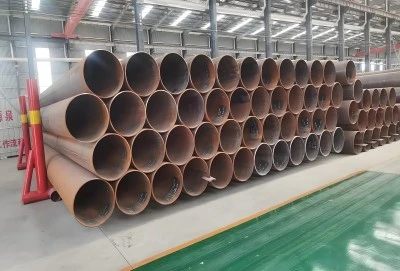
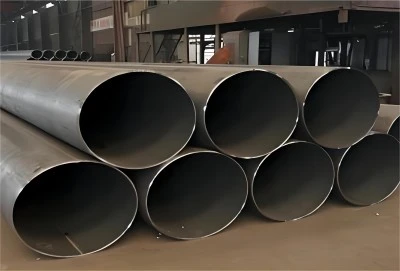
Mechanical Performance Characteristics
The tensile strength of API 5L X60 pipe is between 60,000 and 82,000 psi (415 and 565 MPa), and the yield strength is at least 60,000 psi (415 MPa). With this mechanical shape, the material can withstand forces inside that are higher than 1,000 psi in most situations while still remaining structurally sound. Most of the time, the elongation rate is higher than 20%. This gives the material the flexibility to handle changes in temperature and pressure that happen in petroleum operations. To make sure that testing methods are followed, chemical component analysis, tensile strength proof, yield strength measurement, and elongation assessment are all part of the testing process.
Advantages and Practical Applications of API 5L X60 Pipes in Petrochemical Plants
The way API 5L X60 grade steel works and how much it costs make it a great choice for petroleum settings where safety and profit are directly linked to how reliable operations are.
Strength-to-Weight Ratio and Chemical Resistance
API 5L X60 pipe has a very high strength-to-weight ratio, which lets engineers make better structures that need less support and cost less to place. At 415 MPa, the yield strength allows for working pressures that are good for most refinery process units, crude oil transfer systems, and product distribution networks. Chemical resistance to hydrocarbons, alcohols, and many organic substances lets it last a long time in normal petroleum uses. Corrosion rates can be kept under control by choosing the right coatings and installing cathodic protection systems.
Lifecycle Cost-Efficiency
Durability directly leads to a financial gain. When properly designed and installed, API 5L X60 piping systems usually have service lives of 25 to 30 years with only minor upkeep needed for things like coating checks and tracking of the cathodic protection. Less upkeep is needed, which lowers operational costs and keeps output from stopping while pipelines are being fixed or replaced. The wide availability of API 5L X60 materials means that new parts can be found quickly if changes or additions need to be made.
Typical Applications and Service Conditions
API 5L X60 pipes are used in many processes at petrochemical plants. The pipes that bring crude oil from storage to air distillation units usually work at 150 to 300 psi and temperatures up to 400°F, which is well within the limits of what the API 5L X60 pipe can handle. Similar conditions apply to intermediate product transfer lines that move naphtha, oil, and diesel parts. API 5L X60 pipe is also used in utility systems for its dependability and low cost in areas like firewater distribution, cooling water movement, and sensor air supply. X60 pipe is used in process units that do hydrotreating, catalytic reforming, and alkylation as long as the working conditions don't go beyond the grade's mechanical limits.
New industry needs are pushing projects that aim to raise pressure or temperature toward using materials with higher strengths. Using microalloying elements and controlled rolling methods to make new alloys push the limits of performance while still being able to be welded. These new ideas put API 5L X60 derivatives in a good situation to meet the changing needs of petrochemical infrastructure as sites try to become more efficient and increase their capacity.
Procurement Insights and Buying Guide for API 5L X60 Pipes
To be good at buying, you need to know a lot about technical specs, what suppliers can do, and how the market works, which affects prices and supply.
Technical Specifications and Dimensional Options
API 5L X60 pipes come in outer sizes ranging from 1/2 inch to 80 inches (21.3mm to 2032mm), so they can be used for anything from instrument lines to main transmission lines. There are choices for wall thicknesses from SCH10 to SCH160 (6.35mm to 59.54mm), which lets you match the pressure grade perfectly. Standard lengths are between 6 and 18 meters, but special lengths can be made to cut down on field joints and installation work. There are different types of ends, such as straight ends for mechanical coupling systems and beveled ends for welded links.
Pressure values depend on the size, thickness, and temperature of the service. At room temperature, a 12-inch API 5L X60 pipe with a 0.375-inch wall thickness can usually handle pressures close to 1,500 psi. As the working temperature rises, the pipe's grade needs to be lowered. The type of coating chosen—hot-dip galvanizing for protection against the atmosphere, FBE for installations underground, or 3PE for better mechanical protection—should match the conditions of the surroundings.
Supplier Evaluation and Certification Requirements
Reliable makers keep their API 5L certification, ISO 9001 quality management system certifications, and environmental management certifications up to date. The risk of buying something is lower when these qualifications are checked by looking at the certificates directly and doing building checks. Well-known companies get their raw materials from well-known steel mills and use full traceability systems to keep track of materials from their heat number all the way through to the end product marking.
Inspection and Test Plans (ITP), Manufacturing Procedure Specifications (MPS), Material Test Certificates (MTC), and inspection records from a third party should all be included in documentation packages. Full paperwork makes it easier to make sure the project is following the rules and gives important records for managing assets throughout the pipeline's operating life.
Pricing Trends and Bulk Procurement Strategies
The price of carbon steel changes based on the price of iron ore, the price of energy, and how much of the production capacity is being used. When the market is good, procurement teams should keep an eye on product indices and make framework deals with producers. When you commit to buying a lot of something, you can get better prices. For orders over 200 tons, you can get savings of 10-15%. Standard designs usually have lead times of 7 to 30 days for delivery, while non-standard versions may need 45 to 60 days.
Conclusion
API 5L X60 carbon steel pipe is a tried-and-true, cost-effective choice for piping systems in petrochemical plants that need to have balanced mechanical qualities and stable performance. Knowing a lot about the details of materials, their pros and cons, buying options, and the quality of production lets you make smart choices that save money on both short-term project costs and long-term running costs. Working with well-known makers who have the right certifications and a track record of success guarantees the quality of the materials, the reliability of shipping, and all the paperwork needed to make the project a success. Procurement teams can choose materials that are safe, long-lasting, and good value throughout the lifecycle of an infrastructure project by paying close attention to technical standards, supplier review, and application-specific needs.
FAQ
What pressure classes are available for API 5L X60 pipes?
Pressure rates depend on the width and wall thickness that are used together. Standard plans (SCH 10 through SCH 160) can handle pressures ranging from around 400 psi for thin-wall large-diameter API 5L X60 pipes to over 3,000 psi for heavy-wall small-diameter pipes. To find the exact pressure class, you have to do some math using ASME B31.3 or the relevant design rules. You have to take into account the working temperature, the corrosion limit, and the joint efficiency factors.
Are API 5L X60 pipes suitable for sour service conditions?
Standard API 5L X60 grades don't usually have the right chemical and tests for bad service (environments with H2S). For uses involving high levels of hydrogen sulfide, the material needs to meet the standards set by NACE MR0175 and ISO 15156, with controlled hardness levels and proof of impact toughness. For sour petroleum service, it may be necessary to use different specs or higher PSL2 grades with extra requirements.
What certifications should buyers verify when procuring X60 pipes?
API 5L product specification compliance, ISO 9001 quality management systems, and, if needed, API Q1 production quality systems are all important qualifications. Material Test Certificates (MTC) that list the chemical make-up and mechanical qualities of each production lot are still needed. Third-party inspection records from well-known organizations add to the proof. Buyers should check the credentials of the maker by looking at the manufacturer's certificate directly and visiting the plant on a regular basis.
Partner with Longma Group for Premium API 5L X60 Pipe Solutions
Since 2003, Hebei Longma Group Limited has been making high-quality welded steel pipes for engineering firms, purchasing managers, and plant workers in over 90 countries. Our API 5L-certified factories make API 5L X60 pipe in PSL1 and PSL2 grades, and they offer a wide range of sizes, from 1/2 inch to 80 inches in diameter and SCH 10 to SCH 160 in wall thickness. Every product meets international standards thanks to advanced ERW and LSAW production lines and strict quality control measures like ultrasound testing, hydraulic testing, and NDT inspection. We only buy raw materials from trustworthy mills like Shagang, HBIS, and Bao Steel, and we can track everything from the heat number to the finished pipe. Email our team at info@longma-group.com to talk about the needs of your petrochemical project, get detailed details, or set up plant tours. We offer competitive prices, fast delivery, and full documentation that includes ITP, MPS, and MTC to help your project succeed. Visit longma-group.com to see all of our products and learn why the world's largest petroleum companies choose Longma Group as their API 5L X60 pipe supplier of choice.