
To be successful in purchasing line pipe for oil and gas transportation projects, you need to know the difference between API 5L X60 and X65 types. The API 5L X60 pipe has a minimum yield strength of 60,000 psi (415 MPa), which makes it good for moderate-pressure uses. The X65 pipe, on the other hand, has a minimum yield strength of 65,000 psi (448 MPa), which makes it better for harsh conditions. Both grades meet the standards set by the American Petroleum Institute, but the choice depends on the needs of the project, the available budget, and the operating conditions that determine how reliable the asset will be in the long run.
|
|
|
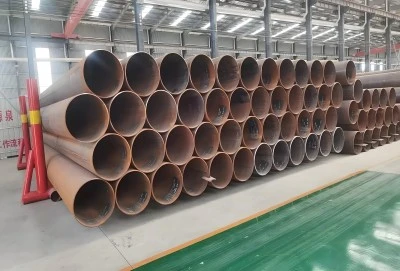
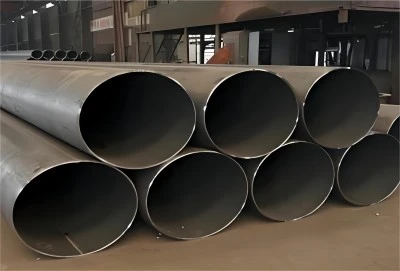
API 5L X60 and X65 Pipe Specifications
Chemical Composition and Mechanical Properties
The main difference between these two types is in the chemicals they are made of and how they behave mechanically. Carbon, manganese, and microalloying elements like niobium and vanadium are all added in controlled amounts to both X60 and X65 line pipes. X65 usually has a little more manganese and specially designed microalloying added to it to make it stronger without making it harder to weld.
When purchasing managers check if something can be welded in the field, carbon equivalent (CE) numbers are still very important. API 5l X60 pipes usually have CE values between 0.40% and 0.43%, and X65 pipes keep their values in the same areas by carefully controlling the chemistry. This carefully chosen mix makes sure that both grades can be fused using the standard methods explained in API 1104. However, the thickness of the wall and the temperature where the work is happening may require different amounts of pre-heating.
The standards for mechanical tests are very different between PSL1 and PSL2 product specification levels. Charpy V-Notch impact testing must be done at certain temperatures (often 0°C or -20°C) by PSL2, which guarantees toughness in cold-weather uses. API 5L X60 pipe (PSL2) must show minimum absorbed energy values that ensure crack arrest capabilities. This is especially important for pipes that run through areas where temperatures change.
International Standards and Certification Requirements
In addition to API 5L standards, X60 is classified as L415 and X65 is classified as L450 by ISO 3183, which is based on their metric yield strength numbers. When buying things for big projects that involve many countries, procurement teams have to make sure that the makers they're looking at have valid API 5L monogram licenses that show they follow the rules for tracking, testing, and dimensional limits.
Material Test Certificates (MTC) according to EN 10204 3.1 or 3.2, Inspection and Test Plans (ITP), and Manufacturing Procedure Specifications (MPS) are all parts of the paperwork that comes with approved pipes. These papers show the chemistry make-up analysis, the tensile strength, the elongation rates, and the results of the hydrostatic test. PSL2 orders require more paperwork that includes records of impact tests and records of non-destructive tests. This gives engineering companies full quality assurance.
Some of the qualifications that manufacturers like Longma Group keep up to date are ISO 9001 Quality Management Systems, API 5L monogram permission, and environmental compliance certificates. This method of getting multiple certifications makes sure that pipes meet the different rules in the Middle East, Southeast Asia, and Australia, where projects need to meet quality standards that can be checked.
Performance and Application Differences Between X60 and X65 Pipes
Strength and Pressure Rating Capabilities
The difference in yield strength directly affects the pipe's ability to handle pressure, which changes the formulas used for design. Using Barlow's method for hoop stress, X65 pipe can handle about 8% more working pressure than API 5L X60 pipe with the same wall thickness and diameter. When project engineers figure out the Maximum Allowable Operating Pressure (MAOP), they take into account the strength of the material, the design factors, and the safety gaps that are required by the government.
Because it is stronger, X65 is the best choice for high-pressure gas transmission lines with a working pressure of more than 1,200 psi or for long-distance crude oil pipes where managing pressure drop needs the highest initial pressure. On the other hand, X60 is more cost-effective in water transfer systems, gathering lines, and distribution networks with modest pressures and choices based on minimizing costs.
The tensile strength requirements are also a little different. API 5l X60 pipe needs tensile strength between 60,000 and 80,000 psi, while X65 needs it between 65,000 and 85,000 psi. This feature affects how the pipe acts when it is being installed under stress, such as when it is being bent or pulled during horizontal directional drilling operations or when it is expanding and contracting during temperature changes in above-ground installs.
Corrosion Resistance and Coating Considerations
Both grades have about the same rust protection, which is based on how pure the steel is and how well it was made, not on the difference in grades. Coating methods like Fusion Bonded Epoxy (FBE), two-layer polypropylene (2PP), or three-layer polyethylene (3LPE) are used to protect against rust on the outside. Keeping internal rust at bay depends on the type of fluid being moved. For example, sour gas service needs special grades like API 5L X60MS or API 5L X65NS that meet NACE MR0175 standards.
Choosing the right coating has a big effect on the overall cost of the project. Premium coats raise the cost of pipes by $15 to $30 per meter but make them last decades longer. Environmental exposure intensity must be evaluated by procurement managers. This includes soil resistivity, groundwater chemistry, and air quality in coastal sites. Longma Group provides a wide range of anti-corrosion services, such as hot-dip galvanizing and 3PE coating application. This lets customers buy from a single source, which makes quality control and transportation planning easier.
Industry-Specific Application Scenarios
Both grades are mostly used for oil and gas transmission pipes, with X65 being the most common type for high-pressure trunk lines that connect production areas to processing centers. These standards were used a lot in projects like MOBIL OIL AUSTRALIA, which had to balance performance needs with budgets for buying things. A lot of offshore platform risers, onshore gathering systems, and pipeline infrastructure use X60 because it's strong enough to meet operating needs without costing too much.
More and more, water supply systems require these grades for large-diameter transmission mains that serve cities and industrial areas. You can get both sizes in diameters up to 80 inches and they are both very strong. This makes them good for city jobs. These materials are used in structural uses like bridge piling, base supports, and building columns when engineers need more than just standard structural grades of proven mechanical qualities and material traceability.
How to Choose Between API 5L X60 and X65 Pipes?
Project Requirements Assessment Matrix
Comprehensive recording of the project parameters is the first step in a systematic grade selection process. Design experts decide what MAOP is needed based on the properties of the fluid, the temperature ranges, and the safety rules that apply in the area. This pressure requirement directly affects the pipe specification. X65 is chosen when design optimization supports thinner walls or when future capacity growth may need higher working pressures than API 5L X60 pipe can handle.
The environment has a big impact on the choice of material, and not just because of its power. Installations in the Arctic and sub-Arctic need to make sure that the toughness is confirmed at low temperatures. This is done by Charpy impact tests at temperatures that match the lowest expected service conditions. Thermal cycles and UV exposure, which affect coating systems instead of pipe grade choice, are problems that desert sites have to deal with. Offshore and submarine uses need better corrosion protection, which could be a reason to choose X65 for its wear strength in settings with changing loads.
When technical factors give grade flexibility, budget limits affect the choices that can be made in the real world. Projects that have set amounts of money for capital can choose X60 to get the longest pipeline possible within their budgets or to use the money they save for better coating systems, cathodic protection infrastructure, or more advanced testing technologies. On the other hand, projects that focus on operational efficiency and asset longevity may be able to support the higher costs of X65 because thinner-wall, larger-internal-diameter pipe with the same outside diameter can lower the amount of energy needed for pumping.
Performance Benchmarking Criteria
When pipe moving and installation logistics make it hard to finish a job, strength-to-weight ratios become very important. X65 has about 8% better strength-to-weight performance, which is important for remote installations that need to be transported by air or for installations that need to get to places via bridges and roads that can't carry as much weight. This benefit is even bigger when the job is done abroad, where the cost of the support system goes up as the weight it holds up.
Case study research from the real world shows how grade selection works in many fields. A 400-kilometer crude oil export pipeline in the Middle East chose X65 with a 42-inch diameter to reach a working pressure of 1,400 psi while maintaining a good wall thickness. This was done by combining the distance between pump stations with the cost of capital. Instead, a regional water transfer project called for API 5l X60 pipes with a 36-inch diameter. These pipes would meet the 600 psi design pressure cost-effectively while still being compatible with infrastructure standards set decades ago.
Conclusion
To choose between API 5L X60 and X65 grades, you need to look at a lot of technical needs, cost factors, and supply chain factors that are unique to each project. X60 has been shown to work well in moderate-pressure situations and is cheaper, while X65 is stronger and should be used in high-pressure situations or systems that need to be light. To be successful in procurement, you need to work with certified manufacturers who can provide clear quality documents, reliable shipping, and expert help throughout the project. Instead of automatically choosing better grades, the design choice should match the material's capabilities with its real working conditions. This would save money on the project while still meeting the safety and dependability standards needed for modern pipeline infrastructure.
FAQs
What distinguishes PSL1 from PSL2 specifications for X60 pipe?
PSL2 specs set higher quality standards. These include required chemical composition limits with controlled Carbon Equivalent values, Charpy V-Notch impact tests to check low-temperature toughness, and better tracking of materials throughout the production process. PSL1 doesn't require impact testing and lets you use a wider range of compositions, making it better for less demanding uses. Most transmission pipes require PSL2 to make sure that the material has been tested and proven to last for decades.
Is it possible to use X60 grade pipe in places where hydrogen sulfur is present?
According to API 5L Annex H, standard API 5L X60 pipe needs to be changed for sour service uses. These grades are called API 5L X60MS or API 5L X60NS. NACE MR0175 standards say that these specs control the maximum hardness, chemistry parameters, and production methods so that sulfide stress cracking doesn't happen. Sour service standards must be clearly stated in purchase orders so that makers can put in place the right controls during production and testing.
How does X60 compare with ASTM A106 Grade B for use in pipelines?
X60 has a yield strength of 60,000 psi, which is much higher than ASTM A106 Grade B's minimum of 35,000 psi. This means that it can be used in higher-pressure situations with thinner walls. The A106 specifications are made for high-temperature use in the process and power production industries, while the X60 specifications are made for transport uses at room temperature. The standards cover a range of different uses, with only a small amount of overlap between them.
What welding issues need to be thought about when installing X60 pipes?
The managed Carbon Equivalent of X60, which is usually less than 0.43%, makes it easy to weld using methods approved by API 1104 guidelines. Pre-heating suggestions depend on the width of the wall, the temperature of the area, and the type of welding process chosen. To stop cold cracking, pipes with walls thicker than 25 mm or welding done in temperatures below 0 °C usually need to be heated first. For code-compliant joints that meet project quality standards, qualified welding processes and licensed welders are still needed.
Ready to Source Quality API 5L X60 Pipe for Your Next Project?
Longma Group is ready to be your reliable API 5L X60 pipe manufacturer. We have more than 20 years of experience working with clients in the oil and gas, water infrastructure, and industrial building sectors around the world. We can make pipes with diameters from 1/2-inch to 80 inches using ERW, LSAW, and DSAW techniques, and all of them are fully certified for API 5L PSL1 and PSL2. We keep a large collection, which means that we can deliver standard specs within 7 days. We can also meet your particular needs, such as those for beveled ends, special coatings, and fabrication services that are suited to your project. Our quality control includes thorough testing procedures, full paperwork packages, and getting our raw materials from the best steel mills in the United States. This makes sure that every order gets the same level of performance. Get in touch with our sourcing experts at info@longma-group.com to talk about the details of your project and find out how our unified production capabilities, affordable pricing, and reliable delivery can help you meet your API 5L X60 pipe supply goals.