
Through stringent mechanical, chemical, and non-destructive testing methods, third-party inspection requirements for API 5L X70 pipe focus on ensuring compliance with PSL2 standards. Material traceability certificates (MTC), measurement correctness, yield and tensile strength ratios, Charpy V-notch toughness, ultrasonic weld studies, and hydrostatic pressure tests are all checked by independent inspection agencies. These tests show that X70 grade pipes meet the strict chemical composition limits and minimum yield strength of 485 MPa needed for high-pressure oil, gas, and water transportation lines. Before approving a package, procurement managers depend on third-party witnesses to make sure that project specs are in line with international pipeline safety standards and that compliance is documented. This lowers the risk in the supply chain.
|
|
|
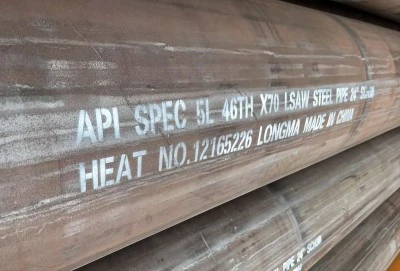
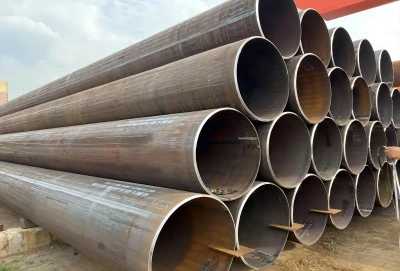
Core Third Party Inspection Procedures for API 5L X70 Pipes
A thorough review happens at many stages of production, finding flaws before they affect how the API 5L X70 pipes work in the field. We've seen procurement teams dodge huge problems by pressing on staged witness points instead of just final inspections.
Pre-Production Document Verification
Before steel enters fabrication equipment, inspectors audit raw material documentation. Mill certificates confirm plate or coil chemistry matches X70 specifications. Heat numbers enable traceability from ladle to finished pipe. Suppliers must demonstrate material origin from reputable steelmakers—facilities like those Longma Group sources from, including Shagang, TISCO, and Bao Steel. Inspectors verify heat treatment records for thermomechanically rolled material, the most common delivery condition for welded api 5l x70 pipes. This paper trail establishes accountability and proves due diligence during audits by end clients or regulatory bodies.
In-Process Dimensional and Visual Checks
During api 5l x70 pipe formation, inspectors monitor critical control points. Weld seam alignment receives particular attention, as misalignment creates stress concentrators. Visual examination detects surface defects—laps, seams, cracks, or excessive roughness—that could propagate under cyclic pressure. Dimensional checks using micrometers and ultrasonic thickness gauges confirm wall uniformity. Ovality measurements ensure roundness stays within tolerance, preventing installation problems and uneven stress distribution. Coating application thickness and adhesion tests occur here if anti-corrosion treatments like 3PE or FBE are specified. Real-time recognition lets mistakes be fixed before more value is added, which lowers the amount of waste and keeps delivery dates.
Mechanical and Chemical Laboratory Testing
Representative samples undergo destructive testing that reveals internal characteristics invisible to surface examination. Tensile tests pull specimens to failure, quantifying yield and ultimate strength. Hardness testing across weld zones, heat-affected zones, and base material identifies problematic variations. Charpy impact tests measure energy absorption at temperatures matching service environments—critical for Arctic installations or deep-water applications. Drop weight tear tests (DWTT) assess crack arrest capability, with shear area percentages typically required above 85%. Chemical analysis verifies micro-alloying element percentages match specifications. Guided bend tests stress weld integrity without causing fracture. These results populate inspection reports that procurement managers use to validate supplier claims.
Non-Destructive Testing and Final Certification
Every length of api 5l x70 pipe undergoes 100% ultrasonic testing (UT) scanning the full body and weld seam to detect internal laminations, inclusions, or lack of fusion invisible externally. Radiographic testing (RT) provides X-ray images of weld quality and pipe ends. Magnetic particle inspection (MPI) reveals surface-breaking discontinuities. Hydrostatic testing subjects each pipe to internal pressure reaching 100% of specified minimum yield strength for a minimum duration, proving leak-free integrity. Passed pipes receive individual identification marks correlating to test records. Third-party inspectors witness these tests, sign off on documentation, and release material for shipment only after all criteria satisfy contractual requirements.
Common Challenges in API 5L X70 Third Party Inspections and How to Navigate Them
Even when guidelines are set, technical difficulties and the facts of the supply chain can make API 5L X70 pipe inspections harder. Purchasing teams can use preventative tactics more effectively when they are aware of these problems.
Documentation Inconsistencies and Traceability Gaps
Material test certificates sometimes contain transcription errors or incomplete heat number tracking that breaks the chain of custody. Procurement managers encounter suppliers who cannot definitively link finished api 5l x70 pipe back to original steel chemistry. This ambiguity creates liability exposure when projects demand full traceability for regulatory compliance. Mitigation strategies include pre-qualifying suppliers with robust quality management systems certified to ISO 9001 and API 5L standards. Requiring digital MTC formats with barcode or QR code linking reduces manual data entry mistakes. Contractual language should mandate traceability records retention for minimum periods matching project lifecycles, typically 10-25 years for pipeline infrastructure.
Technical Difficulties in High-Strength Steel Testing
X70's elevated strength challenges standard testing equipment calibrated for lower grades. Tensile testing machines require higher load capacities. Charpy impact specimens from thick-wall api 5l x70 pipes demand specialized machining to extract samples without inducing residual stresses that skew results. Ultrasonic testing frequencies and calibration standards differ from those used on X52 or X60 material due to grain structure variations. Inspectors lacking X70-specific experience may misinterpret acceptable indications as rejectable defects, causing unnecessary disputes. Selecting inspection partners with demonstrable high-strength steel expertise and calibrated equipment specifically maintained for X70 testing parameters eliminates these technical pitfalls.
Inspection Timeline Management Without Quality Compromise
Production schedules pressure teams to abbreviate inspection duration, risking oversight of critical defects. Rush orders compound this challenge when delivery deadlines conflict with thorough testing protocols. Some suppliers propose skipping witness points or reducing sample sizes to accelerate shipments. However, statistical sampling insufficiency on high-consequence pipelines exposes projects to catastrophic risk. Effective planning integrates inspection milestones into manufacturing schedules from contract inception. Communicating realistic lead times that account for testing, potential re-work, and documentation preparation prevents last-minute compromises. Establishing framework agreements with pre-approved inspection agencies and suppliers streamlines repeat orders while maintaining quality gates.
Conclusion
To meet the API 5L X70 pipe third-party inspection standards, you need technical know-how, good planning, and relationships you can trust. To make good inspection methods, you need to know about X70's mechanical performance standards, dimensional limits, and metallurgical qualities. Implementing staged verification from receiving the raw materials to the final hydraulic testing finds mistakes early on, before they damage the project's structure. Taking proactive steps to deal with common problems like missing documents, difficult testing, and tight deadlines will protect your investment. Your quality gates will work well if you choose inspection partners based on their titles, skills, and ability to work with your process. Using inspection data to help choose suppliers, negotiate contracts, and build relationships turns legal requirements into business benefits that make pipeline infrastructure safer and more reliable.
FAQs
What documents should a complete third-party inspection report include?
Full inspection reports include the Mill Test Certificate with mechanical and chemical properties that change with heat, records of measurements with statistical analysis, results from non-destructive tests like UT, RT, and MPI, hydrostatic test pressures and durations, visual inspection observations with photographic proof, and inspector certifications. Reports need to list the relevant standards (API 5L PSL2, ISO 3183), and they need to make it clear whether each tested measure met or did not meet the standards. Traceability, which connects API 5L X70 pipe identification numbers to specific test results, lets you look back on past information if problems happen in the field. Digital forms with searchable databases make it easier to keep track of records throughout the lifecycle of a project.
How long does the typical third-party inspection process take for X70 pipe orders?
The length of the inspection depends on the size of the order, the type of testing, and the plan for production. Standard orders of 100 to 500 tons usually take two to three weeks from the start of production to the release of the final paperwork, as long as there aren't any big problems. This includes looking over documents before production starts, keeping an eye on the work as it's being done, testing in the lab (which could take 3–5 days for mechanical tests), finishing the NDT, and putting together the report. Rush orders might shorten the time it takes a little, but never less than 10–14 days without sacrificing quality. Timelines are pushed back to 4 to 6 weeks for orders over 1,000 tons or for complicated requirements like sour service approval.
Can inspection procedures be changed to fit the needs of a certain project?
Of course. API 5L PSL2 sets minimum standards, but projects often add extra tests to deal with specific service situations. Annex H compliance with HIC and SSCC testing is required in sour service settings. Annex G says that low-temperature Charpy tests must be done at -45°C or below for Arctic uses. Offshore systems may need more corrosion resistance proof. End-user guidelines from companies like Shell, ExxonMobil, and Saudi Aramco add extra requirements on top of the API 5L principles. Inspection companies with a lot of experience can adapt to these changes by changing sampling plans, testing schedules, and record forms as needed. By telling the seller and tester about your specific project needs at the start of the relationship, you can make sure that procedures are in line with real risk profiles and not just general approaches that don't work for your situation.
Partner with Longma Group for Certified API 5L X70 Pipe with Complete Inspection Documentation
Decisions about procurement have long-lasting effects on the safety, schedule, and price of a project. Longma Group gets rid of doubt by combining strict third-party inspection methods with factory-direct production control. We have been an established API 5L X70 pipe manufacturer since 2003 and have many foreign certifications, such as API 5L, ISO 9001, and others, that show our dedication to quality. Our 230,000-square-meter factory makes more than 1,000,000 tons of X70 pipe every year, utilizing LSAW and ERW technologies to deliver pipe in diameters from 1/2 inch to 80 inches with wall thicknesses spanning SCH10 through SCH160. We source raw materials exclusively from premium domestic mills including Shagang, TISCO, and Bao Steel, ensuring metallurgical consistency from heat to finished product. Complete documentation packages—ITP, MPS, MTC—accompany every shipment, providing the traceability and transparency engineering contractors require. Contact our team at info@longma-group.com to discuss your project specifications and discover how our combination of manufacturing expertise and inspection rigor delivers pipeline materials you can stake your reputation on, with delivery timelines as fast as seven days for urgent requirements.








