
When sourcing cold-formed structural steel for light-duty projects, understanding the AS/NZS 1163 C250 pipe standard is non-negotiable. This joint Australian and New Zealand standard governs cold-formed hollow sections used across general construction, agricultural facilities, and light industrial frameworks. The "C" prefix confirms cold-formed production, while "250" specifies a minimum yield strength of 250 MPa and a minimum tensile strength of 320 MPa. Available in Circular (CHS), Square (SHS), and Rectangular (RHS) hollow sections, this grade balances structural adequacy with excellent weldability — making it the go-to choice for budget-conscious projects that still demand verified compliance.
|
|
|
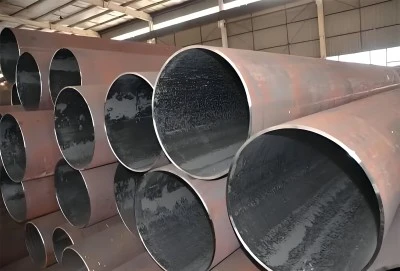
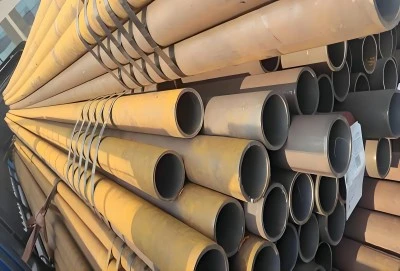
Understanding AS/NZS 1163 C250 Specifications and Mechanical Properties
Mechanical and Chemical Requirements
The standard requires a minimum stretch of 18–22% and a yield strength of at least 250 MPa. The tensile strength range should be between 320 and 510 MPa. Chemically, AS/NZS 1163 C250 pipe has a low Carbon Equivalent Value (CEV), with carbon levels between 0.20 and 0.25% and manganese levels up to 1.50%. This means that it can be welded consistently without needing to be heated first in most normal circumstances. Fabricators can be sure that the material will behave in a predictable way when it is loaded and when it is being processed because of these parameters.
Dimensional Tolerances and Section Types
As a result of AS/NZS 1163 C250 pipe there are strict rules about the outside diameter, wall thickness, straightness, and mass per meter. Most of the time, outside diameter limits for CHS are ±1% or ±0.5 mm, whichever is bigger. The allowed range for wall thickness is ±10%. For buying accuracy, these limits are very important—you need to know what you're getting before the shipment comes, especially if you need to finish the project quickly. The standard includes parts ranging from small tubes to bigger structural profiles. This lets buyers choose from different sources for greenhouse frames, fence posts, and equipment brackets.
C250 vs. C250L0 — An Important Distinction
The "L0" term on grades like C250L0 adds an extra requirement: Charpy impact toughness must be proven at 0°C. This is not required by standard AS/NZS 1163 C250 pipe. It is safer to specify C250L0 for projects in temperate or cold climates where dynamic loading or low-temperature performance are important. Not meeting standards during a third-party review can happen if you treat them as replaceable, which is a mistake that costs a lot of money.
Comparing C250 with Other Grades and Alternative Materials
The AS/NZS 1163 C250 pipe is the base level of the AS/NZS 1163 line. The lowest yield from C350 is 350 MPa, and the highest yield from C450 is 450 MPa. Higher-grade options require less wall thickness and section weight, which is good for large structures where self-weight is important. But AS/NZS 1163 C250 pipe is more flexible and easy to shape, which makes it easier to cold-bend and make. For most light structural uses, like greenhouse frames, storage sheds, and agricultural fencing, the extra strength of C350 or C450 doesn't add much value.
The strength-to-weight ratio of AS/NZS 1163 C250 pipe parts is much better than that of galvanized black steel and PVC options. Under AS 1074, black steel pipes are used to move fluids, not to support buildings, and PVC pipes can't hold the weight that fixed structures need. The mechanical thresholds are mostly the same at Grade B level when comparing AS/NZS standards to ASTM A500 (the North American equivalent for cold-formed hollow structural sections). However, the certification documentation is different, which is a very important difference for international projects that need to meet two sets of rules.
Procurement Considerations: What Smart Buyers Check First
It's not just about price when looking for cold-formed hollow sections for projects that span borders. Here are the main things that show if a buying decision can stand up to close inspection:
- Certification verification: A real AS/NZS 1163 C250 pipe product has a continuous stamp mark that has the name of the maker, the standard name, the grade (for example, C250), and the heat number so that the product can be fully tracked. Always ask for the Mill Test Certificate (MTC) and make sure the heat number matches what's written on the pipe.
- Third-party inspection support: Reliable suppliers let you choose between SGS or Bureau Veritas inspections before shipping. This gets rid of the chance of getting materials that don't pass local acceptance testing, which is a big problem for small-batch buyers who can't keep stock that doesn't meet standards.
- Small-quantity availability: A lot of mills have high minimum order quantities that make it hard to get small amounts. If you buy from a company that has a lot of different section sizes in stock, you can combine smaller orders without having to pay more per unit.
- Packaging integrity: Steel wrapping with end caps and moisture-barrier wrap is normal for exports to Australia, New Zealand, and Southeast Asia. Surface corrosion and damage during shipping are caused by bad packaging. These issues slow down projects and cost money in dispute costs.
These things together show if a seller is really ready to help you with your buying cycle and not just handle a transaction. Competitive CIF prices are important, but a supplier who ships quickly, fills out all the paperwork, and packs correctly is worth more than a slightly cheaper option that causes problems at the port.
Technical Application and Installation Guidelines
Welding and Fabrication
Under normal circumstances, MIG, TIG, and manual metal arc (MMA) welding processes can all be used on AS/NZS 1163 C250 pipes without any special preheating needs. With a low CEV, the welds will be clean and there will be little chance of hydrogen-induced cracks. Standard welding techniques make parts that are well above what is needed for greenhouse structures, fence systems, and furniture frames.
Load Capacity and Corrosion Protection
According to AS 4100 construction guidelines, the AS/NZS 1163 C250 pipe CHS and RHS sections can handle enough axial, bending, and shear loads for light structural uses. For long-lasting protection against rust, especially near the coast or in farms, hot-dip galvanizing according to AS/NZS 4680 works perfectly with AS/NZS 1163 C250 pipe chemistry. Powder painting works just as well and is used a lot in furniture and architecture where looks are important.
Why C250 Hollow Sections Remain a Preferred Structural Material
In the market for construction materials, AS/NZS 1163 C250 pipes hold a stable and useful place. They are compliant with AS/NZS standards, can be made using standard methods, and have a price range that works for projects that need to stick to a budget. As the world moves toward lighter, faster-to-erect buildings in agriculture and light industry, this grade is still in high demand. This is especially true in Australia, New Zealand, Vietnam, and Indonesia, where building codes directly reference AS/NZS 1163.
Conclusion
If buyers know everything that AS/NZS 1163 C250 pipe requires, from mechanical features and dimensional tolerances to grade differences and best practices for buying, they can make choices that will hold up on-site and during review. Cold-formed hollow sections made of AS/NZS 1163 C250 pipe offer strong structure at a reasonable price, which makes them a useful base material for light construction, agricultural buildings, and equipment frameworks. Choosing a certified seller with good records is what makes the difference between a smooth project and an expensive buying headache.
FAQ
What is the difference between AS/NZS 1163 C250 pipe and C350?
AS/NZS 1163 C250 pipe has a minimum yield strength of 250 MPa, and the minimum yield strength for C350 is 350 MPa. C250 is chosen when saving money is the most important thing and the structure doesn't need to hold the highest load. It is also more flexible, which makes it easier to cold-bend and shape.
How do I verify that a pipe genuinely meets AS/NZS 1163?
Check out the stencil markings that go all the way around the pipe body. The name of the maker, the standard number (AS/NZS 1163), the grade name, and the heat number must all be on it. Compare the heat number to the Mill Test Certificate that the supplier gave you.
Can AS/NZS 1163 C250 pipe hollow sections be hot-dip galvanized?
Yes, AS/NZS 4680 says that AS/NZS 1163 C250 pipe can be used for hot-dip galvanizing. To make sure that the zinc covering quality stays the same, the silicon level in the base steel should be checked.
Is AS/NZS 1163 C250 pipe the same as C250L0?
Charpy impact hardness testing at 0°C is an extra condition for No. C250L0. Choose C250L0 if your project needs to work in low temperatures or with changing loads.
Can AS/NZS 1163 C250 pipe be used for fluid transport?
Building grade AS/NZS 1163 C250 pipe is not pressure pipe grade. It's not the same as pipes approved under AS 1074 or ASTM A53 for use with pressure fluids.
Partner with Longma Group for Certified AS/NZS 1163 C250 Pipe Supply
Since 2003, Longma Group has been making certified structural hollow sections and providing verified AS/NZS 1163 C250 pipe supplier solutions to more than 90 countries. We can handle small orders, ship within reasonable wait times, and give full MTC paperwork for all shipments. To get a CIF quote right away, email our team at info@longma-group.com or go to longma-group.com.








