
In commercial construction, bridge engineering and mechanical fabrication, rigorous adherence to grade-specific welding standards for cold-formed structural hollow sections is indispensable for structural safety and regulatory compliance. AS/NZS 1163 C350 pipe is a medium-high strength cold-formed steel hollow section featuring a minimum yield strength of 350 MPa and a minimum tensile strength of 430 MPa. Its low carbon equivalent formulation delivers superior inherent weldability, eliminating mandatory pre-heating requirements for most standard wall thicknesses. This technical guide consolidates standardized welding protocols, critical process parameters and field-proven best practices for engineering and procurement professionals.
|
|
|
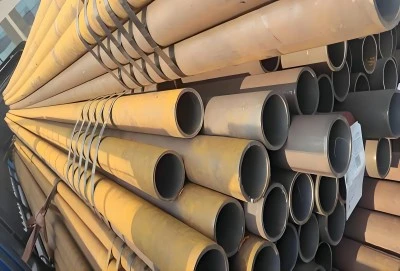
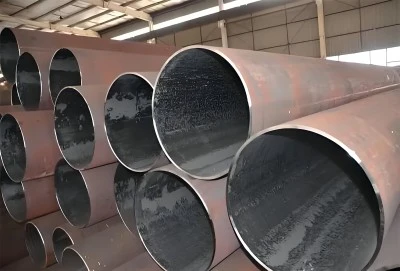
AS/NZS 1163 C350 Pipe Specifications & Welding Fundamentals
Core Structural Characteristics of C350 Steel
AS/NZS 1163 governs the production of all C350 cold-formed square, rectangular and circular hollow sections (SHS, RHS, CHS), regulating chemical composition, mechanical performance and dimensional tolerances. The “C350” designation indicates cold-formed manufacturing and a 350 MPa minimum yield strength, providing a robust strength upgrade over the entry-level C250 grade to meet medium-load structural demands.
Precisely controlled chemical constituents guarantee consistent weldability across AS/NZS 1163 C350 pipe: maximum carbon content is limited to 0.20%, with manganese capped at approximately 1.60%. This calibrated composition achieves a low carbon equivalent (CE) value, enabling safe field welding without mandatory pre-heat treatment for the majority of standard wall profiles. All dimensional tolerances for outer diameter, wall thickness and unit mass are specified in Table 7 of the AS/NZS 1163 standard, ensuring precise, repeatable structural performance for engineering applications.
Mandatory Pre-Weld Inspection Standards
Comprehensive pre-weld preparation and inspection are foundational to eliminating welding defects and minimizing project rework in compliant structural fabrication. Prior to welding, the entire weld zone must be thoroughly cleaned and cleared of slivers, mill scale, surface moisture, oil and other contaminants, which commonly cause porosity, inclusion defects and incomplete weld fusion.
All joint designs must strictly comply with qualified Welding Procedure Specifications (WPS). Fabricators are required to verify joint fit-up accuracy and dimensional tolerances before commencing welding. Systematic pre-weld inspections mitigate common quality risks and ensure full alignment with structural design criteria and industry compliance standards.
Technical Welding Requirements for AS/NZS 1163 C350 Pipe
Heat Input Control & Key Welding Parameters
Heat input regulation is the single most critical factor determining welding quality for AS/NZS 1163 C350 pipe. Excessive heat input causes HAZ widening, abnormal grain growth, and deterioration of the base metal mechanical properties and the structural integrity. The heat input for all welding shall be strictly maintained within approved WPS limits, expressed in kJ/mm.
Three core parameters require synchronized, precise control throughout fabrication to produce defect-free, qualified weld joints:
-
Welding Current & Voltage: Higher current & voltage increases the HAZ. These parameters are to be adjusted dynamically along with travel speed so as to stay within the WPS qualified envelopes, to ensure full fusion between weld metal and base metal without metallurgical overheating.
-
Travel Speed: Reduced travel speeds with more linear heat input. In thin-walled C350 sections (< 5 mm wall thickness), burn-through and structural distortion are often observed at inadequate travel speed and incomplete fusion and weak joint strength would occur at excessive travel speed.
-
Filler Material Selection: Welding consumables must deliver chemical and mechanical compatibility with 350 MPa-grade base steel. AWS ER70S-6 solid wires for MIG welding and equivalent E48XX electrodes for MMA welding serve as the industry standard, offering tensile strength matching or marginally exceeding the C350 base metal to ensure uniform joint performance.
Strict adherence to the above parameter controls is mandatory for weld joints to pass standard non-destructive testing (NDT), including ultrasonic testing (UT) and radiographic testing (RT) for all critical structural connections.
Post-Weld Heat Treatment & Non-Destructive Inspection
Post-weld heat treatment (PWHT) is non-mandatory for standard-thickness C350 pipe used in ambient-temperature static structural applications. However, stress-relief PWHT is required for two critical service conditions: wall thickness exceeding 25 mm, and components subjected to sustained dynamic or cyclic loading. This process eliminates residual welding stress and prevents premature fatigue failure.
Upon weld completion, all critical joints require 100% NDT via ultrasonic or magnetic particle inspection. This verifies weld compactness, eliminates subsurface defects, and confirms full compliance with structural design specifications and AS/NZS welding regulations.
Welding Performance Comparison: C350 vs. Other Steel Grades & Standards
A clear comparative understanding of C350’s welding characteristics versus alternative structural grades empowers engineering and procurement teams to make precise, application-aligned material selections.
The lower-grade C250 pipe (250 MPa minimum yield strength) features a lower carbon equivalent and more forgiving heat input tolerance during welding, yet its limited strength restricts use to light-load structures. In contrast, the high-strength C450 grade requires stricter fabrication controls: higher carbon equivalent values mandate pre-heating, precision parameter tuning and specialized consumables, significantly increasing fabrication complexity and overall project costs.
Compared with North American ASTM A500 Grade C (317 MPa minimum yield strength for round sections), AS/NZS 1163 C350 delivers higher guaranteed yield strength, tighter dimensional tolerances and more rigorous testing protocols fully aligned with Australasian building codes. It is the primary compliant material for construction and mechanical projects in Australia, New Zealand, Singapore and the UAE.
For hot-dip galvanized C350 sections, the zinc coating within the weld joint area must be fully removed prior to welding to prevent weld porosity and hazardous zinc fume emissions. Post-weld restoration of anti-corrosion treatment on the stripped zone is required to reinstate full protective performance.
Procurement & Sourcing Guidelines for Qualified C350 Pipe
To guarantee fabrication quality and full project compliance, procurement teams must prioritize suppliers that deliver fully certified, traceable AS/NZS 1163 C350 products. Qualified vendors shall provide Mill Test Certificates (MTC) compliant with EN 10204 Type 3.1/3.2, documenting complete batch-specific chemical analysis and mechanical test results.
All AS/NZS 1163 C350 pipe undergoes mandatory longitudinal seam inspection via eddy current or ultrasonic testing to eliminate hidden seam defects. For medium-volume bulk orders, a 15–30 day delivery lead time serves as the industry benchmark to sustain construction project scheduling.
Established in 2003, Longma Group is a professional manufacturer of ERW and LSAW structural steel pipes, serving over 90 countries with stable large-scale production capacity. We source raw materials from top-tier domestic mills including Shagang and Bao Steel to ensure consistent batch quality. All C350 products hold ISO 9001 and API 5L certifications, supported by complete technical documentation including ITP, MPS and full MTC reports to meet international project compliance standards.
C350 Welding Best Practices & Common Pitfalls to Avoid
Standardized field execution and rigorous in-process monitoring are essential to guarantee welded joint quality and structural compliance. The following standardized workflows and risk mitigation guidelines apply to all C350 structural fabrication projects:
Standard Welding Best Practices
-
Material & Joint Preparation: Completely remove mill scale, surface moisture and contaminants from the weld zone. Verify actual wall thickness and joint fit-up dimensions to fully align with WPS design requirements before finalizing welding process selection.
-
Process Selection: MIG (GMAW) and MMA (SMAW) are the mainstream processes suitable for most C350 welding applications. TIG (GTAW) is recommended for high-precision root passes on critical joints. All welding operations must comply with AS/NZS 2980 qualified WPS protocols.
-
In-Process Monitoring: Fully document welding parameters for every weld pass. Maintain interpass temperature below 250°C at all times to prevent HAZ softening and mechanical property degradation.
-
Post-Weld Verification: Conduct comprehensive visual inspection first, followed by specified NDT procedures. Archive all inspection reports and test records as permanent project quality documentation for compliance traceability.
Common Welding Errors & Risks
The most prevalent C350 welding defects stem from mismatched welding consumables, excessive uncontrolled interpass temperature, and failure to strip galvanized coatings prior to welding. These procedural lapses cause porosity, HAZ performance degradation and long-term fatigue risks. Strict adherence to qualified WPS procedures and standardized inspection protocols is critical to mitigating defects and ensuring long-term structural reliability.
Conclusion
High-quality welding of AS/NZS 1163 C350 pipe relies on precise heat input control, matched-grade filler materials, qualified welding procedures and standardized post-weld inspection. Thanks to its low carbon equivalent composition, C350 delivers excellent weldability for commercial building frames, bridge components and mechanical structures under standard fabrication conditions. Sourcing fully certified, well-documented C350 pipe from experienced, qualified suppliers minimizes pre-fabrication risks, ensures full project compliance, and secures long-term structural service performance.
FAQ
Q: What welding processes are suitable for AS/NZS 1163 C350 pipe?
A: MIG (GMAW), MMA (SMAW) and TIG (GTAW) are all applicable welding processes. Selection is determined by wall thickness, joint configuration and site conditions, with all operations required to follow AS/NZS 2980 qualified WPS standards.
Q: Is post-weld heat treatment mandatory for C350 pipe?
A: PWHT is not required for standard-thickness C350 sections used in conventional static structural applications. It is only mandatory for sections with wall thickness exceeding 25 mm or components subjected to sustained dynamic and cyclic loading, serving to eliminate residual welding stress.
Q: How does welding affect galvanized C350 pipe’s corrosion resistance?
A: Welding temperatures burn off local zinc coatings, removing localized corrosion protection. The weld zone zinc layer must be fully stripped before welding to prevent defects, and targeted anti-corrosion treatment must be reapplied post-welding to restore full protective functionality.
Q: What certifications should a reliable C350 pipe supplier provide?
A: Reliable suppliers shall provide EN 10204 Type 3.1/3.2 MTC reports, official AS/NZS 1163 compliance certificates, ISO 9001 quality system certification and valid NDT inspection records to verify product quality and batch consistency.
Partner with Longma Group for Certified AS/NZS 1163 C350 Pipe
Longma Group supplies weld-ready, fully certified AS/NZS 1163 C350 structural hollow sections, complete with comprehensive MTC documentation, consistent batch quality and professional English-language technical support. With over two decades of global export experience and service coverage across 90+ countries, we deliver end-to-end solutions from specification confirmation to bulk delivery for international engineering and procurement teams. Reach out to our technical team at info@longma-group.com or visit longma-group.com for customized quotations and project-specific support.