
When sourcing high-strength structural steel hollow sections for heavy equipment or mining infrastructure, you know pricing alone never tells the complete picture. The cost of AS/NZS 1163 C450 pipe is decided by a combination of criteria at many levels, including the price of global steel feedstock, pipe size and wall thickness, third-party certification requirements, order quantity and distance to transport. By understanding each aspect, procurement teams are able to set realistic budgets, bargain with confidence with suppliers and prevent expensive surprises mid-project.
|
|
|
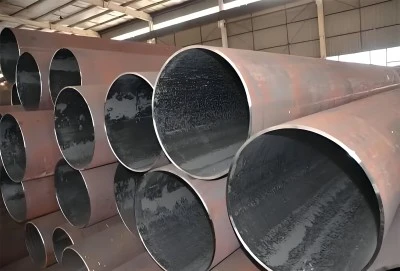
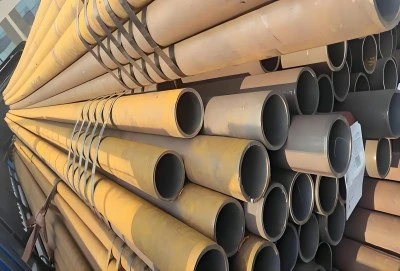
Understanding AS/NZS 1163 C450 Pipe Specifications and Standards
You should know exactly what you're buying before you compare prices.
What the Grade Designation Means?
The “C” in front of C450 stands for cold-formed. Generally, a yield strength of 450 MPa is considered adequate. Minimum elongation of 12 to 16 percent may be obtained in various wall widths. Tensile strength is in the region of 500 to 620 MPa. The mechanical properties are specified by the joint Australian / New Zealand Standards, AS/NZS 1163. It also defines the size limitations and the chemical composition.
C450 vs. C450L0
There is a little difference between the C450 and the C450L0 that changes the specs and the price. The "L0" suffix means that the Charpy impact energy is guarantyd to be zero degrees Celsius. This is important for fracture-critical applications in cold regions like as mining sites in Alaska or Canada. The L0 should be given only if you genuinely need toughness at low temperature for your project since it increases the expense of testing.
Chemical Composition and Weldability
The C450 has a higher design load than the lesser classes, which gives it a Carbon Equivalent Value (CEV) of around 0.43. By following the proper methods and controlling the heat input, the hardness of the heat-affected zone may be controlled and the weld can be expected to function as projected. At this strength level, experienced suppliers include strict adherence to the welding method into the production process of the product as a quality and safety requirement.
Key Factors Influencing AS/NZS 1163 C450 Pipe Price
There are a number of factors that affect the price of cold-formed structural hollow pieces with this level of strength. This is what every buying engineer should keep an eye on when it comes to costs:
- Steel feedstock cost: World market prices for hot rolled coil are the benchmark. When big manufacturers like Baosteel or HBIS change production, spot prices change in weeks, impacting pipe mill bids immediately.
- Pipe dimensions and wall thickness: Larger outer diameters and heavier walls demand more raw material per linear meter and a longer mill processing time. A square hollow portion of 200 x 200 x 12.5 mm is more expensive per ton than a rectangle part of 100 x 50 x 4.0 mm.
- Certification and inspection costs: Suppliers roll the charge for each of the AS/NZS 1163 compliance, ISO 9001 quality management certification and third party mechanical testing (tensile, yield, Charpy impact) into the unit price. If you save money by not using qualified suppliers it usually ends up costing you more later on when you have site inspections or equipment acceptance audits.
- Order volume and lead time: Standard mill runs prefer quantities beyond around 20 tons/size. Extra costs apply for smaller orders handled as non-standard runs. Urgent lead times squeeze manufacturing schedules and drive prices up even further.
- Logistics and packaging: Heavy walled pipe heading for Australia, Canada or the United States needs steel-banded bundle packing, end caps and port handling documents. Landed cost is dependent upon ocean freight rates, port congestion fees and interior delivery distance.
By understanding these five drivers, buyers can separate the factors they can change (like when to place their order, how much they buy all at once, and which standard size to choose) from those that are set by the market.
Comparing AS/NZS 1163 C450 Pipe Price with Alternative Grades
On the AS/NZS 1163 power ladder, C450 is at the very top. The two most common ones are ASTM A500 Grade C and C350.
C350 vs. C450
The minimum yield strength for C350 is 350 MPa, which is about 22% less than for AS/NZS 1163 C450 pipe. When building to C450, a structural engineer can often choose a smaller or lighter piece that will still hold the design load. The lighter weight can make up for the higher price per ton, making C450 the more cost-effective choice over the course of a project's lifecycle. This is especially true for big crane frames or mine gantry structures.
ASTM A500 Grade C vs. C450
In ASTM A500 grade C , the minimum yield for curved sections is 345 MPa and for spherical sections is 317 MPa . C450 is greater than any of them. Remember that compliance with AS/NZS 1163 is contractually needed for things going to Australia and New Zealand when American procurement teams look at both standards for equipment that will be sold. Do not try to replace ASTM pipe with other things to save expenses. If and when it does arrive, it may not be up to scratch.
Total Cost of Ownership Perspective
Cost-focused purchase choices may ignore the costs of repairs, maintenance and warranties. Mine conveyor gantries and marine platform supports are constantly under financial stress owing to the danger of deformation under cyclical load but this risk is minimized by the use of better grade pipe with confirmed mechanical test certificates.
Procurement Considerations for AS/NZS 1163 C450 Pipes
It takes more than a competitive price quote to find a certified C450 structural pipe supplier. There are five steps to the buying process: confirming the technical specifications, auditing the supplier, testing samples, placing a trial order, and signing a long-term contract.
Supplier Certification Verification
Before placing an order the supplier must be required to provide the AS/NZS 1163 mill certificate, ISO 9001 certificate and any relevant third party inspection reports. We are glad to be able to provide a reliable manufacturer that will give a standard Inspection and Test Plan (ITP) and Material Test Certificate (MTC) along with full material traceability from the steel coil heat number to the finished pipe.
Custom Dimensions and Special Orders
Projects come in many sizes. You need to specify them early on but vendors that can construct walls to non-standard widths or cut to length pieces do provide flexibility. Before you commit to dimensions in your design drawings, ask what the minimum order number is for custom runs. You can modify typical sizes – they cost less than paying more for tailored runs.
Logistics Risk Management
Heavy structural pipe such as AS/NZS 1163 C450 pipe needs to be handled by experts at every step of the supply chain. Before you ship, talk to your supplier about steel-banded bundle packaging, moisture protection, and load securing standards. Including clear due dates for deliveries and penalties for late deliveries in the purchase agreement helps keep project budgets and plans safe.
Practical Applications and Added Value of AS/NZS 1163 C450 Pipes
C450 cold-formed hollow sections are the best choice when every kilogram and millimeter of cross-section size counts because they are strong for their weight.
Mining and Heavy Equipment Frames
C450 has good toughness and is resistant to high vibration loads. It is widely used in structural frames of processing plants, conveyor gantries and crusher support structures. Smaller section sizes simplify bolt and weld connections in already-crowded equipment bays.
Renewable Energy and Large Infrastructure
C450 torque tubes and support pylons for utility-scale solar tracking systems when the lower-grade pieces would be unfeasible owing to wind load stiffness requirements. More strength density means fewer poles and more clear spans. This also applies to wide span roof trusses in warehouses and airport hubs.
Fabrication Best Practices
Given the C450 elongation is less than the C250 and C350, the radii and connection designs must be consistent with the requirements of the permitted procedure. If you cold bend under the minimum recommended radius you risk cracking and work-hardening in some places. You bought the mechanical properties. Preserve them and the integrity of the weld by including preheat and interpass temperature controls in your welding procedure specification (WPS).
Conclusion
Price is not a single figure, it is contingent upon the specifics, the quantity, the certification and logistics. Cold-formed structural hollow sections of grade C450 (e.g. AS/NZS 1163 C450 pipe) are more costly than lesser classes because they may be designed to withstand higher stress, which frequently implies less material weight and lower lifetime costs. Knowing the above cost factors makes it simpler for buyers to receive fair pricing, choose reputable suppliers and stay on track with the project goals. For any procurement team the greatest method to manage costs is to ensure that the proper grade is utilized for the right project.
FAQ
What is a typical price range for C450 structural hollow sections?
Prices vary with market conditions, pipe size, and order volume. As a general reference, cold-formed high-strength structural hollow sections in the C450 grade have traded in a range of approximately USD 900–1,400 per metric ton for standard sizes and volumes, ex-works from major producing countries. Landed costs to the United States, Australia, or Canada add freight, port charges, and duties on top of that base figure.
Do AS/NZS 1163 certifications increase the pipe price?
Yes, but the increment is modest relative to the risk it mitigates. Certification testing—tensile, yield, impact, dimensional—adds cost that manufacturers pass through. However, uncertified pipe that fails a site acceptance test costs far more in rework, delay penalties, and reordering than the original certification premium.
Can bulk purchasing reduce the per-unit cost?
Consolidating orders above standard mill run thresholds—typically 20 tons or more per size—removes non-standard run surcharges and improves freight efficiency. Long-term supply agreements with agreed annual volumes provide the most consistent pricing stability, particularly useful for large mining or infrastructure programs with multi-year procurement horizons.
What documentation should I request from a supplier?
Request the Material Test Certificate (MTC), AS/NZS 1163 mill compliance certificate, ISO 9001 certificate, third-party inspection report, and the supplier's Inspection and Test Plan. For fracture-critical applications, also request Charpy impact test data confirming L0 performance where applicable.
Get a Certified C450 Pipe Quote from Longma Group
From 2003 to now, Longma Group has sent AS/NZS 1163 C450 pipe to more than 90 countries for use in infrastructure, heavy equipment, mining, and other projects. Our yearly production capacity is more than a million tons, and we get our raw materials from mills like Baosteel and HBIS. We offer full paperwork in MTC, ITP, and ISO 9001 formats, and we can support custom dimensions for projects with a lot of copies. Visit longma-group.com or email our team at info@longma-group.com to get a price from a reliable AS/NZS 1163 C450 pipe maker.