
Your project's demands will determine which standard you pick between ASTM A252 and API 5L. ASTM A252 steel pipe in particular is excellent for structural applications. It is used for constructing load-bearing buildings, erecting bridges, and installing foundation piles. In these circumstances, strength and durability are the most crucial factors. API 5L, on the other hand, is the most frequent form of pipeline transportation. Its major aim is to service oil, gas, and fluid systems. Thus, knowing these basic distinctions aids engineers in making wise choices. Ultimately, these decisions impact the project's success, cost, and long-term performance in a range of industrial contexts.
|
|
|
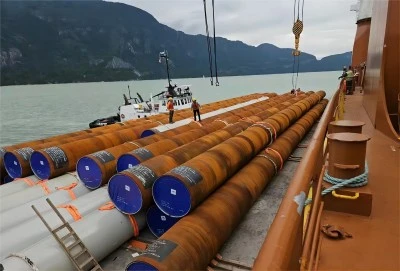
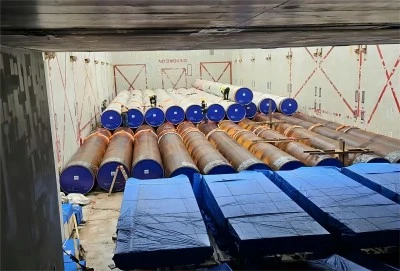
Understanding ASTM A252 Steel Pipe: Foundation of Structural Excellence
ASTM A252 is a specific standard. In reality, scientists made it just for welded and seamless steel pipe piles that are utilized in construction. This standard also has three different grades. Each grade is designed to handle a certain amount of weight. They also take into account the specific characteristics of the environment.
The mechanical qualities of ASTM A252 steel pipe show that it is strong. For instance, Grade 1 has a minimum yield strength of 240 MPa. Grade 2, on the other hand, goes up to 310 MPa. Finally, Grade 3 reaches an astonishing 345 MPa. As a result, these numbers come from a lot of testing done in a controlled lab setting. This strict technique makes sure that performance stays the same no matter what the soil conditions are. It also makes sure that it will work even when there are severe structural loads.
Manufacturing specifications allow for a wide range of dimensions. Specifically, pipe diameters range from 219.1mm to 1016mm. Also, wall thickness spans from 8.18mm to 25mm. As a result, these dimensions accommodate diverse foundation requirements. Applications range from residential buildings to massive offshore platforms. In addition, length options extend from 3 to 18 meters. This variety provides flexibility for different installation methods. It also supports various soil penetration depths.
The welding process for ASTM A252 steel pipe follows stringent quality controls. Notably, manufacturers use Electric Resistance Welding (ERW) and Longitudinal Submerged Arc Welding (LSAW) techniques. These methods ensure seamless joint integrity. Furthermore, heat treatment procedures strengthen weld zones. Simultaneously, advanced inspection equipment detects potential inconsistencies. Crucially, this happens before product delivery.
Therefore, if you need foundation piling for offshore platforms or deep foundation systems, choose ASTM A252 steel pipe. It offers superior structural performance compared to general pipeline standards.
API 5L Explained: The Pipeline Transportation Standard
API 5L serves as the industry benchmark for line pipe. Primarily, transportation systems use it for carrying petroleum, natural gas, and other fluids. This comprehensive standard covers both seamless and welded pipes. Moreover, it features two product specification levels (PSL1 and PSL2). These levels offer different quality requirements.
Grade designations within API 5L reflect minimum yield strengths. Usually, these are measured in pounds per square inch (psi). For instance, Grade B provides 35,000 psi minimum yield strength. On the other hand, X-grades range from X42 (42,000 psi) to X80 (80,000 psi). These specifications ensure pipes withstand internal pressures. Specifically, they handle pressures generated during fluid transportation across vast distances.
Manufacturing processes for API 5L emphasize corrosion resistance. Additionally, they focus on pressure containment. Steel composition includes specific carbon content limits. It also mandates manganese requirements. Furthermore, the standard controls sulfur and phosphorus levels. These chemical restrictions enhance weldability. At the same time, they maintain structural integrity under pressure cycling.
Testing procedures for API 5L include hydrostatic pressure testing. They also involve non-destructive examination and chemical analysis verification. Consequently, each pipe undergoes rigorous inspection protocols before receiving certification. Documentation includes material test certificates (MTC). It also includes inspection test plans (ITP). These documents trace material properties from raw steel through final production.
In summary, if you need transportation pipelines for oil and gas systems, select API 5L. It provides specialized features that ASTM A252 steel pipe cannot match for fluid conveyance applications.
Key Technical Differences: Performance Under Pressure
The fundamental distinction between these standards lies in their intended applications. It also depends on resulting performance characteristics. Therefore, understanding these differences helps engineers select appropriate materials. This ensures they meet specific project requirements.
Three core technical differences emerge clearly:
- Load distribution mechanisms: ASTM A252 steel pipe distributes structural loads through compression and bearing. Conversely, API 5L manages internal pressure through hoop stress calculations.
- Wall thickness optimization: ASTM A252 emphasizes thicker walls for structural stability. In contrast, API 5L balances thickness with pressure requirements and material efficiency.
- Joint design philosophy: ASTM A252 often utilizes mechanical connections. Alternatively, it uses full-penetration welds for structural continuity. However, API 5L employs welded joints optimized for pressure containment.
Chemical composition requirements differ significantly between standards. For example, ASTM A252 allows broader carbon content ranges. Grade 2 allows a 0.26% maximum. This range enhances structural properties. However, API 5L restricts carbon content more tightly. Typically, it limits it to 0.24% maximum. This limitation improves weldability and toughness in pipeline applications.
Mechanical testing protocols reveal another distinction. Specifically, ASTM A252 emphasizes compressive strength. It also focuses on structural stability testing. In contrast, API 5L focuses on tensile properties. It also tests impact resistance at low temperatures and pressure cycling endurance. Ideally, these testing differences reflect each standard's operational priorities.
Environmental resistance varies between applications. On one hand, ASTM A252 steel pipe addresses soil corrosion. It also handles groundwater exposure and freeze-thaw cycling. On the other hand, API 5L confronts internal corrosion from transported fluids. Additionally, it deals with external atmospheric exposure and chemical interactions.
Therefore, if you need pipes for structural foundations in challenging soil conditions, rely on ASTM A252 steel pipe. Its enhanced structural properties provide better performance than fluid transportation standards.
Application-Specific Performance Analysis
Real-world performance data demonstrates clear application boundaries between these standards. Notably, structural engineering projects utilizing ASTM A252 steel pipe report excellent long-term stability. Specifically, they excel in foundation systems. Records show documented service lives exceeding 50 years in marine environments.
Conversely, pipeline projects using API 5L show superior performance in fluid transportation. For example, pressure ratings reach 1440 psi (10 MPa) for high-grade specifications. Furthermore, offshore pipeline installations demonstrate resistance to internal corrosion. They also resist external seawater exposure. This occurs when properly coated with fusion-bonded epoxy (FBE) or three-layer polyethylene (3LPE) systems.
Bridge construction projects frequently specify ASTM A252 steel pipe. Mainly, they use it for driven piles supporting major infrastructure. For instance, the Sydney Harbour crossing project utilized Grade 3 specifications. Engineers chose this for foundation elements. As a result, they achieved required load capacities exceeding 2000 kN per pile. Such performance levels prove difficult to achieve with pipeline-grade materials.
Water supply systems often employ hybrid approaches. Typically, they use API 5L for main transmission lines. Simultaneously, they use ASTM standards for structural support elements. This combination optimizes fluid transport efficiency. It also ensures system structural integrity across diverse terrain conditions.
Industrial manufacturing facilities benefit from understanding both standards. Usually, process piping requires API 5L specifications. However, structural supports and equipment foundations utilize ASTM A252 steel pipe. Therefore, proper standard selection ensures optimal performance for each system component.
In conclusion, if you need versatile steel pipes for complex industrial projects, analyze your needs. Understanding both standards enables optimal material selection for each application.
Cost-Benefit Analysis for Project Planning
Economic considerations significantly influence standard selection for large-scale projects. Factors such as initial material costs and installation expenses play a role. Additionally, long-term maintenance requirements create complex cost structures. These structures vary between ASTM A252 steel pipe and API 5L applications.
Material pricing reflects manufacturing complexity and market demand. Generally, ASTM A252 steel pipe commands premium pricing. This is due to specialized production requirements. It also results from smaller market volumes. In contrast, API 5L benefits from higher production volumes. It also enjoys established supply chains. Consequently, this often results in more competitive unit costs.
Installation costs vary dramatically between applications. For example, structural piling projects require specialized driving equipment. They also need soil preparation and foundation engineering expertise. However, pipeline installation involves trenching and welding. It also includes testing and backfill operations. These tasks require different equipment and skill sets.
Maintenance considerations span decades for both applications. Fortunately, ASTM A252 foundations typically require minimal maintenance once properly installed. Inspection intervals are often measured in years. Conversely, API 5L pipelines need regular monitoring. They also require cathodic protection maintenance. Sometimes, they need potential internal cleaning operations.
Lifecycle cost analysis reveals surprising insights. While ASTM A252 steel pipe may require higher initial investment, it pays off. Structural applications often deliver superior long-term value. This comes through reduced maintenance requirements and extended service life. Meanwhile, API 5L excels in other areas. It fits applications where operational flexibility justifies higher ongoing maintenance costs.
Therefore, if you need cost-effective solutions for long-term infrastructure projects, consider the lifecycle. ASTM A252 steel pipe often provides better value despite higher initial costs.
Why Choose Longma Group for Your ASTM A252 Steel Pipe Requirements
Longma Group stands among China's premier steel pipe manufacturers. Since 2003, we have delivered exceptional ASTM A252 steel pipe solutions. Our extensive production capabilities span 230,000 square meters. Moreover, our annual output exceeds 1,000,000 tons. This capacity ensures reliable supply for projects across 90+ countries. With comprehensive certifications including API 5L and ISO 9001, we guarantee product excellence. Therefore, contact info@longma-group.com to discuss your requirements with experienced professionals.
Longma Group's ASTM A252 Steel Pipe Advantages:
- Comprehensive Grade Coverage: We offer a complete range of ASTM A252 Grades 1, 2, and 3. Additionally, we verify mechanical properties to meet international specifications.
- Flexible Sizing Options: Our outer diameters range from 219.1mm to 1016mm. Also, the thickness ranges from 8.18mm to 25mm. This accommodates diverse foundation requirements.
- Rapid Delivery Capability: We provide an industry-leading 7+ day delivery timeframe. Furthermore, we maintain stock quantities of 50-100 tons.
- Advanced Manufacturing Technology: We operate LSAW and ERW production lines. These lines utilize sophisticated heat treatment and inspection equipment.
- Premium Raw Material Sourcing: We maintain partnerships with renowned steel mills. These include Shagang, TISCO, and Bao Steel. This ensures consistent quality.
- Comprehensive Documentation: We provide complete ITP, MPS, and MTC packages. These documents support engineering compliance requirements.
- Global Project Experience: We have a proven track record. Specifically, we operate in the Middle East, Australia (MOBIL OIL AUSTRALIA), and Southeast Asian markets.
- Multi-Standard Expertise: We possess simultaneous production capabilities. These cover ASTM, API, ISO, and EN standards for complex project requirements.
- Value-Added Services: We offer welding, perforating, and expanding services. In addition, we provide anti-corrosion treatments including FBE, 2PP, and 3LPE coatings.
- Quality Assurance Systems: We hold multiple international certifications. These include ISO 9001:2016, API 5L, and environmental management systems.
- Technical Support Excellence: We provide engineering consultation services. This supports optimal material selection and application guidance.
- Logistics Optimization: We use streamlined supply chain management. This ensures timely delivery to global project locations.
- Competitive Pricing Structure: We offer direct manufacturer advantages. This provides cost-effective solutions without compromising quality standards.
- Long-Term Partnership Approach: We provide dedicated customer support. This fosters enduring relationships with engineering contractors and procurement managers.
Conclusion
Selecting between ASTM A252 and API 5L standards requires careful evaluation. You must consider project-specific requirements, performance expectations, and economic considerations. Notably, ASTM A252 steel pipe excels in structural applications. It demands superior load-bearing capacity and long-term foundation stability. Conversely, API 5L dominates pipeline transportation. Here, pressure containment and fluid compatibility take precedence. Ultimately, understanding these fundamental differences enables informed decisions. This optimizes project outcomes while managing costs effectively across diverse industrial applications.








