
ASTM A53 ERW pipe can serve fire protection systems when the project specification, local code, and the authority having jurisdiction accept it. Type E, Grade B carbon steel pipe offers uniform wall thickness, a heat-treated weld seam, and sizes from NPS 1/8 to NPS 26. NFPA 13 lists ASTM A53 among the steel pipe standards for sprinkler systems, but some projects also require UL or FM listing. This guide covers specifications, pressure factors, selection, documents, and buying steps, so your team can match the right pipe to the right system before ordering.
|
|
|
Is ASTM A53 ERW Pipe Suitable for Fire Protection Systems?
Where Steel ERW Pipe Fits in a Fire Protection System
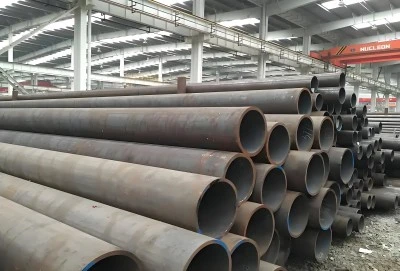
Standpipes, supply lines to fire hydrants, fire pump connections, and ring mains around industrial sites are all made of steel pipe. So are sprinkler mains and branch lines. ASTM A53 ERW pipe is often used for these water-filled lines. Mills make a lot of it because it is easy to cut, thread, shape, and join. The rule covers both black and hot-dip galvanized styles. Most of the time, galvanized pipe is used for wet or outdoor runs, while black pipe works well in many dry indoor places. If you want to know what style to use, talk to a professional.
What Type E Means
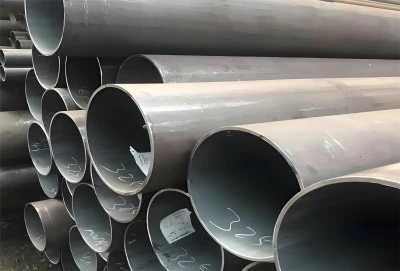
What does Type E mean in ASTM A53? It means bonded with low electrical resistance. Electricity and pressure are used in a mill to make a steel strip into a tube and connect the long ends. Type F is welded in a furnace, while Type S is made without any seams. Because it starts as a rolled plate or coil with a fixed thickness, ASTM A53 ERW pipe has walls that are always the same thickness and in the same place. People who thread or roll-groove pipe can connect it better because of that regularity. The fact that standard water service costs less per ton is also liked by contractors. This Grade B pipe is from the Longma Group.
ASTM Compliance Is Not the Same as Project Approval
The mill made the pipe and tested it to make sure it met a certain standard. The ASTM A53 certificate is proof of this. It says the pipe cannot be used for all kinds of fire safety tasks. NFPA standards, like NFPA 13, 14, 20, and 24, along with local rules, design pressure, joining method, and any UL or FM listing that the owner or insurance company needs, decide if the work is finally accepted. Before you ask for prices, you should make sure of these things with your engineer and the right person in charge. That step keeps extra materials and plan delays from happening on the job site.
ASTM A53 ERW Pipe Specifications and Pressure Performance
Grade B Properties and Chemistry
We give a Grade B, and most project plans list it too. There must be at least 48,000 psi of tensile strength and 30,000 psi of bending strength in Grade A. At least 60,000 psi (415 MPa) of tensile strength and at least 35,000 psi (240 MPa) of yield strength are needed for Grade B. Most carbon that can be in Type E Grade B is 0.30%, most manganese is 1.20%, most phosphorus is 0.05%, and most sulfur is 0.045%. Of course, the weld seam has to be heated to at least 1000°F (540°C) as well. The most up-to-date version and the mill test certificate should always be used to compare values.
Sizes, Schedules, and Lengths We Supply
Our ASTM A53 ERW pipe comes in lengths ranging from 3 to 12.5 meters, wall thicknesses from SCH10 to SCHXXS, and NPS sizes ranging from 1/8 inch to 26 inches. How thick the wall is changes both the weight and the flow area. According to ASME B36.10M, the wall thickness for Schedule 40 NPS 2 pipe is 0.154 inches, and for Schedule 80 NPS 2 pipe it is 0.218 inches. It weighs more per meter and is narrower on the inside because the wall is thicker. The people who make sprinklers think about that change when they do the hydraulic math. We have 200–300 tons in stock, and shipping can take up to 7 days, based on the size and amount.
Pressure Rating and Schedule 40 Versus Schedule 80
There isn't a single pressure level that works for all schedules and sizes. It depends on the width, wall thickness, grade, temperature, weld state, corrosion allowance, safety factor, and type of link to know how much pressure can be used. Leave three words between each other. Design pressure is found by doing the math for the system. When the system is being used, it sees working pressure. One way to be sure is to use hydraulic test pressure. New fire systems should be put through a 200-pound-force water test that lasts for two hours, according to NFPA 13. Schedule 80 isn't always better than Schedule 40. It costs more, weighs more, and has less flow area, but it adds pressure cushion.
Choosing Pipe for Different Fire Protection Applications
Sprinkler Systems
Sprinkler systems are made up of different kinds of pipes, and each type needs a certain amount of flow. You can also call these feeders, cross mains, branch lines, and feed mains. Hydraulic calculations decide what the pipe's diameter is, and the wall thickness changes the inside diameter that is used in those calculations. NFPA 13 tells us how thick the walls should be for threaded and cut-grooved joints. Check the timetable before you put in your order. Shelved or roll-grooved joints might work with SCH10 walls or lighter walls, but only if the code and the company that makes the unions allow it. There is a plan here. It should be written on every line of the bill of materials by your artist.
Hydrant, Standpipe, and Ring Main Lines
When it comes to risks, fire hydrants, standpipes, and ring mains are not the same as indoor water lines. Longma Group can protect buried pipes from soil corrosion by hot-dip galvanizing, FBE, 2PP, 3LPE, and 3PE coating. Designers should also check for surge pressure, thrust restraint at bends, drainage, and flushing. The rules for standpipes are in NFPA 14, and the rules for private underground mains are in NFPA 24. Look at these papers to find out what you can bury and how you should bury it. We will let you know what we can do after you send us the covering language from your plan.
Fire Pump Piping and Cases That Need Another Product
The lines that bring fire pumps in and out go through changes in pressure, vibration, and alignment loads. The pressure of the pump must match the ratings on the flanges. To find out more, talk to the pump supplier. There are times when ASTM A53 ERW pipe isn't enough. Check that part of the specs before you bid to see if it needs straight pipe, a certain product, or a certain finish. It would be better to fix a mistake during the review than for the inspector to find it on the job site. Short calls with techs at the start can save weeks of work down the road.
Comparing ASTM A53 ERW Pipe with Other Options
ERW Pipe Versus Seamless Pipe
Mills make seamless pipe by cutting a hole in a solid block. There is no weld joint on it. But ASTM A53 Type E Grade B says that ASTM A53 ERW pipe's seam needs to be heated up first. If you cannot weld the seams together or need very heavy walls, seamless pipe is a good choice. ASTM A53 ERW pipe comes in many shapes and sizes and has a smooth surface. The wall thickness is always the same. It is made from coils or rolled plates. The design lets you use it for normal fire and water service, and it is a better value per ton than seamless.
ASTM A53 Versus ASTM A106
It is easy to work with hot steel because ASTM A106 pipes are smooth. These pipes are used for things like power plant steam lines. For mechanical and low-pressure uses, ASTM A53 ERW pipe is not a good choice. It is not meant to be used in high temperatures. Fire water lines are often at room temperature, which is why ASTM A53 is used so often in fire safety rules. If your project has hot process lines close to the fire loop, you should treat them as a different kind of pipe with its own design rules. They might get mixed up if you put them on the same buy order.
ASTM A53 Versus ASTM A500 and Unspecified Welded Pipe
ASTM A500 only talks about structural tubes that are cold-formed for load-bearing frames. It does not talk about pressure pipes. Longma Group also makes ASTM A500 Grades A, B, and C. We watch out for the right way to use each standard. When welded pipe is sold without a named standard, it makes it harder to test, find, and understand the chemistry behind it. You have to do chemical limits, mechanical tests, and either an electric test that does not damage the material or a hydraulic test. Before taking a different one, check the purchase order to see if it lists the exact standard, grade, test requirements, and pressure service.
Quality Verification and Documentation
Tests to Expect
ASTM A53 makes it clear how to test ASTM A53 ERW pipe. Every length either goes through a hydrostatic test that lasts for five seconds or an electric test that does not hurt the material, like an electromagnetic or ultrasound check. This test is used on NPS 2 and up to make sure the weld is good. The plates must be two-thirds of the way around before the weld can open. Stretch and pull tests show how strong and flexible something is. Galvanized pipe should have a covering weight of 1.8 oz/ft² as a general rule. We also check that the outside width and wall thickness are all the same.
Documents to Request
Steel needs paper that goes with it. We give you the Material Test Certificate (MTC), the Inspection and Test Plan (ITP), and the Manufacturing Procedure Specification (MPS). Check the goods' size and weight, get certificates of origin, and look at test records and packing lists. Mills like TISCO, BX Steel, Shougang, HBIS, and Bao Steel supply us with their raw materials. We keep track of everything we make, from the raw materials to the finished goods. Make sure that the heat numbers on the license and the pipe match when the pipe arrives. Make it clear in your question what kind of certificate you need for the project.
ASTM Compliance, Listing, and Common Risks
ASTM compliance, UL grade, FM approval, and company recognition are all four things that are not the same. Our management processes and product lines have ISO 9001, ISO 14001, ISO 18001, FPC, and API 5L certificates. They aren't on the UL or FM lists. Before you place your order, check to see if the pipe you need is on the list for your project. When you receive goods, you might find mixed heats, unfinished certificates, walls that are smaller than what was ordered, or export packing that isn't strong enough. Measure how thick the walls are when you get there and compare them to the MTC.
Buying, Installing, and Selecting the Right Pipe
Prepare a Complete Purchasing Specification
When the needs are clear, it is easier to get quotes. Include the ASTM edition, Type E, Grade B, sizes, schedule or wall thickness, length, finish, end type, number, test requirements, certificates, approval requirements, location, delivery date, and test results. Next, look at quotes that are like the first one. When you make the quote, use the same Incoterm, weight scale, inspection fees, and time period. Check to see if the items are in stock or if they need to be made. Being in stock can change the lead time. We have between 200 and 300 tons of size types ready to ship right away. Sizes that are extra-long might take longer.
Installation and Storage
The type of joint determines the thickness of the wall, how quickly it can be put together, and how easy it is to keep up. For long-term runs, grooved joints are best; threaded joints need walls that are thick enough; flanged joints connect pumps and valves; and welded joints don't need walls that are thick enough. To make mating connections, Longma Group can weld, perforate, expand, and do other things to the ends. When you send your inquiry, be sure to say what kind of end you need. When it comes to hangers, supports, and earthquake bracing on the job site, follow the rules set out by NFPA 13. Make sure the pipe is off the ground, dry, and well-ventilated. Also, protect the ends and keep it away from things that will rust it. Finally, check that the heat-number marks can be read.
Final Selection Check
Before you decide, you should think about the type of system, the flow rate, the design pressure, the temperature, the joint method, the corrosion exposure, the relevant codes, the licensing needs, the delivery date, and the cost over its lifetime. For normal business tasks, you might look at price, access, and paperwork the most. For big or international jobs, you might need an outside check, full tracking, and proof that you know how to ship. The cheapest quote does not always mean the lowest price. This is because late materials and delays cost more than a small price difference. Longma Group has been making ASTM A53 ERW pipe since 2003. They will have made more than 1,000,000 tons of pipe every year and sold it to people in over 90 countries by the end of 2023.
Conclusion
For fire safety systems, ASTM A53 ERW pipe can be used as long as the project needs, NFPA rules, and the local government all agree. But having an ASTM certificate does not mean that it will be approved. Type E, Grade B pipe always has the same wall thickness. The weld seam is heat-treated, and the sizes range from NPS 1/8 to NPS 26. Pressure works better or worse depending on things like width, wall thickness, grade, joints, and weathering. This means that Schedule 80 is not always better than Schedule 40. Sprayer, hydrant, standpipe, and fire pump lines all need to be checked in different ways. Straight ASTM A106 pipe works better in high temperatures than ASTM A53 pipe. Records of tests, heat numbers, and mill test papers all show that the quality is good. Fair price comparison is possible if there is clear information about what to buy and when to get a quote. Remember that the cheapest quote does not always mean the lowest price in the long run.
FAQ
1. Can ASTM A53 ERW pipe be used in sprinkler systems?
Yes, as long as the project specs, NFPA 13, and the local government allow it. Also, make sure that the pipe you need for some jobs is listed by UL or FM.
2. Is Schedule 80 better than Schedule 40?
Not all the time. It costs more, weighs more, and has less flow area than Schedule 80, but it has a thicker wall and more weight margin. The choice is up to you based on the hydraulic and design pressure estimates.
3. Which documents should I request?
Ask for the MTC, proof of the tests and checks, a report on the sizes, and any permissions the project needs. The heat numbers on the certificate should match the numbers on the pipe.
4. What does an export quotation need?
Please list the size, Grade B, Type E, plan, finish, number, length, location, Incoterm, certificates, and delivery date.
Contact Longma Group for ASTM A53 ERW Pipe Quotations
Email info@longma-group.com with the sizes of pipes you need, the grade of pipes you need, the schedule, the finish, the amount, the location, the Incoterm, and the date of delivery. Since 2003, Longma Group has sold ASTM A53 ERW pipes. They can say they have MTC, ITP, and MPS papers and 150 to 300 tons in stock. They can also say they can deliver in 7 days or less. Get detailed information and a sample MTC before you place your order.