
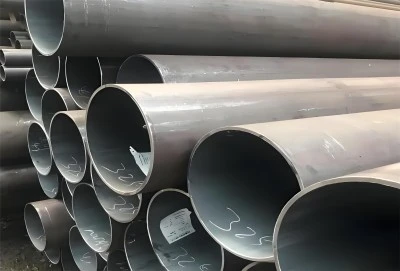
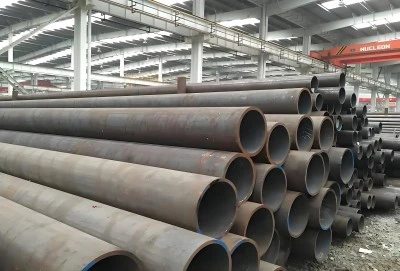
ASTM A53 ERW pipe with a plain end has a square-cut finish for threaded, grooved, flanged, or mechanical joints. ASTM A53 ERW pipe with a beveled end has an angled edge ready for butt-welding. Choose plain ends when your crew will thread, groove, or couple the pipe on site. Choose beveled ends when your crew will weld the joints in the field or in a spool shop. The right choice protects your schedule and keeps labor costs predictable. Below, I cover specifications, applications, costs, inspection, and ordering details so you can request the correct pipe the first time.
|
|
|
Why the End Choice Matters for ASTM A53 ERW Pipe
What Separates a Plain End From a Beveled End
The burrs are taken off, and the ends are cut square or very close to square. A sharp end has a root face, which is a small flat area, and a cut that slopes outward on the outside. The welder can easily get to the base of the joint and fill it in stages thanks to its shape. Because of the thickness of the walls, ASME B16.25, the standard for butt-welding ends, says that a 37.5-degree bevel is the most common shape. Plain ends can be used with threads, plugs, and flanges. Along with welded lines that never end, beveled ends look good with parts that are already made. How the ends are made is the only thing that is different. Everything starts with the same ASTM A53 ERW pipe body.
ASTM A53 ERW Pipe Specifications Buyers Should Confirm
In ASTM A53/A53M, there are three types of black pipe that has been hot-dipped zinc on it. It has an electric resistance weld and is called Type E. Type F is made in a kiln, and Type S does not have a weld seam. It goes from NPS 1/8 to NPS 26 and talks about Type E Grades A and B. It can be pulled apart at least 60,000 psi (415 MPa) and stretched at least 35,000 psi (240 MPa). That company sells it. Your purchase order should list the item you want to buy, along with its grade, length, end finish, coating, testing, and any paperwork that goes with it. Just seeing "ASTM A53 ERW pipe" on a line doesn't give you enough information to compare prices fairly.
What a Wrong End Choice Costs on Site
Most of the time, the site has trouble when the end type and the joining method don't match. To join square-cut pipes together, the bevels have to be ground by hand. This takes longer and makes the angles less even. When teams get pipe with bent ends instead of grooved ends, they may have to cut it back to square, which takes time and makes the pipe shorter. Because of either mistake, the work takes longer than planned, and many construction contracts have penalties for finishing late. Once you choose the end type, it takes a little while to process your order. Fixing the mistake right away costs a lot more.
ASTM A53 ERW Pipe Plain End and Beveled End: Features, Uses, and Limitations
Plain End: Where It Fits Best
To connect to other pieces, the ASTM A53 ERW pipe has either a threaded or grooved end. A lot of different types of mechanical parts work well with it. It is often used for fire protection lines, compressed air, water distribution, utility services, general industrial piping, and building structures. Crews can cut, groove, or thread it on the job site instead of waiting for a mill. Prices for pipes stay low because the plant doesn't have to do much work on them. Because welders have to grind or make each end and set a root gap, the limit can be seen in systems that are bonded. Please check the thread allowance, coupling ratings, and material of the gasket to make sure they will work with each other before you place your order.
Beveled End: Where It Fits Best
It is time to butt-weld ASTM A53 ERW pipe that has a beveled end. With the angled edge, you can get full root entry, place the filler metal correctly, and control how strong the weld is. The shape of each pipe stays the same after the joints are cut in the mill. That is important for long welded lines, process pipes, welding utility systems, and frames that are already made. Welders can start the weld faster because they don't have to spend as much time getting the edge ready. You have to choose between cost and freedom. If you bevel one end, you have to cut off the bevel before you can thread or slot it. Factory beveling costs more because the process takes more steps.
What to Write in the Purchase Order for Bevel Details
If you want rounded ends, please write down the exact details of your order. It should be 37.5 degrees if you want to follow ASME B16.25. You should also write down the root face size and any possible errors. Ask that the ends be cleaned and any burrs be removed. If you want to send the bevel, make sure the ends are protected so it can be handled and shipped by sea. Those numbers shouldn't be set by default; they should be based on your welding procedure and engineering drawings. Remember that just because a pipe meets ASTM A53 standards doesn't mean it can handle all pressures. Both the expert and the design code make that choice.
Technical and Commercial Comparison for Your Project
Compare Total Installed Cost, Not Pipe Price Alone
Most of the time, plain-end pipe is the cheapest and ships quickly from stock. Before welding, it can save time to prepare and check beveled pipe, but it takes longer to make and check it. When you compare prices, you should think about things like pipe, threading or beveling, couplings, fittings, welding labor, inspection, packing, freight, and maybe even repairs. When you use a grooved system, you trade the work of welding for the cost of connecting. A welded method saves money on coupling costs by not having to pay for weld checking. Your price should be listed along with the minimum order amount, lead time, export packing, and shipping terms such as FOB, CIF, or DDP. When you get quotes, it's only fair that they all price the same finish.
Match the End Type to the Application
Most utility and water lines have plain ends that either screw or groove together to join. If you have a lot of welded transmission lines, factory bevels can help. It is important for fire safety systems to follow NFPA 13, local rules, and any rules for listing or approval. Schedules that are thicker than thin-wall pipe are usually needed for threaded joints. In the case of process pipes, ASME B31.3 lays out the rules for things like pressure, temperature, fluid, rust, welding, and industrial services. Each of these places needs to look at the design code on its own. Check to see if the project needs columns or pilings that meet ASTM A500 or some other building standard. To get the most out of them, you should ask your expert or tester early on.
ASTM A53 ERW Pipe Compared With Alternatives
ASTM A53 ERW pipe is only good for liquid and machine work at low pressure. Not good for work that needs to be done in hot places. Power plant steam lines need ASTM A106 carbon steel pipe without a weld joint because it works well in hot places. ASTM A500 talks about cold-formed structural tubing. Pipes without weld seams are sometimes not needed for a system, and it costs more to buy one when the specs don't call for it. When ERW pipe is rolled from a plate, the wall thickness stays the same. This makes it easy to thread and groove automatically. Black and galvanized A53 are not the same when it comes to how well they resist corrosion, how much they weigh, or how they can be made. Instead, use the product that best meets your needs.
Procurement Checklist and Inspection for ASTM A53 ERW Pipe
RFQ Checklist for ASTM A53 ERW Pipe
A clear RFQ gets quotes that are the same. You need to get these three kinds of knowledge.
- Material and size: Please list the length, outside diameter, schedule or wall thickness, and nominal pipe size, along with the material and size as ASTM A53/A53M, Type E, Grade B. You can say whether random lengths are fine or that they need to be a certain length, and add the number of each size. Anyone can quote a different price for the same item with these lines. It's simple to see which quotes are the best.
- End finish and surface: You can choose whether the ends are smooth or rounded, and you can also describe the root face, the angle of the bevel, and any rules that apply. You can finish it in black or hot-dip zinc, and you can add any holes or grooves you need. You can also cover it with FBE or 3PE. This will help your team find each box at the port. Make sure that each box is marked and packed for export.
- Testing and documents: Make a list of the Material Test Certificate, the results of any chemical or mechanical tests, any reports on dimensions or nondestructive electric tests, and any inspections by a third party. Make a note of when you need the ASTM A53 ERW pipe, where it's going, and how it will get there. The seller can then answer in one letter how much stock they have and how long the wait time is.
You don't have to guess when you ask for a price with this kind of list. It also speeds up the process.
Testing That Backs Up the Standard
If a length of pipe doesn't pass the hydraulic test in ASTM A53, it also has to pass an electric test that doesn't damage it. This test keeps the pressure at a certain level for at least 5 seconds. There is also a flattening test for bigger ERW sizes. The plates have to be less than two-thirds of the way around before the weld can close. For sizes NPS 2 and less, there is also a bend test. On Grade B Type E pipe, the weld joint is heated to at least 1000°F (540°C). Getting rid of the untempered martensite is done this way. With a hydraulic test, you can see that the pipe met the standards for the test. Because the working pressure is different for each pipe based on its size, thickness, temperature, corrosion limit, and design code, it's not given.
Receiving Inspection at the Job Site
The check can begin as soon as the bundles arrive. Look at the buy order and the real thing to see how they match up in terms of size, grade, wall thickness, length, quantity, surface condition, and end preparation. If the pipe has a bevel, measure the angle between the root face and the bevel. Also, look for burrs, broken end faces, and missing or broken protection. Check that the heat numbers on the pipe match the numbers on the Material Test Certificate. You should also look for scratches or damage from being handled. ASTM A53 says that the zinc covering on galvanized pipe should normally weigh about 1.8 oz/ft². Make sure that this number is recorded in the test materials. Write down any problems that need to be fixed before you give the materials to the work crew. To back up your claim, take pictures as you unload as well.
Decision Guide: Which End Should You Order From Longma Group?
Choose Plain Ends When Flexibility Matters
If you need to groove, thread, flange, motorize, or build a system in the field, choose ASTM A53 ERW pipe with a straight end. Utility water lines, fire sprinkler mains, chilled water loops, and compressed air lines are all in this group. Plain ends are also useful because crews can cut them to length and prepare the ends on the job site if plans change. You can get ASTM A53 ERW pipe from us in as little as 7 days, and we always have 200 to 300 tons in stock. That helps when a job is already going on, and a change order comes up. Make sure our team knows exactly what sizes we have in stock before you tell us what you want.
Choose Beveled Ends When Welding Drives the Job
You can butt-weld over and over with beveled ends, ready-made spools, long welded lines, or any other job where it's easy to see how to prepare the weld. When the factory bevel is consistent, it takes less time to prepare the edges, and there is less chance of root gaps that aren't even. Longma Group can fix the ends of connections that join things together. Please send us the root face and bevel angle from your welding process. We will check everything to make sure it is right. Look at engineering plans, piping diagrams, building rules, owner requirements, and fitting needs to help you make your choice. Then, write down the type, grade, size, wall thickness, length, end finish, and edge on the buy order.
Longma Group Supply Details for ASTM A53 ERW Pipe
Since 2003, Hebei Longma Group Limited has been making ERW and LSAW steel pipe. They will be making more than 1,000,000 tons of it every year by the end of 2023. We sell Grade B ASTM A53 ERW pipe. It comes in lengths from 3 to 12.5 meters and widths from NPS 1/8" to 26", or SCH10 to SCHXXS. The steel we use comes from mills in China, like Shagang, TISCO, HBIS, and Bao Steel. We keep track of products from the time they are raw materials until they are finished goods. The surface can be hot-dip galvanized, FBE, 2PP, 3LPE, or 3PE. There are several documents inside, such as the Material Test Certificate, the Manufacturing Procedure Specification, and the Inspection and Test Plan. Two of our certificates are API 5L and ISO 9001.
Conclusion
Based on how the pipe will be joined, choose either a plain or a beveled end. Crews can easily make changes on the job site because plain ends work with mechanical, threaded, grooved, and flanged systems. Butt-welded lines and spools fit beveled ends. A straight edge, on the other hand, lets roots grow all the way through and saves time on preparation. Type E, Grades A and B, and NPS 1/8 to 26 are all types of ASTM A53 ERW pipe. On the order form, you need to write down the type, grade, size, schedule, length, end finish, and bevel. The cost of installing the pipe is more important than the price of the pipe itself. You, the expert, and the job need to choose between ASTM A53, A106, and A500. Hydrostatic tests, not working pressure, show that the standard is met, so it is still important to get an inspection.
FAQ
1. Can I order ASTM A53 ERW pipe with either end type?
Yes, write on the order whether the ends are straight or curved. If they are curved, write down the root face and berth angle. Longma Group will talk to you about the specifics.
2. Can I weld plain-end pipe?
As long as the right plans are made, yes. It needs to be cleaned, and the ends need to be beveled. The welding process and design code also need to accept the pressure service.
3. Which grade does Longma Group supply?
We only sell Grade B ASTM A53 ERW pipe; ASTM A53 shows Grade A. Grade B has a minimum tensile strength of 60,000 psi and a minimum yield strength of 35,000 psi.
4. Is ASTM A53 suitable for high-temperature steam?
Most of the time, no. ASTM A53 is designed to be used for industrial tasks and low pressure. ASTM A106 is mostly used for work that needs to be done at high temperatures.
Request Your ASTM A53 ERW Pipe Quote From Longma Group
Want to find an ASTM A53 ERW pipe supplier that can meet your needs for the plan, delivery date, and end finish? It takes 7 days for Longma Group to deliver 200–300 tons of stock and fax MTC, ITP, and MPS documents. Send us an email at info@longma-group.com with the size, schedule, number, and type of end you need (plain or beveled). We will then send you a price that fits your needs.