
Procurement managers want more than just generic product catalogues when they're looking for high-integrity pressure piping for mission-critical infrastructure. They want quality guarantee that has been tested and technical clarity. We know that finding an ASTM A671 CB60 pipe supplier can be hard because of the complicated requirements, third-party certifications, and worries about the reliability of the supply chain. Our complete guide solves these problems by making it clear what makes certified suppliers unique and how TUV inspection protocols protect your money. We have been making things for over twenty years and have strict compliance standards. This gives us the technical knowledge and buying trust needed for large-scale projects in the power generation, petrochemical processing, and oil and gas transmission sectors.
|
|
|
Understanding ASTM A671 CB60 Pipe and Its Specifications
What Defines ASTM A671 CB60 Pipe?
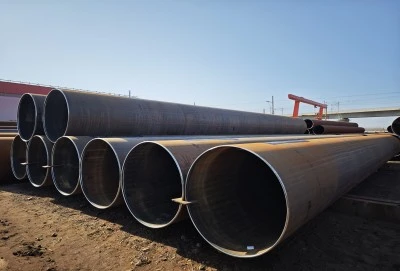
ASTM A671 CB60 pipe is a specific type of electric-fusion-welded (EFW) carbon steel pipe that is made from plate that is suitable for pressure vessels. The "CB60" marking means that the base material is ASTM A515 Grade 60 killed carbon steel plate that has been made into tubes and longitudinally welded with extra filler metal. This way of making things solves one of the biggest problems in large-diameter piping: getting the power and dependability of seamless pipe without the size restrictions that come with making seamless pipe above 24 inches.
This pipe grade has a minimum tensile strength of 60 ksi (414 MPa) and a minimum yield strength of 220 MPa. It is mostly made for use in low-temperature and air pressure applications. The fine-grained, fully killed structure makes sure that the pipe wall has the same mechanical qualities all the way through, which gets rid of the pore risks that come with materials that haven't been deoxidised. Trace impurities like phosphorus and sulphur are strictly controlled and can only be 0.035% each. This makes CB60 easier to weld and tougher, making it perfect for uses that need stable performance under repetitive loading.
Chemical Composition and Mechanical Properties
The carefully balanced chemistry of ASTM A671 CB60 pipe is what makes it work. The carbon content stays below 0.24%, which makes it easy to weld without lowering its strength. Manganese levels between 0.60% and 0.90% help the steel harden and remove oxidation. Silicon levels between 0.15% and 0.40% also help remove oxidation and make the steel matrix stronger. This mixture has a tensile strength between 415 and 550 MPa and a yield strength starting at 240 MPa. It has a large range of strengths for keeping internal pressure in check while still being flexible enough for installation in the field and accommodating thermal expansion.
Heat Treatment Classes and Testing Requirements
One thing that makes this grade of pipe stand out is its classification system, which sets the rules for heat treatment and non-destructive testing (NDT) intensity. In order to meet the Class 22 specification, longitudinal welds must first go through normalising and tempering heat treatments and then a full radiographic examination. Class 32 needs the same kind of heat treatment, plus extra ultrasonic testing. These standardised inspection levels meet the requirements of regulations that cover special pressure equipment in power plants and petrochemical plants, where failure can cause more than just financial loss; it can also have safety and environmental effects.
The required stress-relief heat treatment gets rid of any leftover pressures that were created during the forming and welding processes. This keeps the dimensions stable and makes the material less likely to crack from stress corrosion. Full radiographic testing finds internal cracks that can't be seen with the naked eye, making sure that the weld quality meets or beats the values of the base metal. This complete quality assurance framework lowers the risk of procurement by providing written proof of honest manufacturing.
TUV Inspection Role in Quality Assurance
TUV inspection adds an extra layer of independent verification that gives international buyers more confidence in their purchases. In contrast to quality checks done by the factory, TUV is a third-party verification of the accuracy of measurements, the chemistry of the materials, their mechanical properties, and the integrity of the welds against the stated specifications. TUV inspectors watch over important parts of the manufacturing process, from checking the arriving plate material to doing the final hydraulic testing. Products only get certificates when they fully meet international standards and contractual requirements.
A common worry in procurement is making sure that promises about manufacturing can stand up to independent review. The TUV certification shows that the ASTM A671 CB60 pipe's dimensions, wall thickness tolerance, and mechanical properties meet the requirements of the specification. It also confirms that the heat treatment parameters and NDT procedures are done according to standard procedures. Impact tests at certain temperatures back up the service temperature grade all the way down to -29°C, showing that the material stays tough in real-world situations.
Top Trusted ASTM A671 CB60 Pipe Manufacturers and Suppliers with TUV Certification
Global Manufacturing Hubs and Regional Players
There are well-known manufacturing hubs for industrial piping in the United States, China, India, and Korea. Each of these hubs has its own benefits. For government-funded infrastructure projects that follow the Buy American Act, American manufacturers stress using domestic content. Chinese manufacturers, on the other hand, offer competitive prices and a lot of capacity for large orders. Indian suppliers serve the growing markets in the Middle East and Southeast Asia because they are close by, and Korean mills make high-quality goods for offshore platform building, which requires them to be very strong.
Hebei Longma Group Limited is one of these options. It is a good example of a modern ASTM A671 CB60 pipe manufacturer that combines size, technical skill, and an eye on the world market. Longma has been in business since 2003 and produces more than 1,000,000 tonnes of goods every year. It has full API 5L approval as well as ISO 9001, ISO 14001, and OHSAS 18001 titles. The building covers 230,000 square meters and has advanced LSAW and ERW production lines that can make pipes up to 60 inches in diameter and 40 mm thick at the walls. These lines can meet the needs for large diameters that are common in power generation and petrochemical applications.
Critical Certifications Beyond TUV
While TUV inspection is a good way to get independent proof, having a wider range of certifications shows that the manufacturing process is mature and the product is accepted by the market. When you get API 5L approval, it means that your welding procedures, NDT methods, and quality control systems meet the standards of the petroleum business. This shows that you can do more than just meet ASTM requirements. Getting registered with ISO 9001 shows that you follow organised quality management practices for choosing suppliers, keeping an eye on processes, and making improvements all the time. Environmental management (ISO 14001) and occupational health and safety (ISO 45001) certifications show that an organization is taking more operational responsibility, which is becoming more important for EPC contractors managing the sustainability of the supply chain.
Factory Production Control (FPC) certification, which is needed to enter the European market, proves that the manufacturing process is controlled consistently. AS/NZS compliance, on the other hand, lets projects in Australia and New Zealand happen. This variety of certifications not only proves technical skill, but also shows export experience and knowledge of international business practices that make buying things across borders easier.
Manufacturers, Distributors, and Fabrication Partners
Understanding how supply networks are structured can help make buying routes work better. Working directly with a manufacturer can save you money and get you technical help from engineering teams that know what the production can and can't do. This way of doing things works well for large orders and projects that need to be customised or tested in a special way. Distributors keep supplies in their own regions so that smaller orders or emergency backups can be delivered faster. In exchange for this, they charge slightly higher prices, but the goods are always available. Fabrication partners add value by doing extra work like spooling, pre-fabricating pipe assemblies, and on-site assembly services that cut down on the need for field labour.
Longma Group works in all of these areas, offering both direct manufacturing and fabrication services such as welding, perforating, expanding, and end treatments for connections that fit together. This integrated capability speeds up procurement by combining multiple tasks into a single source of responsibility. This makes coordination easier and lowers the risks that come with multi-vendor supply chains.
Customer Performance and Case Studies
The best way to tell if a seller is capable is to look at their experience with real projects. The MOBIL OIL AUSTRALIA project is part of Longma Group's portfolio. It shows that they can successfully carry out international contracts with strict requirements. These kinds of references not only confirm the quality of the product, but also its suitability for business use, the accuracy of its documentation, and its ability to meet deadlines—all of which are just as important as technical compliance.
Buyers can get useful information by asking for example projects that are similar to the ones they need for their own applications and then getting in touch with previous customers to find out about product performance, quality of expert support, and any problems that came up after delivery and how they were fixed. This investment in due research gives information that goes beyond certificate reviews and facility checks. This gives people more trust before they commit to big project funds.
Conclusion
To get TUV-inspected ASTM A671 CB60 pipe, you have to find a balance between technical needs, strict quality control, and business concerns that span global supply chains. This grade of pressure vessel works well in lower-temperature, moderate-pressure situations like those found in power generation, petrochemical processing, and industrial manufacturing. Knowing the specifics, heat treatment classes, and differences between materials lets you make an informed choice that fits the needs of the project. TUV inspection adds to the quality systems used by manufacturers by providing independent confirmation. This lowers the risk of purchasing something by showing that it meets international standards. By looking at more than just price, like certifications, technical skills, and customer references, you can find partners who can help with projects from the time the specifications are made until they are fully operational. Using these guidelines, project teams, procurement managers, and pipeline engineers can be sure to get approved materials from reputable sellers. This will ensure the quality and dependability needed for mission-critical infrastructure.
FAQs
What documentation accompanies TUV-inspected CB60 pipe?
TUV inspection makes full certification packages that include dimensional inspection reports that confirm tolerances for diameter, wall thickness, and length; material certificates that include chemical analysis and mechanical test results; radiographic examination records that show the quality of the weld; heat treatment charts that show the time-temperature cycles; and hydrostatic test reports that show the integrity of the pressure. As a whole, these documents show that the specifications were met and help with project material receiving procedures, equipment installation documentation, and regulatory compliance submittals that are needed in many fields and places. In every instance involving ASTM A671 CB60 pipe, the documentation ensures full traceability.
Can CB60 pipe be customized for specific industrial applications?
Different project needs can be met by customisation options such as bevelled or plain ends, protective coatings like FBE or 3LPE to resist corrosion, threading or grooving for mechanical joining, special cleaning for oxygen service and longer fabrication to cut down on field welds. The type of heat treatment—from stress-relieved to normalised and tempered—affects the properties of the material based on its use. To meet specific needs, the base specification can be expanded through tests like HIC resistance for sour service environments or low-temperature impact testing for cryogenic applications.
How does TUV certification enhance pipe reliability beyond standard mill testing?
In addition to internal quality control through witness inspection of key production steps, TUV certification adds independent proof. Before the fabrication process starts, TUV inspectors make sure that the raw materials meet the standards. They also check the time and temperature parameters of the heat treatment processes, make sure that qualified staff interpret the radiographs correctly, and make sure that the final dimensions are correct. This outside oversight lowers the chance that non-conforming materials will get to project sites, gives procurement teams proof that the manufacturing process is honest, and gives people a way to get their problems fixed if they happen. The independent validation is especially helpful when buying from makers that don't have a past of performance or when project requirements call for high levels of confidence for pressure vessel and power generation uses.
Partner with a Certified ASTM A671 CB60 Pipe Supplier
Longma Group is ready to help you buy pressure pipes by making TUV-certified ASTM A671 CB60 pipes that are made to exact specs. Our thorough quality management system, which is backed by API 5L, ISO 9001, and other international certifications, makes sure that our products always work well on large orders for the oil and gas, petrochemical, and power generation industries around the world. We only get our base materials from the best domestic mills, like Shagang, TISCO, and Baosteel. This way, we can track everything from where the plate came from to its final inspection. Our expert team helps with engineering throughout the whole project lifecycle, from coming up with specifications and choosing materials to giving advice on welding in the field and helping with testing. We offer turnkey solutions that make your supply chain more efficient. Our fabrication services include coating, end treatment, and custom machining, and we can make more than a million tonnes of steel every year. Contact us at info@longma-group.com to talk to one of our procurement experts about your needs and get access to detailed technical information that will help you make confident choices about where to get materials for your important infrastructure projects.