
Choosing the right piping material is an important part of managing important boiler infrastructure because it affects both operational safety and long-term cost efficiency. ASTM A671 CB65 pipe is a special kind of electric fusion welded (EFW) carbon steel product that is made from ASTM A515 Grade 65 pressure vessel quality plate. High-pressure boilers working at room temperature and lower pressures work very well with this pipe grade, which has a strong tensile strength of 65 ksi (450 MPa) and is easy to weld. Engineers and procurement managers depend on the A671 CB65 pipe specifications to deal with the tough thermal cycling and pressure changes that happen in petrochemical and power plants.
|
|
|
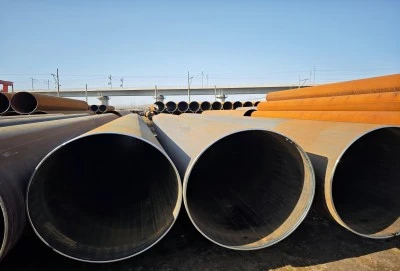
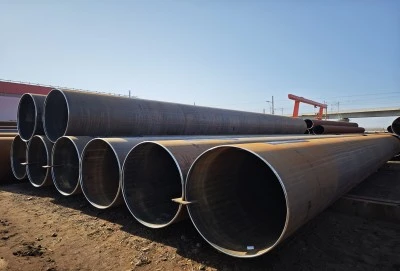
Understanding ASTM A671 CB65 Pipe Specifications and Properties
The technical strength of electric fusion welded pipes relies on the type of material used and how well it is made. Longma Group makes ASTM A671 CB65 pipes out of ASTM A515 Grade 65 steel plate, which goes through strict compositional controls to make sure it works the same way in all large-diameter installations.
Chemical Composition and Material Foundation
The base material has a carefully balanced chemistry: the highest carbon content stays at 0.28%, which keeps it weldable while still giving it strength. The manganese level is between 0.85% and 1.20%, which helps to smooth out the grains and improve the material's mechanical qualities. Impurities of phosphorus and sulphur stay below 0.035% each, which makes the material less likely to break easily. This killed carbon steel mix with the right amount of silicon and manganese gives it stable mechanical properties that are needed for uses that need to hold pressure.
Mechanical Performance Standards
The tensile strength of ASTM A671 CB65 pipe grade pipes is between 450 and 585 MPa, or 65 to 85 ksi, and the yield strength is at least 240 MPa, or 35 ksi. The elongation properties make sure that the material is flexible enough for field fabrication and can handle thermal expansion. These mechanical properties are higher than those of standard carbon steel grades. This makes A671 CB65 pipe an ideal medium-strength material for moderate to high-pressure boiler systems, where the cost of seamless pipe in bigger sizes becomes too high.
Class Designations and Heat Treatment Options
The ASTM A671 standard has several class names, such as Class 10, 12, 22, and 32. Each class specifies a different way to heat treat and check things. When Class 10 pipes come, they are just rolled, but Class 22 pipes go through normalisation, tempering, and a full x-ray review of their longitudinal welds. This gives purchasing teams the freedom to perfectly match material requirements to the level of risk in the application and the design pressures. Heat treatment makes the grain structure more uniform and relieves stress, which has a direct effect on how reliable the material is in environments with cyclic loading.
Longma Group's production method uses modern heat treatment furnaces that keep the temperature profile consistent along the whole length of the pipe. This controlled thermal processing makes sure that the mechanical qualities and dimensional stability stay the same, which are very important when adding large-diameter parts to boiler systems that are already in place.
ASTM A671 CB65 Pipe vs Other Pipe Grades: A Comparative Analysis
When making choices about what to buy, it's helpful to know how the ASTM A671 CB65 pipe specifications relate to other materials that are often used in boiler and pressure pipe applications.
CB65 Versus CB60 and Lower Carbon Grades
The main difference between ASTM A671 CB65 pipe and CB60 is the base plate. A671 CB65 pipe uses A515 Grade 65 material, which has a tensile strength about 10% higher than CB60's Grade 60 base. This difference in strength means that thinner walls are needed for the same design pressures, which lowers the cost of materials and the weight of installation. When it comes to large diameters (above 16 inches), where seamless manufacturing becomes technically difficult and cost-prohibitive, EFW A671 CB65 pipes offer better dimensional control than ASTM A53 or A106 seamless grades.
Comparison with Stainless and Alloy Grades
ASTM A312 stainless steel pipes are very resistant to rust, but they cost 300–400% more to make than carbon steel ASTM A671 CB65 pipes. The corrosion resistance benefit rarely justifies the extra cost in boiler applications that use non-corrosive media, like treated feedwater or dry steam. The A671 CB65 pipe has good oxidation stability at temperatures up to 650°F, which is common for low- to medium-pressure boilers. This makes it an economical choice for many thermal power and industrial heating systems.
Lifecycle Performance Considerations
When done right, the EFW production method makes joints that are as strong as the base metal. This is because it creates consistent weld quality with full penetration fusion. Longma Group tests all of its Class 22 pipes with x-rays to make sure that their weld quality meets or beats the standards of ASME Section VIII Division 1. This quality guarantee gives lifetime performance that is similar to seamless options, and in well-kept boiler systems, it has been shown to last more than 25 years. We do transverse guided-weld-bend tests to make sure the pipe is flexible across the fusion zone. This shows that the pipe can handle changes in operational stress without cracking.
Applications of ASTM A671 CB65 Pipe in Boiler Pipeline Systems
The flexibility of ASTM A671 CB65 pipe specifications makes them useful in many industrial fields where reliable fluid and steam transfer are essential for running the business.
Power Generation Infrastructure
In thermal power plants, A671 CB65 pipes are used a lot in the networks that carry steam from boiler drums to turbine inlets. Because it can handle both high pressure and temperature changes, this type is good for main steam lines that work at levels between 600 and 900 psi. Large diameter options (up to 60 inches in our production range) allow for high bulk flow rates that are necessary for large-scale power plants. We provided ASTM A671 CB65 pipes for several coal-fired power plants in Southeast Asia. The material's cost-to-performance ratio made it the clear choice over stainless steel options.
Petrochemical and Refining Operations
In refineries, ASTM A671 CB65 pipe grade pipes are used in process heating circuits where crude oil and intermediate products need to be heated up before they can be distilled. The material works well for fired heater outlet pipes and heat exchanger connections because it stays stable at temperatures below 700°F. The weldability properties make it easier to make changes in the field during repeat repair, which lowers the cost of downtime. One project in the Middle East called for 24-inch diameter hot oil return lines made of A671 CB65 pipe. The mix of its strength and ease of manufacturing allowed for faster building plans.
Industrial Manufacturing and District Heating
Manufacturing plants that use steam-powered tools, like textile makers, food production facilities, and chemical producers, need reliable boiler lines to keep making things. When these things are used, A671 CB65 pipes are what hold steam distribution heads and condensate return systems together. More and more, district heating networks in cold climates require this grade for primary distribution mains. This is because the balance between mechanical strength and material economy is important for the infrastructure to work.
The recorded performance in these areas shows that A671 CB65 pipe can adapt to different operational profiles. The material's predictable behaviour under cyclic loading is liked by engineering teams, and the competitive pricing compared to performance is liked by procurement managers.
Procurement Guide: Sourcing ASTM A671 CB65 Pipes for Your Projects
To get quality-assured pipe materials, you need to carefully evaluate suppliers and check all of their paperwork.
Manufacturer Qualification Criteria
Reliable suppliers keep their API 5L and ASME certifications up to date, which shows that they follow widely recognised production standards. Longma Group's ISO 9001:2016 certification shows that we handle quality in a planned way throughout the whole production process, from receiving the raw materials to checking the finished product. Check to see if the potential suppliers you're interested in have well-equipped testing labs that can do chemical analysis, non-destructive testing, and checking of mechanical properties all in-house. This feature makes it possible to track down data and quickly answer questions about specifications while the project is being carried out.
Quality Documentation Requirements
Full Mill Test Certificates (MTC) that meet EN 10204 Type 3.1 or 3.2 standards should be sent with every shipment of pipes. These papers show the chemical makeup that changes with heat, the results of tensile tests, data on impact toughness (if needed), and records of NDT examinations. We give engineering companies full Inspection and Test Plans (ITP) and Manufacturing Procedure Specifications (MPS), which makes it easy for them to follow the quality control rules for the project. Third-party inspection services from companies like Bureau Veritas or SGS add extra layers of security for important uses where lowering the risk of buying is worth the extra cost.
Pricing Structures and Lead Time Planning
The price of base steel plates affects the cost of materials for ASTM A671 CB65 pipes, which are usually priced between $850 and $1,200 per tonne for normal class labels. When you commit to buying more than 200 tonnes, you can often get better prices, which makes buying all at once during various stages of a job financially smart. Standard production wait times are 30 to 45 days from the time an order is confirmed until the goods are ready to be shipped. Faster schedules are possible for an extra fee. When setting project material delivery goals, good procurement planning takes into account the time it takes for ocean freight (25–35 days to places in the Middle East and North America) and the steps needed to clear customs.
Longma Group's procurement team works closely with engineering contractors to make sure that order quantities are the best they can be given the limitations of storage space and the needs of construction sequencing. This way of working together keeps working capital from getting stuck in inventory as much as possible and makes sure that material supply matches up with installation plans.
Why Choose ASTM A671 CB65 Pipe for Your Boiler Pipeline System
The market has continued to favour A671 CB65 pipe standards because they offer real operational and financial benefits that procurement pros see throughout the lifecycle of a project.
Strength-to-Cost Optimization
ASTM A671 CB65 pipe has mechanical properties that are in a good spot between standard carbon steel grades and high-end alloy materials. The tensile strength of 65 ksi allows for pressure design calculations that lower the wall thickness needed compared to lower-grade alternatives. This directly cuts down on the amount of material needed and the cost of shipping it. When looking at strength-per-dollar, A671 CB65 pipe always does better than both standard seamless grades and lower-strength welded alternatives in applications with a diameter of more than 20 inches.
Fabrication and Installation Efficiency
The A515 Grade 65 base material is very easy to weld, so it can be joined in the field using standard SMAW, GMAW, or SAW procedures that are approved by ASME Section IX. This makes it easier to find specialised contractors and lets local fabrication shops make changes without having to use special consumables or follow special preheat protocols. Out-of-roundness in EFW manufacturing is usually less than 1% of diameter, which makes it easier to fit up during installation. This speeds up building plans and lowers labour costs. In Australia and the Middle East, projects we worked on reported 15-20% shorter installation times compared to seamless options that needed a lot of field machining to prepare the joints.
Maintenance and Reliability Benefits
When ASTM A671 CB65 pipes are properly defined, they break down in predictable ways when they are loaded with heat and pressure over and over again. This lets condition-based maintenance tools make the best use of inspection intervals. The material doesn't turn into graphite at temperatures below 800°F, which keeps the microstructure stable for the whole design life. Ultrasonic thickness tracking tools can keep track of how walls are slowly falling apart due to internal erosion or external corrosion. This lets you know about problems before they become a problem. The A671 CB65 pipe is a lifetime cost leader for boiler uses that work within its temperature and pressure range because it is mechanically reliable and easy to maintain.
As the industry changes, new covering technologies like fusion-bonded epoxy (FBE) and three-layer polyethylene (3LPE) methods make the ASTM A671 CB65 pipe last longer in harsh conditions. Longma Group provides full anti-corrosion services and uses these protection shields in a factory setting that controls the quality of the adhesion and coverage to make sure it is uniform. This extra feature takes care of all the material protection needs from the time it is manufactured until it is no longer needed after decades of use.
Conclusion
The ASTM A671 CB65 pipe standards cover the exact area where strength needs, ease of fabrication, and cost-effectiveness all come together to make boiler pipeline projects successful. With electric fusion welding, the dimensions and weld integrity are the same as with seamless alternatives in large diameters, where other manufacturing limitations would limit your choices. By carefully choosing materials that are compatible with operational parameters, such as pressure ratings, temperature profiles, and media properties, engineering and procurement teams can make sure that infrastructure is reliable and works for the full design service life. A671 CB65 pipe is a good choice for a strategic specification because it has been used successfully in power generation, petrochemical processing, and industrial manufacturing.
FAQ
1. What distinguishes CB65 from CC65 grade pipes?
The main difference is the base plate specs. The ASTM A671 CB65 pipe uses ASTM A515 Grade 65 material that is best for mild temperature service, while the CC65 uses A516 Grade 65 plate that is designed to be tougher in the notches at lower temperatures. When projects expect temperatures below zero or cold starting cycles, they usually require CC65 to lower the risk of brittle fracture.
2. Can CB65 pipes serve in sour service environments?
As required by NACE MR0175 and ISO 15156, hydrogen-induced cracking (HIC) testing and sulphide stress cracking (SSC) evaluation can be added to ASTM A671 CB65 pipe material to make it suitable for sour service applications. This extra qualification makes sure that the material is resistant to the ways that hydrogen can weaken things in H2S-containing settings that are common in oil and gas plants.
3. Why do specifications reference different class numbers?
The ASTM A671 class designations spell out the required heat treatment and non-destructive examination range. Class 22 pipes are normalised and tempered, and all of the welds are checked with x-rays. Class 10 materials come as-rolled, and only a few spots are x-rayed. When the class number is higher, the quality requirements are stricter, which is right for high-risk applications.
4. What welding procedures apply during installation?
Field joining usually uses SMAW or GMAW processes with low-hydrogen electrodes or ER70S-6 wire, following ASME Section IX-approved procedures. Preheating needs depend on the material's thickness and the temperature outside; sections with walls thicker than one inch are required to be preheated at 200 to 300°F to avoid hydrogen cracking.
Partner with a Trusted ASTM A671 CB65 Pipe Manufacturer
Longma Group is ready to help you with your next boiler pipeline project by providing you wapproved ASTM A671 CB65 pipe according to strict quality standards. We can make things with widths ranging from 16 to 60 inches, and we can customise full paperwork packages with MTC, ITP, and MPS to meet the needs of engineering contractors. Email our technical team at info@longma-group.com to talk about your needs, delivery schedules, and specifications. We are a top A671 CB65 pipe supplier with more than 20 years of experience making high-quality products. We provide the reliable materials and quick service that complex industrial projects need.








