
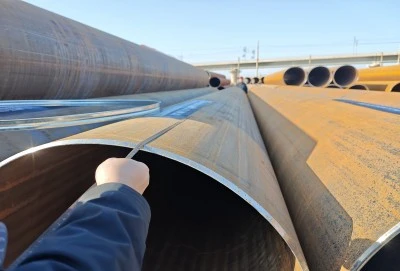
When engineers and purchasing managers choose pipes for high-pressure systems, it's important to know what the welding requirements are. To make sure the structure stays strong, ASTM A671 CB65 pipe welding requires close attention to the steps for preheating, joint preparation, and post-weld heat treatment. This pipe is made by Electric Fusion Welding from ASTM A515 Grade 65 pressure vessel plate. It has a minimum tensile strength of 65 ksi (450 MPa), which is a good balance between mechanical performance and weldability. When welding processes are done correctly, connections don't leak and the equipment lasts longer. This is especially important in places where efficiency can't be compromised, like oil and gas gearbox, industrial facilities and power generation systems.
|
|
|
Understanding ASTM A671 CB65 Pipe Welding Fundamentals
Material Properties Influencing Weldability
Electric Fusion Welded pipe from ASTM A515 Grade 65 plate has chemical properties that affect how well it welds. The formula has a maximum of 0.28% carbon, a range of 0.85% to 1.20% manganese, a maximum of 0.035% phosphorus, and a maximum of 0.035% sulphur. The controlled chemistry makes the grain structure stable and able to respond predictably to changes in temperature. The balance of silicon and manganese allows for good deoxidation while still allowing for good hardenability without becoming too brittle. Tensile qualities range from 450 to 585 MPa (65 to 85 ksi), and yield strength is at least 240 MPa (35 ksi). Because of these mechanical properties, the material can handle a lot of hoop stress during operation and bend around welds during fabrication.
Heat Treatment Effects on Microstructure
Different ASTM A671 Classes require different heat treatment plans that change the microstructure and how the metal welds. For example, ASTM A671 CC60 pipe comes in its original rolled state and still has a ferrite-pearlite structure with medium-sized grains. Normalisation and hardening are done to Class 22 to smooth out the grain limits and make the material harder to break. When compared to as-rolled material, this normalised and tempered state is more resistant to heat-affected zone cracking. Stress-relieved versions lower leftover stresses from forming operations, which makes it less likely that the metal will warp during welding operations. When welding experts know about these differences in metals, they can change how much heat they use and how fast the metal cools down to avoid unwanted phase changes that weaken the joint.
Common Welding Challenges and Defects
When soldering large-diameter pressure pipes, there are a few things that can go wrong. Heat input sensitivity is a major issue because too much energy makes the grains bigger in the heat-affected area, which makes the material less tough and more likely to crack. Rapid cooling can make martensitic structures that are easily broken, especially in joints that are held together and have a lot of residual stress. Hydrogen-induced cracking is still a possibility when welding in places with a lot of humidity that don't have the right storage for the electrodes or enough preheating. When joint surfaces are dirty or there isn't enough protective gas coverage, pores form. Undercutting at the weld toes makes stress concentration places that cause fatigue breakdowns. When the pressures of thermal shrinkage are higher than the strength of the partly hardened weld metal, solidification cracking happens. Fabricators can take precautions against these possible flaws before they start welding when they are aware of them.
Essential Welding Requirements and Standards for ASTM A671 CB65 Pipes
Applicable Codes and Standards
When making pressure piping systems, they have to follow a number of rules. As part of its basic skill standards, ASME Section IX certifies welding processes and welder performance. AWS D1.1 is a structural welding code that tells us how to connect carbon steel in building and bridge projects. ASME B31.3 specifies how process pipes should be designed and built, including how they should be welded and how often they should be inspected. There are baseline standards for production welding, heat treatment, and nondestructive testing written in the ASTM A671 specification itself. API Standard 1104 says how gearbox pipelines in oil and gas service can be welded. Combinations of these standards are often used in project guidelines, and makers must keep records showing that they meet all of the requirements. Before giving out contracts, procurement managers should make sure that suppliers have up-to-date certifications that follow the relevant welding codes.
Pre-Welding Preparation Requirements
Getting sound welds starts a long time before the arc starts to glow. When you prepare a joint, you need to make sure that the shape is right for full fusion and good penetration. Bevelled edges with included angles between 60° and 75° allow for the right application of filler metal and removal of slag. Root openings are usually between 1.5 and 3 millimetres, depending on the thickness of the wall and the type of welding used. Cleaning the surface has a direct effect on the quality of the weld. Mill scale, rust, wetness, oil, and paint must be removed by grinding or wire brushing until the metal is bare at least 25 millimetres from the joint midline.
For ASTM A671 CB65 pipe material, preheating is an important step in getting it ready. Minimum temperatures for preheating are usually between 95°C and 120°C (200°F to 250°F), but this can change based on the thickness of the wall and the temperature outside. This thermal treatment slows down cooling in the critical temperature range where brittle phases form. It also lowers the solubility of hydrogen to stop cracking and the magnitudes of residual stress. Using accurate contact thermometers or temperature-indicating crayons to measure the temperature makes sure that the process is followed correctly. Keeping the interpass temperature below the upper limits stops too much heat from building up, which could damage the mechanical qualities of the area that is being heated.
Welding Techniques and Parameters
Shielded Metal Arc Welding (SMAW) is still commonly used for field production because the equipment is portable and the operators are comfortable with it. Low-hydrogen electrodes, which are labelled E7018 or E8018, match the strength of the base metal while reducing the amount of hydrogen present. Current sets depend on the electrode's diameter and position. For 3.2-millimeter electrodes in a flat position, the current is usually between 90 and 150 amperes, but it drops by about 15% for vertical development. Most of the time, travel speed, which is generally between 150 and 250 millimetres per minute, balances entry depth against heat input.
Gas Metal Arc Welding (GMAW) is better for production settings because it has higher deposition rates. Electrical electrodes made of solid wires, like ER70S-6, are strong enough and wet well. Shielding gas mixes that are 75% to 85% argon and the rest carbon dioxide give stable arc characteristics and appropriate amounts of spatter. Spray transfer mode is used for welding that is not in the right place. It is made up of voltage settings between 24 and 28 volts and wire feed speeds between 250 and 400 inches per minute.
When pipes are being made, Submerged Arc Welding (SAW) is the most productive way to join the long pieces together. The arc is covered in granular flux, which makes deep entry and smooth bead profiles. Multiple electrode configurations allow thick sections to be finished in a single pass, which saves money on labour. Controlling the amount of heat input is still very important because the focused energy can lead to unacceptable grain growth if it is not controlled properly.
Post-Weld Heat Treatment and Inspection
For some working situations and wall thicknesses, stress release heat treatment is a must. The process involves heating the finished weld to temperatures between 595°C and 650°C (1100°F and 1200°F), keeping it at that temperature for at least 15 minutes and one hour for every inch of thickness, and then letting it cool slowly in still air. This thermal cycle lowers residual stresses by about 80%, which makes the material more stable in terms of size and resistance to corrosion while also making it tougher to break. Even heating is achieved in a furnace, but resistance heating blankets can be used for localised heating in the field when accessing a furnace is not possible.
Nondestructive testing checks the quality of the weld without hurting the part. Radiographic testing (RT) shows internal breaks like cracks, porosity, slag inclusions, and incomplete fusion. Class 22 standards say that longitudinal welds must be x-rayed 100% of the time, and acceptance criteria are set by ASME Section VIII or B31.3. For thick areas where x-rays are less sensitive, ultrasonic testing (UT) can be used instead. Liquid penetrant testing (PT) finds flaws in the surface of weld caps and roots. Magnetic particle testing (MT) finds signs below the surface of ferromagnetic materials. During hydrostatic testing, finished assemblies are put under 1.5 times their design rating of pressure. This makes sure that there are no leaks while the testing is being done. Full records of inspections are kept in a lasting quality record so that they can be found again in the future.
Best Practices for Welding ASTM A671 CB65 Pipes in Industrial Applications
Optimal Filler Metal and Shielding Gas Selection
The best ways to weld ASTM A671 CB65 pipes in business situations involve matching the chemistry of the filler metal to the base material to ensure that the mechanical qualities and corrosion protection are the same. For SMAW uses, low-hydrogen electrode types E7018-1 or E8018-C2 offer the best mix of strength, toughness, and crack resistance. The "-1" at the end of the name means that the property has better low-temperature effects that are useful in cold service situations. For GMAW processes, solid wire ER70S-6 provides enough deoxidation through its silicon and manganese content, while also keeping good wetting properties and producing little to no spatter.
The type of shielding gas used affects the safety of the arc, the depth of the penetration, and the mechanical features of the final weld. Pure carbon dioxide has the deepest penetration, but it makes a lot of spatter and encourages pores if the gas flow rates drop below what is required. When you mix argon and CO2 with 75% to 85% argon, you get a smoother arc with less spatter while still getting enough penetration. Adding small amounts of oxygen (1% to 2%) makes the arc even more stable and helps wet mill-scaled surfaces better. However, this increases rusting and should not be done for important tasks. Flow rates of 18 to 25 cubic feet per hour of gas provide enough shielding without creating turbulence that brings dirt from the air into the weld pool. By regularly calibrating flow meters and inspecting gas delivery equipment, problems that could be caused by poor insulation can be avoided.
Defect Prevention and Troubleshooting Strategies
Cracking is the worst kind of weld defect because it can spread very quickly when pressure is applied. Cold cracking, also known as hydrogen-assisted cracking, usually happens hours or days after welding is done, when hydrogen moves to areas with a lot of stress. To avoid this, you need to keep the moisture levels very low by storing the electrodes in hot cabinets that stay above 65°C, making sure they are properly warmed up to slow down the cooling process, and making sure that only low-hydrogen welding supplies are used. When heat contraction pressures are higher than the weld metal strength, hot cracking happens during solidification. Making changes to the filler metal to lower its sulphur and phosphorus content and changing the design of the joint to loosen it up both make it more resistant to hot cracks.
When gases get trapped during solidification, porosity forms. Moisture from not preheating enough, hydrocarbon contamination from cutting fluids or marking paints, and atmospheric entrainment from not covering enough shielding gas are some of the sources. Localised porosity can be fixed by grinding back damaged areas to sound metal and then welding them back together correctly. Spreading porosity shows systemic problems that need to be fixed by changing the way things are done. Undercutting makes a sharp notch at the weld toe, which is where stress cracks start. This flaw can be fixed by slowing down the trip speed just a bit to allow enough fill, slightly increasing the current to help with wetting, and using some weaving methods. Before putting the unit to use, any leftover undercut should be ground smooth.
Case Studies from Industrial Sectors
A petroleum plant in Southeast Asia just finished a big expansion that included pressure pipes with a 48-inch diameter made of Class 22 material. The job called for GTAW root passes, then SMAW fill and cap to make sure that the roots were fully drilled and had a good surface. When automatic orbital welding equipment was used for the root pass, consistent results were achieved while 35% less work was done than when human methods were used. All welds were checked on x-rays, and none of them needed to be fixed. This shows that process optimisation and operator training work.
In Australia, an old power plant replaced its steam pipes with normalized-and-tempered EFW pipes to make them more resistant to thermal cycling. Post-weld heat treatment at 620°C for two hours was part of the welding process. This reduced leftover loads and increased creep resistance. Ultrasonic testing found no problems that needed to be reported, and hydrostatic testing at 1.5 times normal pressure proved that the system was working properly. The system has been up and running nonstop for three years without any leaks or cracks, which proves that the materials and construction method were correct.
For seawater cooling systems that deal with brackish water at high temperatures, this piping specification was used on an offshore platform construction project in the Middle East. Welders passed a series of tests to prove they were qualified, which included side-bend and tensile models that met the standards of ASME Section IX. Liquid penetrant tests of all the weld surfaces showed a few linear signs that needed to be ground down and fixed. As part of the final acceptance process, the product was put under 250 psi of pressure for four hours and no leaks were found. The platform went into service six months early, in part because of reliable welding methods that cut down on the need for extra work.
Conclusion
To successfully weld ASTM A671 CB65 pipe, you need to know how the material works, follow set rules, and use tried-and-true manufacturing methods. The Electric Fusion Welded pipe made from ASTM A515 Grade 65 plate is strong, easy to weld, and affordable, making it perfect for high-pressure service in a wide range of industrial settings. Paying close attention to preheating, joint preparation, choosing the right filler metal, and post-weld heat treatment will make sure that the structure stays strong and lasts a long time. When procurement professionals choose qualified suppliers and build relationships with them that encourage collaboration, their projects are more likely to be finished on time, on budget, and with few quality problems.
FAQ
1. What are the critical welding parameters for ASTM A671 CB65 pipe?
Important factors include a warming temperature that is usually between 95°C and 120°C, based on the thickness of the wall, and an interpass temperature that stays below 250°C to avoid too much heat buildup. To keep entry and heat-affected zone grain growth in balance, the amount of heat added should stay between 1.5 and 2.5 kilojoules per millimetre. Low-hydrogen electrodes kept in heated cabinets keep hydrogen from cracking.
2. Is preheating always necessary for welding this material?
When the wall width is more than 19 millimetres or when the temperature outside is less than 10°C, preheating is required. Thinner sections can be welded without preheating in warm places as long as the welding process is specifically designed to work in those conditions. As a safe precaution, warm all layers, no matter how thick, to lower the risk of breaking.
3. What role does post-weld heat treatment play?
Post-weld heat treatment lowers leftover stresses by about 80%, which makes the structure more stable and less likely to crack from stress corrosion. The process also softens any hard martensitic areas in the heat-affected area, making the metal flexible and tough again. ASME rules say that PWHT has to be used for certain types of pressure vessels and thick-wall pipe systems.
Partner with Longma Group for Your ASTM A671 CB65 Pipe Requirements
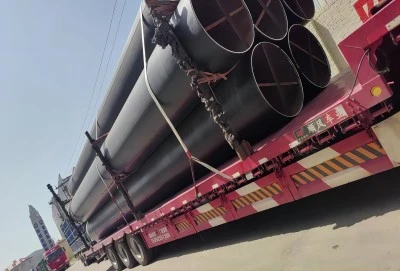
Longma Group is a reliable ASTM A671 CB65 pipe manufacturer with more than 20 years of experience and the ability to make more than 1,000,000 tonnes of pipes every year. Our factories use cutting-edge Electric Fusion Welding tools and a wide range of heat treatment methods to make Class 22 material that is normalised and tempered and meets the strictest requirements. We only get base plate from the best local mills, like HBIS and Bao Steel, so the chemical and mechanical qualities are always the same. Each pipe comes with all of its paperwork, such as Mill Test Certificates, measurement inspection reports, and records of nondestructive examinations. Throughout the lifecycle of your project, our technical team will help you with welding procedures and fixing problems. Get in touch with info@longma-group.com to talk about your needs with application engineers who have worked with high-pressure plumbing systems before and know how hard they can be.