
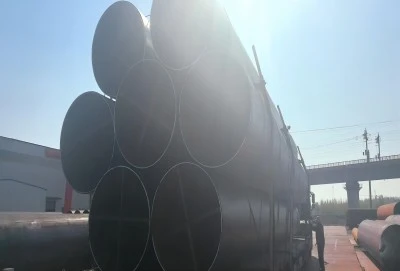
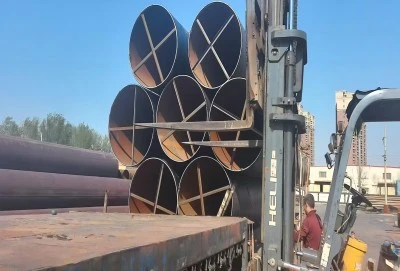
It is the best electric-fusion-welded carbon steel pipe solution for high-pressure applications, and it is called ASTM A671 CB70 pipe Class 22. This pipe specification is made from ASTM A515 Grade 70 pressure vessel quality steel plate. It has a high tensile strength and is very easy to weld, which makes it perfect for use in petrochemical, power generation, and large-scale industrial installations. The "Class 22" label means that the material has been stress-relieved by heat treatment and has been fully scanned for radiography evidence. This makes sure that the structure is strong enough for use in harsh conditions. With a tensile strength of at least 70 ksi (485 MPa), these pipes work well in high-pressure systems that must prioritise safety and durability.
|
|
|
Understanding ASTM A671 CB70 Class 22 Pipe Specifications
Chemical Composition and Mechanical Properties
The performance of ASTM A671 CB70 pipe is based on its carefully controlled chemical composition, which comes from A515 Grade 70 steel plate. Depending on the thickness of the plate, the carbon content is usually between 0.27% and 0.31%. Manganese is balanced at 0.85–1.20% and silicon is balanced at 0.15–0.40%. This mixture makes the best balance of strength and ductility, meeting the needs of both fabrication and operation. The mechanical qualities include a tensile strength between 485 and 620 MPa (70 to 90 ksi) and a yield strength of at least 260 MPa (38 ksi), which means it can hold a lot of weight. In longitudinal examples, elongation values usually go over 17%, which shows that the material is flexible enough for placement in the field and thermal cycles. The hardness ranges from 140 to 190 HBW, which makes the material easy to machine while still keeping its structural strength. Because of these qualities, the material works really well in service situations where notch toughness is important, like in the open air or at lower temperatures.
Heat Treatment Processes and Class Designations
When describing these lines, it's important to know what "Class 22" means. Both the post-weld heat treatment standards and the non-destructive testing methods are set by the classification system in ASTM A671. Class 22 requires a full stress-relieving heat treatment, which is usually done at temperatures between 1100°F and 1250°F (593-677°C) for long enough to remove any remaining stresses from the electric-fusion welding process. This heat treatment evens out the microstructure between the weld and base metal zones. This makes the metal more stable in its dimensions and less likely to crack from stress corrosion. In addition to heat treatment, Class 22 requires that all lengthwise seam welds be x-rayed. This is done to make sure the quality is complete and to find any internal flaws that can't be seen by looking at the surface. When you combine heat treatment with strict testing, you get pipes that can last for a long time in high-pressure systems where failure would have consequences that go beyond money issues.
Corrosion Resistance and Material Durability
While carbon steel doesn't naturally fight corrosion as well as stainless metals, ASTM A671 CB70 pipe can last a long time with the right materials and care. Controlled rolling and heat treatment create a microstructure with small grains that makes it less likely for rust to start than structures with larger grains. Compared to other options like ASTM A672 (which uses higher-carbon A516 plate), the ASTM A671 CB70 pipe standard slightly improves the ability to weld while keeping the rust behaviour the same. Compared to API 5L X52, the pressure vessel plate origin of A671 CB70 pipe has better features throughout the thickness and is less likely to tear during production. External coatings like fusion-bonded epoxy or three-layer polyethylene systems are often used for project-specific rust protection. These systems greatly increase service life in corrosive conditions. Depending on the process chemistry, fluid-side rust may be fixed by adding internal linings or an inhibitor. This multifaceted approach to durability lets purchasing managers safely choose A671 CB70 pipe for projects where downtime fines and the cost of replacements make life estimates very important.
Procurement Considerations for ASTM A671 CB70 Pipes
Supplier Selection and Certification Verification
Beyond the specification of the materials themselves, choosing qualified suppliers may be the most important decision in the procurement process. Reputable makers keep standards like ISO 9001 quality management systems, which show that they have written process controls and tracking methods in place. Third-party inspection agencies that watch production tests and certify conformance are also part of ASTM compliance verification. This is in addition to what the manufacturer says. Longma Group has a lot of certifications, such as ISO 9001, API 5L, and workplace health and safety management systems. These give procurement managers trust in our production skills. Each shipment of ASTM A671 CB70 pipes should come with a material test certificate that lists the results of the chemical analysis, mechanical tests, heat treatments, and non-destructive tests. Positive material identification during the receiving inspection makes sure that the delivered materials match the specifications that were ordered. This keeps expensive mistakes from being installed. Engineering contractors really like it when providers keep clear records, because complete records make it easier for end users to close out projects and handle assets in the long term.
Lead Times and Minimum Order Quantities
Supply chain planning works best when you know about production schedules and order minimums. This is especially true for big projects with multiple stages of building. Standard ASTM A671 CB70 pipe production usually takes 8 to 12 weeks from the time an order is confirmed until it is finished in the plant for standard sizes and schedules. Custom specifications with non-standard dimensions or extra needs may make lead times 12 to 16 weeks, which includes getting the materials and doing special tests. Minimum order amounts depend on the manufacturer and the size of the pipe. For large-diameter goods, they are usually between 10 and 20 tonnes, and for cheaper production runs, they are usually between 50 and 100 tonnes. Longma Group can produce more than 1,000,000 tonnes of goods every year, which gives customers the freedom to choose the size of their orders and keeps prices low across all project sizes. Strategic buyers often plan when to buy things with when to make them, which lets sellers make the most of batch processing to improve production efficiency. When order amounts hit 200 tonnes or more, buying in bulk may lead to price drops of 8 to 15%. This can lead to chances for multi-project aggregation or consortium purchasing arrangements that are good for everyone.
Export Regulations and Logistics Optimization
When you buy something internationally, it's more complicated than when you buy something locally. You have to pay extra attention to export paperwork, shipping logistics, and the customs clearance process. Export-licensed providers are used to meeting these needs and provide accurate business invoices, packing lists, certificates of origin, and inspection certificates that make the customs process go more smoothly. Optimising how containers are loaded cuts down on freight costs by a large amount. Proper ASTM A671 CB70 pipe bundling and dunnage keep containers from getting damaged in transit and make the most of their space. We have customers in more than 90 countries, including some of the most difficult places in the world, like the Middle East, Australia, and Southeast Asia. Longma Group has become very good at managing shipping in these areas. The choice of Incoterms affects who is responsible for shipping plans, insurance coverage, and risk transfer. Common choices include FOB (Free On Board), CIF (Cost, Insurance, and Freight), and DDP (Delivered Duty Paid). Expert suppliers help buyers make these decisions based on the infrastructure of the destination port and the importer's skills. When planning transit times, you should include the lead time for production plus three to five weeks for ocean freight to most foreign places. This way, you can make sure that the arrival of materials matches the readiness of the building.
Manufacturing Process and Quality Assurance of ASTM A671 CB70 Pipe
Raw Material Sourcing Through Final Inspection
To make great products, you need to start with good materials that come from reputable steel mills. Longma Group buys pressure vessel plate from licensed Chinese manufacturers like Shagang, TISCO, and BaoSteel. This is done to make sure that the chemistry and mechanical properties are consistent before the fabrication process starts. Plate inspection makes sure that mill approvals are correct and does extra testing when the specs call for it. The electric-fusion-welding process starts with precise forming steps that turn a flat plate into a cylinder shape. Next, high-frequency resistance welding or submerged-arc welding is used to make horizontal lines that go all the way through the plate. With real-time tracking, process deviations are found before they cause problems, and automated welding parameters keep the same settings across production runs. After the weld, the ASTM A671 CB70 pipe is heated up in controlled furnaces with multiple heating zones and temperature records to make sure that the heating is the same along the whole length of the pipe.
Case Study: High-Pressure Steam Distribution System
For feedwater service at 850 psi and 420°F, a recent growth of a thermal power plant in Southeast Asia needed pipes with a big diameter. The engineering firm asked for ASTM A671 CB70 pipe Class 22 pipe with a 36-inch diameter and a wall thickness of 0.500 inches. Longma Group sent 450 tonnes of pipe along with all the necessary paperwork, such as material test certificates, radiographic examination reports, and inspection witnessing by a third party. Our fabrication services helped the project because they included field-joint beveling and applying a protective coating before shipping. Installation went smoothly with no field rejections, and the system has worked reliably since it was put into service 18 months ago. This success shows that strict controls during production and full quality assurance lead to project results that please everyone, from engineers who care about technical compliance to procurement managers who care about staying on schedule and staying within budget.
Applications and Industry Use Cases for ASTM A671 CB70 Pipes
Core Industrial Sectors and Typical Installations
ASTM A671 CB70 pipe is used in many heavy industries for important tasks that require keeping pressure in check and maintaining structural integrity. In petrochemical plants, these pipes are the backbone of process piping networks that move high-pressure hydrocarbon streams from one processing unit to another. This standard is used a lot in crude distillation units, catalytic crackers, and product distribution headers at oil plants where solid pressure retention is needed. Power plants use CB70 pipe for boiler feedwater systems, condensate return lines, and extra steam distribution networks that work all the time even when the temperature changes. Chemical processing plants use this grade for reactor feed systems and product transfer lines where stopping the process would cost a lot of money. Offshore platforms use ASTM A671 CB70 pipe in their topside pipe systems to reduce weight, protect against corrosion, and meet pressure standards. Pipes like these are used in factories to distribute compressed air, power hydraulic units, and utility systems that support production equipment.
Emerging Trends and Future Demand Drivers
Modernising industrial facilities in growing economies is still driving the need for high-quality pressure pipes. Diversifying the Middle East's industries beyond oil extraction opens up jobs in petrochemical production, water desalination, and power generation, all of which use ASTM A671 CB70 pipe specifications a lot. As industry grows in Southeast Asia, it needs strong utility systems to support factories that make chemicals, gadgets, and cars. In a strange way, efforts to make the energy shift raise the need for pressure pipes in places like biofuel processing plants, carbon steel production facilities, and carbon capture systems, where the material is still cost-effective when properly protected. Embedded sensor technologies that check the state of pipes and predict when they will need repair make digitalisation possible, which improves asset management and increases the useful life of assets. New developments in coating technology offer better protection against corrosion at lower application costs, which improves the economics of the whole lifecycle. Because of these changes, A671 CB70 pipe will still be useful for many years to come, and it can be changed to meet new industry needs by using different technologies instead of switching to different materials.
Conclusion
ASTM A671 CB70 pipe Class 22 is a great choice for high-pressure industrial uses that need strong mechanical properties, complete quality assurance, and performance that doesn't break the bank. The guideline blends the quality of pressure vessel plates with electric-fusion welding to make sure that big pipes meet strict safety and reliability standards. By learning about technical properties, comparative benefits, and procurement issues, you can make smart choices about where to get things that will help your project succeed. Tough manufacturing methods and quality control rules make sure that the product works the same way in all installations. As the world's industrial infrastructure continues to grow, this specification will still be useful because it can be used in new ways and adapt to changing application needs. Procurement professionals can feel confident in the whole supply chain, from the original quote to final commissioning and beyond, when they work with experienced makers who have the right certifications and a track record of project success.
FAQ
1. Can ASTM A671 CB70 pipe handle high-temperature service conditions?
While ASTM A671 CB70 pipe can handle moderate temps well, it is best used for uses that are exposed to air and lower temperatures up to about 450°F. The base material A515 Grade 70 stays strong enough in this range, and the right heat treatment makes sure that the dimensions stay the same when the temperature changes. Applications that need to be used at temperatures above 550°F for a long time usually do better with ASTM A691 alloy steel types that contain molybdenum and chromium and don't bend easily. The temperature should be chosen based on the pressure levels, the number of cycles, and the service life that is needed. An engineering analysis should be done to make sure that the temperature is right for the specific operating ranges.
2. How should buyers verify pipe quality and specification compliance?
Checking the quality starts with looking at the supplier's certifications to make sure they are registered for ISO 9001 and have the right product standards approved. Each shipment comes with a material test certificate that lists the chemical make-up, mechanical properties, heat treatment parameters, and the results of a non-destructive examination. Third-party inspection agencies offer independent confirmation through testing and approval that are seen by witnesses. When the goods are received, they are checked for chemistry using portable spectrometers and size tolerances are confirmed by measurement inspection. If the project is very important and needs more guarantee, a radiographic film review or an ultrasound re-examination may be done. Longma Group provides detailed records and allows outsiders to inspect our facilities, which shows our dedication to openness and quality.
3. What lead times apply for bulk ASTM A671 CB70 pipe orders?
Standard production plans say that it should take 8 to 12 weeks from the time an order is confirmed until it is finished in the mill for most sizes of ASTM A671 CB70 pipe. Custom specifications or extra testing may make the wait time 12 to 16 weeks. When you ship internationally, it takes an extra 3–5 weeks, based on where the package is going. Early involvement of suppliers in the engineering stages of a project is good for strategic procurement planning because it lets production schedules be made that match material delivery with building readiness. Longma Group has a lot of production capacity, which lets them respond quickly to pressing needs while still keeping high quality standards. This gives procurement managers reliable delivery performance.
Partner With Longma Group for Your ASTM A671 CB70 Pipe Requirements
Longma Group is a great choice for procurement managers and engineering contractors who need a reliable ASTM A671 CB70 pipe manufacturer. Our 20-year history of manufacturing combines cutting-edge production technology with strict quality control systems to consistently deliver certified pipe that meets international standards. With a capacity of more than 1,000,000 tonnes per year and a long list of certifications, such as ISO 9001 and API 5L, we can reliably handle difficult projects in more than 90 countries. Our manufacturing services, which include welding, beveling, and protective coatings, make your supply chain more efficient. At the same time, our full paperwork packages make it easier to follow the rules and finish the project. Our engineering team works closely with the people involved in your project to make sure the best results, whether you need standard specs or unique solutions. Get in touch with our knowledgeable sales staff at info@longma-group.com right away to talk about your piping needs and get competitive quotes that come with quality guarantees. Find out why Longma Group is the chosen ASTM A671 CB70 pipe source for major building projects around the world by talking to top contractors and procurement experts.