
It is very important to find the right ASTM A671 CC65 pipe provider when you need high-performance pressure piping for important oil and gas, industrial or power generation projects. Hebei Longma Group Limited is one of the best companies in China that makes large-diameter welded steel pipes. They offer ASTM A671 CC65 options that have high tensile strength, low-temperature toughness, and the ability to be welded. Longma Group has been making things for more than 20 years and can make more than 1,000,000 tonnes of products every year. They sell certified, traceable pipe products that meet strict international standards for use in pressure vessels all over the world.
|
|
|
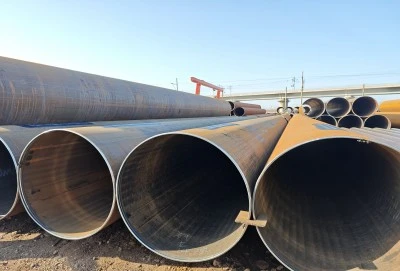
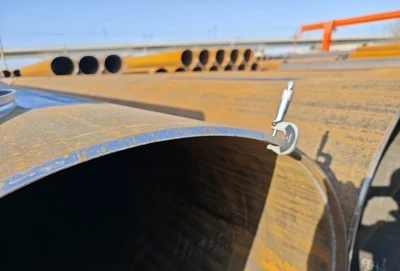
Understanding ASTM A671 CC65 Large Diameter Welded Pipes
The ASTM A671 CC65 pipes specification calls for Electric-Fusion-Welded (EFW) carbon steel pipes. These pipes are a unique engineering solution made to meet the strict needs of high-pressure, low-temperature service environments. The pipes are made from ASTM A516 Grade 65 fine-grain killed carbon steel plate, a material that was created for use in pressure vessels where notch toughness and structural stability are essential.
Material Composition and Mechanical Properties
The highly controlled chemical makeup of CC65 pipes is what makes them work. The base material is made up of an equal mix of carbon, manganese, and silicon. The carbon content stays at 0.24% and the manganese content ranges from 0.85% to 1.20%. This exact recipe makes it easier to weld while also encouraging grain refinement. This directly improves the material's resistance to breaking into brittle pieces when exposed to changes in temperature and mechanical stress.
These large-diameter welded pipes have a minimum tensile strength of 65 ksi (450 MPa) and a maximum range of 585 MPa (85 ksi). They also have a minimum yield strength of 240 MPa (35 ksi). This type of strength lets the pipes handle long periods of high pressure while keeping their structural integrity over a long period of time. The fine-grain microstructure is a big reason why this steel is so tough, especially at lower temperatures, where other grades of carbon steel may change from being ductile to brittle.
Heat Treatment and Classification Systems
One unique technical benefit of the ASTM A671 standard is that it can be used with different class names, such as Class 10, Class 22, and Class 32. For each class, there are specific heat treatment and X-ray examination rules that must be followed. This lets procurement professionals make sure that the pipe's flexibility and resistance to impact are exactly right for the project's safety needs. Class 10 lines don't need to be heated after they are welded, which saves money for most uses. Class 22 requires stress-relieving after welding to get rid of any remaining stresses, and Class 32 needs normalization and tempering to get the best mechanical properties for the toughest service conditions. Because of this, tech teams can find the best balance between efficiency and cost-effectiveness based on the needs of each project.
Corrosion Resistance and Service Life
In harsh environments, carbon steel needs to be protected against corrosion. However, ASTM A516 Grade 65 plate is better at resisting corrosion than commercial-grade carbon steel because it has a fine-grain structure and controlled impurity levels. The uniformity of the material makes it less likely to rust in certain areas. When these pipes are coated with the right kind of protection, like fusion-bonded epoxy (FBE), 3-layer polyethylene (3LPE), or hot-dip galvanizing, they can last for decades in oil and gas transmission, offshore platforms, refineries, and petrochemical facilities. The mix of CC65 pipes' high mechanical strength and ability to resist corrosion makes them very useful for downstream processing uses involving liquefied gases and condensates, where it is important to keep the structure intact at temperatures below zero.
How to Select and Procure ASTM A671 CC65 Pipes from China
To get around in the Chinese steel pipe market, you need to know how to evaluate suppliers, how prices work, and how to handle logistics, all of which have a direct effect on project timelines and budgets for ASTM A671 CC65 pipes.
Supplier Qualification and Certification Verification
Chinese companies with a good reputation keep a full set of certifications that prove both their quality management systems and the compliance of their products. Some important certificates are ISO 9001 for managing quality, API 5L for making line pipes, and ISO 14001 for managing the environment. All of these certifications, along with occupational health and safety credentials, show that Longma Group is dedicated to operational excellence. When looking at possible sources, buying teams should make sure that API Monogram licenses are up to date, ask for recent audit reports from a third party, and check that manufacturing facilities have the right pressure vessel manufacturing licenses from Chinese regulatory authorities.
Checking the supplier's history in foreign markets is also very important. Established exporters show that they know what the requirements are for the destination country, such as ASME Section II material specifications, NACE compliance for sour service environments, and EN standards for European projects. Longma Group has delivered projects to over 90 countries, including MOBIL OIL AUSTRALIA and other major projects. This gives clients confidence in their export skills and ability to manage projects across cultures.
Pricing Structure and Order Flexibility
Chinese makers usually offer tiered pricing based on the amount of orders they receive, with prices going down significantly as the number of orders rises. For large-diameter welded pipes, the minimum order quantity (MOQ) is usually between 20 and 50 tonnes. However, reputable providers like Longma Group are willing to accept smaller initial orders when they are getting to know a new customer. Unit prices depend on many things, such as the cost of raw materials (which changes with the prices of domestic steel mills), the diameter and thickness of the pipe walls, the class designation (costs go up by 8–15%), the coating specifications, and the documentation packages that are needed.
Lead times for ASTM A671 CC65 pipes are usually between 30 and 45 days for standard specifications and between 45 and 60 days for custom needs that include non-standard sizes or testing methods. Manufacturers with a lot of production capacity can often meet rushed schedules for critical project parts, but they may charge more for this. During the inquiry phase, clear communication about project timelines helps providers make the best production schedules to meet delivery promises.
Logistics and Documentation Requirements
When you buy large diameter pipes internationally, you have to coordinate a lot of different logistics. At important ports like Tianjin or Qingdao, Chinese sellers usually offer FOB (Free On Board) terms. For bigger deals, however, CIF (Cost, Insurance and Freight) and DDP (Delivered Duty Paid) terms can be worked out. Care must be taken when bundling pipes and placing containers so that they don't get damaged during transport. Reliable makers use steel banding and strengthened wood cradles that are made for heavy loads.
Documentation packages are an important product, especially for engineering workers who are in charge of projects that have strict quality control rules. Material Test Certificates (MTC) that meet the requirements of EN 10204 Type 3.1, measurement inspection reports, non-destructive testing (NDT) records, heat treatment charts, and hydrostatic test paperwork are all part of complete material documentation. Longma Group offers full sets of documentation, such as Inspection and Test Plans (ITP) and Manufacturing Procedure Specifications (MPS). This makes it easy to integrate these into project quality management systems and clear customs.
Manufacturing Process of ASTM A671 CC65 Large Diameter Welded Pipes
When buying workers know how the ASTM A671 CC65 pipes are made, they can be sure that they will be consistent and that quality control is being strict.
Raw Material Selection and Preparation
The first step in the making process is carefully choosing raw materials from well-known Chinese steel mills like Shagang, HBIS, and Bao Steel. The controlled rolling methods used in these mills make ASTM A516 Grade 65 plate with the fine-grain microstructure needed for pressure vessel uses. When plates are received, they go through an inbound check that includes chemical analysis to make sure they are correct, mechanical property confirmation, and ultrasonic testing to look for internal breaks. Only materials that meet all the requirements in the specifications move on to the forming steps. This makes sure that the quality of the base materials sets the stage for reliable pipe performance.
When you prepare a plate, you have to machine the edges to very precise standards. This makes bevels that are good for welding later on. It is proven that mill scale and other contaminants that could hurt the quality of the weld have been removed from the surface. The controlled preparation environment keeps the number of variables that could affect later steps to a minimum.
Electric Fusion Welding and Post-Weld Treatment
Large-diameter pipes are made in several steps. First, plates are rolled into a cylinder shape using three- or four-roll plate bending tools that can handle heavy-gauge material. Before welding starts, precise fixturing is used to line up the edges. To make the lengthwise seam, Submerged Arc Welding (SAW) is used. Multiple welding heads are used to make full-penetration welds in thick walls. When compared to other options, SAW welds are better because they go deeper, leave less spatter, and have better mechanical properties in the fusion zone. The buried flux keeps the liquid weld pool clean by keeping out airborne contaminants. This makes clean, sound welds with few holes or slag inclusions.
After being welded, pipes go through heat treatment protocols that are specific to their class. To relieve stress (which is needed for Class 22), the whole pipe is heated to between 1100°F and 1200°F, held there for a certain amount of time based on the thickness of the wall, and then cooled slowly to lessen the pressures that were created during welding and shaping. Normalizing and tempering (Class 32) includes heating above the upper critical temperature to even out the microstructure and then tempering to get the best mix of strength and toughness. Modern heat treatment furnaces make sure that the temperature is the same all the way around the pipe, which is important for getting stable mechanical qualities.
Quality Assurance and Testing Protocols
Full testing makes sure that finished pipes meet all the requirements in the specifications. To start non-destructive testing, industrial X-ray or gamma-ray equipment is used to look at the lengthwise weld for higher classes and find any problems inside the weld. Ultrasonic testing is an extra way to make sure, especially for pipes with thick walls that may not show up clearly on X-rays. Using precise measure tools, dimensional checking checks the outside diameter, wall thickness, length, and straightness tolerances. For mechanical testing, transverse tension tests and guided-bend tests are used to make sure that the qualities of the weld zone match or go beyond the specs of the base material. Charpy V-notch impact testing checks how tough something is at low temperatures, which is an important factor for CC65 grade uses in cold environments or near cryogenics.
As the last step in the validation process, hydrostatic testing puts each pipe under pressure equal to 1.5 times the design pressure for a certain amount of time to make sure the pressure integrity and leak-tightness are checked. Pipes that pass all of the tests are permanently marked with their heat number, specification, class name, and manufacturer information. This makes it possible to track the product throughout its entire lifetime.
Why Choose a Chinese Supplier for ASTM A671 CC65 Pipes
As the world's biggest steel producer, China offers huge benefits to people around the world who want to buy ASTM A671 CC65 pipes.
Manufacturing Scale and Technological Capability
Chinese companies that make steel pipes work on a scale that has never been seen before. Leading companies like Longma Group produce more than one million tonnes of steel each year. With this much production capacity, orders can be filled quickly, even for big projects that need thousands of tonnes of material. Economies of scale mean lower costs without lowering quality. This is possible because high-volume production supports buying more advanced tools and technology for automation. Modern Chinese factories use cutting-edge forming tools, computerized welding systems that can monitor parameters in real time, and automated testing stations that make the process more consistent and lessen the chance of mistakes.
Aside from size, Chinese makers show the same level of technological expertise as their global rivals. Spending money on research and development has led to the creation of unique methods that improve the performance of pipes. Longma Group's factories have high-tech heat treatment systems with adjustable temperature settings, advanced non-destructive testing (NDT) tools like phased-array ultrasonics, and full quality management software that lets you keep track of everything from the time you receive the raw materials to the time you ship the finished product.
Certification Credibility and International Recognition
Concerns about the quality of Chinese goods have gone down a lot since the country's top manufacturers get internationally recognized certifications and show that their products consistently work in tough situations. American Petroleum Institute inspectors must check that manufacturing processes, quality systems, and testing methods meet strict North American standards every year in order to maintain API approval. Third-party inspectors check that ISO certifications are also in line with international quality and environmental management standards. These certificates aren't just paperwork; they show that the operations really did follow the rules, which were checked by a strict, independent assessment.
Testimonials from customers of global engineering firms and large oil and gas companies are more proof. Deliveries to mega-refineries in the Middle East, offshore platforms in Australia, and power plants in Southeast Asia show that Chinese manufacturers can meet the technical and quality needs of sophisticated international clients who work to strict standards.
Cost Competitiveness and Value Proposition
There are still big reasons why people choose to buy from Chinese suppliers: they have better prices. Even though Chinese manufacturing costs are going up, they are still much cheaper than their European or North American counterparts. This is because China has linked supply chains, efficient production processes, and competitive labor markets. When compared to domestic alternatives with the same specifications, buyers usually save 20–35% on costs. This can add up to big project savings when ordering hundreds or thousands of tonnes of pipes.
In addition to low unit prices, Chinese suppliers also offer great customization options and quick expert help. Engineering teams make suggestions based on the application, help create specifications, and offer design optimization ideas that could lower the cost of materials or make work go more quickly. Flexible manufacturing systems can handle non-standard sizes, special finishing needs, and custom end treatments like beveling, threading, or grooving. This means that multiple steps of production can be done by a single source, which makes cooperation easier.
Conclusion
To find a trustworthy Chinese provider for ASTM A671 CC65 pipe solutions, you need to carefully look at their production skills, certifications, and project support services. Hebei Longma Group Limited is a great example of the quality, technical skill, and customer-focused attitude that make the best Chinese pipe makers stand out in the world market. Longma Group provides high-quality pressure tank piping solutions that meet the strict needs of oil and gas, petrochemical, and power generation industries. They do this by having a wide range of licenses, clear production processes, and a track record of successful foreign projects. Chinese suppliers are great partners for procurement professionals working on complicated industrial projects with strict performance and budget requirements because they offer competitive prices, a lot of customization options, and strong quality assurance.
FAQ
1. What distinguishes ASTM A671 CC65 from CC60 grade pipes?
The main difference is the power of the base material. ASTM A671 CC65 pipe units are made from ASTM A516 Grade 65 plate, which has a minimum tensile strength of 65 ksi and can handle higher pressures than CC60 pipes, which can only handle 60 ksi. This extra strength lets walls be smaller while still providing the same amount of pressure service or more pressure capacity while keeping the same size.
2. Does ASTM A671 CC65 pipe require heat treatment?
What kind of heat treatment is needed depends on the class specification that was ordered. Class 10 doesn't need any heat treatment after the weld, Class 22 needs stress-relieving, and Class 32 needs normalizing and hardening. The choice is based on how hard the device is and what mechanical qualities are needed.
3. Can these pipes serve in sour service environments?
CC65 pipes can be used in sour environments as long as they pass extra tests for Hydrogen Induced Cracking (HIC) and Sulfide Stress Cracking (SSC) and meet the requirements of NACE MR0175/ISO 15156. For these tough jobs, you need to choose the right materials and follow specific steps for preparing them.
4. What are typical lead times for custom orders?
For standard specifications, the production time is usually between 30 and 45 days. For customized requirements that include non-standard dimensions or specialized testing, the time frame is between 45 and 60 days. When project deadlines call for faster delivery, manufacturers with a lot of capacity can often work with shortened plans.
Partner with Longma Group for Premium ASTM A671 CC65 Pipe Solutions
Longma Group is a top ASTM A671 CC65 pipe manufacturer with more than 20 years of experience. We invite purchasing managers and engineering contractors to look at our full range of pipe solutions, which are specifically designed for tough industrial uses. Our approved production sites make large-diameter welded pipes with great mechanical properties, strict quality control, and reasonable prices. We have the technical know-how, customization options, and quick support that complex projects need. Our yearly production capacity is over 1,000,000 tonnes, and we've worked on projects in more than 90 countries. Email our engineering team at info@longma-group.com to talk about your unique needs, get full technical specifications, or get a personalized quote for your next project. Our skilled workers are ready to offer advice on choosing the right materials, help with application engineering, and complete solutions that make projects more efficient while lowering costs over their entire lifecycle.