
When sourcing pipe materials for critical pressure applications, the ASTM A671 CC65 pipe stands as a proven engineering solution trusted across global industries. Manufactured from ASTM A516 Grade 65 fine-grain killed carbon steel plate through electric fusion welding (EFW), this pipe grade delivers a balanced combination of mechanical strength, weldability, and low-temperature toughness that satisfies the rigorous demands of oil and gas transmission, petrochemical processing, and offshore platform construction. With a minimum tensile strength of 65 ksi (450 MPa), CC65 pipe provides structural reliability needed for high-integrity piping systems operating under elevated pressures and challenging environmental conditions.
|
|
|
Understanding ASTM A671 CC65 Pipe Specifications and Properties
Chemical Composition and Grade Definition
The ASTM A671 CC65 pipe standard's "CC65" designation is a direct reference to the base material that was used: ASTM A516 Grade 65 pressure vessel quality plate. To get the best weldability and grain polishing, the chemical makeup is carefully controlled. Between 0.85% and 1.20% of the material is manganese, and up to 0.24% of the material is carbon. Silicon is also present to help with deoxidation and strength growth. This controlled chemical keeps the heat-affected zone from becoming too hard during welding while still being strong enough to hold pressure.
The name "fine-grain killed steel" means that the steel has been fully deoxidised with silicon or aluminium. This gets rid of any internal holes and makes the steel tougher. This property of the metal is especially useful when pipes are used in places where the risk of weak damage needs to be kept to a minimum.
Mechanical Properties and Performance Benchmarks
The mechanical performance of ASTM A671 CC65 pipe meets the strict requirements of the industrial world. Tensile strength is between 450 and 585 MPa (65 and 85 ksi), and yield strength is at least 240 MPa (35 ksi). In a 2-inch gauge length, elongation values usually go over 21%, showing that the material is flexible enough to be bent in the field and installed differently when needed.
This grade is different from other carbon steels because it keeps its stiffness better at lower temperatures. Charpy V-notch impact testing shows that the ASTM A671 CC65 pipe's energy-absorbing capacity stays high even when the temperature drops. This means that it can be used in cold climates or for uses that use cool process fluids.
Manufacturing Process and Dimensional Standards
The longitudinal seam in ASTM A671 CC65 pipe production is made with electric fusion welding, which makes it possible to make combinations of large diameter and heavy wall thickness that aren't possible with seamless pipe production. The lengthwise weld is usually made with submerged arc welding (SAW), which gives the seam deep penetration and uniform fusion quality along its length.
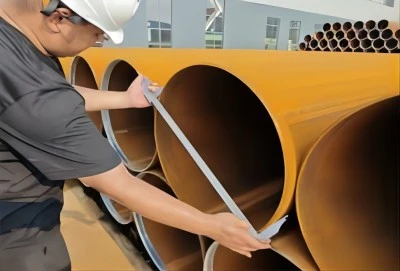
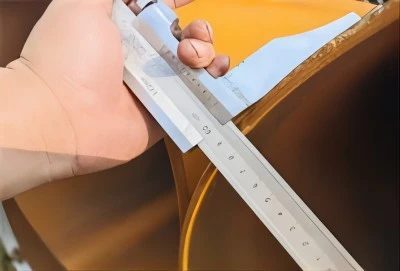
Tolerances for dimensions are set according to ASTM A671, and the outside width and wall thickness must be kept to certain levels to make sure they fit correctly with flanges, valves, and other system parts. Pipe diameters usually fall between 16 inches and 60 inches, and wall thicknesses go above 25 mm when pressure ratings call for it.
Different "Class" designations have different heat treatment needs. Class 10 doesn't need any heat treatment after welding, but Class 22 does need stress relief. Class 32 steels need to be normalised and tempered to get the toughest properties for the toughest uses. Because of this, project engineers can define exactly what qualities are needed without having to do too much work or spend too much money.
Testing and Quality Verification Methods
Before being shipped, ASTM A671 CC65 pipe has to pass strict tests to make sure it meets safety and performance standards. Hydrostatic pressure testing uses 1.5 times the design pressure to make sure the structure is strong and the building doesn't leak. The lengthwise weld is checked for internal discontinuities like porosity, slag inclusions, or partial fusion using a full-length x-ray.
Ultrasonic testing is another non-destructive way to check for flaws by looking at how sound waves reflect off of things. Positive material identification (PMI) makes sure that the chemical composition meets the standards. This keeps materials from getting mixed up, which could risk the safety of the system. Transverse tension testing and guided-bend testing compare the mechanical properties of the weld zone to those of the base metal. This makes sure that the fusion line doesn't make the pipe structure weak.
Procurement and Supply Chain Considerations for ASTM A671 CC65 Pipes
Pricing Dynamics and Order Quantity Economics
Material costs for ASTM A671 CC65 pipes include the price of the base steel plate, the cost of welding it together, the cost of heat treatment if it needs to be done, and the cost of testing and making sure it works. Pricing is usually done per linear metre or per tonne, and unit costs are affected by things like the thickness, width, and class name of the walls. Changes in the prices of steel commodities affect the prices of ASTM A671 CC65 pipes. This is because foreign markets react to changes in the supply and demand of raw materials.
Different sellers have different minimum order amounts based on how they handle their inventory and how profitable it is to make a run of goods. Large-diameter heavy-wall pipe usually needs at least 10 to 20 tonnes of it to meet specifications and cover the costs of setting up the factory. Suppliers may be more willing to work with smaller minimum orders for sizes that are commonly made and that they keep in stock. When you order in bulk, you may be able to get a discount, especially if your project's plan lets you combine needs from different shipping phases.
Lead Times and Global Distribution Logistics
Standard lead times for making ASTM A671 CC65 pipes are 8 to 12 weeks from placing an order to being ready to ship, as long as raw materials are still easy to get and production capacity can handle the order process. If you need a special heat treatment, more testing, or non-standard dimensions, it may take a few extra weeks to get your order. Supply chain problems that affect steel mills or transportation networks can cause delays that were not expected, so they need to be carefully watched and plans made for what to do if something goes wrong.
Transporting big diameter pipes around the world presents its own set of logistics difficulties. Pipes with a smaller width can be shipped in containers, while larger pipes need to be shipped on break-bulk ocean freight or specialised heavy-lift boats. Trucking in the United States has length limits that require special permits and routes for pipe pieces that are longer than what a normal trailer can carry. When making delivery schedules and site readiness timelines, project planners need to take these logistical factors into account.
Certification Requirements and Supplier Qualification
Compliance paperwork is needed to buy ASTM A671 CC65 pipe, especially in places where pressure equipment rules are strictly enforced. Mill test certificates (MTC) according to EN 10204 Type 3.1 or 3.2 show the approved chemical make-up, mechanical test results, and heat treatment records that can be linked to specific pipe lengths. When the project requirements call for extra monitoring, third-party inspection agencies can watch the testing and provide independent confirmation.
When evaluating a supplier, you should look at their production capabilities, quality management systems, and technical support services. API 5L certification means that quality processes have been formed and can be used to make pipes, even if the product itself meets ASTM standards. Getting registered with ISO 9001 shows that your organization is committed to quality management in all of its processes. Visits to production facilities let you check out the testing facilities, tools, and industrial controls that have a direct effect on the consistency and dependability of the product.
Custom Fabrication and Value-Added Services
In addition to normal pipe supply, many projects benefit from fabrication services that bring parts that are ready to be installed. Pipe that is cut to exact lengths doesn't need to be cut in the field, and the square ends make sure that it fits together correctly. Beveling processes set up weld joint geometries based on angles and land measurements that have been given. Hydrotesting that goes beyond the standard requirements makes sure that the system works properly in conditions that are similar to the final fitting conditions.
When applying an anticorrosion layer in the workshop, quality control is better than when it is done in the field, where conditions can change. Coatings made of fusion-bonded epoxy (FBE), two-part polypropylene (2PP), and three-layer polyethylene (3LPE) keep surfaces outside safe from corrosion caused by air and soil. Internal linings can be used when the fluids being moved are corrosive and need extra protection beyond the resistance of the base material.
How to Choose and Source ASTM A671 CC65 Pipes: A B2B Procurement Guide
Defining Project-Specific Requirements
To choose the right ASTM A671 CC65 pipe, you must first have clear operating guidelines that set the service envelope the material must meet. The maximum working pressure is used to figure out the minimum wall thickness needed based on the relevant code values. The design temperature tells us if the base CC65 properties are enough or if we need to add more standards, like impact tests at lower temperatures. Fluid properties like corrosivity, hydrogen content, and pollution levels affect the choice of material and the requirements for the covering.
When specifications are being made, environmental factors that affect the outside of pipes must be taken into account. Exposure to air, dirt, and water in marine and coastal areas cause corrosion that needs extra protection beyond what the base material can provide. Mechanical stresses are caused by things like earthquakes, wind pressure, and thermal expansion. These stresses change the design of supports and the study of their flexibility, which in turn changes the choice of pipe grade.
Supplier Evaluation and Qualification Criteria
It's not enough to just compare prices when looking for a supplier. You also need to look at their production capabilities, technical support, and service after the sale. The manufacturing ability of a supplier tells you if they can meet project numbers and deadlines without sacrificing quality by using too many resources. Quality management certifications give people trust that production processes are governed by written rules instead of ad hoc methods that could go wrong.
Technical support is what sets suppliers who work with you to complete a project successfully apart from those who are just processing transactions. Having engineering staff on hand to look over specs, suggest options, and answer technical questions adds value during the planning and building stages. After-sales service, such as help with documentation, warranty issues, and problem resolution, shows that the company is committed to the customer long after the product has been delivered.
Balancing Cost, Quality, and Delivery Requirements
To optimise procurement, you have to find ways to balance different priorities. Lowest starting cost might not be the best idea if problems with the quality of the materials cause rejections in the field, extra costs for rework, and plan delays that are greater than the price savings. On the other hand, over-specification compared to real service needs wastes money on performance margins that aren't needed and don't provide any value.
The project's cash flow and site logistics are affected by how well the delivery plan matches up with building milestones. Early deliveries require storage space and add to the cost of keeping goods on hand, while late deliveries squeeze the schedule and could cause project delays. Phased delivery schedules that match the order of building make the best use of working capital and keep the site from getting crowded with materials that are ready to be installed.
Conclusion
ASTM A671 CC65 pipe has been used for many years in industrial pressure pumping uses that need strong, tough, and easy to weld pipe. The engineering properties of ASTM A516 Grade 65 plate made for pressure vessels give you peace of mind in tough service conditions like oil and gas transmission, petrochemical processing, offshore platforms and power generation systems. To be good at procurement, you need to know how to read technical specs, compare different grades, evaluate suppliers, and find the right balance between cost and quality and delivery. Projects gain from working with skilled manufacturers who can both make things and offer expert support services that make the planning, buying, and building processes go more smoothly.
FAQ
1. What distinguishes ASTM A671 CC65 pipe from standard carbon steel pipe?
The base material for ASTM A671 CC65 pipe is pressure vessel quality ASTM A516 Grade 65 plate. This gives it better toughness and known mechanical properties than standard structural or line pipe grades. The fine-grain killed steel construction makes the notch hardness better, which means that ASTM A671 CC65 pipe can be used in low-temperature environments and in important situations where the risk of brittle fracture needs to be kept to a minimum. When you use electric fusion welding to make something, you can get big diameters and thick walls that are hard to get with other methods.
2. Does ASTM A671 CC65 pipe require special welding procedures?
Because its carbon content is managed and its chemistry is adjusted, ASTM A671 CC65 pipe is very easy to weld. Standard methods for welding carbon steel usually work fine, but certain project requirements may call for qualified processes, welder licenses, and non-destructive testing of field welds. The amount of heat needed depends on the thickness of the cloth, the temperature of the area, and any relevant code rules. It works well with standard arc welding methods like gas metal arc welding (GMAW), shielded metal arc welding (SMAW), and submerged metal arc welding (SAW).
3. Can CC65 pipe be used in sour service environments containing hydrogen sulfide?
Standard ASTM A671 CC65 pipe might be good for sour service if it goes through extra testing and safety checks that meet NACE MR0175/ISO 15156 standards. Hydrogen-induced cracking (HIC) and sulphide stress cracking (SSC) tests show that the material is resistant to the breakdown processes that happen when hydrogen sulphide is exposed. Sour service compliance must be made clear in the procurement specifications, since standard ASTM A671 CC65 pipe production does not automatically include these extra requirements.
Partner with Longma Group for Your ASTM A671 CC65 Pipe Needs
Getting supplies from a reliable ASTM A671 CC65 pipe maker who has experience making large-diameter pressure pipes is important for the project's success. Since 2003, Longma Group has worked on oil and gas, petrochemical, and industrial infrastructure projects around the world. Our 230,000-square-meter factory makes more than 1,000,000 tonnes of products every year. Our ASTM A671 production includes CC60, CC65, and CC70 types made from quality plate that we get from top steel mills like HBIS, Bao Steel, and Shougang.
We keep all of our quality certifications up to date, such as API 5L, ISO 9001, ISO 14001, and OHSAS 18001, which makes sure that our production methods meet foreign standards. Your project's compliance needs can be met with full documentation packages that include Material Test Certificates (MTC), Inspection and Test Plans (ITP), and Manufacturing Procedure Specifications (MPS). Value-added services like pipe fabrication, coating application (FBE, 2PP, 3LPE), and custom end treatments make parts that are ready to be installed faster, which saves time on the construction schedule.
Get in touch with our engineering team at info@longma-group.com to talk about your pressure piping needs and get a detailed quote that fits your project. You can see our whole line of products at longma-group.com, and that's why purchasing managers in 90 different countries trust us with their most important pipe infrastructure.