
Knowing the heat treatment needs of large-diameter pipes for high-pressure uses is not a choice when requesting them; it's a procurement must. To get the mechanical qualities you need for your project, ASTM A671 CC70 pipe goes through a certain heat processing. Depending on the class designation, this pipe grade needs to be normalised or stress relieved to smooth out the grain structure and get rid of any stresses that were introduced during the Electric Fusion Welding process. The base ASTM A516 Grade 70 steel plate can be properly heated to turn it into a high-performance pressure tank part that is more tough, has known mechanical behaviour, and is more reliable in low-temperature service.
|
|
|
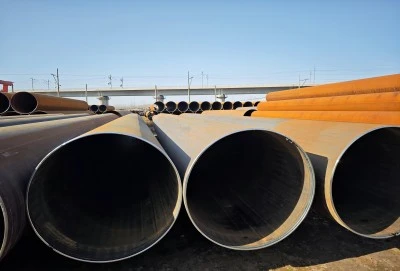
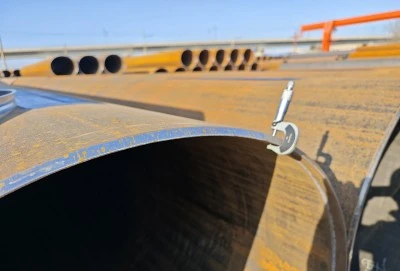
Understanding ASTM A671 CC70 Pipe and Its Heat Treatment
Learn about ASTM A671 CC70 pipe and how it is heated. This pipe grade is the strongest in the CC series of electric fusion welded products. It is made from fine-grain killed carbon steel plate that meets ASTM A516 Grade 70 standards. A fixed chemical makeup of the base material includes carbon at or below 0.27%, manganese between 0.85% and 1.20%, and silicon between 0.15% and 0.40%. These carefully balanced elements have a direct effect on how well the metal can be welded, how tough it is, and how it reacts to heat treatment.
Chemical Composition Impact on Treatment Response
As required by ASTM A516 Grade 70, the fine-grain practice involves treating steel with aluminium during the making process. This creates aluminium nitride precipitates that pin the grain boundaries during the next thermal processing. When we put this stuff through controlled cycles of heat treatment, the aluminum-killed steel reacts in a predictable way, keeping the fine grain structure that is needed for low-temperature toughness. A carbon content of less than 0.27% makes sure that the metal can be welded properly and hardens enough for heat treatment to work. Adding manganese makes the material stronger and helps keep the properties constant through the whole thickness during normalising processes.
Mechanical Properties Enhanced Through Thermal Processing
The as-welded pipe has basic mechanical qualities that come from the parent plate before it is heated. These qualities are raised by controlled thermal cycles to meet strict code requirements. You can treat the pipe in the right way to make it at least 70 ksi (485 MPa) in tensile strength and 38 ksi (260 MPa) in yield strength. Heat treatment smooths out the microstructure, getting rid of stress clusters caused by welding and rough grain zones in the area next to the lengthwise seam that was heated.
Role of Heat Treatment in Code Compliance
For many service situations, international pressure vessel codes require that the heat treatment be recorded. Heat treatment does several technical things: it evens out the microstructure across the pipe wall, lowers the difference in hardness between the weld and the base metal, raises the toughness of the notches, and keeps the dimensions stable. For projects that need to work with cryogenics, sour gas, or cycle pressure loads, the microstructural consistency that can only be achieved through proper heat treatment is needed.
Detailed Heat Treatment Requirements for ASTM A671 CC70 Pipes
ASTM A671 lists different types of pipes, and each type has its own heat treatment requirements. For ASTM A671 CC70 pipe, Class 10 means "as-welded," Class 22 means "normalising" or "stress relieving," and Class 32 means "normalising followed by tempering." To make sure that providers use the right thermal cycles, procurement requirements must make the needed class very clear.
Normalizing Process Parameters
Normalising means heating the whole pipe to a temperature above the upper critical transformation point, which for ASTM A516 Grade 70 material is usually between 900°C and 955°C (1650°F to 1750°F). Keeping the pipe at this temperature for as long as it takes to completely change into austenite, then letting it cool in still air. This heating cycle improves the structure of the grains, gets rid of the banding, and makes the pipe wall's mechanical features the same all the way through. To avoid thermal shock, heating rates should not go above 400°F per hour (220°C per hour) for walls that are thicker than one inch. At high temperature, soaking time is usually about an hour for every inch of wall thickness. This makes sure that the heat gets through completely. With controlled air cooling, martensitic structures don't form, and the desired ferrite-pearlite microstructure is reached.
Stress Relieving Specifications
When full normalisation is not possible, stress relieving is another way to treat Class 22 pipe. The process heats the pipe to temperatures below the lower critical transformation temperature, which is between 1100°F and 1250°F (595°C and 675°C). The temperature stays high for one hour for every inch of wall thickness, with a minimum of 30 minutes, and then the furnace slowly cools down. This subcritical process lowers the leftover stresses from welding without changing the base microstructure too much. Stress relieving works especially well for large-diameter pipes where normalising equipment can't do everything it needs to.
Verification Testing Requirements
Verification of heat treatment goes beyond just checking the temperature. Testing the hardness of the weld zone, the heat-affected zone, and the base metal to make sure the process worked is common, and the highest hardness allowed is 200 HBW. Charpy V-Notch impact tests at certain service temperatures confirms low-temperature toughness. Depending on the project requirements, the minimum received energy value is usually between 15 and 20 ft-lbs. Transverse tensile testing makes sure that the strength of the weld joint is at least as strong as the base metal. A metallographic examination may be asked for to make sure of the grain size, the uniformity of the microstructure, and the lack of untempered martensite.
Comparing ASTM A671 CC70 Heat Treatment with Other Pipe Grades
When procurement teams know how the standards for heat treatment vary between similar specs, they can choose the right materials for the job while staying within their budgets.
ASTM A671 CC70 Versus CC65 Treatment Differences
Both grades start with killed carbon steel plate and go through electric fusion welding, but their source materials are different. ASTM A516 Grade 70 plate is used in ASTM A671 CC70 pipe, while Grade 65 material, which is a little less strong, is used in CC65. Temperatures and holding times for heat treatment stay the same, but the mechanical properties after treatment change. The lowest tensile strength for ASTM A671 CC70 pipe is 70 ksi, while the lowest for CC65 is 65 ksi. When the requirements for your project call for maximum allowable stress levels that are close to the maximum capabilities of carbon steel, the ASTM A671 CC70 pipe, when heated properly, gives you the performance margin you need.
ASTM A672 Comparison
ASTM A672 specifies rules for electric fusion-welded pipe made from pressure vessel plate that is meant to be used at mild to high temperatures, while ASTM A671 is for use at room temperature or lower. Both specifications talk about similar ways to treat things with heat, but the environments in which they will be used are very different. A672 materials, such as ASTM A671 CC70 pipe, are designed to be resistant to creep and strong at high temperatures. This means that they need to be heated in a way that makes these properties work better. When A672 pipe is heat treated, the focus is on its high-temperature tensile qualities and stress rupture performance rather than its low-temperature impact hardness.
Cost-Performance Analysis
A big part of the cost of making pipes is heat treatment, which can make up anywhere from 8% to 15% of the total cost, depending on the size and class of the pipes. When compared to as-welded options, ASTM A671 CC70 pipe with Class 22 or 32 heat treatment costs more, but this investment pays off in the long run. When heat is applied correctly, pipe can last 30% to 50% longer in difficult situations, need less upkeep, and be less likely to break. Instead of high-alloy options like austenitic stainless steel, heat-treated carbon steel ASTM A671 CC70 pipe is 40% to 60% less expensive and works well in many non-corrosive or slightly corrosive applications.
Best Practices and Troubleshooting in ASTM A671 CC70 Pipe Heat Treatment
To get the best results from heat treatment, you need to pay attention to the details of the process and be aware of common mistakes that hurt pipe performance.
Common Heat Treatment Defects and Prevention
Heating that isn't even is one of the most common problems with heat treatment of ASTM A671 CC70 pipe. If the temperature changes more than 50°F (28°C) across the pipe's diameter or length, it creates microstructural inconsistencies that show up as changes in hardness and stiffness that are hard to predict. For prevention, make sure the heater is properly loaded, that air flows well, and that the multi-zone temperature control is set correctly. Too much warmth too quickly creates thermal stresses that can lead to cracks or warping, especially in heavy wall pipes. This risk is lower when heating rates are kept below 400°F per hour (220°C per hour). If you don't soak the grains long enough, they don't change completely, leaving thick parts of raw grain structures. Following the minimum soaking requirements—one hour for every inch of wall thickness—ensures that the properties are the same all the way through the thickness.
Post-Treatment Handling and Storage
Pipe that has been properly heated needs to be kept safe from rust and mechanical damage while it is being stored and moved. After heat treatment, put on temporary protective coatings right away to keep atmospheric corrosion from breaking down the surface. Place pipes on cushion supports to keep them from warping or getting damaged on the surface. Do not stack pipes at heights that put too much weight on the lower layers. Rotate your inventory so that the oldest items go into fabrication last. This will keep them from being stored for too long, which could damage protective coatings or start corrosion.
Emerging Heat Treatment Technologies
Advanced furnace designs that use computational fluid dynamics modelling get better temperature uniformity while using 20% to 30% less energy. Induction heating systems let you treat only certain areas of a weld, which can cut down on cycle time in some cases. Using ultrasonic techniques for real-time microstructural monitoring gives process input, which lets dynamic parameter changes improve treatment results. Environmental laws require low-NOx boilers and heat recovery systems more and more. This changes the cost of treatment and the tools that can be used. Keeping up with these changes in technology helps procurement teams find suppliers who are investing in process improvements that make the company more competitive and improve quality.
Conclusion
The ASTM A671 CC70 pipe's heat treatment requirements are more than just formalities; they are necessary processing steps that turn welded carbon steel into reliable pressure containment systems. By normalising or relieving stress correctly, you can improve the microstructure, make the material tougher, and get the mechanical properties your important applications need. To be successful at procurement, you need to know about heat treatment classifications, check that the supplier can do what they say they can do, and make sure that supplied goods come with full paperwork. The heat processing adds to the cost and time of the project, but the performance gains and lower risk make the investment worth it in the oil and gas, petrochemical, and power production industries. If you work with experienced makers who can show they know how to do heat treatment, have strong quality systems, and have recorded compliance, you can be sure that your projects will be safe from material failures and get long-term value from better durability and operating reliability.
FAQ
1. What specific heat treatment class should I specify for cryogenic LNG service?
Class 32 (normalised and tempered) has the best low-temperature hardness for uses in cryogenics. This process creates a fine-grained ferrite-pearlite microstructure with high notch toughness, which is necessary to keep the material from breaking easily at temperatures below -50°F (-45°C). Charpy impact tests should be done at your minimum design temperature to make sure that the absorbed energy numbers are correct.
2. How do I verify heat treatment compliance when inspecting delivered pipe?
Check the Mill Test Certificate for written information on the heat treatment settings and the results of the proof tests. Test the hardness of different areas of the weld separately and compare the results to the limits set by the manufacturer. Ask to see the time-temperature charts that are made when the furnace runs. Think about having a third-party metallographic study done on representative examples to make sure that the microstructural features match the treatment that was chosen.
3. Can heat treatment be performed after field welding for repair purposes?
Full-pipe heat treatment during manufacturing is not the same as relieving stress locally on field welds. Field heat treatment is possible with special tools, but it doesn't always get the same results as controlled furnace processing. Before you try field heat treatment, talk to welding experts and look at the relevant code standards. To keep problems from getting worse, it is important to make sure that procedures are properly qualified and monitored.
Partner with Longma Group for Certified Heat-Treated ASTM A671 CC70 Pipe
Longma Group runs advanced heat treatment facilities with full testing labs and automatic temperature control systems to make sure that every ASTM A671 CC70 pipe provider meets high quality standards. Our production process includes normalising and stress-relieving furnaces that can handle pipe diameters of up to 100 inches. The steps we take are written down and meet the standards of ASME Section VIII. We only get base plate from reliable mills like HBIS, Bao Steel, and Shougang. This way, we can track the material from the time it is made to the time it is heat treated. Each shipment of pipes comes with all the paperwork you need to make sure your project meets all the standards. This includes Material Test Certificates, heat treatment charts, and dimensional inspection records. Get in touch with our technical team at info@longma-group.com to talk about your unique heat treatment needs, delivery schedules, and bulk prices for long-term supply deals.








