
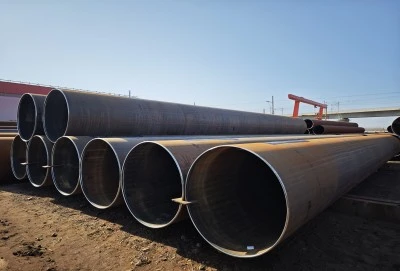
Finding a reliable ASTM A671 CC70 pipe provider who can apply 3LPE finish is important for the success of the project when looking for an electric fusion welded pipe source. Longma Group makes high-performance carbon steel pipes from ASTM A516 Grade 70 fine-grain killed steel. These pipes have a high level of mechanical strength and are protected against rust by three-layer polyethylene covering systems. Our factories strictly follow international standards. This makes sure that every pipe they send out meets the strict needs of oil and gas transportation, LNG ports, and petroleum processing areas where dependability is a must.
|
|
|
Understanding ASTM A671 CC70 Pipe and Its 3LPE Coating
Technical Foundation of CC70 Grade Piping
This standard, ASTM A671 CC70 pipe, is the strongest choice in the CC series. It is made using electric fusion welding to make longitudinally welded carbon steel pipes from pressure vessel quality plate. This is the main material, ASTM A516 Grade 70. It has a carefully controlled chemical make-up, with up to 0.27% carbon, 0.85–1.20% manganese, and 0.15–0.40% silicon. This mix makes it very easy to weld while still having the fine grain that is needed for low-temperature working settings.
This grade has a minimum tensile strength of 70 ksi (485 MPa) and a minimum yield strength of 38 ksi (260 MPa). This means that it can hold up well under high internal pressures. The fine-grain structure makes the material more difficult to break and more flexible, which lowers the risk of brittle failure in important situations.
Manufacturing Excellence Through EFW Processes
Our manufacturing process uses advanced electric fusion welding methods with the addition of filler metal. This lets us make pipes with large diameters that are too big for smooth manufacturing. When compared to traditional ERW methods, the EFW process makes welds that are stronger and last longer because it uses electric arc technology to ensure full fusion and penetration through thicker wall sections.
We use heat treatment methods that are specific to the pipe's class during production. These include normalisation and stress-relieving processes that improve the grain structure and mechanical qualities. These managed heating processes make the material more resistant to changes in temperature and mechanical vibration, which are problems that often happen in power plants and refineries.
Three-Layer Polyethylene Coating Technology
The 3LPE coating system makes pipes last longer by using a carefully designed three-layer structure. The top layer is made up of a fusion-bonded epoxy that sticks to the pipe surface at the molecular level and doesn't rust. The copolymer glue in the second layer sticks the epoxy to the polyethylene layer on the outside very well. The third layer is made of high-density plastic, which protects against impact, wear, and the surroundings.
This all-around coating method has many advantages that make it useful in harsh environments like buried pipelines, offshore installations, and industrial facilities. The system doesn't break down easily in a wide range of temperatures, doesn't react chemically to soil contaminants, and lasts a lot longer than alternatives that aren't sealed. During the coating process, our coating application facilities keep a close eye on the surroundings to make sure that the coating is the right thickness and covers the whole pipe, as required by international standards for pipeline coating.
Procurement Guide for ASTM A671 CC70 Pipes with 3LPE Coating
Specification Development and Inquiry Preparation
Accurately identifying requirements is the first step in effective procurement. The technical requirements should list the pipe's diameter, wall thickness, length needs, and the class name that applies (for example, Class 22 needs stress reduction). Chemical make-up and mechanical property requirements must be in line with ASTM A671 CC70 pipe standards and the related ASME SA671 standards. The coating specs should list the 3LPE layer thicknesses, adhesion needs, and any performance standards that are relevant to the job.
When you make your enquiries, be sure to include an estimate of the amount, an expected delivery date, and the information about the target port so that you can get accurate quotes. It should be clear what kinds of paperwork are needed, like Mill Test Certificates according to EN 10204 3.1, Inspection and Test Plans, and Manufacturing Procedure Specifications. This level of detail cuts down on explanation cycles and speeds up the buying process.
Minimum order quantities depend on the manufacturer and the type of pipe being used. For standard dimensions, the minimum order quantities are usually between 20 and 50 tonnes. For custom specs, bigger minimums may be needed to cover the costs of setting up the production line. Knowing these guidelines early on helps make sure that the planning for the project fits with what the seller can do.
Strategic Supplier Selection Criteria
A production capacity review makes sure that providers can meet the needs of the project without using too many resources, which could hurt quality or cause delays. Multiple production lines and coating application systems show that a facility is flexible enough to work on multiple projects at once and meet delivery deadlines. Being close to sources of raw materials, like the mills we work with, like Shagang, TISCO, and BX Steel, makes the supply chain more stable and makes it easier to track down materials.
Portfolios of certifications show a dedication to quality and safety. In addition to ISO 9001 quality management, you should also look for ISO 14001 environmental management and ISO 18001 health and safety at work certifications, which show that your business is running at a high level overall. API certificates that are specific to pipeline goods show that you know how to do technical work in this field. At Longma Group, these standards are covered by our certifications, and we do regular checks to make sure that they are being followed.
When deciding between global and local sourcing, you have to weigh landed cost, lead time dependability, and the ease of getting technical support. Longma Group and other international suppliers that have been in business since 2003 offer expert export logistics, technical support in multiple languages, and a lot of experience dealing with customs rules in over 90 countries. This knowledge means less risk in the buying process and easier project completion.
Logistics and Supply Chain Optimization
When you order in bulk, you save money because the cost of shipping each item is lower, and the making process runs more smoothly. Optimising the load on containers becomes important. Standard 20-foot and 40-foot containers have weight and volume limits that affect the best way to size an order for the lowest cost. Break-bulk shipping works for pipes with diameters bigger than containers, but it needs special handling arrangements.
Freight charges, insurance, port handling fees, and transportation to final destinations on land are all part of shipping costs. Working with sellers who know how to handle foreign shipping can help you get through these tricky situations. Our logistics team offers complete solutions that include manufacturing services like welding and expanding, application of anti-corrosion coatings, and planned transport times that are in line with project goals.
To follow customs rules, you need correct paperwork like business invoices, packing lists, certificates of origin, and technical certificates that are specific to the product. Harmonised System (HS) code accuracy makes sure that the right duty is assigned and that clearance delays don't happen. Experienced sellers offer documentation packages that meet the needs of the final target country, which speeds up the customs process.
Enhancing Performance and Longevity of ASTM A671 CC70 Pipes with 3LPE Coating
Corrosion Protection Mechanisms and Field Performance
The 3LPE coating system works well because it uses multiple barriers to stop corrosion. The fusion-bonded epoxy inner layer prevents cathodic disbondment, so the protective properties stay the same even if the coating gets slightly damaged. This feature is especially useful in underground pipeline uses where impressed current cathodic protection systems are used, since the coating doesn't break down when electrical currents flow through it.
Field performance data from sites in corrosive soil conditions, such as high-salinity settings that are typical in Middle Eastern projects, shows that if the layer is kept intact, the service life can be extended by more than 50 years. The UV resistance of the polyethylene outer layer keeps it from breaking down during storage and installation above ground, and its flexibility lets it bend and move with the soil without cracking. Chemical resistance includes things like fuels, acids, and alkaline substances that are common in oil and gas transportation.
Heat Treatment Optimization for Mechanical Integrity
The post-weld heat treatment needs depend on the type of pipe and the needs of the application. For items with the Class 22 label, they must be stress-relieved after they are made. This is done by slowly heating them to temperatures between 1100°F and 1200°F under controlled conditions. This process lowers the leftover stresses that were created during welding. This makes the material less likely to crack from stress rust and increases its stability in terms of its dimensions.
Normalising treatments improve mechanical uniformity and grain refinement. This is especially helpful for ASTM A671 CC70 pipe that will be used at low temperatures, where impact toughness is important. Computerised temperature tracking and recording systems are used in our heat treatment facilities to keep track of thermal cycles. This provides proof of proper processing that is included in material certification packages and can be checked.
Quality Verification Upon Delivery
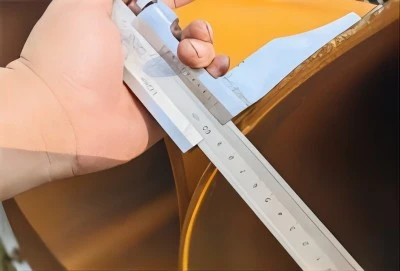
Protocols for onsite inspections protect buyers' interests by making sure that products are compliant before they are installed. Dimensional verification should compare the product's outside diameter, wall thickness, and length to the specs given in the buy order. Using magnetic or ultrasonic gauges to measure the coating's thickness confirms that it meets the standards of the 3LPE guideline. The total thickness should be between 2.5 and 3.5 mm.
By using holiday detection to check the stability of the coating, any breaks or thin spots that could weaken rust protection are found. Visual inspection checks for bubbles, cracks, or contamination on the covering and the quality of the surface preparation. Reviewing the paperwork shows that the Mill Test Certificates have all the necessary chemistry analysis, mechanical test results, and records of non-destructive examinations. During client inspections, our quality assurance team helps with everything, speeds up the verification process, and addresses any concerns right away.
Maintenance Strategies for Extended Service Life
Preventive maintenance programs keep coatings in good shape and find problems before they happen. Periodic coating inspections with holiday detectors find damage from mechanical impact or environmental degradation. This lets repairs be targeted and stops corrosion from starting. Monitoring the cathodic protection system makes sure that the right amount of current reaches the pipe surface, which proves that the coating is working.
By comparing working conditions to design settings, monitoring data for temperature and pressure helps figure out how much service life is left. Trending analysis finds strange trends that could mean problems are getting worse and need to be looked into. When you write down what you do for maintenance, you create historical records that can be used for lifecycle management and making decisions about future purchases.
Conclusion
Selecting the right ASTM A671 CC70 pipe provider with proven 3LPE finishing skills has a direct effect on the success of the project, how reliable it is in operation, and the costs over its entire life. When you combine the technical benefits of CC70 grade carbon steel—such as its 70 ksi tensile strength, superior low-temperature toughness, and excellent weldability—with three layers of polyethylene corrosion protection, you get a strong solution for tough industrial applications. Longma Group has been making things for 20 years, can produce more than a million tonnes of goods every year, and has a wide range of certifications. This makes us a trusted partner for pipeline engineers, procurement managers, and project workers all over the world. Your investment in high-performance piping will give you real value for a long time thanks to our dedication to quality control, thorough documentation, and quick expert help.
FAQ
1. What chemical components make ASTM A671 CC70 pipe suitable for low-temperature applications?
CC70 grade pipes are made from ASTM A516 Grade 70 plate, which has a balanced amount of carbon (0.27% max), manganese (0.85–1.20%), and silicon (0.15-0.40%). This makes a fine-grain killed steel structure. This mix has great notch toughness, which was proven by Charpy V-Notch impact tests done at certain low temperatures. This makes sure that the material doesn't break easily in cryogenic and sub-zero service conditions, which are common in LNG terminals and cold-climate pipes.
2. How does 3LPE coating compare to alternative corrosion protection methods?
Three-layer polyethylene coating works better than single-layer systems because it has more than one barrier. Fusion-bonded epoxy creates molecular-level adhesion and corrosion resistance, copolymer adhesive makes sure that layers stick together, and high-density polyethylene protects against mechanical damage. This method lasts longer than paint coats and is more impact-resistant than FBE alone. It protects against soil corrosion, chemical exposure, and mechanical damage and has a service life of more than 50 years.
3. What are typical lead times for bulk ASTM A671 CC70 pipe orders with 3LPE coating?
Standard standards say that it should take between 30 and 45 days from the time an order is confirmed until it is ready to be shipped. This time includes manufacturing, heat treatment, finish application, and quality testing. Custom specifications or large orders may make the lead time 60–75 days longer, depending on how busy the production line is and how many coats it can handle. Getting suppliers involved early on and being clear about what is needed helps keep delivery plans on track with project goals.
Partner with Longma Group for Reliable ASTM A671 CC70 Pipe Supply
When procurement managers and engineering teams work with Longma Group, they get a lot of benefits. These benefits include a reliable ASTM A671 CC70 pipe maker. Our wide range of production options, international certifications, and track record of success in more than 90 countries give your important projects the dependability they need. You can email our technical team at info@longma-group.com to talk about your specific needs, get detailed quotes, or set up sample evaluations. Our professionals are ready to help you reach your buying goals by providing customised solutions that include pipe manufacturing, 3LPE coating application, fabrication services, and planned global shipping that make your supply chain more efficient and speed up project timelines.








