
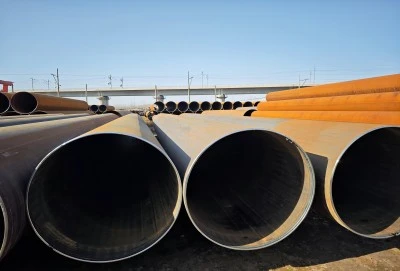
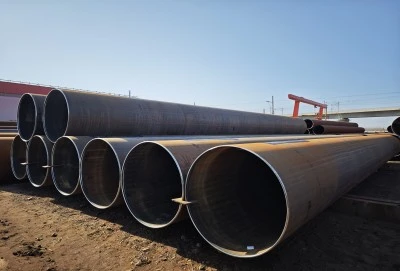
ASTM A671 pipe used to make low-temperature pipes is tough, comes in a range of sizes, and can be tracked. As a pressure vessel, the pipe is made of plate that was joined together with electric fusion. Techs can choose the best plate grade, wall thickness, heat treatment, and testing scope for the job this way. It can be used in power, gas, and process plants because it has large diameters, exact lengths for each project, and proven good weld quality. Still, it's not a one-click fix for cold food. It's important that the grade, class, impact test temperature, and design code all match. In this guide, I'll show you how to check each point before you place an order.
|
|
|
What Is ASTM A671 Pipe and Why Is It Used at Low Temperatures?
How the Specification Works?
ASTM A671 covers steel pipe that has been welded with electric current at or below room temperature. A pressure-vessel plate is rolled into a cylinder shape in the mill. Filler metal is then added to the seam and it is welded. With this specification, big sizes like NPS 16 and up are most often used. Since the pipe starts as a plate, you can look at the plate chemistry, find the heat number, and set the wall thickness to the design. It's more important than usual for A671 to pick the right material, check the weld for strength, keep records, and make sure it's inspected. In cold service, that care is needed because a small flaw in steel that has lost its toughness can get worse very quickly.
Where Buyers Use It?
I see that ASTM A671 pipe is used to process gas, build power plants, connect to pressure vessels, and make process lines for oil and gas refineries and petrochemical plants. A lot of these jobs need big diameters. Sizes from 18 to 56 inches work well because they can be welded together. That range is the same as the one we have now, which is from 457.2 mm to 1422 mm outside diameter. When used for gas or chemical systems that work at lower temperatures, it can also be used in cold places, as long as each project checks its own minimum design temperature and code rules. All of them are connected by pressure service, and a good weld and knowing about the material's history are very important.
Why It Is Not a Universal Guarantee?
The word "lower temperatures" in the title can make some people think that all A671 pipes can be used in cold service. It doesn't. It gets harder for carbon steel to cut when the temperature drops. It's also more likely to break easily because the walls and weld zones are thick. The answer is based on the grade, class, wall thickness, welding method, heat treatment, impact testing, and the rulebook that says everything. When you work with very cold things, like liquefied natural gas, you need to use different materials, like austenitic stainless steel or nickel steels. That way, the supplier can make sure that the plate and test plan match the lowest design temperature. I always tell them to write that in the inquiry.
ASTM A671 Pipe Materials, Grades, and Manufacturing
CC60, CC65, and CC70 Grades
If the pipe has the letter CC on it, it means it is made of carbon steel and ASTM A516 plate. The number on the plate tells you what grade it is: 60, 65, or 70. You can use pressure vessels that will be used at moderate to low temperatures that meet the A516 standard. The plate specs say that Grade 60 has a minimum tensile strength of 415 MPa, Grade 65 has a minimum of 450 MPa, and Grade 70 has a minimum of 485 MPa. Walls can be thinner even though they are stronger, but that doesn't mean they are tougher. Also, look at the results for elongation, yield strength, tensile strength, and Charpy V-notch all at the same time. Also, read the MTC's analysis of heat and form. Longma Group makes the CC60, CC65, and CC70.
Classes and Heat Treatment
An A671 order also has a class number, such as Class 22 or Class 32. The class chooses how to heat treat the item and how close of an exam to do with x-rays. In other words, two pipes of the same grade may cost, behave, and have paperwork that is different. Some kinds of heat therapy, like those that relieve stress or make the body normal, can lower residual stress. The structure of the grains gets better when the material is normalized, which makes it stronger. There are different needs for each edition and purchase order. It seems like you should read the class table in the most recent copy and write down the exact class for each question. When you compare classes, please don't use the past or rough charts.
Welding and Toughness Control
It's not just the plate that needs to be tough in cold service. Both the metal that was welded and the area that was heated need to be strong. When welding, it's best to use the right tools and techniques, keep an eye on the heat, pre-heat when needed, and set limits on the temperature between passes. Identifying the plate is the first step in a typical A671 process. Next comes shaping, longitudinal welding, correcting the dimensions, heat treatment (if needed), hydrostatic testing, inspection, marking, and finally marking. Plate comes from mills in China like TISCO, Shougang, HBIS, and Bao Steel. We keep track of our goods from the time they are raw materials until they are dispatched. Because it can be tracked, you can link each pipe to its own heat number and certificate.
Testing, Dimensions, and Pressure Limits
Testing, Inspection, and Certification
Hydraulic testing can show that something is pressure-tough, but it's not the same as impact testing, weld inspection, or dimensional checks. The inspection could include x-ray, ultrasonic, magnetic particle, and liquid penetrant tests, as well as a visual review, depending on the needs of the class and project. For people who want to buy critical cold service, I tell them to ask for a full quality dossier. As well as MTCs, it should have Charpy data, records of heat treatment, hydrostatic reports, NDE reports, qualifications for welding, and records of measurements. This is what we give you: an Inspection and Test Plan, a Manufacturing Procedure Specification, and a Material Test Certificate. These will help you and your inspector agree on hold points before production starts.
Dimensions, Wall Thickness, and Tolerances
You should include the nominal size, outside diameter, wall thickness, length, end preparation, and tolerances in your question. Sizes of our ASTM A671 pipe range from 457.2 mm to 1422 mm across and from 7.92 mm to 50.8 mm thick. Plus-sized pipes are easier to find without weld seams, so building them with plates works best. The standard doesn't give a single pressure rating, so the wall thickness is determined by the code, the pressure, the temperature, the allowable stress, the corrosion allowance, the weld efficiency, and the allowable stress. When they are in cold service, thicker walls need more care because they change how fast they cool, how much heat is used for welding, how much stress is left over, and the impact test requirements.
Pressure Rating and Temperature Limits
Temperatures and pressures that work for all A671 pipes don't fall into a single range. Engineers use things like grade, class, diameter, wall thickness, design temperature, allowable stress, weld efficiency, corrosion allowance, and the relevant code to figure out capacity. Part VIII of ASME B31.3 is often used for pressure vessels, and Part B31.3 is often used for process pipes. Take a look at short-term situations like start-up, shutdown, depressurization, and upsets as well. The pipe can get very cold when a gas line is quickly depressurized. This should be part of the design review. If someone wants to order steel, they should talk about the material acceptance, welding qualifications, and inspection scope as soon as possible.
Comparing and Selecting ASTM A671 Pipe
Compared with Other Pipe Specifications
You shouldn't compare options by name; instead, you should compare them by the service conditions they meet. ASTM A672 also talks about electric-fusion-welded pipe, but this type of pipe is meant to be used at normal temperatures and high pressures. For services that need to be more resistant to rust, ASTM A358 is the best choice for welded stainless steel. API 5L was created to help move things through pipes, but it doesn't always work well with pressure vessels. It doesn't have that seam if the pipe isn't made with a longitudinal weld, but it might cost more and be harder to find in big sizes. You should think about how tough something is, how it will be welded, inspected, accepted by code, available, and how much the whole project will cost.
How to Select the Right Pipe?
First, describe the service. Some of the things that are included are the minimum and maximum design temperatures, the operating conditions, the design pressure, the fluid, the diameter, the wall thickness, the thermal cycling, and the code. First, match the grade to the toughness, weldability, and strength. Then, go over the class one more time to test and heat treat it. Before production starts, give the package to be checked and written down. Then, give each supplier a score based on how well they can make things, have quality systems, export, and keep track of products. You should make sure of the grade, class, dimensions, testing, marking, packing, and delivery procedures in the final technical submission. Making things and welding on-site won't be a surprise thanks to this order.
Common Mistakes to Avoid
To begin, it's not accurate to believe that all A671 pipes are cold-service pipes. The second is picking based only on grade, without looking at the class, the impact temperature, or the heat treatment. Third, they are using a blanket pressure rating, which could lead them to make a dangerous switch. Fourth, some teams think that an MTC proves everything. You can be sure that all of the NDE, hydrostatic, dimensional, welding, and third-party checks have been done, but it doesn't mean that they are complete. Last but not least, comparing prices from different suppliers can lead to delays in documents, extra inspections, materials that don't meet standards, and higher project costs overall. A short list at the start costs a lot less than a spool that is turned down.
Buying ASTM A671 Pipe from Longma Group
Why It Can Be a Practical Cold-Service Solution?
When grade, class, manufacturing route, and testing all match the use, ASTM A671 gives a good technical and business answer. Pressure-vessel plate is made of different materials. When it comes to welded construction, it can handle large diameters, custom wall thicknesses, and lengths that are made just for the job. You can write NDE, heat treatment, impact testing, and hydrostatic testing on the order. Competitive costs of production, help with paperwork, and delivery to export destinations are all examples of business gains. Still, the outcome depends on proven toughness, skilled welding, code review, and full tracking. If they do a good job with these things, they will save you time during certifications and checks.
What to Include in Your Inquiry?
You can compare quotes if you ask a clear question. List the ASTM edition, grade, class, size, outside diameter, wall thickness, quantity, length, minimum design temperature, pressure, impact requirements, hydrostatic test, NDE scope, end preparation, coating, packing, inspection, and certification needs. The price changes based on the type of plate, how it is heated, tested, inspected, packed, shipped, how much is ordered, and when it is ordered. Find out if the material is already in stock or if it needs to be made, and make sure you can keep track of the heat number. We also have ways to stop corrosion, like hot-dip galvanizing, FBE, 2PP, 3LPE, and 3PE, and we can treat the ends of pieces that connect them.
What Longma Group Offers?
There has been an ERW and LSAW steel pipe company in Hebei since 2003. Over 1,000,000 tons of steel will be made every year by the end of 2023. We ship to more than 90 countries. You can pick from CC60, CC65, and CC70 ASTM A671 pipes, which are 457.2 mm to 1422 mm long and 7.92 mm to 50.8 mm thick. There are 50 to 100 tons in stock, and delivery can happen in as little as 7 days. Please let me know what sizes are available right now. We have business licenses for ISO 9001, ISO 14001, and API 5L. We have A672 and A691 pipe for sale too. Just let us know what you need, and we'll let you know if the documents and time are available.
Conclusion
ASTM A671 pipe can be used in low-temperature situations as long as the requirements are carefully met. It is made of pressure-vessel plate and has big diameters, walls that are thin but flexible, and material that can be tracked. But it doesn't have a general rating for cold service. CC60, CC65, and CC70 grades aren't always hard, but they are different in how hard they are. Classes like 22 and 32 need to be tested and heated. The result is based on hydrostatic and nondestructive tests, a full quality dossier, and how tough the weld and heat-affected zone are. Not just the standard, but also the design code tells us how much weight something can hold. Don't make the same mistakes when you compare A672, A358, API 5L, and pipe without a weld seam based on service conditions. This will help you make a safer and more cost-effective choice.
FAQ
Is ASTM A671 pipe suitable for low-temperature service?
If the grade, class, impact test results, welding procedures, and design code all meet the project's minimum design temperature, then the answer is yes. Before you place your order, please write down what you're sure of for each item. Just calling something by its name isn't enough.
How do CC60, CC65, and CC70 differ?
They are based on ASTM A516 Grades 60, 65, and 70. As the number goes up, so does the minimum tensile strength. Class numbers show how things like tests and heat treatment are different. Don't just go by the name; compare the toughness, weldability, and design conditions as well.
Does one pressure rating apply to all A671 pipe?
In order to find out the capacity, engineers use the governing code, such as ASME B31.3, along with the grade, class, diameter, wall thickness, design temperature, allowable stress, weld efficiency, and the code itself. Take a look at temporary cases too.
Which documents should I request?
Ask for MTCs, impact results, heat treatment records, NDE and hydrostatic reports, dimension records, welding qualifications, and certificates of conformance. We also have an ITP and an MPS.
Request Your Low-Temperature ASTM A671 Pipe Quote from Longma Group
Please send Longma Group an email at info@longma-group.com with your grade, class, size, ideal design temperature, and test scope. It's been since 2003 that we've sold ASTM A671 pipes. We have CC60, CC65, and CC70 pipes with thick walls that are 7.92 to 50.8 mm wide and 457.2 to 1422 mm long. We have 50–100 tons in stock, and we can start delivering in 7 days. Visit longma-group.com to find out more.