
The ASTM A671 pipe is made from pressure vessel quality plate and is electric-fusion-welded. It is designed to work in atmospheric and lower temperatures. The grade (CC60, CC65, or CC70), the class, the diameter, the wall thickness, and the testing plan are all listed in a good OEM specification. Longma Group sells ASTM A671 pipe with a wall thickness of 7.92 mm to 50.8 mm and an outside diameter of 457.2 mm to 1422 mm. This guide tells you how to read the grades, pick sizes, and set up tests and documents so that your search is complete and it's easy to compare quotes.
This is something I wrote for pipe engineers, QA/QC managers, and procurement leads at US EPC firms and shipyards. There are different editions and project rules, so make sure you know the standard edition, design code, and inspection plan before you quote.
|
|
|
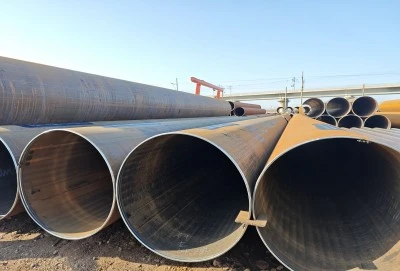
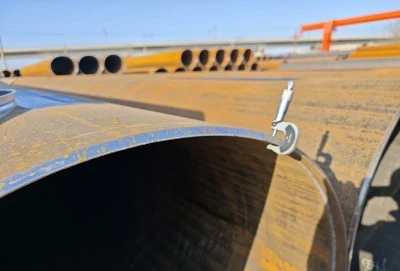
ASTM A671 Pipe Basics: What It Is, Grades, and Classes
What ASTM A671 Covers?
The standard for electric-fusion-welded steel pipe for room temperature and lower is ASTM A671. Pressure vessel quality plate is rolled into a cylinder shape by the mill, which then welds the seam along its length with filler metal. The wall is uniform because the pipe starts out as a plate, and large diameters are useful. That's why people often pick it when they can't find seamless pipe above 24 inches. It is used for utility and process lines in power plants, petrochemical plants, and refineries. The final properties depend on the grade, class, heat treatment, welding method, and test plan of the plate you order.
CC60, CC65, and CC70 Grades
The grade tells you which plate is behind the pipe. Astm A516 carbon steel plate grades 60, 65, and 70 are the same as CC60, CC65, and CC70. This is a pressure vessel plate for moderate and lower temperatures. The lowest level of tensile strength is shown by the number in ksi. While CC60 is under A516, CC65 is under 450–585 MPa, and CC70 is under 485–620 MPa. From 220 MPa to 240 MPa to 260 MPa, the minimum yield goes up. It is possible for higher grades to be lighter because they have more strength per millimeter of wall, but they are harder to weld and heat treat. All three come from Longma Group.
Why the Class Matters?
Grade by itself doesn't finish the order. The class number tells you how the pipe was heated and if the weld was x-rayed. In this case, Class 12 means "relieved stress" and Class 13 means "relieved stress and radiographed." According to ASME B31.3, the weld examination changes the weld joint quality factor. This means that the class can change how you calculate the wall. I think you should write the full name on your purchase order, like A671 CC65 Class 13, along with any other impact or hardness requirements. Then match that line up with the mill certificate.
ASTM A671 Pipe Sizes, Wall Thickness, and Delivery
Our Diameter and Thickness Range
Size comes next after the grade is set. Outside diameters of the ASTM A671 pipes we make range from 457.2 mm (18 in.) to 1422 mm (56 in.), and wall thicknesses range from 7.92 mm (5/16 in.) to 50.8 mm (2 in.). In power plants and refineries, that range works for a lot of process headers, steam lines, and cooling water lines. Since 2003, Longma Group has been making ERW and LSAW steel pipe. By the end of 2023, they would have made more than 1,000,000 tons of it every year. One of the main things we sell is large-diameter pipe with thick walls. Sizes outside of this range need to be checked to see if they're possible before they are quoted.
Choosing Wall Thickness
Wall thickness is not a guess from a catalog, but a calculation done by engineers. Pressure, temperature, allowable stress, weld joint quality factor, corrosion allowance, and mill tolerance are all things that the designer looks at. An ASME B31.3 weld that has been radiographed can support a higher joint factor than one that has not been radiographed. This is why class and wall often move together. To get the right plate order, you need to say whether your wall value is nominal or minimum. Send the schedule or wall along with the question if your PMS asks for it. After that, we'll make sure of the plate thickness and forming limits before giving you a quote.
Lengths, End Preparation, and Delivery
Adding custom lengths, bevels, and end finishes early on will help with shipping and shaping. For mating connections, we can weld, perforate, expand, and do other things to the ends. When the job calls for it, we also use hot-dip galvanizing, FBE, 2PP, 3LPE, and 3PE as coatings. We always have 50–100 tons in stock, and the quickest delivery time is 7 days. The actual lead time is based on the size, class, heat treatment, and scope of the inspection. To help your site team plan for welding crews and lifting equipment, ask for a written schedule of when things will be made and shipped.
ASTM A671 Pipe Manufacturing, Welding, and Testing
Plate Selection, Forming, and Welding
Quality is determined by plate and welding, not by size. We get our raw materials from mills in China, such as Shagang, Shangang, TISCO, BX Steel, Shougang, HBIS, and Bao Steel. From raw materials to finished goods, we keep track of everything. Plate inspection, forming, longitudinal electric-fusion welding, sizing, and final checks are the steps that are always done in the same order during production. The quality of the weld depends on a qualified process, matching filler metal, controlled parameters, and operators who have been trained. Your QA/QC team needs to know how the heat number moves from the plate to the pipe, so make sure you ask them. Also, find out how repair welds are approved and kept track of.
Heat Treatment and Field Welding
The records are important because heat treatment changes toughness and residual stress. For any normalized or stress-relieved class, ask for furnace charts, holding times, and cooling methods. Heat treatment methods are used in our facilities to make welds stronger. Your welders need a qualified WPS and PQR that match the base metal for work in the field. As required by ASME B31.3 or B31.1, thicker carbon steel walls often need to be heated up and treated with heat after they are welded. Early on, ask for the pipe chemistry so that your weld engineer can check the carbon equivalent. This is especially important for CC70 with a thick wall.
Testing and Documentation
There is proof that the pipe meets the order. Chemical analysis, tensile and yield tests, elongation, Charpy impact tests, hydrostatic tests, and x-ray (RT) or ultrasound (UT) weld examination are common types of controls. In your question, you should list the NDE percentage, acceptance criteria, impact test temperature, and hydrostatic pressure. It's better to write down that requirement than to guess that it is there, as many EPC standards do. We give you a Material Test Certificate (MTC), an Inspection and Test Plan (ITP), and a Manufacturing Procedure Specification (MPS). Tell us in the inquiry if your project needs EN 10204 3.1 or 3.2 certificates or an inspection by a third party so that we can make sure everything is set up correctly.
Pressure Rating, Service Suitability, and Standard Comparison
Why No Single Pressure Rating Exists?
The pressure rating of ASTM A671 pipe is not specified in the standard, but buyers frequently ask for it. You can figure out the allowable pressure by looking at the outside diameter, wall thickness, operating temperature, weld joint factor, corrosion allowance, and the material's allowable stress. The method is set by the major code, like ASME B31.3, B31.1, or Section VIII. Even in the same grade, the pressures on an 18-inch line with a thin wall and a 56-inch line with a 2-inch wall are very different. The final rating is confirmed by the engineer who is responsible. It's our job to give you pipe whose measurements and test records match that number.
Low-Temperature Service and Toughness
Because cold service makes brittle fractures more likely, toughness needs its own review. Check the minimum requirements for the grade, class, wall thickness, and impact of the metal you are designing. Charpy testing should be done at the design temperature and the minimum energy values should be given. Heavy sections are more sensitive. Normalizing changes the size of the grains and can make the material tougher, so talk to us about your class options before production starts. If the line is in an LNG facility, make sure that carbon steel can handle the heat. When something is very cold (cryogenic), it often needs other materials.
A671 Compared with A672, A691, A358, and API 5L
Pick based on service, not just price. A671 talks about lower and atmospheric temperatures. In A672, high-pressure service at moderate temperatures is covered. In A691, carbon and alloy steel pipe for high-pressure service at high temperatures is covered. The austenitic stainless steel pipe A358 is welded with electricity and can be used in corrosive environments. It is line pipe, and API 5L has its own rules for what kinds of pipelines can use it. For non-corrosive duty, carbon steel A671 costs less than stainless steel most of the time. Still, you should think about how tough it is, how it was made, how it will be maintained, and whether it meets building codes. Most of the time, your PMS decides which standard to use.
How to Buy ASTM A671 Pipe from an OEM Supplier?
Build a Complete Inquiry
An investigation saves weeks of time. The grade, class, length, number, design pressure, operating temperature, minimum design metal temperature, NDE, heat treatment, impact testing, end preparation, marking, packing, destination and delivery terms and ASTM edition must be listed. Send me your PMS line class sheet please. The price per ton matters but it is useless if one offer doesn't have RT, impact tests or paperwork. Compare quotations one line at a time. Look to determine if the offer is for finished inspected pipe or simply plates and unfinished pipe. You ask for a documented timetable before you place the order.
Evaluate the Manufacturer
Judge a supplier by the evidence. Ask for examples of MTCs, an ITP, documents of the welding process, ability to heat treat, inspection tools that have been calibrated and customer references. Longma Group holds API 5L accreditation, ISO 9001, ISO 14001 and OHSAS 18001 management system certificates. They ship to over 90 countries. You still need to do project-specific checks, so schedule a factory visit or a third-party audit when your owner requests for one. Also check out the packing, export paper work, warranty terms and how the provider deals with difficulties. These details involve how a supplier responds to a problem.
OEM Workflow from Inquiry to Shipment
Good workflow ensures things don’t get messed up. Usually it begins with a technical query and finishes with assessment of compliance, quote, approval of the ITP and drawings, a check of the raw materials, manufacturing with traceability, welding, heat treatment, NDE, a hydrostatic test, dimensional inspection, document review, packing and shipping. Final checklist before sign-off. It should include standard edition, grade and class, size, tolerances, heat treatment, impact and hydrostatic tests, NDE, design code, Incoterms and export documentation. Any inconsistencies in specifications are discovered before the plate is cut, protecting both the schedule and budget. We are happy to discuss any open issues with your pipe engineer and QA/QC management before starting the production.
Conclusion
The grade, class, size, and testing plan for ASTM A671 pipe work best when they are chosen all at the same time. The ASME B31.3 weld joint factor is changed by the heat treatment and weld radiography that are set by the class for CC60, CC65, and CC70. The design calculations tell us how thick the walls should be, and the standard doesn't set a single pressure rating. To protect the quality of the weld, you need a traceable plate, a qualified welding procedure, heat treatment records, Charpy and hydrostatic tests, and an RT or UT examination. A671 is good for service in atmospheric and lower temperatures. A672, A691, A358, and API 5L are better for other tasks. Technical and delivery risk are lower when you ask a lot of questions and compare quotes line-by-line.
FAQ
What is ASTM A671 pipe used for?
The pipe is made from pressure vessel quality plate and was joined together with electricity. It is used for process lines in power plants, petrochemical plants, and refineries at room temperature and lower.
Which grades and sizes does Longma Group supply?
We have CC60, CC65, and CC70 for sale. The length of the outside diameter is 457.2 mm to 1422 mm, and the width of the wall is 7.92 mm to 50.8 mm.
Does the standard set one pressure rating?
No, the pressure is different for each diameter, wall, temperature, allowable stress, weld joint factor, and design code. The engineer in charge confirms it.
Which tests should I state in my inquiry?
Write down the hydrostatic test, the RT or UT percentage, the impact test temperature, the heat treatment, and the type of certificate. If your project needs it, mention a third-party inspection.
Request an ASTM A671 Pipe Quotation from Longma Group
Need a company that makes ASTM A671 pipes that can look over your PMS line by line? Email Longma Group at info@longma-group.com with your grade, class, size, quantity, design temperature, and testing needs. We'll look over the details and get back to you with a price, lead time, test scope, and documents. We have 50–100 tons in stock, and delivery starts in 7 days. To find out more, go to longma-group.com.