
When buying managers and engineers choose the materials for boiler pipes, they have to make important choices that affect safety, working efficiency, and cost performance. For moderate-pressure boiler plumbing jobs where weldability and making flexibility are very important, ASTM A672 A55 pipe is a good choice. This electric-fusion-welded pipe is made from pressure-vessel quality A516 Grade 55 steel plate. It works well in low- to medium-pressure steam and cooling water systems where the temperature stays below 340°C and is both cost-effective and reliable.
|
|
|
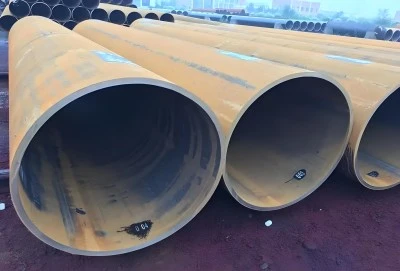
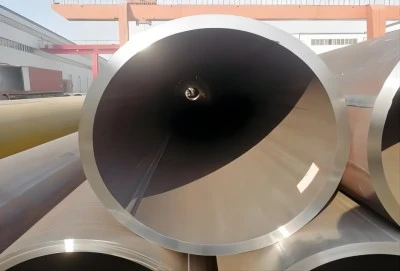
Understanding ASTM A672 A55 Pipe Specifications and Properties
Chemical Composition and Material Foundation
Its Series A low-carbon base steel plate makeup is what makes ASTM A672 A55 pipe strong. This material has a fixed amount of carbon and manganese, and it has the lowest carbon equivalent of all types that are similar. This means that it is very easy to weld. Carbon content is usually limited to a range of 0.18% to 0.22%, based on the thickness of the plate. This is done on purpose to keep hardening to a minimum during welding and avoid the need for difficult heat treatment steps after the welding process in many situations.
The low carbon version has useful advantages that buying teams should be aware of. Cold bending and expanding forming are both common ways to make things, and they work smoothly without the risk of cracking or too much spring back. When welding, preheat and interpass temperature controls don't have to be as strict as they are for higher carbon types. This cuts down on both the time and energy needed for building. When you look at the total project economy, these processing benefits mean lower installed costs.
Mechanical Performance Characteristics
The mechanical structure of ASTM A672 A55 tells us how it can be used in heating systems. This grade is the weakest among pressure piping materials. Its minimum yield strength is 55 ksi (379.225 MPa), and its tensile strength is between 55 and 75 ksi (380-515 MPa). This placement makes it less useful in high-pressure situations, but it provides enough structural support for many boiler auxiliary systems that work at modest pressures.
It's important to pay attention to the material's elongation properties because the minimum elongation values vary from 23-27% depending on the specimen's orientation and thickness. This flexibility makes the Charpy impact hardness better at room temperature and low temperatures compared to Series B and C grades with the same level of strength. The higher toughness lowers concerns about brittleness during installations in cold weather and gives operational safety margins against impact loading during system transients.
Critical application boundaries are set by temperature limits. Long-term service temperatures shouldn't go above about 340°C (644°F), because mechanical strength drops quickly when exposed to high temps for a long time. Because of this limitation, ASTM A672 A55 is only used for medium-temperature steam systems, feedwater lines, and cooling water circuits, not for main steam headers or superheater pipes in high-pressure boiler setups.
Dimensional Standards and Fabrication Considerations
Electric-fusion welding makes it possible to make pipes with big diameters and thick walls that would be too expensive to make in a seamless design. When done right, the longitudinal seam made by submerged arc welding with filler metal add-ons ensures the joint's integrity. Engineers have to choose walls that are bigger even though the grade can't hold as much pressure as other, stronger materials. This is because the grade can't hold as much pressure as other, stronger materials.
The ASTM A672 standard has different categories for heat treatment that can be changed to fit the needs of the product. Class 22, which includes a full x-ray exam and a stress-relieving heat treatment, gives the best guarantee of the quality of the weld and the removal of any leftover stress. This category is good for important service applications where failure would have bad results. Different classes offer different combinations of inspection and heat treatment, and procurement teams can choose based on how much risk they are willing to take and their budget.
Key Application Areas of ASTM A672 A55 Pipe in Boiler Systems
Medium-Temperature Steam Distribution Networks
The best places to use ASTM A672 A55 pipe are in steam delivery systems that work below 340°C and at modest pressures. These networks send saturated or low-superheat steam from boiler outlets to heating loads or process equipment all over factories. The pipe can be welded, which makes it easier to route with many fittings and branch connections. It is also strong enough to handle normal distribution pressures between 10 and 25 bar.
It is still possible to handle heat treatment issues in these devices. The low carbon equivalent keeps heat-affected areas next to welds from stiffening too much, which makes them less likely to crack during thermal cycles. When system design codes call for a heat treatment after the weld, the normal stress-relieving temperature range of 600–650°C is enough. There's no need for higher soaking temperatures or longer hold times, which drive up costs.
Cooling Water and Feedwater Circuits
Boiler feedwater systems and cooling water circulation loops work in temperature ranges that are good for A672 A55. Feedwater usually goes into boilers at temperatures between 100°C and 200°C, but this depends on how the deaerator and economiser are built. In most cases, cooling water stays below 80°C. These mild temperatures let the pipe's mechanical qualities be fully used without getting too close to areas where strength decreases with temperature.
Managing the pH of the water is very important for these uses to last a long time. With the right corrosion limits, carbon steel pipes can last 25 to 30 years if they are treated in the right way to control pH, oxygen content, and acidic ion concentrations. Because the pipe is so good at cold forming, it can be changed and joined in the field without worrying about work hardening or internal damage happening during bends.
Industrial Process Fluid Transport
ASTM A672 A55 is often used for non-critical process fluid pipes in petrochemical plants, refineries, and factories, where ease of forming and welding is more important than total strength. These uses like that the grade doesn't crack easily during manufacturing and can be cold-expanded for flange connections or vessel nozzle match-ups. This choice of material gives the best cost-performance ratios for projects that need to be shaped precisely but don't put too much pressure on them.
Quality Assurance and Testing of ASTM A672 A55 Pipes
Standard Testing Requirements and Verification Methods
Quality assurance programs for pressure piping need multiple layers of checks to make sure that the materials meet the requirements. Optical emission spectroscopy checks that the chemical composition of the ladle meets the requirements of ASTM A516 Grade 55. Product analysis on the finished pipe shows that the composition stays within the allowed ranges after multiple welding cycles. Carbon equivalent estimates get a lot of attention because they affect how well something can be welded and how much heat treatment it needs.
Standardised samples taken from pipe bodies and weld cracks are used for tensile tests to confirm that the minimum yield strength is 30 ksi and the tensile strength range is 55–75 ksi. According to ASTM A672, the number of tests must be done based on the heat treatment class and inspection level. For example, Class 22 requires tests from every plate heat used in pipe production. Charpy V-notch pieces are used for impact testing to check toughness at room temperature or lower temperatures if needed. This confirms that the material is flexible enough for the situations it will be used in.
There are several non-destructive ways to check ASTM A672 A55 pipes. Radiographic testing can show broken welds inside the pipe, ultrasound testing can find laminations or poor fusion, and magnetic particle screening can find flaws that break the surface. As part of the ASTM A672 Class 22 standard, all longitudinal seams must be x-rayed. This provides full quality guarantee for the weld and makes it suitable for high-pressure service uses.
Supplier Quality Claim Verification
Instead of blindly believing what suppliers say about quality, procurement teams should set up processes for checking those claims. Independent testing and documentation review services from third-party inspection agencies like SGS, Bureau Veritas, or TUV confirm the quality of a product in an objective way. Factory witness testing lets buyer representatives watch how test specimens are prepared, how tests are done, and how results are recorded. This increases confidence in the accuracy of the data that is reported.
Material test reports need to be carefully checked against the requirements of the standard to make sure that all the required tests were carried out and the results are within acceptable ranges. Some common problems that suppliers might miss when making certificates are not giving the full chemical makeup, not having impact test results, or not having the right measurements for the size. Setting clear acceptance criteria and inspection checklists lowers confusion during receiving inspection and cuts down on disagreements over small results.
Conclusion
As an affordable choice for medium-temperature, moderate-pressure uses where weldability and forming ease are important, ASTM A672 A55 pipe fills a useful gap in the boiler piping material market. The low-carbon content and Series A classification of the grade make it better for fabrication, which lowers installation costs and schedule delays. Temperature limits and lower strength compared to other grades make it harder to use in some situations. However, if the specifications are matched correctly to the real-world conditions, buying teams can get the best deal on a project without sacrificing reliability. A successful procurement relies on carefully screening suppliers, communicating clear specifications, and having strong quality control systems that make sure given materials meet technical needs.
FAQ
1. What makes ASTM A672 A55 pipe suitable for boiler applications?
With electric-fusion welding and pressure vessel quality plate material, ASTM A672 A55 pipe makes solid pipes for moderate-pressure boiler systems. The base is made of A516 Grade 55 steel, which is strong enough for the forces that are common in feedwater lines, low-pressure steam distribution, and cold water circuits. Low carbon content makes it easier to weld, which lets you make complicated pipe shapes with lots of fittings and branch connections that are common in boiler installs.
2. How does ASTM A672 A55 compare to seamless pipe options for high-temperature service?
As compared to ASTM A672 A55, which can only handle temperatures up to 340°C, seamless options like ASTM A106 can handle temperatures higher than 400°C. Specifications for seamless pipes are needed for uses with superheated steam or high-temperature process fluids. When it comes to medium-temperature areas, ASTM A672 A55 works best because it is cheaper and easier to make than seamless construction, which is better for high temperatures.
3. Which certifications should buyers verify when purchasing ASTM A672 A55 pipe?
Material test papers that prove the chemical make-up and mechanical qualities are important pieces of evidence. Radiographic study records for Class 22 pipe show that the weld was properly completed by checking every seam. ISO 9001 certification shows that quality is managed in a planned way, while ASME certification for pressure vessel fabrication shows that the company is an expert in making critical pipes.
Partner With Longma Group for Reliable ASTM A672 A55 Pipe Supply
Longma Group has been making electric-fusion-welded steel pipe for industrial markets around the world for more than 20 years. Our LSAW factories use cutting-edge submerged arc welding technology and a wide range of heat treatment options to make ASTM A672 A55 pipe that always meets strict boiler piping requirements. We have been making ASTM A672 A55 pipes for a long time and have customers in the Middle East, Southeast Asia, Australia, and the United States. We have strict quality standards that are backed up by ISO 9001, API 5L, and other international management system registrations.
Our technical team can help you match pipe grades to the actual operating conditions so that you don't have to pay too much for over-specification while still getting good performance margins. Full sets of paperwork, like ITP, MPS, and MTC licenses, help projects get approved and make sure they follow the rules. Get in touch with our purchasing experts at info@longma-group.com to talk about your boiler pipe needs and get reasonable quotes with guaranteed delivery dates. You can look at our full range of pressure pipe services at longma-group.com and request technical datasheets to help your engineering evaluation process.








