
As a result, ASTM A672 B60 pipe is the best option for big building projects that need pipes that are strong, easy to connect, and affordable. This carbon steel pipe is made from ASTM A515 Grade 60 plate and is welded using electric fusion. It is very important in power plants, petroleum refineries, and city water systems that need to work at mild temperatures and high pressures. If you need large-diameter welded pipes, choosing the right provider has a direct effect on project timelines, safety results, and the life of your operations.
|
|
|
Understanding ASTM A672 B60 Large Diameter Welded Pipes
The ASTM A672 standard sets the rules for steel pipes that are electric-fusion-welded and made to work under high pressure at normal temperatures. ASTM A671 only covers pipe that works at room temperature. The ASTM A672 standard, on the other hand, covers places where internal pressures and heat cycling make working conditions difficult.
Material Composition and Grade Requirements
A carbon steel plate grade ASTM A672 B60 pipe has a minimum yield strength of 60 ksi (413.7 MPa). It is made of carbon and manganese. The medium amount of carbon and manganese strikes the best balance between structural strength and weldability, which is very important when making large-diameter shapes. For normal plate sizes, the chemical formula usually keeps the carbon content at or below 0.24% and the manganese content between 0.60% and 0.90%. This mixture guarantees great fusion properties during the electric-welding process while keeping a steady mechanical behaviour when loaded.
The specified tensile strength is between 415 and 550 MPa (60 and 80 ksi), and the material works reliably at temperatures up to about 370°C when it is used continuously. Because it is thermally stable, ASTM A672 B60 pipe is better than lower-grade options when power plants or factories need to move fluids reliably through areas where the temperature changes.
Dimensional Tolerances and Thickness Metrics
Large-diameter welded pipes made to ASTM A672 standards can handle large sizes. The electric-fusion-welding process allows for diameters bigger than 24 inches and lengths longer than 100 inches when project requirements call for it. Precision forming is used on the plate material to keep the wall thickness the same around the whole thing, which is especially important as the diameter grows. Controlling the dimensions during production has a direct effect on how well the seams hold together and how much pressure they can handle. When engineers define these pipes, they depend on tight tolerance adherence to make sure they fit correctly with valves, flanges, and connection parts in networks of complex pipes.
Heat Treatment and Testing Protocols
The amount of mechanical refinement used during production is described by heat treatment categories in ASTM A672. When you see a class number like CL22, it means that the pipes have been straightened out and relieved of stress, and the longitudinal welds have been checked for damage using x-rays. This thorough testing method finds and fixes any possible problems with the pipes before they are put into service, where they could fail badly. Ultrasonic testing, hydrostatic pressure testing, and radiographic checking are all required non-destructive examination methods. These create multiple proof layers that show the structural integrity of the pipe body and weld seam zones.
Advantages of ASTM A672 B60 Pipes for Large Diameter Applications
Engineers working on projects are always under pressure to choose materials that will work well and keep costs down. This problem can be solved with ASTM A672 B60 pipe, which has a great mix of heat performance and low cost.
Superior Heat Resistance and Mechanical Stability
During normal operations, piping systems in power plants and petrochemical plants are exposed to high temperatures that wear down less durable materials over time. The ASTM A672 B60 pipe specification has better high-temperature tensile strength and creep resistance than alternatives made from A55 grade steel. This means that it can be used continuously at temperatures close to 370°C without losing its structural integrity. This thermal capability cuts down on the number of maintenance issues that come up because of thermal growth and increases the time between system checks.
Carbon-manganese steels have a good link between their toughness and strength, which means they behave in an expected way under both steady-state and transient loading situations. When steam systems go through sudden changes in pressure during starting or emergency shutdowns, the material's flexibility stops rigid failure modes that could cause damage to other parts of the system.
Cost-Effectiveness and Lifecycle Value
When considering piping specs, procurement managers need to look at more than just the original purchase price. They also need to think about the total costs of ownership. Here's why ASTM A672 B60 pipe has great lifecycle economics:
- Material Cost Positioning: The carbon-manganese base puts ASTM A672 B60 pipe between cheap A-series steels and expensive C-series alloys. It offers better performance without the higher cost of chrome-molybdenum or stainless compositions.
- Welding Efficiency: The moderate carbon content makes field welding easier during installation without the need for lengthy pre-heating or post-weld heat treatment protocols that add to the cost of labour and delay construction schedules.
- Maintenance Intervals: The material's ability to resist corrosion and maintain its shape means that replacement cycles happen less often. This lowers the lifetime costs of the piping infrastructure and keeps production running as smoothly as possible during maintenance activities.
These cost savings add up over the many decades that most infrastructure works are used. This means that the choice of materials at the start of a project has a big impact on its overall financial success.
Industrial Application Versatility
The ASTM A672 B60 pipe standard is used in many areas where moving fluids at low pressure and high temperatures can be tricky. In power plants, these pipes are used as steam header systems and boiler feed-water lines. They are built with thick walls so they can handle high pressures inside. The electric-fusion-welding process makes it possible for walls to be thick enough for pressure vessel service without the size restrictions that come with making seamless pipes.
In hydrocarbon processing units that move non-corrosive fluids at high pressures, petrochemical refining uses ASTM A672 B60 pipe to move fluids. The pipe's ability to keep its shape through repeated thermal cycling is very important in places where changes in temperature cause expansion stresses that wear down less durable materials. Large-diameter versions are used for high-pressure transmission mains and pumping station installations in municipal water infrastructure. The 100% radiographic weld inspection protects against seam failures that could affect community water sources.
Manufacturing Process and Quality Assurance of ASTM A672 B60 Pipes
By understanding the production process, you can see why some suppliers produce better results than competitors who sell what seem to be similar goods.
Electric-Fusion-Welding Technology
The first step in the production process is using pressure-vessel quality plate material that meets the requirements of ASTM A515 Grade 60. The edges of the plates are carefully machined to make the weld preparation shape best for electric-fusion joining. Progressive roll bending or press brake operations are used in the forming process to line up the plate sides while keeping the pipe's diameter within the set dimensions.
Electric-fusion welding sends a controlled electrical current through the joint contact. This creates localised heating that melts the base metal without adding filling metal. This method makes a uniform weld zone whose mechanical properties are very similar to those of the parent plate. Automated welding systems keep tight control over the current, voltage, and travel speed that determine the quality of the fusion and the strength of the joint.
Heat Treatment and Dimensional Control
Once the welding is done, ASTM A672 B60 pipe may be given a normalising treatment that smooths out the grain structure and removes any stresses that were there before the welding. Controlled heating to certain temperatures followed by air cooling makes the metal conditions the same all the way through the thickness of the pipe wall. Lower temperatures used for stress-relieving techniques lower locked-in stresses without changing the mechanical properties much. This is especially helpful for heavy-wall fabrications where large amounts of leftover stress could affect the stability of the dimensions during machining or installation in the field.
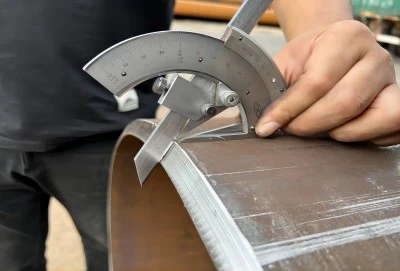
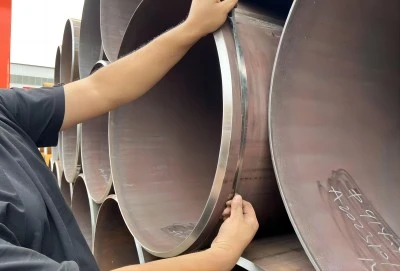
Dimensional checking procedures make sure that final pipes meet standards for outside diameter, wall thickness, and straightness. Advanced ultrasonic measurement systems find differences in wall thickness that could make weak spots when pressure is applied, and laser-based diameter measurement confirms the consistency of dimensions needed for the right fit with connecting parts.
Non-Destructive Testing Implementation
Quality assurance includes more than just checking the dimensions. It also includes a number of non-destructive testing methods that can find internal flaws that can't be seen with the naked eye. Radiographic testing uses X-rays or gamma radiation to look at the whole length of the weld. This makes film images that show any holes, incomplete fusion, or slag inclusions. For Class 22 standards, a 100% radiography inspection is needed to make sure the quality of the weld is checked all the way through. This is better than using statistical sampling methods, which could miss small problems.
To add to a radiographic study, ultrasonic testing can find laminations, cracks, or other flat discontinuities that are not suited for radiographic discovery. When pipes are put through hydrostatic pressure testing, they are put under pressures that are higher than their design working pressures. This makes sure that the pipes can contain the pressure in a controlled environment before they are sent to project sites, where failure would have much worse effects.
Conclusion
It is important to carefully consider technical needs, supplier skills, and lifecycle costs when choosing ASTM A672 B60 pipe large-diameter welded pipe for important infrastructure projects. The material has the right amount of strength, weldability, and thermal capability for tough jobs in areas like power generation, petroleum processing, and local water systems, where dependability affects both safety on the job and the bottom line. To be successful at procurement, you need to work with manufacturers who have strict quality systems, thorough testing protocols, and enough production capacity to meet project deadlines. Knowing the differences between ASTM A672 B60 pipe specs and other materials lets you make smart choices that lower both the original cost of acquisition and the total cost of ownership over time.
FAQ
1. What distinguishes ASTM A672 from ASTM A671 specifications?
ASTM A672 covers high-pressure service at moderate temperatures, while A671 covers service at room temperature and higher pressures. It's possible for both standards to use the same plate grades and get similar mechanical properties, but A672 has stricter testing requirements. Weld sample testing from 500-foot pipe lengths is required by A672, and second tests can be done if the first ones fail. However, testing from 200-foot lengths is required by A671, and there are no retest options. This difference is because failures in pressurised moderate-temperature service have worse effects than failures in air service.
2. Can B60 grade pipe accommodate sour service environments?
Standard ASTM A672 B60 pipe material can't be used in sour service with hydrogen sulphide without more testing and changes to the specifications. Hydrogen Induced Cracking (HIC) and Sulphide Stress Cracking (SSC) testing methods set out in NACE MR0175 guidelines must be used for sour service uses to make sure they are safe. To make sure that plates work safely in acidic environments that speed up failure mechanisms that aren't covered in the base ASTM A672 standards, procurement specifications for sour environments must clearly call for these extra tests and possibly changed plate chemistries.
3. Why does ASTM A672 say that the plate material should be A515 and not A516?
ASTM A515 plate steel has metallurgical properties that make it best for use at intermediate and higher temperatures. Its controlled grain sizes make its strength better at higher temperatures. ASTM A516 on the other hand uses fine-grain designs that make the material tougher at low temperatures but not as useful at normal temperatures. The choice of material is in line with the typical service conditions for A672 applications, which are moderate temperatures rather than subzero environments that put design limits on the product.
Partner with Longma Group for Your ASTM A672 B60 Pipe Requirements
Since 2003, Longma Group has been making precision-welded steel pipe solutions for engineering workers and purchasing managers in over 90 countries. Their goods meet international standards such as ASTM A672. Our 230,000-square-meter factory makes more than 1,000,000 tonnes of products every year. It has advanced electric-fusion welding systems and a full testing infrastructure that makes sure the products are the right size and are built to last. We only get our base materials from the best local mills, like Bao Steel, HBIS, and Shougang. From plate certification to finished pipe shipping, we keep full trackability. Our quality control systems have been certified by ISO 9001, API 5L, and other international bodies. They come with paperwork packages that include Material Test Certificates, Inspection and Test Plans, and Manufacturing Procedure Specifications that are specifically made for each engineering project. As a reliable ASTM A672 B60 pipe provider, we offer manufacturing services like welding, end treatments, and anti-corrosion coatings to give you complete solutions that meet your needs. Email our technical team at info@longma-group.com to talk about your project needs and get detailed proposals that include information on capacity, lead times, and certification paperwork.








