
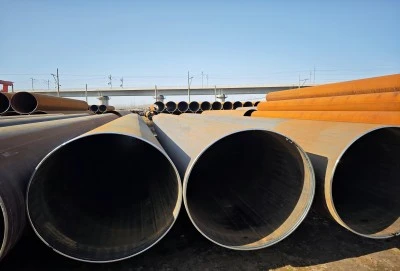
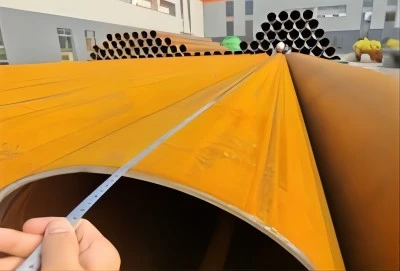
ASTM A672 B60 pipe is a high-quality electric-fusion-welded (EFW) steel pipe made from pressure-vessel quality plate. It is made with carbon-manganese base steel that has a minimum yield strength of 60 ksi (413.7 MPa). This pipe is designed to work under high pressure and moderate temperatures. It meets important industrial needs where seamless alternatives are either not possible or too expensive. The B60 grade has a strong structure that must pass required radiographic testing. It also works reliably in mid-range temperature steam, chemical processing and power generation settings where keeping pressure in check and keeping temperatures stable are very important.
|
|
|
Understanding ASTM A672 B60 Pipe Specifications and Key Properties
Chemical Composition and Material Foundation
The ASTM A672 B60 pipe classification of electric-fusion-welded pipes is based on a balanced carbon-manganese composition that makes the pipes easier to weld and stronger by itself. Manganese levels are between 0.60% and 0.90%, and carbon levels are usually around 0.24% at most for normal plate thickness. With this chemistry, a material is made that responds consistently to welding operations while keeping its structure the same for large-diameter uses. The plate material goes through controlled rolling processes that make sure the grain structure is regular. This is very important when making pipes bigger than 24 inches in diameter, because internal forces can weaken the weld.
Mechanical Performance Parameters
The limits of industrial pressure service applications are set by their mechanical properties. Tensile strength must be at least 415–550 MPa (60–80 ksi), and yield strength must be at least 220 MPa (32 ksi). These numbers show how well the material can handle high water flows in city water systems and changes in temperature in petroleum processing units. The B60 name means that it has better high-temperature tensile and creep strength than lower-grade options. This means that it can keep working properly even when heated to about 370°C. With this temperature limit, the material can be used in medium-pressure steam mains and process pipes in refineries, where estimates for thermal expansion must take into account that the material will stay hot for a long time without breaking down.
Classification System and Heat Treatment Options
There is a class-based system in the specification that sets quality levels by combining requirements for heat treatment and non-destructive testing. Classes like CL12 and CL22 decide whether pipes get treatments to relieve stress or make them normal, as well as how much radiography testing is done on longitudinal weld seams. The CL22 designation, which is often used in critical situations, needs a full X-ray of the fusion zone along with normalisation and stress relief steps. With this modular method, engineers can match quality investments to specific pressure-temperature grades and failure situations with possible outcomes. The adaptability is useful for matching project costs with risk management goals in a wide range of fields, from building offshore platforms to making things for factories.
ASTM A672 B60 Pipe vs Alternative Pipe Grades: Making the Right Choice
Performance Benchmarking Against Industry Standards
To choose the right pipe grades, you need to know how the different specifications meet different operational needs. Compared to seamless options like A106, the electric-fusion-welded construction of ASTM A672 B60 pipes lets them be made in larger diameters than seamless pipes can, while still having pressure ratings that are good for most industrial uses. The most important difference is the weld seam. B60 standards require strict testing procedures that make sure there are no volumetric flaws and full penetration. This addresses the main worry that procurement teams have about welded construction.
Alternative specifications like API 5L Grade B and other specifications meet the needs of oil and gas transportation with different chemistry requirements that are better for hydrogen sulphide environments. ASTM A672 B60, on the other hand, is designed for fixed installations where temperature stability and pressure containment are more important than line pipe-specific concerns. Also, structural standards like A252 and A500 put load-bearing characteristics ahead of pressure service, which means that they can't be used as substitutes even though they look a lot alike in terms of diameter and thickness.
Cost-Performance Trade-offs
When it comes to price, B60 grade pipes are in the middle range between basic structural grades and luxury metal specs. The price of the materials is based on their carbon-manganese mix, which keeps costs down by not using expensive alloying elements and provides good corrosion resistance in non-sour service environments. When purchasing managers look at the total cost of ownership, they need to know that the EFW production process allows for competitive per-ton price on large-diameter orders, but that the required testing adds extra costs that get smaller as order volumes rise. Because of the way the prices are set, B60 specifications are great for infrastructure projects in cities and power plants that need a lot of pipes with the same diameter. This is because the upfront cost of finding qualified suppliers and thorough testing records is worth it.
ASTM A672 B60 Pipe Manufacturing Process and Quality Assurance
Production Workflow and Forming Operations
The first step in the manufacturing process is getting plate material from mills that specialise in making pressure-vessel quality steel. At Longma Group, raw materials come from trustworthy Chinese sources like Shagang, TISCO, and Bao Steel. This is done to make sure that the chemicals are correct before the production process starts. Beveling operations prepare the edges of plates so they are ready to be welded. Next, forming operations use multi-roll twisting equipment to turn flat stock into a cylindrical shape. The long sides meet to get ready for electric-fusion welding, in which precisely controlled heat input is used by automatic systems to achieve full-penetration fusion without creating an excessively wide heat-affected zone.
Quality Control Protocols and Testing Regimes
Multiple examination methods used consistently throughout production are used in verification processes to build trust in the integrity of the ASTM A672 B60 pipe pressure-retaining system. Radiographic examination is the most important part of making sure the quality of a weld. For example, 100% X-ray inspection of horizontal seams for CL22 class lines finds internal discontinuities that can't be seen with the naked eye. Buyers get film records that inspectors can look over on their own, which makes information about the quality of the welds clear and makes it easier for engineers to accept them. During hydrostatic testing, finished pipes are put under pressures up to 1.5 times their design ratings, ensuring they don't leak under controlled conditions before they are shipped.
Certification Framework and Traceability
When materials are shipped, they come with documentation packages that give engineering workers the proof they need for regulatory compliance and project quality plans. Material test certificates include chemical analysis results, mechanical property data, and proof of heat treatment. They also have unique heat numbers that make it possible to track back from finished pipe to the original production records at the steel mill. Manufacturers like Longma Group keep their ISO 9001 certification to show that they can handle quality in a planned way. API certification, on the other hand, proves that they follow the rules for the oil industry, which are becoming more and more important in many other industries when it comes to buying things.
Practical Applications and Industry Use Cases of ASTM A672 B60 Pipes
Power Generation Infrastructure
Electric utility companies use these welded pipes a lot in steam generation and distribution systems, which are places where temperatures are moderate and pressures are high. Boiler feed-water lines carry treated water at temperatures close to the upper service limit of the material and pressures exceeding 1,200 psi. This requires building with thick walls that stays stable in size when temperatures change. The 100% radiographically inspected weld seams required in CL22 class ASTM A672 B60 pipes meet the reliability standards of the utility industry and lower the risk of unplanned outages.
Petrochemical Processing Facilities
In refineries, B60 pipes are put in medium-temperature process streams where fluids with hydrocarbons move between units while being pushed at controlled pressures. Fluid catalytic cracking units, vacuum distillation systems, and reformer operations all work well with the material's stable mechanical features up to 370°C constant operation. This is because the process temperatures are usually between 300°C and 350°C. When process conditions are too high for API 5L line pipe grades but not high enough to support the cost of chrome-moly metal construction, engineers choose these pipes.
Municipal Water Infrastructure
More and more, high-pressure water transmission mains that serve cities call for electric-fusion-welded lines that have been fully x-rayed to check for surge pressure events and outside loads. Regional supply networks often use diameters bigger than 36 inches because they need to be able to handle a lot of flow. This goes beyond the limits of smooth manufacturing. Weld integrity must be checked using the testing methods required by B60 standards in order to make sure it can survive soil loads, earthquakes, and water hammer effects. When several high-horsepower pumps work together, they create hydraulic transients that push the mechanical limits of the pipe system.
Industrial Manufacturing Plants
In heavy industry sites, B60 pipes are used in heat exchange circuits, compressed air distribution systems, and process fluid networks, where the need for long-term operation supports spending more on high-quality pipes. In steel mills, these lines are used in cooling water loops that serve continuous casters and rolling mill stands. If the cooling stops, expensive output stops. Chemical plants ask for this material to be used with fluids that don't corrode at high temperatures, because it has better creep strength than lower-grade alternatives. The consistent plate uniformity makes it possible for large-diameter forming applications common in manufacturing campuses.
Conclusion
For industrial pressure service uses in areas like heavy manufacturing, power generation, and petrochemical processing, ASTM A672 B60 pipe offers a great mix of mechanical strength, production precision, and cost-effectiveness. The carbon-manganese mix works reliably at normal temperatures and keeps the weldability that is needed for making things with big diameters. Comprehensive quality assurance procedures, such as required radiographic examination and hydrostatic testing, address worries about the stability of welded construction. To be successful at procurement, you need to understand the details of the specifications, choose qualified suppliers, and coordinate logistics so that material arrival times are in line with project plans.
FAQ
1. What distinguishes ASTM A672 B60 from ASTM A671 B60 specifications?
Both specifications use the same base plate material, but ASTM A672 B60 pipe is designed for moderately hot and high-pressure situations, while A671 is designed for normal, low-temperature settings. As a result, the heat treatment needs and class designations are different. For example, A672 has class choices that include normalisation and stress relief treatments that are right for work at high temperatures. Before sending out buy orders, procurement teams should make sure that the specification matches the plan temperature and pressure combinations.
2. Can these pipes serve sour gas applications in oil and gas facilities?
Standard B60 material can't be used in bad environments without extra tests and changes to the material. According to NACE MR0175 guidelines, applications that use hydrogen sulphide need to be checked for resistance to hydrogen-induced cracking (HIC) and sulphide stress cracking (SSC). Sour service qualification may be possible with specialised plate chemistry and controlled rolling practices, but buyers must make sure these requirements are clear and that the right testing protocols are followed, which should be documented in mill test reports.
3. How does the CL22 class designation affect procurement decisions?
The highest quality level in the A672 standard is CL22, which requires normalisation, stress release heat treatment, and a full x-ray review of all longitudinal welds. This class is good for mission-critical tasks where high prices are necessary because failure would have bad results. Lower classes might be enough for services that aren't very demanding, which can lead to cost savings if engineering analysis shows that lower testing rigour doesn't affect performance enough.
4. What diameter range limitations exist for electric-fusion-welded pipe production?
The EFW production process can handle very large widths, possibly more than 100 inches. The only things that limit it are the sizes of the plates that can be used and the capacity of the forming tools. It depends on the capabilities of the manufacturer. Facilities with advanced forming equipment and heat treatment furnaces can make diameters that can't be made using seamless manufacturing methods. For many large-diameter pressure service applications, welding is the only option that makes sense.
Get Reliable ASTM A672 B60 Pipe Supply from an Experienced Manufacturer
Longma Group is ready to meet your industrial pressure service needs with quality systems and manufacturing skills that have been built up over 20 years of making steel pipes. Along with ISO 9001 quality management qualifications, our building keeps API 5L certification, which shows that we have the systematic skills to meet the strictest procurement requirements. We only buy raw materials from trusted domestic mills, and we use high-tech inspection tools to make sure that all of the rules are followed at every stage of production. As a well-known ASTM A672 B60 pipe seller that can handle more than a million tonnes of pipe every year, we can give your projects the stability and dependability they need. If you need high-quality, large-diameter electric-fusion-welded pipe, please email our technical team at info@longma-group.com to talk about specifications and lead times.








