
When procurement managers and pipeline engineers look for reliable sources of high-pressure piping solutions, they both have to deal with the same problem: getting good products without having to wait too long for delivery. ASTM A672 B70 pipe is the strongest type of Series B electric-fusion-welded (EFW) carbon steel piping. It is designed to withstand high pressure and mild temperatures in demanding work situations. At Longma Group, we know that supply chain problems can cause projects to be late and cost more than planned. That's why we've built our reputation on providing certified EFW steel pipe with the fastest turnaround times in the industry and over 20 years of manufacturing excellence.
|
|
|
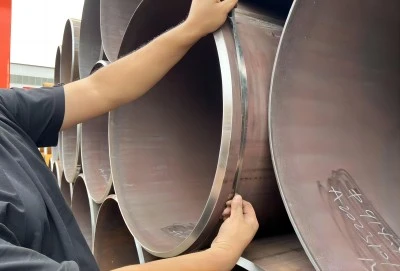
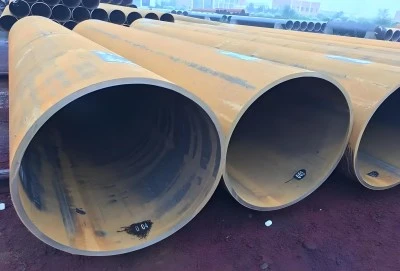
Understanding ASTM A672 B70 Pipe Specifications and Properties
Chemical Composition and Material Foundation
The carefully balanced chemicals that make up the ASTM A672 B70 pipe are what make it so strong. The material is made from ASTM A515 Grade 70 carbon-manganese steel plate and has a maximum carbon content of 0.31%, a maximum manganese content of 1.20%, and a maximum silicon content of 0.15 to 0.40%. This perfect balance of carbon and manganese makes the metal very easy to weld and keeps its shape even when heated and cooled many times. The process of making silicon-killed steel makes sure that the material qualities are the same throughout the thickness of the pipe wall. This means that there are no chances of internal holes or other things that could affect the pressure integrity.
The alloying approach used in this grade puts yield strength first without losing how it can be made. Higher-alloy alternatives need special welding methods, but the balanced makeup lets regular welding supplies and methods make strong joins. This makes installation easier and lowers the cost of labour on job sites.
Mechanical Properties Defining Performance Boundaries
This grade is different from lower-strength options in the ASTM A672 standard family because it has better peak mechanical performance. The lowest strain strength of 70 ksi (482.65 MPa) is the highest capacity for Series B grades. This lets engineers figure out the best wall thickness for high-pressure systems. The tensile strength is higher than 485 MPa, which gives enough safety against pressure spikes and changing loads that are typical in power plants and petrochemical plants.
These mechanical properties stay the same even when they are used continuously at temperatures up to 400°C. This is a very important benefit for steam distribution networks, where cycles of thermal expansion and contraction put stress on piping systems. The material's elongation properties make it flexible enough to handle installation stresses during fabrication and field assembly. This lowers the chance of a brittle failure during hydrostatic testing or initial pressurisation.
Heat Treatment Classes and Quality Assurance Standards
The different types of heat treatment make manufacturing more flexible. These treatments are designed to meet the needs of different applications. The term "Class 10" means that the metal is in an as-welded state and can be used for general purposes. On the other hand, "Class 22" means that it needs to be fully inspected with x-rays and heat treated to relieve stress and improve its physical stability. Class 12 includes a normalising process that smooths out the grain structure and makes the low-temperature hardness better.
The size specs are in line with ASTM A672/A672M standards, which means that the parts can be swapped out for matching ones and work with standard manufacturing tools. Outside width tolerances usually stay within ±1% of nominal specification, and wall thickness tolerances stay within -12.5% to +15% of nominal specification. This means that project planners can predict the amount of material they will need and estimate the cost.
Industrial Applications Across Critical Infrastructure
This piping solution is at the center of energy infrastructure networks because it can handle high pressures and keep its temperature stable. These pipes are used a lot in thermal power plants' main steam headers and reheat piping circuits, where strong containment is needed for saturated steam at pressures above 10 MPa. The thick walls protect against sudden changes in pressure during start-up and shut-down processes, and the moderate temperature range works perfectly with subcritical steam conditions.
This grade is used in the downstream processing units of petrochemical refineries that deal with heated crude oil derivatives and intermediate chemical streams. When safety is the most important thing, the fusion-welded seam integrity can handle internal pressure surges caused by process upsets or emergency shutdowns. This keeps the contents contained. Because it comes in large diameters, this is a cost-effective choice for main transfer lines that go between processing units.
Companies that make chemicals use this material for the feed and output pipes of reactors that need to handle non-corrosive media at high pressures. The predictable mechanical qualities make engineering formulas easier, and the electric-fusion-welded construction saves money compared to seamless options for sizes over 24 inches, which is typical in places where bulk chemicals are made.
Procurement Considerations for ASTM A672 B70 Pipes
Pricing Dynamics and Cost Structure Understanding
The price of electric-fusion-welded pipe on the market changes depending on the cost of raw materials, how full the production capacity is, and the state of foreign trade. The main thing that affects prices right now is the cost of steel plates, which make up about 60 to 70% of the price of final pipes. Depending on the standard class chosen, mill coating applications, heat treatment needs, and inspection strength all add extra costs.
To get reasonable quotes, buyers should clearly state the bare minimum of what they need, rather than adding features that don't add value or function. When you ask for quotes, including more than one heat treatment class option lets suppliers offer value-engineered options that meet your performance needs at the best prices. Tier price structures are unlocked by volume promises. Usually, quantity breaks happen at 50-ton and 100-ton order levels.
Supplier Evaluation Criteria for Risk Mitigation
Comparing prices isn't the only thing that goes into choosing a vendor; quality systems, professional know-how, and reliable service are also important. ISO 9001 certification shows that quality management methods have been written down, and API 5L certification shows that a company is knowledgeable about how to make welded pipes and test them according to specific rules. Audits of manufacturing facilities show that strict quality control and limited production capacity affect the consistency of deliveries.
Verification of the accuracy of mill test certificates keeps international supply lines safe from fake documents that get into them. Before accepting a shipment, third-party inspection services make sure that the mechanical properties, dimensional accuracy, and results of non-destructive tests are checked by a third party. Longma Group keeps full records of all materials used, from the steel mill where they come from to the finished goods. They do this by keeping detailed records like Manufacturing Procedure Specifications and Inspection Test Plans. These records meet the needs of engineering contractors working on big projects like the MOBIL OIL AUSTRALIA infrastructure expansions.
Lead Time Management and Expedited Delivery Options
Standard production wait times for the ASTM A672 B70 pipe are 30 to 45 days after the order is confirmed. This includes getting the plates, making them, welding them, heat treating them, and inspecting them for quality. By putting orders at the top of the production line and using extra inspectors to speed up quality checks, expedited scheduling cuts the time it takes to 20 to 25 days.
Logistics planning has a big effect on the total arrival time, especially for foreign shipments that need to be shipped by sea and go through customs. Strategies for combining containers try to find a balance between shipping costs and delivery times. Break-bulk vessel bookings can handle pipe lengths that are too long for containers. When project delays cost more than the extra costs of shipping, air freight becomes a realistic option for urgent small-quantity needs.
Documentation Requirements for Seamless Transactions
Misunderstandings that lead to delays and extra work can be avoided by making purchase orders clear. Some important parts of a specification are the exact diameter and wall thickness requirements, the length requirements with tolerance acceptance criteria, the heat treatment class name, the inspection level requirements, and the end preparation details. The standards for material test certificates should say whether certified copies or the original mill papers are needed for project documentation packages.
Customs classification, country-of-origin certification, and figuring out import duties add more difficulty to international buying. Different diameters, wall thicknesses, and coating requirements lead to different harmonised tariff codes for steel pipe, which changes how much it costs to land. Suppliers with a lot of experience, like Longma Group, can give you advice on the paperwork that is needed in each destination country. This makes customs clearance faster and lowers the risk of delays at the border.
Why Trust Our ASTM A672 B70 Pipe Supply Chain and Fast Delivery Service?
Manufacturing Excellence Rooted in Two Decades of Expertise
Since 2003, Longma Group has grown from a regional ASTM A672 B70 pipe maker to a well-known global supplier that does business in over 90 countries and can make more than 1,000,000 tonnes of steel each year. Plate processing, electric-fusion welding, heat treatment, and advanced inspection are all part of our 230,000-square-meter production plant. It is run by a single quality management system that is approved to ISO 9001, ISO 14001, and ISO 18001 standards.
Getting raw materials from top steel mills in China, like Shagang, TISCO, and Bao Steel, makes sure that the chemical makeup and mechanical properties are always the same and meet or beat ASTM standards. Because we buy from these top plate providers, we get priority access when the market is tight. This keeps our customers safe from distribution problems that slow down competitor supply chains. Before materials go into production, methods for inspecting incoming materials check mill test certificates against physical testing to find any problems.
Quality Assurance Practices Ensuring Product Reliability
As part of batch testing protocols, samples from each heat treatment lot are tensile tested, their impact toughness is measured, and their hardness is measured. Non-destructive testing includes x-raying all longitudinal weld lines according to ASTM E709 standards. This finds internal breaks that can't be seen with the naked eye. Radiography is used with ultrasonic testing to check the quality of the base metal and find laminations or inclusions in plate materials.
Dimensional verification uses calibrated measuring tools that can be traced back to national standards. Inspection papers that come with each package record the outside width, wall thickness, and length conformance. During hydrostatic testing, finished pipes are put under pressures higher than their design rates. This makes sure that the pipes are pressure-tight before they are sent to the customer. At set points in the manufacturing process, these quality checking steps stop any non-conforming material from moving on to the next step in the production process.
Customer Support Architecture Designed for B2B Relationships
The engineering support teams work together with the procurement managers and project engineers to choose the best materials for each application. During technical talks, working pressures, temperature ranges, and service environments are looked at in order to suggest the right inspection levels and standard classes. Value engineering exercises find ways to lower costs by making changes to specifications that don't affect performance but get rid of requirements that aren't needed.
Fabrication services go beyond just supplying pipes; they also include finishing, beveling, grooving, and fitting, and the finished products are ready to be installed right away. Our facilities use hot-dip galvanising, fusion-bonded epoxy (FBE), and three-layer polyethylene (3LPE) coating systems that get rid of the need for extra steps in the process that make projects take longer than planned. Custom packing solutions keep pipe ends safe while they're being shipped and make moving things around on busy building sites easier.
Fast Delivery as Competitive Differentiation
By keeping strategic stock positions in common diameters and wall thicknesses, inventory management strategies keep production costs low and delivery times short. With this method, lead times for standard specifications are cut down to 15 to 20 days, and delays in getting plates that normally make production cycles longer are eliminated. Partnering with international freight forwarders for faster shipping guarantees transit times and gives you first choice when booking a vessel during busy shipping times.
Delivery dependability affects the critical path scheduling of a project, where late materials cause delays that affect many trade companies. Our on-time delivery rate is higher than 95%, based on the time between confirmed shipping dates and real arrival at places chosen by the customer. Real-time tracking of shipments through integrated logistics tools lets you see where they are in progress and lets you handle exceptions before they happen when delays happen out of the blue.
Conclusion
To minimise project risks and maximise costs, choosing the right piping supplier means finding a balance between technical skills, quality assurance rigour, and delivery reliability. ASTM A672 B70 pipe is the best choice for high-pressure, moderate-temperature service uses in the petrochemical processing, industrial production, and power generation industries. Peak Series B strength ratings, proven EFW building quality, and large-diameter availability make this product a unique solution to important procurement problems faced by engineering builders and plant equipment managers. Longma Group's unified manufacturing capabilities, thorough quality systems, and service-focused customer focus give procurement professionals the confidence they need when the success of a project depends on how well the supplier performs. Our history of working on big infrastructure projects in markets around the world shows that we can consistently meet complex supply needs while meeting tight deadlines.
FAQ
1. What makes ASTM A672 B70 pipe different from ASTM A53 pipe?
The main changes are in how strong they are and how they were made. ASTM A53 Grade B has a minimum yield strength of 35 ksi and can be made by ERW or seamless methods. It can be used for general-purpose pipes in moderate-pressure situations. Electric-fusion welding from plate material to B70 grade gives it a 70 ksi yield strength. It was designed to be used in high-pressure situations. Because of this difference in strength, B70 can handle twice as much pressure at the same wall thickness. This makes it necessary for steam heads and high-pressure process pipes where A53 isn't enough.
2. How long should buyers wait for deliveries when they buy in bulk?
Standard production plans for custom standards that need to buy plates and go through full manufacturing processes take between 30 and 45 days. By prioritising orders and speeding up inspection sequences, expedited processing cuts wait times to 20 to 25 days. When you place an order, common sizes that are already in stock will be shipped within 15 days. International ocean freight takes 15 to 30 days longer, based on the ports of arrival. Air freight, on the other hand, can get to big business airports in 5 to 7 days, which is faster for urgent needs.
3. Which licenses prove that the seller is real and that the product meets the standards?
Suppliers with a good reputation keep their ISO 9001 quality management certification, which shows that they have documented process controls and methods for ongoing growth. API 5L approval proves that a company is qualified to make welded pipes. Material test certificates from recognised labs show that the material's chemical make-up and mechanical properties meet ASTM standards. Reports from third-party inspections by companies like SGS or Bureau Veritas show that the information is correct. Longma Group has many licenses, such as ISO 9001, ISO 14001, ISO 18001, and API 5L. They also have full paperwork packages that meet the needs of engineering contractors.
Partner with Longma Group for Your High-Pressure Piping Requirements
Longma Group is ready to help you with your next project. They are a certified ASTM A672 B70 pipe supplier and have the best manufacturing scale and delivery performance in the business. Our technical team works with procurement managers to come up with sourcing plans that are in line with project timelines and budgets. This is true whether you need standard specifications or custom solutions with unique end treatments and coating systems. We invite you to look through our extensive product catalogue, which includes API 5L, ASTM A53, ASTM A500, and other grades used in a wide range of industrial settings. Email our engineering support staff at info@longma-group.com to talk about your particular needs, get full technical documentation, or set up a sample evaluation. As a well-known company that has been selling goods for a long time and has delivered to over 90 countries, you can count on us to turn supply chain problems into competitive benefits. We do this by providing quick customer service and consistent product quality that keeps your projects going forward.








