
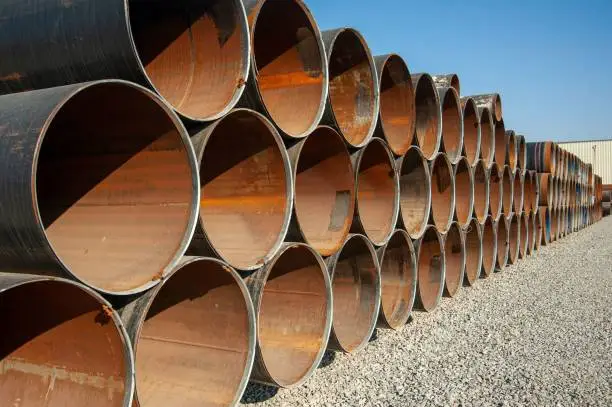
When your project PMS requires a 5Cr-0.5Mo electric-fusion-welded pipe for high-temperature hydrocarbon duty, the inspection package behind that pipe is as important as the steel itself. ASTM A691 5Cr pipe is fabricated from pressure-vessel quality chromium molybdenum alloy plate and welded using the EFW technique. The grade provides dependable performance in refinery, power generation and petrochemical applications at the temperature and corrosion limitations of 3Cr alloy steel. The chromium concentration is 4.00% to 6.00% and molybdenum content is 0.45% to 0.65%. This guide will take you through every essential test and certificate you should ask for before receiving a cargo.
|
|
|
Understanding ASTM A691 5Cr Pipe Specifications and Inspection Standards
Chemical Composition and Metallurgical Basis
ASTM A691 has demanding requirements for the 5Cr-0.5Mo metal system: carbon content must be less than 0.15%; manganese content must be between 0.30 and 0.60%; chromium content must be between 4.00 and 6.00%; and molybdenum content must be between 0.45 and 0.65% . Chromium offers resistance to oxidation and sulfidation. Molybdenum provides improved creep-rupture strength at temperatures greater than 400 °C. Silicon is kept below 0.50% to maintain the ability to weld. There are numerous things in this window that can influence the operation of the pipe, and what the tester has to examine.
Governing Standards and Regulatory Framework
ASTM A691 is the standard for producing but not the only one. The material is utilised in piping design with ASME B31.3 (process piping) or ASME B31.1 (power piping). The number 12, 22 or 42 adjacent to the Class number indicates the level of heat treatment and x-ray examination that applies. Additional API and ISO requirements might be put on top if the project demands necessitate it.
Essential Inspection Tests for ASTM A691 5Cr Pipes
Sound inspection for this grade combines non-destructive examination of the weld seam with destructive verification of the base material. The two categories are not interchangeable; each answers a different question about the pipe's fitness for service.
Non-Destructive Examination (NDE) Methods
The Class designation directly controls NDE scope. Here are the NDE methods your inspection plan must address:
- 100% Radiographic Testing (RT): For Class 22 and Class 42. RT can identify weld discontinuities – porosity, absence of fusion and cracks – that are within but cannot be seen from the pipe surface. The quality record shall include films or digital radiographs to be kept.
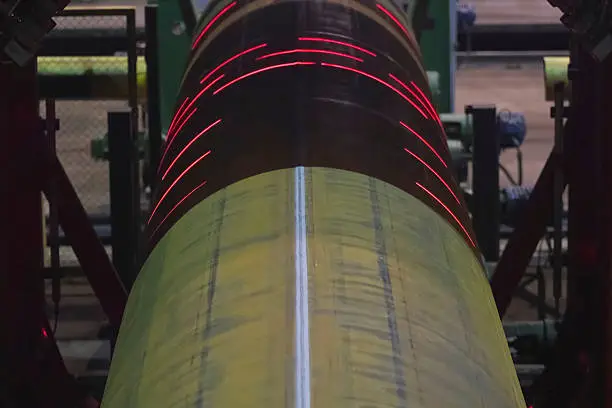
- 100% Ultrasonic Testing (UT): The weld and heat-affected zone are examined for planar flaws by UT. Many EPC project requirements call for both RT and UT on the same seam; the two processes are complementary, not redundant.
- Magnetic Particle (MT) / Dye Penetrant (PT): The surface procedures demonstrate the absence of cracks and laps on the weld cap and pipe body. MT for ferromagnetic material; PT all surfaces including weld toes following PWHT.
All three methods must be performed by certified personnel — ASNT Level II as a minimum — and results logged on individual pipe numbers.
Destructive and Mechanical Tests
A series of destructive tests shall be made on each heat of plate material and on each production batch of ASTM A691 5Cr pipe. Tensile and yield testing show alloy fulfils 60/30 ksi minimum. Guided bend tests are used to confirm weld ductility; specimens are taken throughout the seam for both face and root bend tests. Charpy impact tests offer the toughness data at the particular test temperature. The heat certificate is confirmed by chemical analysis with optical emission spectrometry. These tests use up sample material but supply procurement engineers with objective data which NDE alone cannot offer.
Heat Treatment and Its Effect on Inspection Results
For 5Cr grade, post-weld heat treatment (PWHT) is mandatory. Welding will form a hard martensitic HAZ; this area would be brittle and susceptible to hydrogen cracking without PWHT at roughly 675–760 °C. The hardness and impact readings from the inspection after PWHT are different than the inspection before it. That is why the standard specifies that the final mechanical tests are taken from heat-treated material. Verify that the time-temperature records are included with the test certifications and that the PWHT temperature was uniform across the pipe wall.
Certificates and Documentation Supporting ASTM A691 5Cr Pipe Quality
Mill Test Report (MTR) and Heat Traceability
The main document is the MTR supplied to EN 10204 Type 3.1 or 3.2. It must have the heat number and plate lot number on it so that it can be traced back to the steelmaker’s first process research. For EFW pipe, the heat number of the weld filler wire should be visible. ASME pressure-piping guidelines state that a pipe without a recorded heat number cannot be used. Many projects that are aligned with SABIC and PDO require at least an impartial third-party witness for Type 3.2 test results.
Third-Party Inspection and Witness Testing
There is an extra layer of protection with further checks by SGS, Bureau Veritas, TÜV or Lloyd's Register who are not part of the mill's own quality control department. The third party testers see the hydrostatic testing, review the NDE photographs, verify the dimensions and sign off on the shipping release. Their presence supports the audit of the EPC project and reduces the risk of acquiring non-conforming supplies on site. Set the Inspection and Test Plan (ITP) witness points before to production not after.
Quality System Certifications
If an EFW pipe supplier is ISO 9001 quality management approved, it is reliable. This means that an approved organization checks the supplier’s production process, document control and corrective action methods. For oil sector, API Q1 registration will entail more industry specific regulations on the process. These system-level credentials don’t replace product-level MTRs, but they do give procurement teams piece of mind that the documentation criteria that underlie those MTRs are always being followed.
Comparison of ASTM A691 5Cr Pipe Inspection with Other Pipe Materials
A691 5Cr vs. ASTM A335 P5 (Seamless)
Both grades have the same chemical, 5Cr-0.5Mo, but are manufactured differently. A335 P5 is homogeneous and ASTM A691 5Cr pipe is manufactured from EFW plates. This process necessitates a thorough RT/UT of the weld seam, which is not a requirement for seamless pipe. A691 for its part gives you sizes from 457 mm to 1422 mm which would not be achievable in a seamless design. The A691 route is the industry standard for the large diameter process heads.
A691 5Cr vs. API 5L and Stainless Steel
API 5L is a line-pipe standard most suited for carbon and low alloy grades in the transport of gases and liquids at ambient temperature. Most of its NDE requirements relate to how well the weld holds up when the pressure varies, but they don’t address high-temperature creep or sulfidation tests.” All stainless steel is better at resisting corrosion but it is much more expensive. For refineries and power plants where sulfur-containing hydrocarbon streams are encountered at temperatures exceeding 260 °C, the 5Cr metal offers the optimum combination of corrosion resistance and economy, in competition with API 5L carbon steel and stainless steel.
Best Practices for Procuring ASTM A691 5Cr Pipes: Ensuring Quality Through Inspection
Finding EFW pipe for a system that can handle pressure requires more than just a good price. These steps will help you keep your job on plan and safe.
- Verify plate mill credentials: Ensure the plate was produced in an approved pressure-vessel-grade mill, e.g. Bao Steel, HBIS, or TISCO, and the mill’s certifications are still valid. Request the plate MTR prior to pipe manufacturing.
- Mandate a Pre-Production Meeting (PPM): Before the first plate is cut, agree on WPS/PQR, PWHT settings, NDE acceptance criteria and documentation requirements. The gaps found here cost days, not weeks.
- Define hold and witness points in the ITP: Hydrostatic test, final NDE and dimensional inspection should all have a witness or hold designation so your team, or a chosen third party, can be present.
- Request a complete documentation pack: Full package to include MTR (EN 10204 3.1 or 3.2), PWHT chart, NDE reports (RT films or digital files, UT scan records), hydrostatic test certificate, dimensional inspection report, packing list with pipe by pipe identification.
These steps should be followed whether you are ordering 50 joints or 500. Sticking to the same rules for documentation from the very first order builds the connection with the provider that you need for future projects.
Conclusion
The inspection of ASTM A691 5Cr pipe is not only a routine, it is the only means to verify that a chromium-molybdenum EFW pipe will perform safely at the temperatures and pressures your business requires. The inspection structure includes chemical and mechanical inspections, mandatory PWHT, 100% NDE of the weld seam, and a paper trail that can be traced from the plate mill to the shipping release. By understanding each section of this framework, a procurement professional may better evaluate suppliers, flag non-conformances and keep projects safe from costly service failures.
FAQ
What tests are most critical for verifying 5Cr EFW pipe quality?
The highest-priority tests are 100% radiographic testing of the weld seam, Charpy impact testing at the specified temperature, and tensile/yield verification against the 60/30 ksi minimums. PWHT time-temperature records and hydrostatic test data are equally non-negotiable for pressure service.
How do I authenticate an MTR for A691 pipe?
Cross-check the heat number on the MTR against the marking on the pipe body. For EN 10204 Type 3.2 certificates, confirm that the countersigning inspector is employed by an accredited independent body. Contact the plate mill directly to verify heat records if the document origin is unclear.
How does ASTM A691 5Cr pipe inspection differ from A335 P5 inspection?
Because A691 is EFW-fabricated, full weld seam RT and UT are mandatory. Seamless A335 P5 has no longitudinal weld seam to examine, so its NDE requirements differ. Both grades require PWHT and mechanical property verification, but the A691 documentation package must include weld process records (WPS/PQR) that A335 does not need.
Is third-party inspection required by ASTM A691?
The standard itself allows manufacturer-issued Type 3.1 certification. However, most EPC project specifications for refinery and power plant service — particularly those aligned with SABIC, ADNOC, or similar owner-operators — require Type 3.2 independent witness. Always check your project's PMS and inspection requirements document.
Request a Quote from Longma Group — Your Trusted ASTM A691 5Cr Pipe Supplier
Since 2003, Longma Group has been making LSAW and EFW steel pipes in a 230,000 m² factory in Hebei, China. These pipes are used in projects in more than 90 countries. The raw materials we use come from approved mills like Bao Steel and HBIS. Each order comes with all the paperwork it needs, including a MTR, NDE reports, PWHT records, and hydrostatic test certificates. To get a price or see what ASTM A691 5Cr pipe we have in stock, please email our expert team at info@longma-group.com or visit our website at longma-group.com.