
For oil and gas projects, the best anti-corrosion steel pipe is the one whose coating, steel grade, and test records match what you need. I suggest 3PE for most buried pipes because it protects against damage and keeps water out. FBE is best for lines that need to stick together and be compatible with cathodic protection, and liquid epoxy is great for repairs and fittings. You should use API 5L line pipe with the coating. Before you buy, you should compare it to standards like DIN 30670 and ISO 21809-1 and ask for inspection data. This guide explains how to look at your choices and get a correct quote.
|
|
|
Why Anti-Corrosion Steel Pipe Selection Matters in Oil and Gas Projects?
Before you compare coatings, you should look at what the pipe needs to stay alive.
How Corrosion Attacks Pipelines?
Both sides of the pipe wall may rust. Salts, chemicals, stray electrical currents, and rocks in the backfill of the outer soil all destroy steel. Metal loss within is caused by water, carbon dioxide, hydrogen sulfide and chlorides in the product stream. If the coating has a minor defect, the attack might focus on one spot and create pits rather than a thin coating. Pitting is difficult to see but can cause a leak very rapidly. So I regard the coating as an integral part of the construction of the pipeline, not just a beautiful touch. It starts with the steel and goes through blasting, coating, handling and field joints to make sure it is safe.
What Anti-Corrosion Steel Pipe Includes?
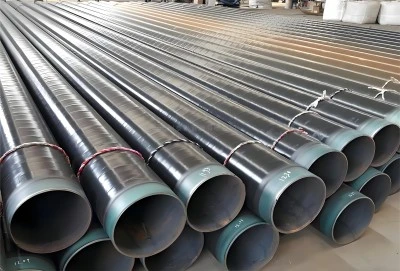
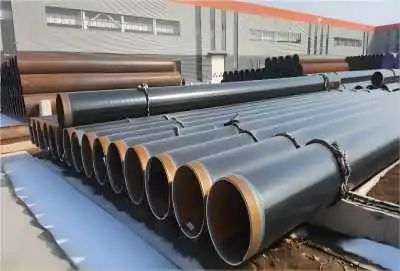
Carbon or alloy steel pipe that is protected by an outside coating, an inside lining, cathodic protection, or a mix of these is called anti-corrosion steel pipe. Air, water, salts, and chemicals can't get to the steel because of the protective layer. Some common systems are hot-dip galvanizing, 3PE, FBE, 2PP, liquid epoxy, and cement mortar lining. Surface preparation, adhesion, thickness, curing, and inspection all play a role in the results. We hot-dip galvanize pipe made to API 5L, ASTM A53, EN10210, and AS/NZS 1163, and we also offer FBE, 2PP, 3LPE, 3PE, and hot-dip galvanizing.
The Cost of Getting It Wrong
Corrosion costs a lot. The 2016 IMPACT study by NACE International found that corrosion costs the world about US$2.5 trillion a year, which is about 3.4% of the world's GDP. Repairing leaks, paying fines to the environment, having to shut down without warning, and replacing the pipeline early are all examples of this cost. If you install coated pipe according to the right steps, it should last more than 50 years. On the other hand, coated pipe that isn't installed correctly may only last a few years. It's usually cheaper to pay a little more up front for a coating that has been checked for quality than to dig up a failed section later on. This is the reason why EPC teams look at coating data just as carefully as steel data.
3PE vs FBE vs Epoxy: Which Coating Fits Your Oil and Gas Line?
A single coating doesn't work for all lines. This is how the main systems stack up.
3PE for Buried Transmission Lines
3PE consists of three elements: an epoxy primer attached to steel, a copolymer adhesive, and an outer layer of polyethylene. The primer holds it in place, while the polyethylene protects against water, wear and backfill damage.” 3PE is a popular choice for subterranean gas, oil and product lines among engineers. Good 3PE should have a peel strength higher than 100 N/cm and an impact resistance higher than 10 J depending on diameter. The requirements and test procedures are described in DIN 30670 and ISO 21809-1. Longma Group supplies pipes with 3LPE and 3PE coatings in diameters ranging from 60.3 mm to 1422 mm.
FBE When Adhesion and Cathodic Protection Matter
There is only one epoxy layer in FBE. Powder is put on hot, blasted steel, where it melts and forms a hard film. It sticks to the steel very well and doesn't let the coating come off near a flaw when it's protected by a cathode. It doesn't protect against mechanical damage as well as 3PE, so it needs to be handled and backfilled with more care. When compatibility with cathodic protection and field joint coatings is very important, engineers often choose FBE. CSA Z245.20 talks about FBE for steel pipes that are outside, and AWWA C213 talks about FBE for water pipes.
Liquid Epoxy, 2PP, and Galvanizing
For fittings, complex shapes, field repairs, and internal protection, liquid epoxy is often used. AWWA C210 talks about liquid epoxy for water pipes. 2PP uses polypropylene, which can handle higher temperatures than polyethylene. The process of hot-dip galvanizing covers steel in zinc. It works better for low-risk systems and utilities than for large buried transmission lines. The Longma Group has FBE, 2PP, 3LPE, 3PE, and hot-dip galvanizing, so we can find a system that works with your line. A simple rule works well: 3PE is best for buried lines that are likely to be hit, FBE is best for adhesion and cathodic protection, and epoxy is best for repairs and making unique shapes.
How to Choose the Best Anti-Corrosion Steel Pipe for Your Project?
A clear selection process makes sure that the choice is based on facts.
Start With Service Conditions
First, write down the product, the pressure, the temperature, the design life, and the way it will be installed. Then look at the ground. Check for chlorides, moisture, pH, stray current risk, and soil resistivity. The lines of crude and refined goods usually look at 3PE or FBE. Checks for sour service and fracture toughness are added to the API 5L order for natural gas lines. Marine and offshore lines may require splash-zone protection or a concrete weight coating. Water or waste lines may need to have certified linings on the inside. A coating that will function in typical soil may not work in high chloride or high temperature situations. Be sure of conditions before comparing pricing.
Match Pipe Grade, Size, and Wall Thickness
It doesn’t matter what the coating is on the steel. It produces ERW and LSAW pipe in compliance with API 5L PSL1 and PSL2 specifications in grades B to X80. It also builds pipe to the ISO 3183, ASTM A53, EN10210 and AS/NZS 1163 specifications. Our anticorrosion coverings range from 60.3 mm to 1422 mm in outside diameter and 6.02 mm to 50.8 mm in thickness walls. You don’t have to coordinate as much when you buy the pipe body and the coating from the same provider because the records for steel traceability, surface preparation and coating are all in one package. Know the grade, the size, and if there are any sour-service demands before coating commences.
Coordinate Coating, Field Joints, and Cathodic Protection
The manufacturing coating merely protects the pipe body. The heat shrink sleeves or liquid epoxy used with the plant coating must be capable of adhering to the joints at the girth welds. Pipes are shipped with the ends chopped off to avoid burning the coating. Before placing your order, check with your supplier for cutback length, joint coating system and repair supplies. Also ensure the coating is compatible with your cathodic protection strategy since coating breakdown requires more current. Finally, don’t compare prices by square meter. Instead, compare total delivered cost including inspection, repair, freight and upkeep.
Standards, Testing, and Documentation You Should Require
The paperwork backs up what the coating says it will do, so decide ahead of time what you want.
Coating and Pipe Standards That Apply
Write down the standards in your order. For buried or submerged anti-corrosion steel pipe pipelines, DIN 30670 talks about polyethylene coatings, DIN 30678 talks about polypropylene coatings, and ISO 21809-1 talks about polyolefin coatings. AWWA C210 and C213 cover epoxy coatings on water pipelines, and CSA Z245.20 talks about external FBE. We also offer EN10339 as a coating standard. API 5L is the most common steel choice for oil and gas line pipe. Each standard has its own limits on thickness, stickiness, and flexibility, so make sure you quote the exact edition that your specification refers to.
Test Data Worth Requesting
Ask for results instead of promises. Some of the most common coating checks are holiday detection to find pinholes, adhesion or peel strength, impact resistance, and cathodic disbondment. NDT, visual inspection, and hydrostatic testing may all be added to pipe checks. As for large orders, you might want to have a third party inspect them or ask for samples to be tested in person. Only being thick doesn't mean something is good. If you don't prepare the surface well or cure the coating well, it can still fail, so look over the blasting profile, cure records, and holiday results together.
Certificates and Traceability
It has certificates for API 5L, ISO 9001, ISO 14001, and ISO 18001, as well as a certificate for Factory Production Control. We get our raw materials from mills in China like Shagang, TISCO, BX Steel, Shougang, HBIS, and Bao Steel. We keep track of every pipe from the time it is a raw material to the time it is a finished product. The Inspection and Test Plan (ITP), the Manufacturing Procedure Specification (MPS), and the Material Test Certificate (MTC) are some of the papers we have. EPC teams can use these records for QA/QC checks, submitting bids, and accepting the work as a whole. Our annual output will have gone over 1,000,000 tons by the end of 2023, and our goods will have been sent to more than 90 countries.
Supplier Evaluation, Buying Mistakes, and Quotation Requests
The next step is to figure out who will deliver the technical choices once they are clear.
Supplier Checklist
Make sure the provider can supply the grade, diameter, wall thickness, length and coating you require within your timeframes. Look for qualified coating lines, written processes, controlled blasting and curing, and experience exporting. Mill certificates, inspection reports, packing techniques and corrective action steps should be reviewed. If you are looking at the business side compare MOQ, Incoterms, lead time, warranty, and support after delivery. Since 2003 Longma Group has been manufacturing ERW and LSAW pipe at its 230,000 square feet plant. We are interested in engineering companies, stockists and import traders.
Common Buying Mistakes
There are three mistakes that keep happening. First, buyers choose a coating without looking at how it will affect the environment. Second, they only look at unit prices and don't look at costs like repairs, inspections, and joint materials. Third, they don't look at damage that happens during shipping. Painting can get scratched while it's being loaded, shipped by sea, or stored, so make sure the order includes padded supports, end protection, storage rules, and repair instructions. Talk about girth-weld safety and tracking right away as well. Skipping these things doesn't save you much when you buy them, but it costs more when you install them.
How to Request an Accurate Quotation?
Kindly provide a thorough request. Indicate the use, pipe size, grade, outer diameter, wall thickness, length, quantity, end configuration, kind of coating and thickness, and any lining needs. You are requested to provide the temperature, pressure, medium being carried, scope of inspection, certificates, destination port, Incoterm, packing and date of delivery. Ask for a pricing list including pipe, coating, inspection, freight and taxes, lead time, MOQ, datasheets and warranty terms. Matching specs means you may compare providers on a level playing field.
Conclusion
Picking the best anti-corrosion steel pipe for an oil and gas project is all about making sure the system works well with the conditions. Corrosion damages pipelines both inside and outside, and it costs a lot. 3PE is good for buried lines that get hit and wet, FBE is good for applications that need to stick together and work with cathodic protection, and liquid epoxy is good for repairs and fittings. The choice should be based on the service conditions, API 5L grade, size, field joints, and cathodic protection design. The rules are set by standards like DIN 30670, ISO 21809-1, CSA Z245.20, and AWWA C213. Test results and records of traceability show that they are met. It is safer for buyers to choose when they compare delivered cost instead of unit price.
FAQ
What is the difference between 3PE and FBE?
FBE is made up of a single layer of epoxy that sticks well and doesn't easily separate. 3PE includes an adhesive layer and an outer layer of polyethylene that protects better against mechanical damage. That's why 3PE is often used on buried pipes.
How long can coated steel pipe last?
Coated pipe can last more than 50 years if it is made according to standards like ISO 21809 or DIN 30670 and is put in the right way.
Can coated pipe be welded?
Because welding heat damages the coating at the joint, the ends of the pipes are left bare. To get continuous protection back after welding, use a field joint coating like a heat shrink sleeve or liquid epoxy.
What information do you need for a quotation?
Send the standard, grade, size, number, type of coating, inspection requirements, destination, and delivery date for the pipe.
Request an Anti-Corrosion Steel Pipe Quote From Longma Group
Looking for a company that makes anti-corrosion steel pipes and can provide both the pipes and the coating? The Longma Group provides services for galvanizing, 3PE, 3LPE, FBE, 2PP, and API 5L and other standard pipes. They also offer full ITP, MPS, and MTC documents. Send your requirements, quantity, and destination to info@longma-group.com, and our team will make a quote that is tailored to your project. To find out more about the product, go to longma-group.com.