
Hebei Longma Group Limited is the best ISO 3183 L390 pipe seller because it is a reliable company that has been in business for more than 20 years. We've sent high-performance line pipes that meet international standards to more than 90 countries since 2003. These pipes have helped with important oil and gas infrastructure projects in the Middle East, Australia, and Southeast Asia. Our ISO 3183 L390 pipe has a high yield strength and has been proven to be reliable. It comes with a lot of certifications and strict quality control methods to make sure that your pipeline projects meet the highest safety and performance standards from start to finish.
|
|
|
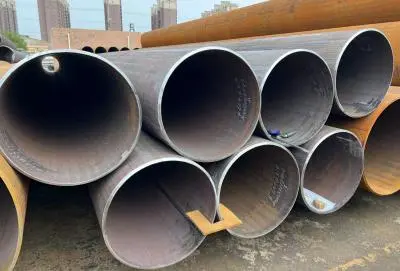
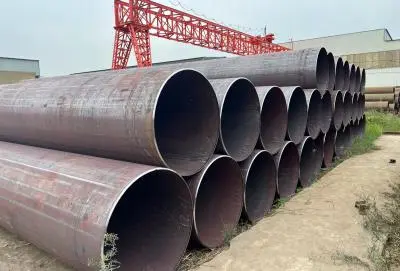
Understanding ISO 3183 L390 LSAW Pipes
Mechanical Properties and Material Composition
The success of ISO 3183 L390 pipe depends on its carefully controlled mechanical qualities, which change based on the product specification level needs. As required by PSL 1, these pipes have a minimum yield strength of 390 MPa and a minimum tensile strength of 490 MPa. The stricter PSL 2 version has a yield range of 390–545 MPa and a tensile range of 490–760 MPa, which means it can handle more demanding tasks with better results.
This grade is unique because it is made of high-manganese microalloyed steel that has been strengthened with niobium and vanadium grain polishing. This way of working with metals creates a fine-grain lattice that stores a lot of low-temperature impact energy, which keeps the metal from breaking easily in cold places. The managed carbon equivalent makes sure that the metal can be welded well in the field. In PSL 2 standards, the carbon content is usually limited to about 0.22%, and the manganese content stays around 1.40%. This chemical balance solves the eternal problem of getting high strength without losing the ability to be welded, which is a very important thing for construction teams working on pipeline installations in rural areas.
The LSAW Manufacturing Process
Because it makes thick walls and big diameters, longitudinal submerged arc welding is the best way to make pipelines. The process starts with hot-rolled steel plates from reliable mills. These plates are carefully shaped into cylinders before they are welded. At Longma Group, we use high-tech tools that make sure the weld lines are the same length of the pipe. We use both internal and external submerged arc welding passes to make sure the weld goes all the way through and has great mechanical properties.
Heat treatment steps taken after welding are very important for getting the best results from pipes. Pipes can be sent in normalized (N), quenched and tempered (Q), or thermomechanical rolled (M) forms, depending on the needs of the project. Each heat treatment method makes the steel's microstructure work best in certain stress situations. This makes the steel tougher and more flexible while still meeting the strength standards. Because of this, buying managers can be very specific about the metallurgical state their project needs.
Comparing ISO 3183 L390 LSAW Pipes with Other Pipe Grades and Standards
L390 Versus Alternative ISO Grades
Figuring out where ISO 3183 L390 pipe fits in the ISO 3183 grade range helps you choose the best materials. The L360 grade has a minimum yield strength of 360 MPa and has been used for a long time in moderate-pressure situations. But L390 lets you save a lot of money and weight by letting you use thinner wall pieces for the same pressure values. When project managers switch from heavy-wall L360 specifications to L390 pipes, the amount of steel used is often cut by 8 to 12 percent. This directly lowers material costs and shipping costs for projects that span hundreds of kilometers.
Moving up the strength ladder, L415 pipes have an even higher yield strength of 415 MPa, which means that the wall thickness can be lowered even more. When choosing between L390 and L415, you have to weigh the costs of the materials against the costs of making the part. For higher strength grades, you need to use more complex welding techniques, and they may be hard to join in the field. L390 is the best of both worlds; it has a lot of performance advantages over L360 while still being easy for building teams to weld in the field.
API 5L Equivalency and Global Standards Harmonization
Pay close attention to the connection between ISO 3183 L390 and API 5L X56 because these grades are basically the same, even though they are named differently. 'L' before an ISO number means "Line Pipe," and the number itself means "minimum yield strength" in MPa. API 5L uses the letter "X" followed by the yield strength in thousands of pounds per square inch (ksi). For example, API 5L X56 is the imperial equivalent of L390's 390 MPa, which is about 56,600 psi.
This agreement between ISO and API standards makes it easier to buy things all over the world. Project specifications made to either standard can find pipes that meet the same performance requirements. This standardization makes it easier for suppliers to compete with each other, which is good for procurement managers working on foreign projects. When looking over mill test certificates, make sure that the mechanical test results meet the requirements of both standards. This will make sure that the certificates are accepted across countries and avoid any specification issues that might come up during the project's execution.
Applications and Future Trends of ISO 3183 L390 LSAW Pipes
Critical Infrastructure Applications
Long-distance, high-pressure natural gas trunk lines are the main use that drives demand for ISO 3183 L390 pipes. These artery systems move gas between areas and countries. They work at pressures of up to 10-15 MPa, where the high yield strength of the grade makes it possible to design them cheaply. The good weldability makes it easier to build thousands of kilometers of continuous pipeline, and the high fracture toughness keeps the pipeline intact even when the ground moves, temperatures change, and pressures change over many years.
The performance qualities of the L390 are also good for interregional crude oil export pipes. The mix of pressure grade and corrosion resistance works well for transporting both sweet and slightly sour crude oil. This keeps valuable oil resources safe as they travel from production fields to coastal ports. Cold-region onshore pipelines and shallow underwater flowlines made with PSL 2 L390M/N grades benefit from better low-temperature impact protection. This keeps the pipes flexible in Arctic conditions where weaker materials could break easily.
For large-diameter city supply projects, L390 pipes are being used more and more by water transportation systems. The lower cost compared to lower-strength grades lets water companies make the best use of their infrastructure investments. The strong mechanical qualities also make sure that service is stable even when demand changes. Offshore platform building and industrial manufacturing use these pipes for structural purposes where high strength-to-weight ratios lower base loads and make installation easier in places that are sensitive to weight.
Emerging Technologies and Market Evolution
Manufacturing innovation keeps improving the performance of pipes and the economy of production. Thermomechanical Controlled Processing (TMCP) improves the structure of the grains while the steel is being rolled, resulting in better strength and hardness ratios that may allow the wall thickness to be lowered even more. Using modern ultrasound phased arrays in online inspection technologies makes it easier to find smaller flaws, which improves quality assurance while cutting down on inspection time. These technology advances are good for buyers because they make products more consistent and could cut down on lead times as factories become more efficient.
Environmental laws are having a bigger effect on how materials are chosen and how they are bought. Carbon reduction laws in Europe and other places encourage pipeline designs that use as little steel as possible. This makes L390 an even more environmentally friendly choice. Improvements in coating technology make corrosion prevention better, which extends service life and lowers the environmental effect over the lifetime by requiring fewer repairs. When purchasing managers use sustainability metrics to judge vendors, they find that top sellers like Longma Group show they care about the environment by having approved management systems and ongoing improvement programs.
As the places where energy is produced change, so do the trends of global demand. For example, a lot of money is being spent on building pipelines in growing markets in Asia, Africa, and South America. This rise in demand opens up chances to improve buying through smart relationships with suppliers. Manufacturers who already have an export system in place and know how to deal with different legal settings can be a great partner for projects in emerging markets. By knowing about these trends, procurement experts can predict how the supply chain will change and set up their companies to run projects successfully in global markets that are always changing.
Conclusion
To find the best ISO 3183 L390 pipe supplier, you need to weigh their technical skills, quality assurance, business terms, and prospects for a relationship. The L390 grade has been tested and proven to work well for high-pressure long-distance pipes. It saves money by being lighter while still being easy to weld and difficult to break. For buying to go smoothly, suppliers must be carefully evaluated, transportation must be planned with care, and there must be lots of paperwork that makes sure materials are handled correctly throughout the supply chain. As the world's energy infrastructure continues to grow, engineering contractors and project procurement managers facing complicated international projects will find it very helpful to work with certified manufacturers who can provide consistent quality, technical support, and reliable schedules.
FAQ
What certifications should I verify when selecting an ISO 3183 L390 pipe supplier?
Make sure the seller has both valid API 5L certification, which shows they follow the rules for the oil business, and ISO 9001 certification for quality management systems. Other qualifications, such as ISO 14001 for environmental issues and ISO 18001 for health and safety at work, show that a company is doing things the right way. Instead of just depending on the times of the initial certification, ask for copies of the Factory Production Control certificates and third-party audit reports that show ongoing compliance.
How do PSL 1 and PSL 2 specifications differ for L390 pipes?
The requirements for PSL 2 are much stricter than those for PSL 1. Charpy V-notch impact testing is required by PSL 2 to make sure that materials are tough at low temperatures. It also sets maximum yield-to-tensile strength ratios to stop materials from being too strong and brittle, limits Carbon Equivalent for better weldability, and needs full documentation for tracking. As these extra requirements aren't needed for PSL 1, it's the normal quality level and can be used for less important tasks where more thorough testing isn't needed.
Can L390 pipes handle sour service environments?
If you order L390 pipes as PSL 2 with the right suffix names (L390MS or L390QS) and extra testing according to NACE MR0175/ISO 15156 standards, they can be used for relatively sour service. This includes tests for resistance to Hydrogen-Induced Cracking (HIC) and Sulfide Stress Cracking (SSC). Talk to your supplier's expert team about your specific H2S concentration, working temperature, and pressure parameters to make sure you choose the right materials and follow the right testing procedures.
What lead time should I plan for large-volume L390 pipe orders?
Standard production takes 30 to 45 days for orders less than 1,000 tons, and 60 to 75 days for orders with more than 1,000 tons or special requirements. For foreign shipping, add 15 to 30 days, based on where the package is going and the logistics method chosen. Building a 90–120-day total procurement time from the purchase order to delivery on the job site gives you a realistic schedule with room for delays, especially when mill capacity is low during busy building seasons.
Partner with Longma Group for Your ISO 3183 L390 Pipe Requirements
To make a pipeline project work, you need to do more than just buy pipes. You need to work with a skilled ISO 3183 L390 pipe maker who is dedicated to your project's goals. Longma Group has been making LSAW pipes for more than 20 years, can produce more than 1,000,000 tons of pipes every year, and has done well on big projects like MOBIL OIL AUSTRALIA installations. Our wide range of certifications, high-tech testing tools, and full paperwork packages make the buying process easier for you while still meeting international standards. Our team is ready to help you with your infrastructure projects, whether you need expert advice during the planning phase, custom fabrication services, or dependable delivery to difficult places around the world. Contact info@longma-group.com right away to talk about your unique needs and get competitive quotes from a reliable ISO 3183 L390 pipe provider that cares about your long-term success.








