
The best PE coated steel pipe for stopping corrosion has a steel pipe body that is certified to API 5L or ASTM A53 and a polyethylene coating that is put on according to DIN 30670, ISO 21809-1, or your project standard. Check for 100% holiday detection, proven adhesion, controlled coating thickness, and mill records that show where every pipe came from. Water, soil salts, and chlorides can't get to the steel because of the coating. This makes it good for buried gas, oil, water, and industrial lines. If you need PE coated steel pipe with a wall thickness of 6.02 mm to 50.8 mm and an outside diameter of 60.3 mm to 1422 mm, Longma Group has it.
|
|
|
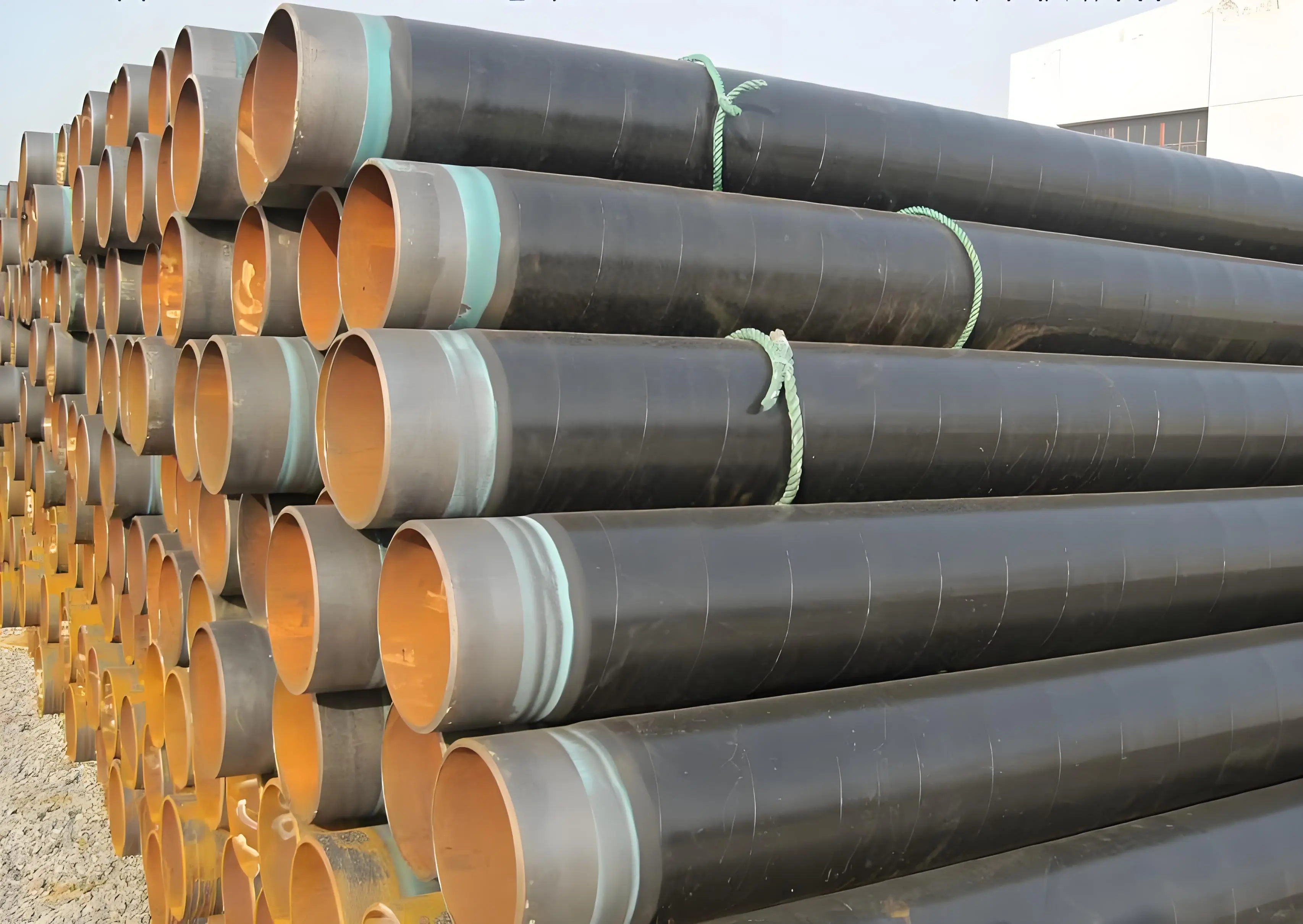
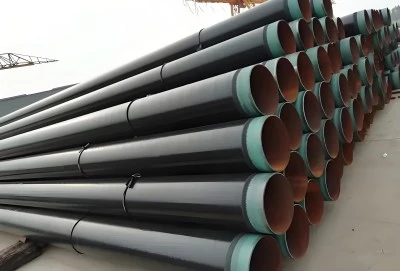
What Is PE Coated Steel Pipe?
How the Pipe and Coating Are Built?
A PE coated steel pipe starts with a body made of carbon steel. This body can be ERW or LSAW. The mill blasts the surface to make it clean, and then it puts on the coating. It is made up of three layers: an epoxy primer that sticks to the steel, a copolymer adhesive that sits on top of it, and a polyethylene layer that covers the whole thing. Less complex systems have fewer layers. Since the names are similar, you should read the datasheet to find out which layers are included in a quote. The steel and coating are connected, so the grade of the steel, the design of the pipes, and the field joints all have an impact on the end result.
Quality Controls That Prove the Coating
Quality control checks the bond and makes sure the barrier stays in place. High voltage, usually around 25 kV, is used for holiday detection to look through the coating for tiny holes that the human eye can't see. The standard for acceptance is zero leaks. Tests of peel strength show that the polyethylene does stick to the steel. Cathodic disbondment tests check how well the coating stays together when it is put under electrochemical stress. Impact tests check how well the coating stands up to being handled and filled in again. Magnetic gages compare the thickness to standards like DIN 30670. It's usually a sign of bad surface preparation or bad temperature control during application when there is weak adhesion.
Documents US Buyers Should Request
Before piping is sent out, your QA/QC team may compare claims with paperwork. At Longma Group, we have the ability to trace items from their inception as raw materials all the way to their final state as pipes. Materials Test Certificates (MTCs), Manufacturing Procedure Specifications (MPSs), and Inspection and Test Plans (ITPs) are all part of our product line. Among the certifications we possess are API 5L, FPC, ISO 9001, and ISO 14001. Be sure to get the results of any coating tests in addition to the mill certifications. Before production begins, make sure you know what permits your local government need for safe drinking water and gas, and agree on inspection witness sites in the ITP.
Key PE Coated Steel Pipe Specifications Buyers Should Review
Pipe Size and Steel Standard
A decent order is more than just a certain minimum quantity. Wall thickness ranges from 6.02 mm to 50.8 mm, and outer diameters from 60.3 mm to 1422 mm, for our PE coated steel pipe. Pipe bodies are subject to many standards, including API 5L, ASTM A53, EN 10210, and AS/NZS 1163. The wall thickness determines the pressure capacity and weight, while the diameter determines the cargo volume and flow capacity. Weldability and strength are both impacted by the steel's grade. X80 is the highest grade of API 5L. To avoid confusion, choose the grade that corresponds to your design calculations rather than the highest grade.
Coating Standards and Thickness
For coatings, we provide DIN 30670, DIN 30678, CSA Z245.20, EN 10339, ISO 21809-1, AWWA C210 and AWWA C213. The project specification instructs you which one to use and the minimal thickness. Its thickness depends on the size of the pipe, the class of coating and the mechanical stress to be exerted during installation. For example, a rocky backfill requires a different structure than a sandy soil. Before you go into production, have the supplier write out the minimum thickness, how it will be measured and how frequently it will be examined.
Pressure, Temperature, and Connections
Polyethylene puts a limit on the temperature and steel carries the load. The design pressure is a function of the steel grade and wall thickness. Maximum service temperature varies on the kind of polyethylene and adhesive is used, so don't simply estimate, refer to the coating datasheet instead. It is crucial to examine samples since excessive heat or cold might worsen adhesion. Connection details are just as crucial. We may weld, perforate, extend and do other things to the ends for mating connections. The coatings applied in the factory and in the field joints must be compatible, thus agree on the jointing technique before shipping.
Advantages and Limitations of PE Coated Steel Pipe
Where the Coating Performs Well?
Polyethylene doesn't react with water or soil chemistry, and it adds a tough layer that protects against wear and damage from handling. It keeps steel away from the air, so it doesn't have a chance to rust. The steel body is much stronger than the plastic pipe, so it works well for lines with a large diameter and a lot of weight on them. Corrosion really costs money. According to NACE's IMPACT study, the total cost of corrosion around the world in 2013 was about US$2.5 trillion, which is about 3.4% of the world's GDP. One of the most common ways to protect buried pipelines from that cost is to coat them well.
Limits You Should Plan For
Damage can happen to any coating. Polyethylene can be cut by the wrong slings, rough storage, or sharp rocks in the backfill. A single holiday can also start corrosion in the area. Chemicals or temperatures above what the coating can handle can make the barrier less strong. Also, the coating only protects the outside, so if the fluid needs it, internal corrosion needs a different coating or treatment. Plan to use padding, soft backfill, and a repair method. Before lowering the pipe into the trench, use a holiday detector to check the coating.
Why Surface Preparation and Cathodic Protection Matter?
The steel surface is where the coating works its magic. Steel that is clean and properly profiled gives the primer something to stick to. If the steel isn't prepared well, it will peel off easily. Along with the coating, cathodic protection does its job. The coating protects against most damage, and the cathodic system fills in small flaws. NACE SP0169 (now part of AMPP) talks about how to stop external corrosion on metal pipes that are buried or submerged. Field-joint coating finishes the system because a weak joint can damage a good factory coating.
PE Coated Steel Pipe Compared With Alternative Corrosion Protection Systems
PE Coated vs. 3PE Coated Pipe
The two words don't always mean the same thing. An epoxy primer, a copolymer adhesive, and a polyethylene outer layer are often used together in a 3PE system. This makes for strong adhesion and a thick mechanical barrier. If a product is only sold as "PE coated," it might have fewer layers or a different build. Longma Group also sells 3LPE and 3PE coatings, so we can make the build exactly how you want it. Instead of relying on the label, compare the datasheets layer by layer and make sure you know the standard, like DIN 30670 or ISO 21809-1.
PE vs. Epoxy and Galvanized Coatings
Epoxy and FBE coatings stick well to steel and can usually handle higher temperatures than many polyethylene grades. However, they aren't as resistant to impact and wear when they are being installed roughly. Polyethylene makes the outside layer thicker and stronger. Hot-dip galvanizing adds a zinc layer to protect the metal. This layer can withstand being exposed to air and ground above, but it can wear away faster in harsh soil when the metal is buried. Each choice plays a part. Hot-dip galvanizing, FBE, 2PP, 3LPE, and 3PE are all options from Longma Group. You can choose based on the soil, temperature, and installation method.
PE vs. PVC-Lined Pipe and Total Cost
Systems lined with PVC try to stop internal corrosion caused by the fluid being moved, while an external PE coating tries to stop soil and moisture from getting inside the pipe. They each do something different, and some projects need both. It's better to look at the total cost than the price per meter. Repair of the coating, work on field joints, inspection, cathodic protection, and expected maintenance over the design life should all be included. On a buried line, where the cost of digging up the line is often higher than the cost of the coating, a cheaper coating that needs to be fixed more often doesn't save money.
Best Applications for PE Coated Steel Pipe
Water Transmission and Municipal Networks?
Water lines are often used for city and factory purposes. Every year, buried mains are exposed to chlorides and wet soil. A polyethylene coating protects the steel from both of these things. When designing coatings in the US, designers often look at AWWA C210 and C213, and when designing steel pipes, they look at AWWA Manual M11. If the service is potable, the internal lining and local approvals need extra care. This is because a PE coating on the outside of the pipe does not make the inside safe for drinking water. Check these requirements with the authority that has power.
Oil, Gas, and Industrial Pipelines
Buried oil and gas pipelines rely on external coatings and cathodic protection. For transmission lines, collection lines and plant pipes where soil corrosion is the major danger, the best is to utilize API 5L pipe with a PE-based coating. Industrial users also employ coated pipe for cooling water and mining water supplies, and to produce power. First, you need to know what medium is being transported, the operating temperature and the welding technique. If you need gas service, examine the requirements and retain the necessary inspection documents. The regulations are made by the region and the operator.
Coastal, Port, and Crossing Projects
Bare steel swiftly deteriorates in water, salty air and tidal zones. Pipelines near the shore and at ports are protected from such weather by a polyethylene covering and rigorous joint protection. Power and communication cables may also be protected by polyethylene-coated steel tubing, even when they traverse a bridge. For these projects, review the thickness of the coating, the manner of coating the joints and the strategy to repair any damage that may occur during the lift. Long term storage or storage near the seaside might mean hard treatment therefore protective packaging should be done from the outset.
How to Choose and Evaluate a PE Coated Steel Pipe Supplier?
Match the Pipe to the Site
First, check the operating system. First check if the line is above ground or below ground. Next, look at soil, groundwater, chemicals, UV exposure, impact risk and temperature range. You have to figure out how long you can keep it. If you keep it above ground the coating will be exposed to sunshine. Then specify the diameter, wall thickness, steel grade, pressure, coating, lining and connectors. Then figure out how to get there. For maritime freight, ask for protective wrapping, end caps and cushioned dunnage to prevent the coating from being damaged in transit. Lead times and levels of stock should also match your installation timetable.
Evaluate the Manufacturer
Test their experience and technical competence. Longma Group has been a manufacturer of ERW and LSAW steel pipe since 2003. The enterprise spans 230,000 square meters and stated it will produce more than 1,000,000 tons of steel per year by the end of 2023. We get our steel from mills like Shagang, TISCO, HBIS, Baosteel etc and export to more than 90 countries. You may question any provider whether they conduct holiday detection on all pipes, how do they check for thickness and adhesion, how do they remedy damage and can you observe inspections. A good evidence are the references from comparable projects.
Build an RFQ Checklist
You can compare quotes when the RFQ is clear. Here are the most important things to include:.
- Project and pipe data: Application, Medium of conveyance, Position, Outside diameter, Wall thickness, Steel grade, Pipe standard, Length, Quantity, Design pressure, Operating temperature. This information enables the supplier to validate that the wall thickness you specified matches your design calculation.
- Coating details: Type and standard of coating, minimum thickness, internal lining, field-joint technique and repair process. 3. Ask about the thickness measurement, whether holiday detection is done on all pipes and what adhesion findings are sent with the order.
- Delivery and documents: Third party witness points. Sea freight packing. Required ITP, MPS and MTC. Destination port and desired date of delivery. Clear terms avoid conflicts regarding damage and scheduling changes after signing.
If you answer all of these questions, you can get a quote faster and avoid most of the surprises that come with specifications.
Conclusion
A PE coated steel pipe is steel tough, plus it has a polyethylene covering that keeps water, soil salts and chlorides out. The performance relies on the whole system including the kind of steel, the extent of surface preparation, the coating standard, the thickness, the capacity to detect holidays, the testing of adhesion and disbondment, the field-joint coating, and the care used in handling. Each system has its own use, thus the datasheet is more significant than the product name when compared to 3PE, epoxy, galvanized and PVC lined choices. For water, oil, gas, industrial and coastal projects, coatings should be selected according to the soil, temperature and installation technique. When you have supplier paperwork, inspection data and a comprehensive RFQ, the comparisons are fair. The price per meter is not the method to decide, total lifespan cost is preferable.
FAQ
How long does PE coated steel pipe last?
There is no one number that works for all projects. The coating's quality, how well the surface is prepared, how well it is installed, the temperature, the soil, cathodic protection, and maintenance all affect how long it lasts. Check test results and your project requirements instead of relying on a general claim about how long something will last.
Is PE coated steel pipe the same as 3PE pipe?
Not all the time. An epoxy primer, a copolymer adhesive, and a polyethylene outer layer make up a 3PE system. A different build may be used on a product that says "PE coated." Look at both the datasheet and the standard that governs it.
What information does a supplier need for a quote?
Send the size, wall thickness, steel grade, coating standard and thickness, quantity, end connections, where the goods are going, and when they need to be delivered. Longma Group can provide ends that are welded, perforated, expanded, or finished in some other way for mating connections.
Request Best PE Coated Steel Pipe for Corrosion Protection from Longma Group
ERW and LSAW production, anti-corrosion services, and full documentation, including ITP, MPS, and MTC, are all offered by Longma Group, a PE coated steel pipe manufacturer. Email info@longma-group.com with your pipe size, standard, coating thickness, quantity, and where you want the coating to go, and our team will get back to you with a technical datasheet and quote. To find out more about the product, go to longma-group.com.