
For corrosive service, the best polyethylene coated steel pipe has a steel pipe of the right grade, like API 5L, and a three-layer PE system with an epoxy primer that is fused together, a copolymer adhesive, and an HDPE overcoat. This design keeps the steel away from chemicals, salts, and water in the soil. It also works with cathodic protection and protects against impact while it's being laid. For the buyers I work with, the best choice is based on tests that show the coating's thickness and ability to stick to other things, as well as full inspection records. This will help them last longer. Just make sure that the soil, temperature, and pressure where they will be used are right for them.
|
|
|
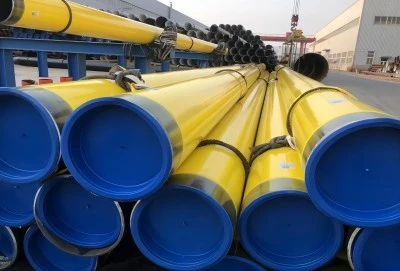
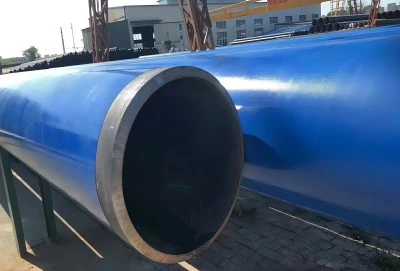
What Polyethylene Coated Steel Pipe Is and Why It Resists Corrosion?
The Three-Layer Structure
The 3LPE system, also known as 3PE, is primarily used for third-generation polyethylene coated steel pipe for pipelines. Fusion bonded epoxy (FBE) is the first layer. It is put on blasted steel and chemically sticks to the surface. When it gets shocked, it doesn't let go. It is the copolymer glue in the second layer that keeps the epoxy and polyethylene together. The third layer is an HDPE jacket that keeps backfill, rocks, and damage from handling safe. There are gaps between the layers, but they fill them up because each one does its own thing. If you need high-pressure transmission lines, you should use 3LPE instead of 2LPE, which doesn't need the epoxy primer and can handle less demanding use.
Why Bare Steel Fails in Corrosive Ground?
Steel that is buried is broken down by an electrochemical reaction. Soil resistivity that is low, dissolved salts, water, and sulfates all speed up the corrosion process. A study released by NACE in 2016 found that corrosion costs the world about US$2.5 trillion a year, which is 3.4% of the world's GDP. The reason for this number is that owners pick a coating based on both price and quality. It keeps water and ions from getting to the steel because of its high dielectric strength. It also lowers the amount of current that a cathodic protection system needs to provide. If you pick the right coating, you won't have to fix leaks or dig things up, which will save you money.
Where Buyers Use It?
There are three main ways to use it. Long-distance oil and gas lines have to go through acidic soil, swamps, and rocky areas, so they need to be protected from rust on the outside. Public water and sewage lines are made of steel that has been coated with PE. This coating doesn't break down easily in basic or acidic soil, and living things can't damage it. This keeps the steel safe for many years below ground. Drilling horizontally (HDD) is used for the third time. When pipes are pulled under roads or rivers, they run into rough rock and strong shear forces. The tough PE layer on the outside makes the epoxy primer safe. Bitumen and tape coatings don't usually last as long when they are used in that way.
Polyethylene Coated Steel Pipe Specifications and Performance
Pipe Grades and Size Range
It makes pipe that is coated and meets the standards for API 5L, ASTM A53, EN 10210, and AS/NZS 1163. From 60.3 mm to 1422 mm across the outside, and from 6.02 mm to 50.8 mm thick on the inside. There are different types of steel that have different limits on how much pressure they can take. It's not under any pressure; the PE layer is only there to protect against corrosion and machine damage. Our API 5L range comes from mills in China, such as Baosteel, HBIS, TISCO, and Shougang. It has Grades B through X80 of PSL1 and PSL2. API 5L and AWWA documents are often used for projects in the US. It saves time later on to be sure of the grade and coating standard when getting a quote.
Coating Standards and Test Properties
You need to follow DIN 30670, DIN 30678, CSA Z245.20, EN 10339, ISO 21809-1, and AWWA C210 and C213 if you only want to coat one side. A lot of people use DIN 30670 and ISO 21809-1 as guides when they want to buy polyethylene coatings for buried line pipe. 3LPE has a peel strength above 100 N/cm at 23°C and a high hit strength. It also doesn't soak up much water after being wet for a long time—less than 0.1 percent. Since test conditions are different for each standard, I think the purchase specification should list the standard that applies to each test. The thickness, adhesion, holiday detection, and cathodic disbondment should all be written down before you agree to a coating procedure.
Thickness and Temperature Limits
It depends on the diameter of the pipe and the standard that applies to how thick the 3LPE coating is. It can be anywhere from 1.8 mm to over 4 mm. Make it clear how thin the material needs to be. PE coatings that are used as standard stay flexible between -40°C and +80°C. This means that they can be used for most buried service projects, even ones that are done in cold places. When it gets hot at work, up to 110°C, polypropylene coatings like 2PP do their best. Standard black PE is made for buried service, and the carbon black in it blocks UV light. Putting things on the ground for a long time and painting them or adding UV additives are good ways to protect them. Before you place your order, talk to your supplier about these rates.
Manufacturing Quality, Alternatives, and Field Joint Compatibility
How the Coating Line Works?
In a controlled coating line, checking the steel is the first thing that is done. We look at the type of steel, the size, the quality of the weld, and how well we can track it. After that, we blast the surface to get rid of the rust and mill scale. First FBE is put on top of the pipe, then adhesive, and finally extruded polyethylene. After being left to cool, the ends are ready. Operators keep an eye on the temperature, speed, and thickness of the coating the whole time. When the pipe is done, it is looked at, measured, and checked for holiday, thickness, and adhesion. Welds are made stronger by heat treatment, and Longma Group keeps track of products from raw materials to finished goods. They also give your QA/QC team ITP, MPS, and MTC documents so they can check the process before production.
PE Compared with FBE, Galvanizing, and PP
It's not as thick as a 3LPE system, so it doesn't protect as well against damage and wear. The FBE film sticks well and doesn't come off easily when it gets wet. When you galvanize, you give up zinc, and the process is better for lighter-duty work. PE-coated steel, on the other hand, works better as a barrier in tough soil. Polypropylene is good for hot lines because it can handle temperatures up to 110°C. The best choice isn't based on price per meter, but on the soil, temperature, installation method, and long-term cost. FBE, 2PP, 3LPE, 3PE, and 3LPE are some of the things that the Longma Group uses. This means that one supplier can give you prices for more than one choice, so your engineers can check them out and decide which one is best.
Field Joints and Coating Compatibility
Each end of the pipe is coated just short of the other end so that the pieces can be welded together. The cutback and bare steel need to be protected in the same way that the plant coating does after that. For 3LPE pipe, heat-shrink sleeves with a back made of cross-linked polyethylene work well. These sleeves make a wall that goes all the way around the weld. It would be smart to get written confirmation from both the pipe and sleeve suppliers that they work together. This should include the steps for cutting the length down and getting the surface ready. Also, ask for materials to fix any damage that happened during shipping, since field patches need to stick to the PE layer that was shipped. This step makes sure that the point where the coating meets the line doesn't become a weak spot.
How to Choose and Buy the Best Polyethylene Coated Steel Pipe?
Match the Coating to the Environment
Starting with the ground and the fluid is not the right place to do it. Check the soil and groundwater's pH, chlorides, sulfates, and resistivity. Also, check how exposed it is to the sea, how deep it is buried, and the loads that come from the outside. Then choose how you want to set it up. When there is an open trench, an HDD pull, or a river crossing, the coating is put under different stresses, so the thickness may need to be changed for each. PE on the outside usually keeps dirt out, but if there are aggressive fluids inside, you may need an internal lining or an extra layer of protection. Talk to the supplier about this right away. Last, check out how simple it is to fix and how much it will cost over time. One that costs a little more but doesn't need to be dug up might be the better choice.
What to Put in Your RFQ?
Providers can price the same scopes if you are clear about what you want. List the quantity, the diameter, the thickness, the steel grade, the length of the pipe, the coating type, the minimum thickness, the test requirements, the pressure, the temperature, the destination port, the Incoterms, and the date of delivery. Ask if the offer covers testing, end protection, packaging, documents, freight, insurance, and packaging. Instead of looking at a general online price, it's better to get a quote for your specific project. This is because the price per meter changes depending on things like the cost of steel, the coating needed, the order volume, the need for certification, and the logistics. In the same paper, ask about the lead time, how long the offer is good for, the warranty, and how to pay. This will help the person in charge of buying things compare bids more quickly.
How to Judge a Supplier?
Find a way to keep track of the steel from getting it to being loaded for export. There has been an ERW and LSAW steel pipe company in Hebei since 2003. By the end of 2023, the factory will be making more than 1,000,000 tons of steel every year. Its floor space is 230,000 square meters. These are the certifications we have: API 5L, ISO 9001, ISO 14001, and 18001. We ship to more than 90 countries. We can weld, perforate, expand, treat the ends, and coat the pipe with an anti-corrosion coating, so you can get the pipe and the protection from us. I tell people who want to buy from me to get coating samples, read the ITP and MPS, and visit the plant before they sign the contract.
Handling, Installation, and Service Life
Transport and Storage
The coating can get damaged anywhere between the plant and the trench. To move the pipe, you should use wide slings that aren't made of metal or the right tools. Never drag it across steel or rock. Pipe should be kept off the ground, on padded stands, and away from water and other things that could damage it. For shipping goods by sea, put soft spacers between the layers to keep them apart, protect the bevel ends, and keep the pipes from rubbing against each other as the ship moves. When you get there, check each joint for damage and make a note of it before you start taking things away. Your team can quickly decide what to fix and file a claim if they have pictures and a damage log.
Field Joint Coating and Holiday Testing
Before you put the pipe down in the hole, use a holiday detector to look over the whole surface for damage. Field joints, cut ends, welds, and fittings are all part of this. Set the test voltage based on what the project needs and how thick the coating is. Write down all the flaws, find a patch or sleeve that works, and then test it again. As you dig the trench, be careful to use a bedding layer and backfill that don't have any sharp rocks in them. This will keep the pipe from getting loaded all at once. If you can get to the film after pull-in on an HDD, check it, and also look over the pulling records. It takes longer to find a leak that is buried deep down than to do these checks.
What Determines Service Life?
If manufactured and installed according to DIN 30670 or ISO 21809-1 standards, polyethylene coated steel pipe should last more than 50 years with little upkeep. That number is just a goal; it's not a promise. How long it lasts depends on how well the coating sticks to the soil, the temperature, how well it was installed, how often it is checked, and how well the joints are protected. Records for each coating batch, repair logs, and test results should all be kept in the same project file. They can use these records to figure out where any problem is coming from and connect it to a pipe, a lot, or a repair. They also help them make better choices about how to maintain the pipeline over its lifetime.
Conclusion
The best polyethylene coated steel pipe for corrosive service has the right grade of steel and a three-layer PE coating that is right for the soil, fluid, temperature, and how it will be installed. You don't need as much cathodic protection because the coating keeps water and ions out and protects against damage and wear. But the pressure capacity is still based on the type of steel, the thickness of the wall, and the diameter. Products are easy to compare if they meet standards like DIN 30670 and ISO 21809-1 and have written data on thickness, adhesion, and holiday tests to back up what they say. Field joint sleeves that work with the coating, being careful with it, and testing before backfilling over the holidays are all things that help keep it safe on the job site. If something is designed to last 50 years, it may or may not last that long in real life.
FAQ
What is the difference between 2LPE and 3LPE?
It is better for smaller jobs when 2LPE is used alone. 3LPE, on the other hand, adds an FBE primer, which makes the chemical bond stronger and the resistance to cathodic disbondment better. This is why it is usually used for high-pressure transmission lines.
Can polyethylene coated steel pipe carry hot fluids?
Even when it's 176°F (80°C), standard PE coatings can still be used. Paints made of polypropylene, like 2PP, work well in temperatures up to 110°C. Before you choose a coating, check the specs to see what the highest temperature is that it can be used at.
How do crews protect field joints?
It is possible to weld because each end of the pipe is left open. Then, the crews put heat-shrink sleeves over the weld, make sure they work with the plant coating, test with a holiday detector, and backfill, making notes of any issues that need to be fixed.
Can I store coated pipe outdoors?
Carbon black, which is in black PE, blocks UV light, so it's fine to store some things outside. PE is meant to be buried, so it needs extra UV coats or paint to be used outside for a long time.
Request a Quote for Polyethylene Coated Steel Pipe from Longma Group
With API 5L certification, the ability to make ERW and LSAW pipes, and paperwork like ITP, MPS, and MTC, Longma Group is a company that makes polyethylene coated steel pipes. Our team will make a quote for your project based on the pipe size, wall thickness, steel grade, coating standard, and where the pipe is going that you send to info@longma-group.com. Please visit longma-group.com to see the steel pipe we have that doesn't rust.