
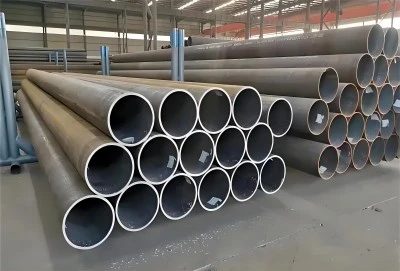
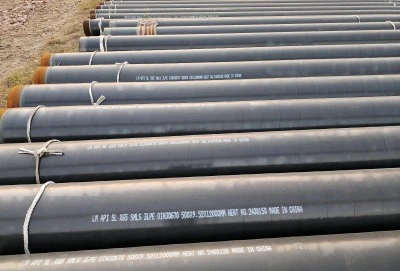
Getting api 5l x65 pipe from China is a smart move for pipeline projects that need high-quality materials at low prices. This high-strength line pipe material is made to meet the strict API 5L standards and is designed to work in harsh environments in oil and gas pipelines, water supply networks, and installations abroad. As the need for infrastructure around the world grows and budgets get tighter, procurement managers are turning more and more to qualified Chinese makers who can make high-tech products at low costs. To get the best value without sacrificing safety or compliance, it's important to understand technical specs, check the credentials of suppliers, and figure out how to handle transportation.
|
|
|
Comparison of API 5L X65 Pipe with Other Grades & Materials
X65 versus X60: Strength and Application Trade-offs
The technical difference between X60 and api 5l x65 pipe is small—about 10 MPa in yield strength—but it has big effects on how much pressure is used in designs and how thick the walls are. Because X65 lets you work at higher internal pressures or thinner walls at the same pressure ratings, you can save a lot of material over the course of a big job. But X60 usually costs 5–8 percent less per ton and doesn't need as strict welding rules. This makes it a good choice for lower-pressure distribution networks where X65's extra power isn't needed.
X65 versus X70: Balancing Performance and Practicality
The X70 grade is stronger than other grades, with a minimum yield of 485 MPa. This lets walls be lowered even more and weight is saved, which is especially helpful for submarine platforms and deepwater flowlines. Even though these benefits exist, api 5l x65 pipe is still useful because it is more flexible and easier to weld. The bigger process window of X65 makes it better for field building in remote areas where welding conditions change. The difference in the cost of materials—usually 12–15% more for X70—also affects the project's finances, especially when pipe selection is based on carrying capacity rather than pressure grade.
X65 versus Stainless Steel: Cost-Effectiveness Analysis
Stainless steel is very resistant to rust, but it costs a lot—often three to four times as much as carbon steel equivalents—and isn't much stronger. With the right corrosion protection (3-layer polyethylene film, fusion-bonded epoxy, or cathodic protection systems), X65 carbon steel has a similar service life at a much lower cost to install. Stainless types should only be used in specific situations with highly corrosive media or strict standards for keeping the product clean, where the risk of covering damage is too high.
How to Buy Best Price API 5L X65 Pipe from China?
Identifying Qualified Manufacturers and Suppliers
More than any other buying choice, choosing the right api 5l x65 pipe supplier is what makes or breaks a project. Manufacturers who are certified and have current API 5L logo licenses show that their quality management systems have been checked and that they are technically competent. In addition to standard licensing, you should look into the company's ability to produce, test, and have sophisticated tools. Facilities with automatic ultrasonic testing systems, modern heat treatment ovens, and in-house labs show that they are dedicated to quality control. For examples, ask for finished projects that are similar to the ones you want to work on in terms of scale and specifications.
Understanding Price Drivers and Requesting Quotations
Prices are affected by more than just the cost of materials. API 5l x65 pipe width and wall thickness change how complicated the process is and how much is produced. Order number has a big effect on unit prices; sizes greater than 500 tons usually get better rates. It's also important how strict the specifications are. For example, PSL2 with sour service approval needs more tests and paperwork, which raises base costs by 8–12%. The terms of delivery (FOB, CFR, or CIF) change who pays for the freight and insurance. When you ask for quotes, be sure to include full details like the standard grade, measurements, end configuration, testing needs, coating choices, and shipping location so that you can get accurate prices.
Navigating Order Logistics and Lead Times
For normal specifications, the minimum order quantity starts at 25 to 30 tons, but some makers will work with lower volumes at a higher cost. Lead times for production range from seven days for standard sizes to 35 to 45 days for unique orders that need special testing or finishes. Different shipping methods are available depending on the project's urgency and budget. Bulk vessel transport is the cheapest and takes the longest (6–8 weeks to reach U.S. ports). Container shipping is faster (3–4 weeks) and makes local delivery easier. And air freight is available in an emergency even though it is very expensive. Planning ahead can help you avoid expensive rush fees and project delays.
Ensuring Quality & Compliance When Sourcing API 5L X65 Pipes
Essential Certifications and Documentation Verification
Verification of credentials is the first step in quality assurance. Using the manufacturer's license number, the American Petroleum Institute's online verification method can prove that the API 5L license is real. The ISO 9001 certification shows that the company manages quality in a planned way, and the ISO 14001 and ISO 45001 certifications show that the company cares about the environment and safety. When the project requirements call for extra security, independent proof from third-party inspection agencies like SGS, TUV, or Bureau Veritas is provided. Ask for copies of mill test certificates (MTC) that meet EN 10204 3.1 or 3.2 standards. These certificates should show the chemical make-up, mechanical qualities, and testing results that can be linked to specific heat numbers.
Critical Inspection and Testing Protocols
Full testing protects against failure before it's time. By putting extra pressure on all of the lines during hydrostatic testing, which checks for leaks, the stability of the system is confirmed. Ultrasonic testing (UT) finds problems inside a material that can't be seen, like laminations, inclusions, and weld faults. X-rays are used in radiographic testing (RT) to look at the quality of the weld seam. Through damaging sampling, mechanical testing shows that the minimums for yield strength, tensile strength, and elongation are met. Charpy impact testing checks how tough something is to break at certain temperatures, which is especially important for PSL2 material. Verification of dimensions makes sure that the outside width, wall thickness, length, and ovality stay within acceptable ranges.
Case Study: Successful Procurement Implementation
A big project in Southeast Asia to send gas needed 12,000 tons of 36-inch-diameter X65 PSL2 pipe for a 280-kilometer route that went through hilly areas. The purchasing team chose a Chinese maker because they had API licensing, could make more than 800,000 tons of product each year, and had done good projects in similar situations in the past. The material had to be LSAW with a three-layer polyethylene finish, sharpened ends, and Charpy testing at -10°C. Production was watched over by a third party inspector, who saw motor tests and measurement checks. Over the course of eight months, the material was shipped in six bulk vessel lots, with each arrival timed to match the building schedule. When compared to other providers, the project saved a lot of money and met tight building schedules without any quality problems.
Value of Our API 5L X65 Pipes
Advanced Manufacturing Capabilities at Longma Group
Since 2003, Longma Group has focused on making high-quality line pipes. It has become one of China's biggest makers, turning out more than 1,000,000 tons of products every year. Our buildings are 230,000 square meters and have cutting-edge LSAW and ERW production lines that can make pipes with an outer diameter of 1/2 inch to 80 inches. We only get our raw materials from the best local mills, like Shagang, TISCO, and Bao Steel. This way, we can be sure that the chemical composition and mechanical qualities are always the same. Modern tools for heat treatment improves the metallurgy of the weld zone, and high-tech ultrasound and radiographic testing systems find flaws that a person inspecting the work might miss.
Our certificates show that we follow foreign rules. We can put the API logo on goods that qualify as long as their API 5L licensing is still valid. Getting ISO 9001, ISO 14001, or ISO 45001 certifications shows that you take an organized approach to quality, safety at work, and protecting the environment. We keep full records of all of our activities, from receiving the raw materials to sending them out to customers. This makes it possible for engineering projects that need strict material verification to have full paperwork.
Tailored Solutions and Comprehensive Support Services
It's not as easy as just getting the materials for pipeline projects. We offer manufacturing services that add value, such as beveling, threading, coating application, and custom length cutting, which cuts down on the need for field work. Our technical team helps with choosing the right material, figuring out the pressure grade, and suggesting the best way to weld based on the specifics of the job. Hot-dip galvanizing, fusion-bonded epoxy (FBE), and multi-layer polyethylene coatings (2PP, 3LPE, and 3PE) are all types of anti-corrosion services that are designed to the land and service area.
Documentation help takes care of all of the tech needs. We offer Material Test Certificates (MTC) that show the results of chemical analysis and mechanical tests for each heat, as well as Inspection and Test Plans (ITP) that show how to check the quality, Manufacturing Procedure Specifications (MPS) that explain how to make the product, and Non-Destructive Testing (NDT) reports that show the inspection was done correctly. This full paperwork package speeds up the approval process for projects and makes it easier to follow the rules.
After-sales support extends throughout material service life. Our expert advisors are still available to answer questions about installation, fix problems that come up out of the blue, and give advice on the best ways to do upkeep. This partnership method changes supplier relationships from ones that are based on transactions into strategic partnerships that get the best long-term return on investment through steady performance and low lifecycle costs.
Conclusion
To find the best-value api 5l x65 pipe, you have to weigh technical ability, supplier trustworthiness, and the total cost of ownership. The material is strong and can be used in many different ways, so it can be used in tough situations in oil and gas transport, water infrastructure, and offshore building. When you do your research and make sure that the quality control systems, output skills, and compliance with international standards are all good, Chinese manufacturers offer great prices. For procurement to go well, there needs to be clear communication throughout the supply chain, detailed specification creation, thorough seller evaluation, and strict quality verification. By using organized selection methods and working with well-known makers, project teams can get reliable materials that meet performance standards and keep costs as low as possible.
FAQs
What distinguishes PSL1 from PSL2 specification levels?
In more than one way, PSL2 has tougher standards than PSL1. Tolerances for chemical makeup are tighter, and carbon equivalent formulas are needed to make sure that the metal can be welded. In mechanical property ranges, there are both minimum and maximum limits, not just minimums. Charpy impact testing is now required instead of voluntary, and it checks the toughness of the crack at certain temperatures. The rules for non-destructive tests are more detailed. PSL2 material is about 10–15 percent more expensive, but it offers more security for important uses where failure would have serious effects.
Can X65 pipe be used in sour service environments containing H2S?
When made and tested according to NACE MR0175/ISO 15156 standards, X65 material can be used in bad situations. This type of material is usually called X65MS or X65QS. To do this, the chemical makeup has to be limited, especially the amounts of sulfur and phosphorus. It also has to be tested for HIC and SSCC and have controlled hardness limits (usually no more than 22 HRC or 250 HV10). Standard X65 material that doesn't meet these requirements shouldn't be used in places where there is wet hydrogen sulfide because it could crack badly and fail in a big way.
How does welding procedure differ from lower-grade materials?
Because X65 is stronger and has a higher carbon equivalent, it usually needs to be heated up before it can be welded. Preheating at temperatures between 50°C and 150°C, based on the thickness of the wall and the temperature of the air around it, helps keep hydrogen from cracking in the heat-affected zone. Qualification tests are needed for welding processes to make sure that the mechanical qualities are correct and that the finished parts don't have any flaws. Welders need to have the right licenses for the type of pipe they are working with and the welding process they use.
Partner with a Trusted API 5L X65 Pipe Manufacturer
Hire a reputable company that makes api 5l x65 pipes. Longma Group is ready to help you with your pipeline building projects by providing you with high-quality line pipe materials at prices that are fair. Since we've been a top-notch api 5l x65 pipe supplier for 20 years, we mix technical know-how with customer-focused service to give you options that are exactly what you need. You can trust the effectiveness of our materials because we can make them, have all the necessary certifications, and use strict quality control systems. We provide the expert help and documentation your project needs to go smoothly, whether it's for cross-country transmission lines, offshore platforms, or industrial processing facilities. Email our procurement experts at info@longma-group.com to talk about your unique needs and get a quote that fits the limits of your project.








