
When sourcing structural steel hollow sections for Australian or New Zealand projects, the choice between C250 and C350 grades under AS/NZS 1163 directly affects your budget, design safety, and long-term performance. The AS/NZS 1163 C250 pipe delivers a minimum yield strength of 250 MPa and suits general-purpose framing where cost control matters. C350 raises that threshold to 350 MPa, offering higher load capacity in a thinner wall. Knowing which grade fits your application prevents costly over-specification or dangerous under-engineering.
|
|
|
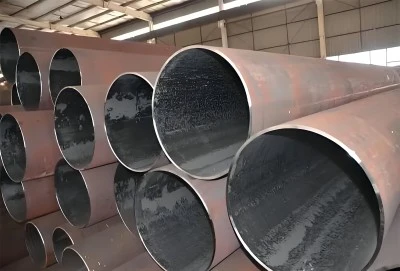
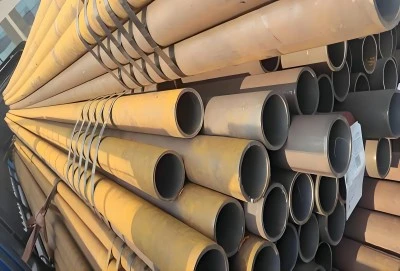
Understanding AS/NZS 1163 Pipe Grades: C250 and C350 Overview
AS/NZS 1163 is a joint Australian/New Zealand standard that specifies the chemical, mechanical and dimensional requirements for cold-formed structural steel hollow sections. Each grade of pipe is cold-formed, as indicated by the designation starting with "C". With this procedure the tolerances are tighter and the surface is smoother than hot-rolling.
What Does the Grade Number Actually Mean?
The value after the “C” is the minimum yield strength in megapascals. For example C250 gives a minimum of 250 MPa and C350 gives a minimum of 350 MPa. Both are available in Circular Hollow Sections (CHS), Rectangular Hollow Sections (RHS) and Square Hollow Sections (SHS) providing engineers an option of how to construct buildings.
Chemical Composition Differences
The carbon concentration of C250 is normally 0.20-0.25%, while the manganese level may be up to 1.50%. This results in a low carbon equivalent ( CEV ), therefore it is easier to weld. Partly, the C350 is stronger because the standards regarding carbon and microalloying are stricter. Neither grade is weak, even if they are cold-formed, both fulfill the standard’s standards for flexibility.
Corrosion Resistance and Surface Compatibility
Neither are a natural stainless but both may be hot dipped to AS/NZS 4680 without any trouble as long as the silicon levels are maintained in balance. C250 is highly popular in rural and agricultural locations where galvanized hollow parts are continually being exposed to chemicals and water.
Dimension and Specification Differences Between C250 and C350 Pipes
It is just as important to choose the right grade as it is to choose the right wall thickness and piece size. On a functional level, this is what makes the C250 different from the C350.
Standard Size Ranges and Wall Thickness
We provide a wide range of sizes of C250 hollow sections such as AS/NZS 1163 C250 pipe. The wall thickness spans from 1.6 mm to 9.0 mm and the section lengths and outer diameters from 20 mm to 400 mm. Higher yield strength in C350 frequently allows it to be produced in somewhat lighter wall options. This is why engineers use C350 when weight savings are a significant feature of their design.
Weight per Meter and Its Impact on Logistics
A thicker walled C250 section will carry the same load as a thinner walled C350 piece. Even a 5–8% reduction in overall tonnage offers considerable savings on freight if a procurement team is moving steel from a port to a distant construction site.” I have observed this element impact sourcing decisions when project volumes are beyond 50 tons.
Mechanical Performance Under Stress
The tensile strength is between 320-510 MPa of C250 and the expansion is between 18-22% depending on the breadth of the wall. The tensile strength of C350 is 430-530 MPa, and it extends a bit less. The C250 has longer extension thus it deforms more before it breaks. This is better for safety in structures likely to be struck or in seismic zones since it absorbs more energy.
Procurement Insights: Buying AS/NZS 1163 C250 and C350 Pipes Efficiently
Only half of the buying job is done when you choose the right grade. It's just as important to manage supply chain risk as it is to check the quality of the products, especially for big orders that need to be filled quickly.
How to Identify Certified Suppliers
Real AS/NZS 1163 pipe features continuous stencil writing including the name of the producer, the standard name, the grade (C250 or C350) and a heat number so the full process can be followed. Request Mill Test Certificates (MTC) per EN 10204 requirements. Type 3.1. A traceable MTC without a heat number is a red flag in project or audit inspections.
Quality Testing Methods You Should Request
Before receiving delivery, the following checks make sure that all the rules are met:
- Dimensional analysis: Checks outer diameter, wall thickness and out of roundness to AS/NZS 1163 standards.
- Mechanical testing: Tensile testing show yield and ultimate strength and flattening tests on CHS sections prove the integrity of the weld seam.
- Non-destructive testing (NDT): Ultrasonic or eddy current examination of the longitudinal weld may uncover interior faults that are not visible to the naked eye.
- Charpy V-notch impact testing: Required when the "L0" designation is specified for cold-climate projects.
When these tests are recorded on the right MTC, they protect buyers from getting non-conforming materials into a building.
Pricing Trends and Lead Times
Because it is easier to alloy, C250 usually has a cheaper starting price per ton than C350. Standard sections usually have lead times of two to four weeks from Australian mills; foreign shipments from approved exporters may take six to ten weeks, based on how busy the port is and how many orders are placed. When the steel market is unstable, locking in prices through forward contracts lowers your risk of sudden cost increases.
Making the Final Decision: Which Grade Should You Choose?
If keeping costs low, being able to weld, and being compatible with coating are important to you, then C250 is the best choice for your job. If your design needs better strength-to-weight performance, especially in settings that are dynamic or highly loaded, the smaller section sizes and lower total steel tonnage of C350 make up for its higher price. As long as both grades meet AS/NZS 1163, the quality control steps will be the same no matter which you pick. When you work with an experienced AS/NZS 1163 C250 pipe maker, your purchasing team can get expert advice that is specific to the grade and make sure that every order is certified the same way.
Conclusion
AS/NZS 1163 C250 pipe is good for general structure uses that need to be cost-effective and where weldability and coating compatibility are important. In situations where weight is important or where there is a lot of load, the C350's higher yield supports a small price difference. The right grade relies on how much weight you need to carry, where you are, and how much money you have. Before taking a package, you should always make sure it is in compliance by looking at the correct MTC paperwork and confirmed heat numbers. The best way to protect your project and your procurement record is to work with a reputable provider who has both types in stock and can provide full certification paperwork.
FAQ
What is the main difference between C250 and C350?
The minimum yield strength for C250 is 250 MPa, and the maximum yield strength for C350 is 350 MPa. When cost is important, C250 is best for general structure framing. C350, on the other hand, is best when design needs higher strength in a lighter piece.
Is C350 always the better grade for structural work?
Not all the time. It costs more per ton to use C350, but C250 meets all AS 4100 design standards for many low-rise or standard-load uses without any structural trouble.
Can AS/NZS 1163 C250 pipe be galvanized?
Yes. As per AS/NZS 4680, both grades can be hot-dip galvanized as long as the silicon content in the steel is properly controlled during production.
How do I verify that pipe is genuinely AS/NZS 1163 certified?
Check out the stamp markings that go all the way around the pipe body. It needs to have the name of the maker, the standard (AS/NZS 1163), the grade name, and a heat number on it.
Is C250 suitable for pressure applications?
Building grades C250 and C350 are not pressure pipe grades. Standards like AS 1074 or ASTM A53 are used to transport fluids under pressure.
Get a Quote from Longma Group — Your AS/NZS 1163 Pipe Supplier
It is possible to buy AS/NZS 1163 C250 and C350 hollow sections from Longma Group. They come in CHS, RHS, and SHS profiles and come with full MTC paperwork and approved quality control. Our team is ready to help you if you need an AS/NZS 1163 C250 pipe maker for a large-scale building project or a reliable supply partner for ongoing OEM manufacturing. To get a price, email us at info@longma-group.com or go to longma-group.com right now.